Scientists say they have created a new system that can create fuel out of sunlight and air.
The new system is notable because it can work under field conditions, rather than in the specialised and specific conditions of a laboratory.
Eventually, it could be used to create carbon-neutral fuels for things like aviation and shipping – but significant amounts of development and upscaling would be required first, the engineers behind the discovery note.
The system is part of a broader attempt to built new processes that could help reduce the 8 per cent of humanity’s carbon dioxide emissions that come from flying and shipping. One option is to make new drop-in fuels that would work like the current kerosene or diesel but are created synthetically, out of water and carbon dioxide and powered by solar energy.
Scientists have had some success in making the individual parts of such a system. But it has proven much harder to create the full thing, in a way that would be useable in real-world conditions.
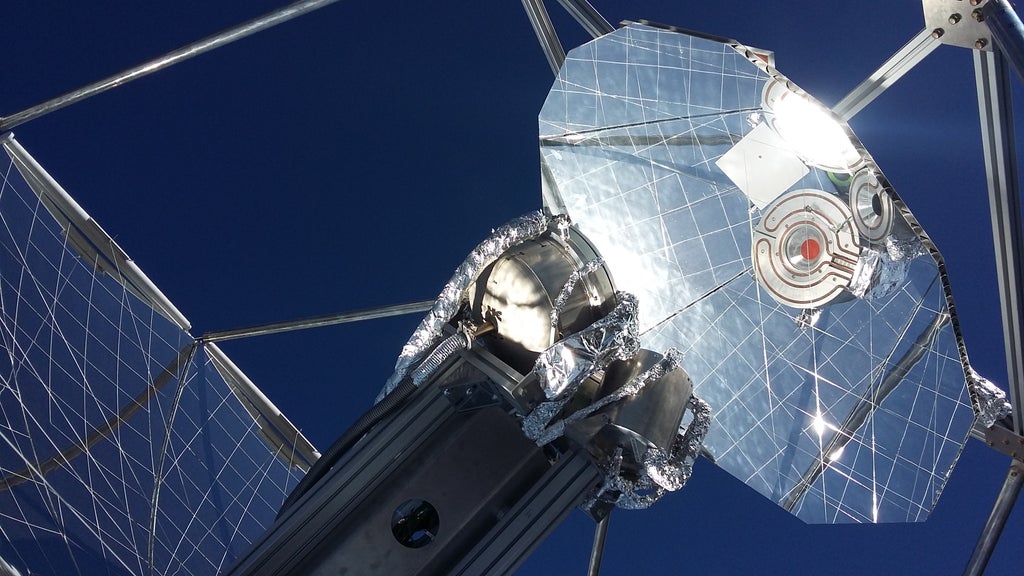
Engineers Aldo Steinfeld and his colleagues built a working version of the system on the roof of ETH Zürich, the university where the research was conducted. It was made up of three pieces – an air capture unit that takes carbon dioxide and water from the air, a solar unit that captures solar energy and uses it to turn those materials into a mixture of carbon monoxide and oxygen, and another unit that turns that gas into liquid so that it could be used as a fuel.
If the system were scaled up to be large enough, it could potentially satisfy the demand for the much less green kerosene that currently powers the aviation and shipping markets.
But that would need large production plants – roughly 0.5 per cent of the Sahara Desert – and the fuel would initially be more expensive than the kerosene.
As such, there would have to be policy support and ways of supporting the initial investment into the fuel, they note.
The research is described in a new journal article, ‘Drop-in Fuels from Sunlight and Air’, published in Nature today.