Can you motivate and engage your staff to perform highly in the midst of 30% cuts and redundancies?
Delegates at the recent Guardian HR Summit in London overwhelmingly concluded that yes, you could achieve this apparently impossible combination.
Our own research at IES on Learning from the Downturn in the private sector highlights a number of important ingredients. Organisations such as Jaguar Land Rover and KPMG came up with innovative methods of cutting costs by reducing working time and pay while preserving jobs, something that has helped to keep staff morale high and been a big boost to their performance as the economy slowly recovers.
We are already seeing examples of local authorities adopting similar tactics, with staff at Blackpool Council accepting pay cuts in order to reduce the number of redundancies and workers at Dorset Council taking 12 days of unpaid leave. And with the coalition's encouragement, a number of the soon to be abolished quangos are looking at adopting mutual and co-operative status – with a degree of employee ownership – to ensure their future survival without public funding.
But these are not universal "magic-bullet" solutions. The example of Aberdeen Council, where staff voted against a 5% pay cut to avoid compulsory redundancies, proves this. Keys to success in the IES research were high degrees of employee involvement, autonomy and trust, a genuine sense within those employers that, to borrow the prime minister's phrase, "we are all in this together" – sharing in the pain of cuts but also in the future. All having the opportunity to share in the gains of success. It was the context and culture for these initiatives that rendered them successful.
Giving employees a financial stake in their employer means positive employee attitudes and high organisation performance, as the previous government's McLeod review of employee engagement conclusively demonstrated. And mutual organisations do generally give their employees a much stronger say in the running of their organisation.
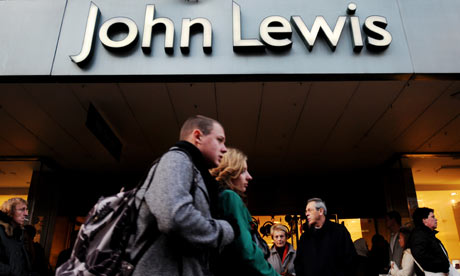
But simply trying to copy the structure of the John Lewis model won't automatically deliver their levels of financial performance and customer service, unless you also address leadership behaviour and employee engagement. Even before the cuts, many local authorities were doing a poor job on this score, with survey data suggesting that only a third of staff speak highly of their employer, trust their leaders, feel they live the organisation's values, say they are listened to and are excited about the future.
For all its undoubted management difficulties, the level of organisational and structural changes required to address the deficit do give authorities the opportunity to strip out traditional hierarchical, top down driven, status-based attitudes and to genuinely listen to staff. Staff can engage in building a viable future for themselves and their employer and the communities they serve. Many people joined the public services in the past to do precisely that – to serve the public – yet have felt prevented and frustrated from doing so.
"We could have moved faster, but you've got to listen to people and take them with you" was how one chief executive summed up the changes underway in his own local authority in our research on restructuring. You can imagine John Spedan Lewis saying the same thing in 1920 when he convinced his business partners to introduce all-employee profit sharing and a representative staff council in the firm that now bears his name. We need similar bravery, imagination and innovation from our local authority leaders today.
Duncan Brown, director of HR business development at Institute for Employment Studies
This content is brought to you by Guardian Professional. Join the local government network to receive more like this direct to your inbox.