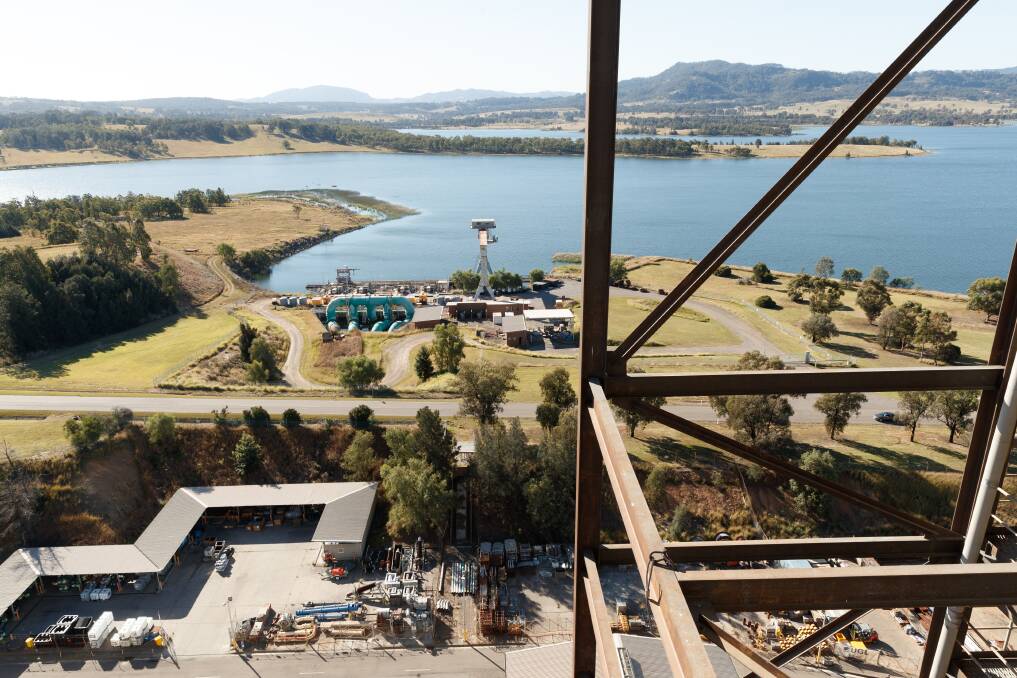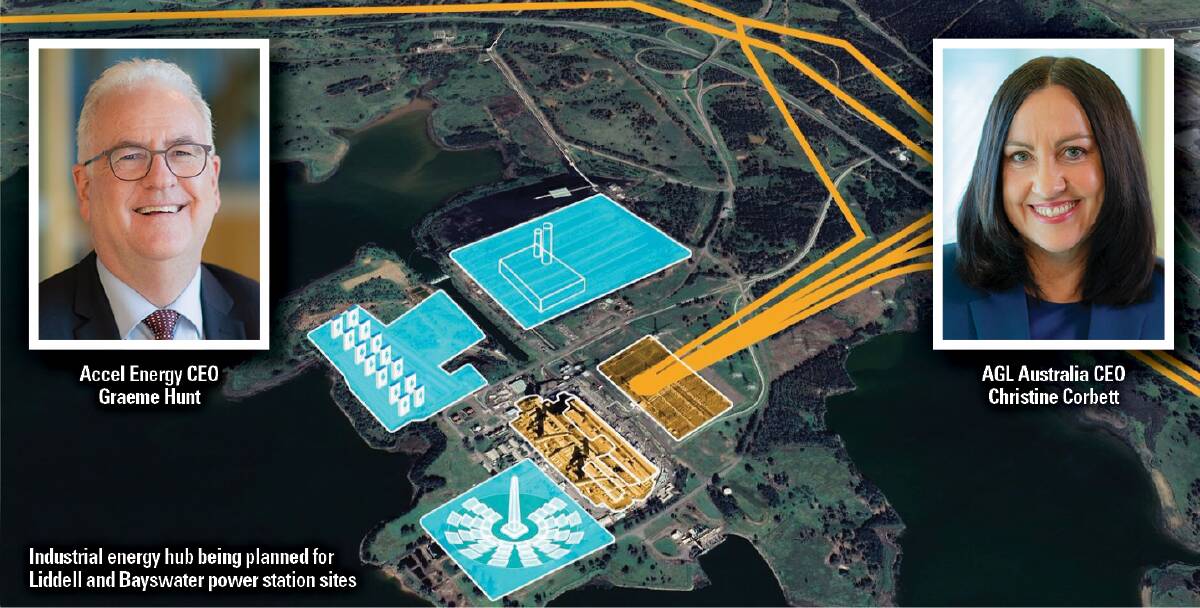
LIDDELL power station will be under new ownership by the time its planned 2023 closure date comes around after gas and power company AGL Energy announced a "de-merger" that will put most of the business in a new company, AGL Australia, with its coal-fired power stations under the corporate name Accel Energy.
BHP carried out similar spin-offs when it exited Newcastle and Whyalla steelworks through OneSteel and Port Kembla through Bluescope Steel.
AGL's announcement formalises a split foreshadowed in March, and follows a change of chief executives and a slide of almost 20 per cent in its share price in the meantime.
A 30-page explanation of the asset split says the de-merger should be finalised by June 30 next year.
Accel Energy would still be the nation's biggest power generator through Macquarie Generation (Bayswater and Liddell), Loy Yang A in Victoria and its Torres Island gas turbine in South Australia, described as the nation's largest.
Various post-Liddell projects - the Liddell battery, the Bells Mountain pumped hydro proposal and the Raygen solar-thermal project - would be under the Acel banner, as well as AGL's stake in a Queensland gas field and gas storage facilities it has been trying to sell at Tomago and in Queensland, along with seven wind farms in SA and Victoria.
But three gas power stations in South Australia, Victoria and Western Australia will stay with AGL, along with the company's big customer electricity, gas and telco businesses and its hydro assets.
The Australian Energy Regulator said this week that 3700 megawatts of large-scale wind and solar plus 2500 megawatts of rooftop solar were installed in 2020, with wholesale prices regularly falling to zero or below around mid-day.
This eats into coal power station profitability, with AGL confirming "a material step-down in earnings" this year as a result.
Splitting the company in two would allow each business to focus on "the opportunities and challenges represented by the accelerating energy transition".
Federal MP Joel Fitzgibbon said there were "were are no surprises in AGL's de-merger", describing it as, "the next natural step in the company's long-running obsession with its green image".
Referring to its financial pressures, he said: "Time will tell whether shareholders benefit, the early signs are not encouraging. This is the risk you run when you take your eye off the main game, the fiscal bottom line."
AGL said existing shareholders would get one share in each company after the de-merger, with Accel holding between 15 per cent and 20 per cent of AGL Australia.
Supply contracts would also allow Accel to seek new customers and AGL to source supply from other generators.
The AGL spokesperson said a new enterprise agreement for Macquarie Generation employees was finalised last year.
A Liddell transition working group with management, unions and other stakeholders had met to consult on workplace matters.