
All the way up Biggin Dale from the river Dove I’d caught an intermittent scent of wood smoke until, where the valley reached its shallows, I saw two men burning gorse near the skyline, clearing scrub threatening to overwhelm a grassy bank that in spring and summer is rich with flowers.
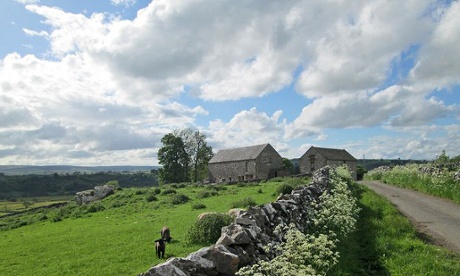
Before the dale’s head, I turned off towards Hartington along Reynard’s Lane, leaving behind this botanical richness for the bone-white walls and uniform pasture of the uplands. Livestock farming is a long tradition here, and these exposed hills are studded with isolated barns centuries old that still offer protection against the harsh winters.
There is one on Reynard’s Lane, called Hill’s Barn dating back to the late 18th century. Last time I was here, a few years ago, it was in a state of ruin, but arriving now I see it has been wholly restored, and very well. The new roof has the original Staffordshire blue tiles and the walls are repointed with lime mortar. Built into the barn’s walls are shuttered openings called pitch-holes, set at the same height as a cart so that straw and hay could be pitched in easily. Inside are some of the original boskins (cattle stalls). There’s an old pigeon loft as well.
Last time I was here, years ago, the air had been thick with swifts and martins, and I stood with my children watching the birds thread their way among the ruins. Everything’s much neater now, but I’m reassured that after the barn’s restoration they moved straight back in. One or two of the roof’s ridge tiles have been lifted a little, to encourage bats to roost.
Turning back down towards Wolfscote Dale I pass Staden Barn, scruffier but with the harmony of a building performing its function. Flagstones against its south wall were bathed in sunlight, so I sat and peered inside at straw spread out across the floor and caught the rich animal warmth still radiating from the walls even though winter’s grip has slackened and the barn is empty.
Twitter: @calmandfearless




.png?w=600)








