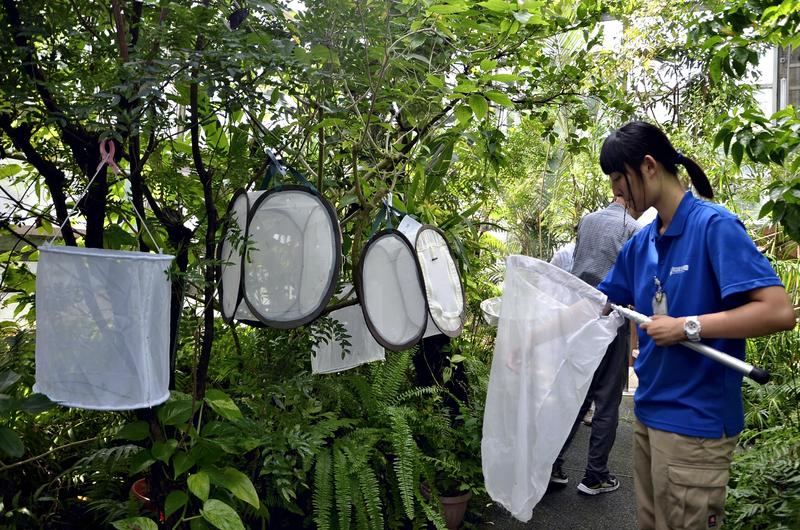
The Adachi Park of Living Things, a biological park in Adachi Ward, Tokyo, has implemented a project to help an endangered species of butterfly reproduce.
The butterfly, Tsushima uraboshi shijimi, known scientifically as Pithecops fulgens tsushimanus, is a rare and precious species found only on Tsushima, a remote island in Nagasaki Prefecture.
The park has sought to improve its breeding methods and has succeeded in breeding 300 to 400 of the butterflies each year.
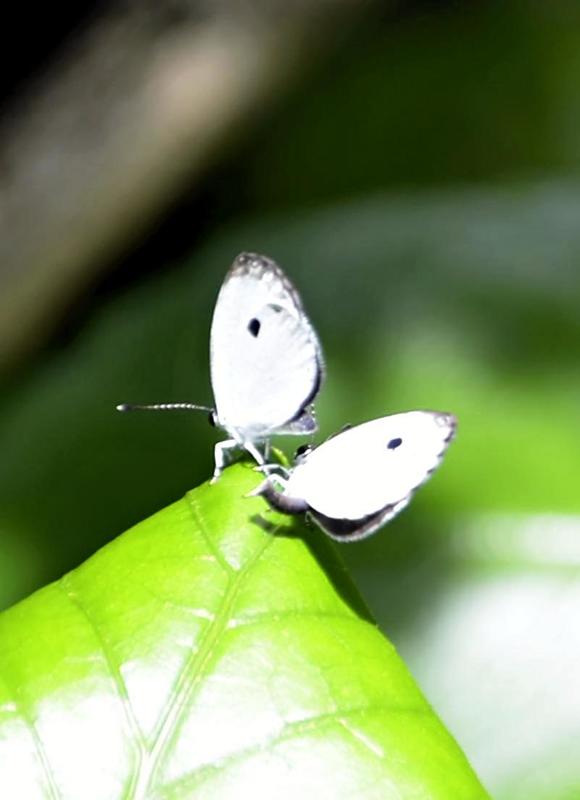
The butterflies were displayed to the public in a greenhouse at the park from Sept. 15 to 24.
According to the park, Tsushima uraboshi shijimi butterflies have wingspans of about two centimeters and belong to the lycaenidae family of butterflies.
The upper side of the wings of males is a glossy bluish purple, while the upper side of females' wings is blackish brown. The inner side of the wings of both sexes is white with black spots.
In recent years, the bottom weeds on Tsushima consumed by the butterflies' larvae have grown scarce due to damage caused by deer and the decline of the local forestry industry.
As a result, the population of the butterflies has rapidly decreased since the latter half of the 2000s, prompting the Environment Ministry to classify them in the 1A category of endangered species that are heavily threatened with extinction. The ministry also designated the butterfly a specified national endangered species of wild fauna and flora.
The central government, local governments and private organizations have taken measures to preserve the species.
In 2013, the Adachi Park of Living Things began breeding butterflies captured on Tsushima and successfully helped them mate, collecting their eggs and nurturing the larvae.
The park has continued its breeding efforts and this year delivered about 50 butterfly pupae and 500 eggs to Tsushima.
However, a lack of breeding data forced the park to adopt a trial-and-error approach to improve its efforts.
For example, breeding staff placed each of the butterfly eggs -- which measure less than a millimeter in length -- in separate containers to prevent the larvae from cannibalizing each other.
After the larvae hatched, the staff would also feed various vegetation favored by the larvae, such as sprouts and buds, depending on the season.
As adult butterflies live only 10 days, the staff placed females on the edge of sticks and positioned them close to males flying nearby to increase the probability of successful mating. Such measures have been steadily implemented.
"We want to preserve the butterflies in Adachi Ward so that a large number of the species can fly freely on Tsushima again," said Nagisa Mizuochi, a breeding staff member at the park. "We also hope ward residents will visit our conservatory to observe our preservation activities in their home community."
Captions
Yomiuri Shimbun photos
A park employee who looks after Tsushima uraboshi shijimi butterflies
Tsushima uraboshi shijimi butterflies are seen at the Adachi Park of Living Things on Sept. 6.
Read more from The Japan News at https://japannews.yomiuri.co.jp/