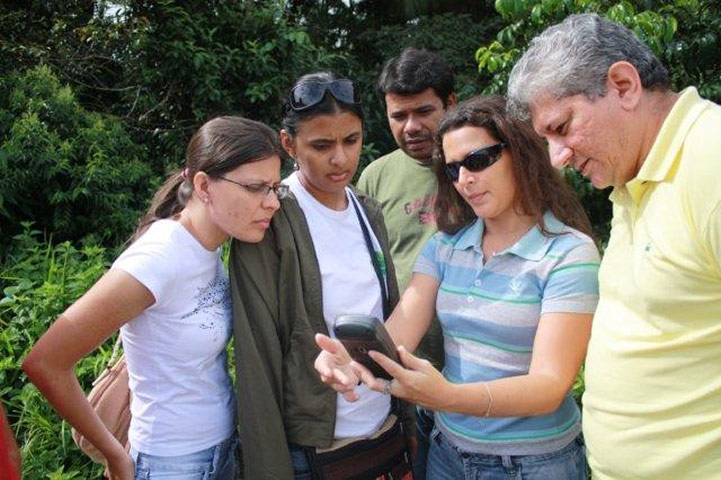
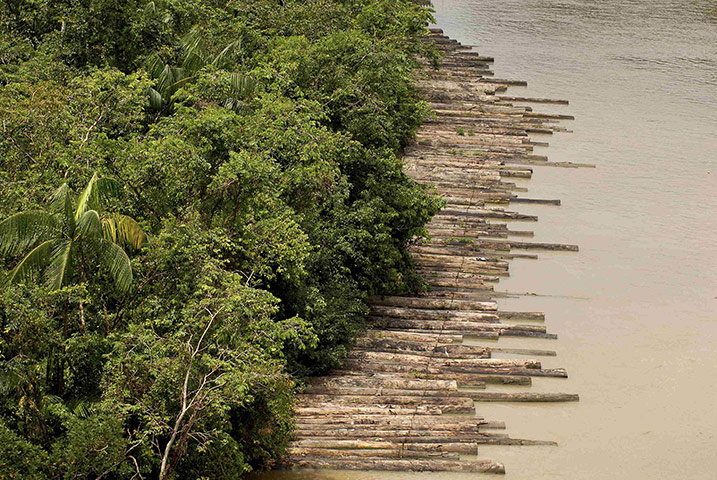
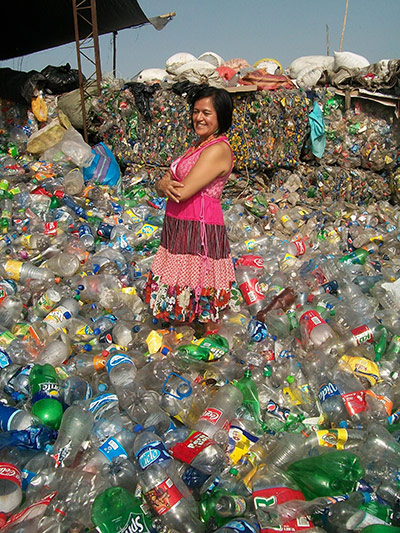
Imazon – Amazon Institute of People and the Environment. A woman working with Imazon displays the Deforestation Alert System, known as SAD. This system is now used by the Brazilian government to control illegal deforestation, focusing on 'hot spot' deforestation identified by Imazon. The group's founder, Adalberto Verissimo, has been an environmental activist since he was 13 and became co-founder of Imazon in 1990, working with his partner Carlos Souza Jr. Imazon's sustainable development practices have preserved many of the Amazon's pristine ecosystems and Imazon pioneered the satellite monitoring system. Photograph: ImazonIllegally logged timber, which has been confiscated, floating down the Guam River Delta in the state of Para, northeastern Brazil, last year. Imazon is developing 'Google Forest', to make real-time monitoring of tropical rainforests accessible to people all over the worldPhotograph: Stringer/ReutersAlbina Ruiz, founder of Ciudad Saludable (Healthy City). Solid waste is one of the world’s most critical public management and health problems. Some 25 years ago, Albina Ruiz came up with the idea for local enterprises to collect and process the waste material. These groups charge affordable fees and have helped reduce waste volume in municipal landfills. They generate more income by separating recyclables and creating additional micro-enterprises, such as producing compost. Ruiz's Healthy City Group (HCG) is working with public and private sector organisations in Latin America and south Asia to create inclusive models of integrated solid waste management that incorporate informal waste collectors into municipal waste management systemsPhotograph: Healthy City
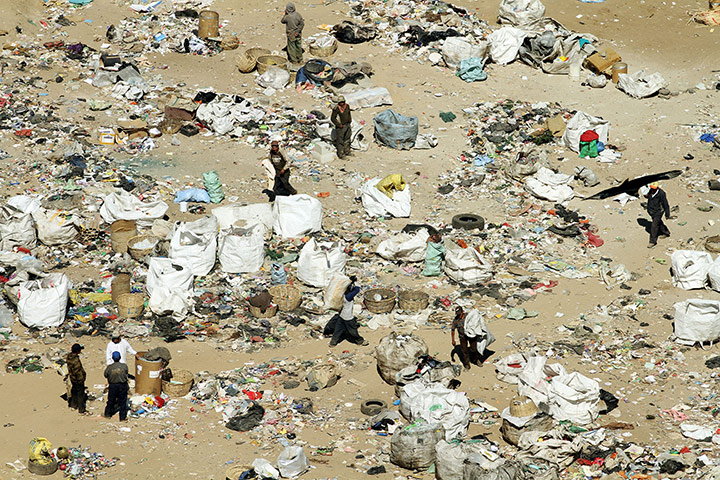
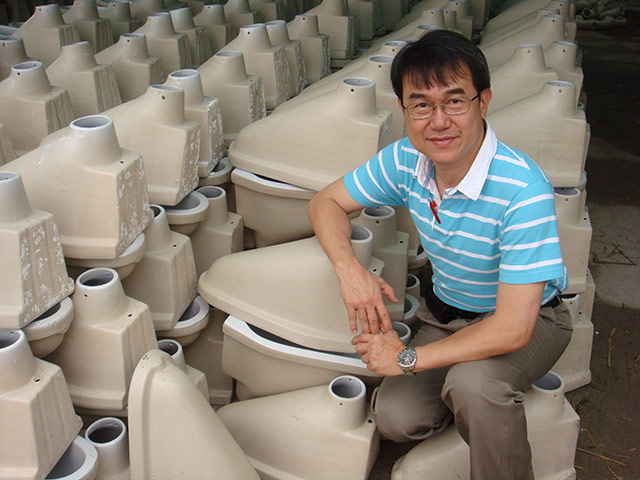
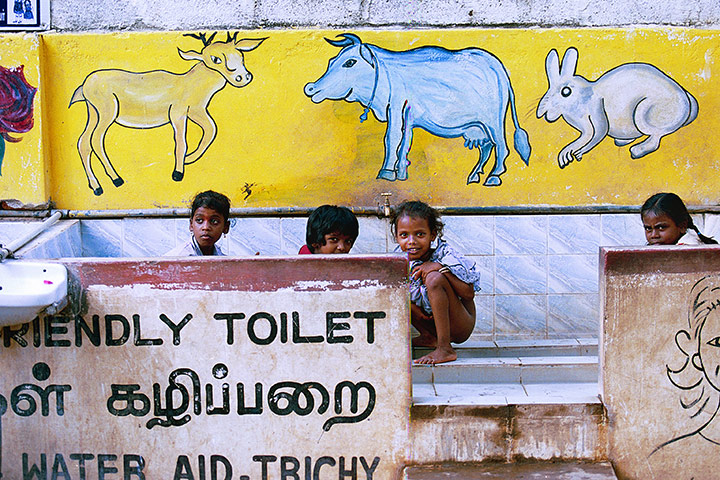
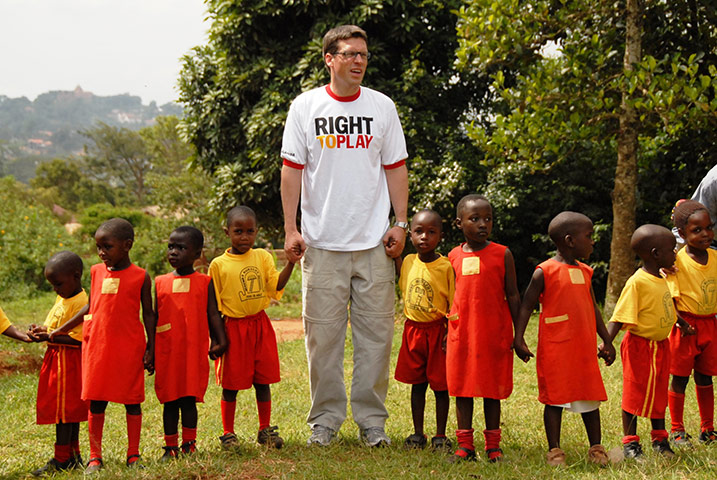
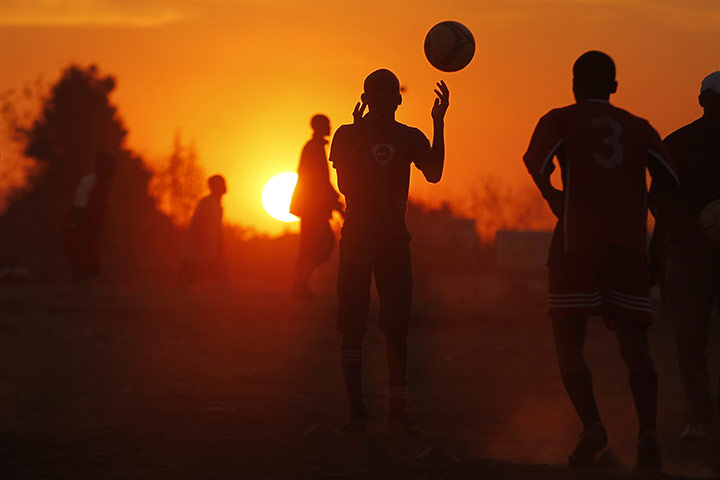
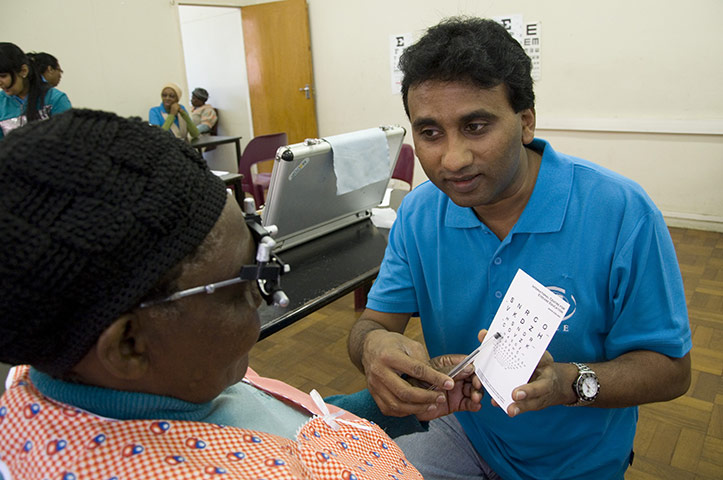
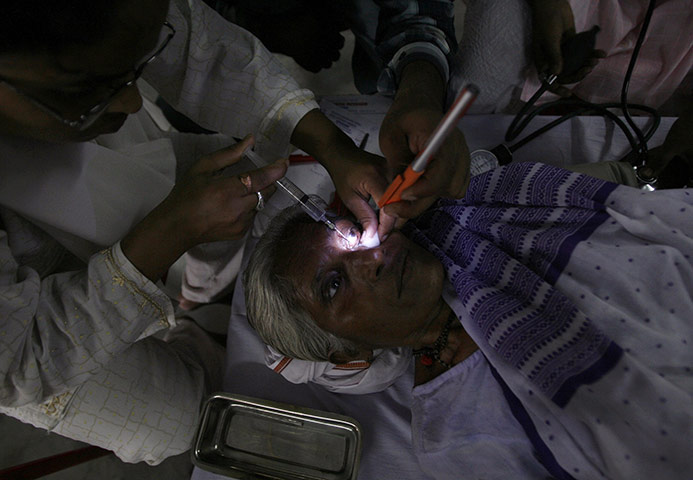
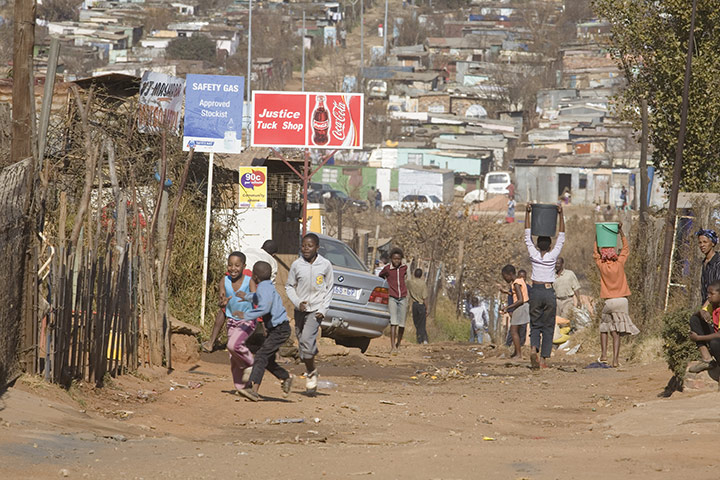
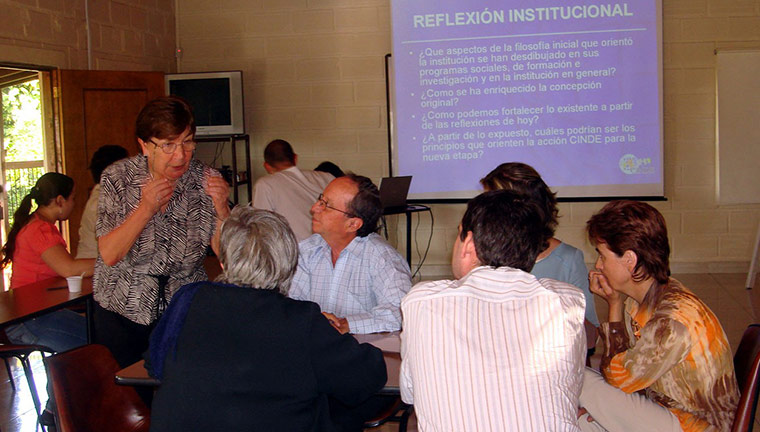
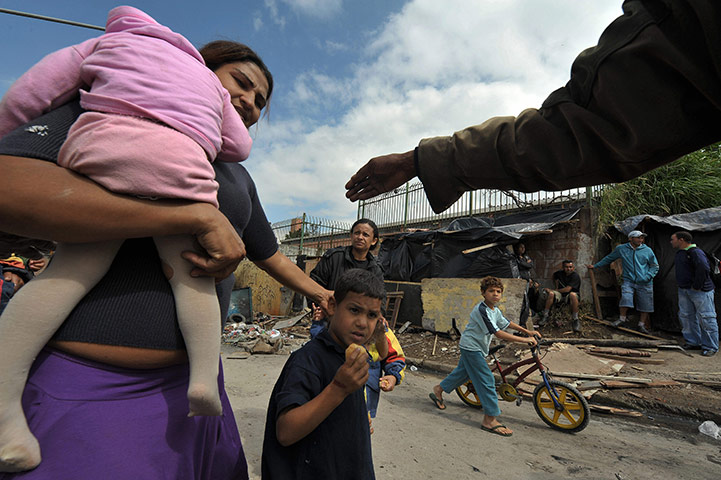
This is the biggest rubbish dumb in Guatemala City: 11,000 people scavenge and make a living from glass and metal that they re-sell at market or to recycling companies. Children are officially banned from the site but many defy the order. HCG has has helped 1,500 people become waste collectors, improving health and living conditions for more than 6 million rural and urban poor in countries including Bolivia, Brazil, Colombia, Mexico, Peru, Venezuela and India. By 2015, Albina Ruiz wants to establish partnerships with public and private actors globallyPhotograph: Graeme Robertson/GuardianSim Juek Wah, better known as Jack Sim, founder of the World Toilet Organisation. Sim has brought the issue of sanitation, and clean toilets, to a worldwide audience, while also meeting an important need for a large segment of the world’s populationPhotograph: World Toilet OrganizationA child-friendly toilet in a 100% sanitised slum, in Trichy, Tamil Nadu, India. WTO has more than 250 partners in 51 countries – including the Schwab and Rockefeller Foundations, Clorox and the Clinton Global Initiative, as well as multiple suppliers of toilets. WTO uses a social franchise model to sell low-cost sanitation systems, creating jobs. WTO recently partnered with Unilever to fund Toilet Business Schools in India, Vietnam, Cambodia, Indonesia and South AfricaPhotograph: Martin Argles/GuardianJohann Koss, founder of Right to Play. The Olympic speed-skater Koss, from Norway, has won four Olympic gold medals and one silver. He became a sports ambassador for Olympic Aid for Eritrea in 1993. While playing football with war-affected children he realised the impact that sport could have in bringing people together. Koss is using sport and play to build life skills in children in communities affected by war, poverty and disease Photograph: Grö Eide/Right To PlaySouth African children playing football in Soweto, South Africa. Johann Koss expanded Right To Play from 15 projects in seven countries in 2001, to 49 projects in 21 countries by 2010. He trains local community members on how to run the programmes. There are now 1,300 trainers, 13,000 local coaches and 5,500 junior leaders delivering programmes to 700,000 children who participate in Right to Play activities twice a week. It is also helping to reduce stigmas that prevent children’s participation, especially towards girls and children with disabilitiesPhotograph: Hassan Ammar/APKovin Naidoo, founder of International Centre for Eyecare Education (ICEE). Uncorrected vision impairment causes profound economic disadvantages to individuals, their families and societies. In the developing world, ophthalmology services are too expensive for a lot of people. Naidoo's organisation focuses on advocacy, promoting eye care strategies to policy-makers and stakeholders; education, training eye care personnel; infrastructure, providing facilities and equipment; and research, keeping programmes relevant and effective Photograph: John Robinson/ICEEA woman receives treatment at a free eye care camp set up in the city of Siliguri, West Bengal. According to the World Health Organisation, 90% of the world's blind people live in developing countries. The ICEE, based in Australia, has helped 1.5 million people in Africa alone. Naidoo's goal is to reach everyone in need of eye carePhotograph: Rupak De Chowdhuri/ReutersLesley Ann van Selm, founder of Khulisa Social Solutions, based in South Africa. After a trip to Leeuwkop prison in Johannesburg in 1996, Lesley Ann van Selm started work with young offenders, founding Khulisa Social Solutions in 1997. Khulisa focuses on access to justice, crime prevention, community development and leadership, as well as developing the skills and entrepreneurship of young offenders Photograph: Khulisa Social SolutionsChildren playing in the Elias Motsoaledi area of Soweto in South Africa, where van Selm's group is active. Khulisa has grown to 250 employees – 95% of them are women. The organisation will expand into Uganda, Mozambique and Kenya this year Photograph: Gideon Mendel/Getty ImagesMarta Arango, founder of International Centre for Education and Human Development, in Colombia. Marta Arango works to promote intellectual, physical and emotional attention towards children in impoverished neighbourhoods. She established the International Centre for Education and Human Development (CINDE) in 1977 with her husband, Glen Nimnicht, creating networks of support with families, communities and childcare professionals to help children succeed through the school system Photograph: Natalia Botero/Revista SemanaA homeless woman and her children queue for food in Capao Redondo shanty town, Sao Paulo, Brazil. CINDE works with Unesco, Unicef, national governments, private groups and NGOs to design policies and programmes to help children improve their life chances. In 33 years, the organisation has moved beyond Colombia and into 30 countries including Indonesia, Panama, Nicaragua, Costa Rica and Bolivia, impacting on the lives of 10 million children and their families. This year, CINDE intends to incorporate e-learning technologies into its workPhotograph: Mauricio Lima/AFP/Getty Images
Sign up to read this article
Read news from 100’s of titles, curated specifically for you.