Women’s empowerment and economic inclusion speed up development, help overcome poverty, reduce inequalities and improve children’s nutrition, health and school attendance.
Compelling data shows that for every dollar spent on key interventions for reproductive, maternal, newborn and child health, an estimated $20 (£13.25) in benefits could be generated, according to the World Health Organisation (WHO). UNICEF (pdf) data shows that mortality rates of newborns are almost twice as high among mothers with no education compared to those with secondary education or higher.
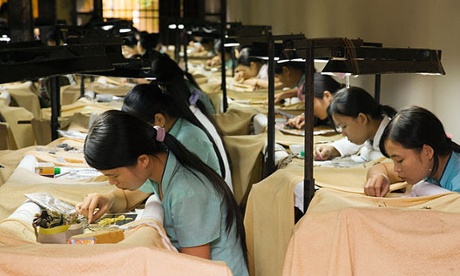
Women represent between 60-80% of the workforce in global manufacturing. Supply chains give them access to the formal economy, stable employment and some measure of social security and social acceptability, but they are still at risk.
These women, many of them young and undereducated migrants who move from rural areas to cities for jobs, suffer from a myriad of challenges. They are vulnerable to labour rights violations, violence and harassment at work and at home. They face increased health disparities as well as risks associated with being outside of the formal financial sector. Despite their clear needs, most of these women are currently left out of community level women’s empowerment interventions. Their needs for relevant knowledge and access to services and products remain unmet.
At the same time, these women have the potential to affect change. As “risk takers” (migrants, eldest siblings, first to work and live outside the home), they tend to be open to new information and willing to break age-old taboos and social constructs related to health, financial management, women at work, violence and gender relations.
As direct income earners, they are able to make financial investments in their health, wellbeing and families, and to make decisions related to income and household spending. As income earners for their families, they are influential among their peers and can model their changed behaviour to influence their families and communities.
Unlocking the potential of low-income working women
HERproject, a BSR initiative, is an example of how to address the needs of low-income women through partnerships with business. The workplace based model provides access to women as employees, and connects them to civil society groups, health and other service providers while improving relationships with their employers.
Recognised as a leading innovation for women’s health by the UN Every Woman, Every Child initiative, HERproject operates in 14 countries with over 40 international companies, 300 factories and farms, and 20 civil society partners. HERproject has improved the wellbeing, confidence and economic potential of over 250,000 women, and has contributed to improved health outcomes for their families and communities.
In each implementing country, BSR has found that taking a holistic and self-directed approach to women’s empowerment is an uncommon but effective method of helping this target group meet their needs. It increases their confidence related to sexual and reproductive health and to personal and family finances. By focusing on and measuring the business case for these interventions (through return on investment), BSR promotes ongoing employer investments in women’s empowerment and elevates working standards in industries such as agriculture, garment and electronics.
Transforming workplaces for improved societies
HERproject has demonstrated success in several areas:
- Collaboration between different sectors and actors is needed to achieve progress on women’s health and financial inclusion. In factories and farms in particular, limited programmes target personal wellbeing issues, and women workers lack opportunities to engage in such programmes outside the workplace. Through its methodology, HERproject programmes address these needs at work during working hours, bringing interventions that are traditionally implemented in the community.
- Trusted partnerships between business and non-governmental organisations (NGOs) are critical to build programmes that are responsive to the needs of beneficiaries and appropriately designed and executed within the business context and the workplace environment. HERproject builds these partnerships so that NGOs can reach these women and at the same time deliver benefits to business.
- One training session on HIV/AIDS does not change people’s beliefs or encourage them to make different choices. True behaviour change requires ongoing engagement with trusted individuals, which is why HERproject uses a peer-to-peer education model and training takes place over a 12-month period. The results of baseline and end line surveys are revealing. For example, participants’ beliefs that a baby should be born in a hospital increased from 41% to 80%, use of family planning products increased from 40% to 60% and use of health clinics increased from 46% to 72%.
- Proving the business case is critical for success. BSR published a study (pdf) in 2011 which found a $4:$1 (£2.65:66p) return on investment from HERproject programmes in Egypt. BSR has since designed interventions to support the business case for investment in women’s health and financial empowerment programmes.
Women and girls face the greatest challenges, and yet investing in them offers the most significant opportunities for socioeconomic development and poverty alleviation. Workplaces represent underutilised intervention points with high potential for reaching these women and activating their potential.
Maria Pontes is manager of partnership development and research at BSR.
To find out more about how companies can integrate children’s rights into their operations and supply chains, click here
More from the UNICEF partner zone:
- Banks and financial institutions can empower children
- Tesco to fund partnership to prevent exploitation in tea industry
- Why is it important for children and youth to have a voice in business?
Content on this page is paid for and provided by UNICEF, sponsor of the children’s rights and business hub