
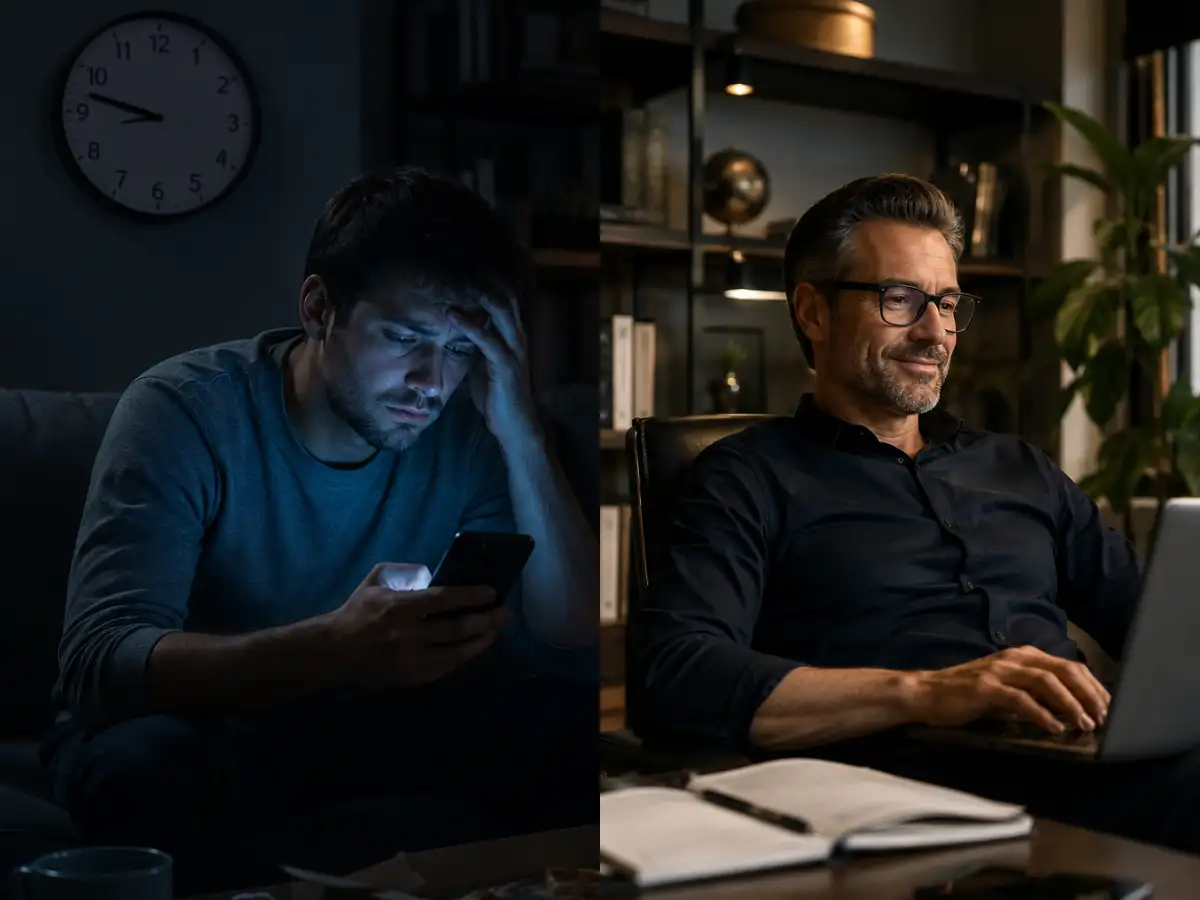
It was a weeknight, 9:47 PM. An employee was just starting to unwind when a message from work came through asking if he could “just quickly” do something. Forty minutes later, he was still typing.
No overtime pay. No apology. Just the quiet understanding that this was somehow expected of him, that his time, after hours and off the clock, still belonged to his job. He posted about it on Reddit and the response was immediate. Thousands of people said the same thing happened to them.
It's not just about 40 minutes
40 minutes doesn't seem like much on the face of it, but the context is everything. It was almost 10 o'clock. Any time he had to relax, watch something, eat, or just breathe, gone.
That’s the part that hurts. After-hours work doesn't just eat up time. It eats up the recovery workers need to show up the next day and do a good job.
This is completely backed by research. In a survey of 315 full-time U.S. employees across multiple industries, researchers found a strong correlation between after-hours work-related communication and higher levels of employee burnout. It also found that responding to messages outside normal hours was associated with lower productivity and a host of other bad outcomes. According to Fast Company, the research found that after-hours communication results in emotional exhaustion, which can then bleed into how employees perform and behave at work the next day.







.png?w=600)




