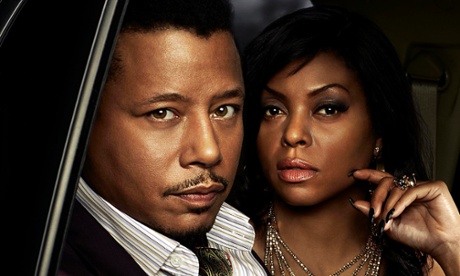
It is fair to say that Empire’s debut was nothing short of spectacular. Launched in January on Fox in the States (and now launching on 28 April on E4 in the UK), it has become the fastest-growing show in a decade, surpassing big-rating network hits such as Desperate Housewives, House and Lost, with ratings increasing every week until its final episode hit 23 million viewers: the highest figure for the finale of a show’s debut season since Grey’s Anatomy in 2005. No wonder the show was described by its creator Lee Daniels as a “black Dynasty”.
But it’s not all about the numbers: Empire is a wild mix of high drama and addictive storytelling set in the world of Empire Entertainment, a hip-hop record label owned and run by Lucious Lyon (Terrence Howard) . Luscious is a millionaire CEO who discovers that he has ALS (motor neurone disease) and must pick one of his three sons to inherit the business. A power struggle then begins as the trio jockey for position. Daniels could have just as easily said Empire is like Jay Z doing King Lear.
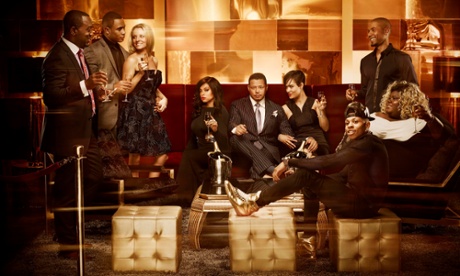
There is a lot of fun to be had in spotting the not exactly subtle inspirations for some of the characters. All-powerful, sometimes violent hip-hop mogul Lucious might also be compared to P Diddy and Suge Knight, while his gay singer-songwriter son Jamal’s (Jussie Smollett) character arc borrows elements of Frank Ocean’s life (though his music is more like John Legend). The best character, though, is Cookie Lyon (Taraji P Henson). Cookie has spent the past 16 years in prison, having taken the fall for ex-husband Lucious. Now she’s free, she wants part of the business she helped start. Cookie gets all the best lines (“The streets ain’t made for everybody – that’s why they made sidewalks”) and seems to spent most of her time in rooms she wasn’t invited into.

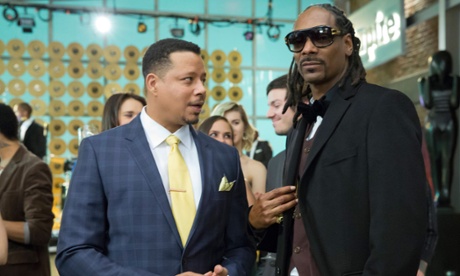
With references to Jay Z and guest spots from Jennifer Hudson, Snoop Dogg and Courtney Love, Empire is also the latest in the growing line of musical dramas kickstarted in 2009 by Glee and followed by Nashville. There is music in every episode, from Lucious’s old-school gangster rap to son Jamal’s earnest R&B ballads. Youngest son Hakeem (Bryshere Y Gray) is also a rapper, with Timbaland lending weight to proceedings and acting as an executive producer on the series. It is a rare chance to see music on TV these days outside of stuffy chat show performances; Jamal in particular has some great tunes.
Empire is not prestige TV. It is trashy, camp and at times quite badly acted (Lucious’s ALS symptoms seem to involve exaggerating every sentence and movement for dramatic effect). The show has also faced more serious criticism. During a CNN debate earlier this year, scholar Boyce D Watkins called the show a “ghettofied hood drama” – he also suggested that TV channels would never put such a “dysfunctional” white family on television. Those who disagree would point to the makeup of the audience as proof that Empire is not simply “ghetto porn” for white audiences – the huge ratings in the US were predominantly thanks to black audiences; one episode in March was watched by 71% of African-American women aged 18-49. As for the “dsyfunctional” charge? Has he never seen Six Feet Under?

Admittedly, Empire does have some cliched characters, but the portrayal of Jamal’s sexuality and the reaction from his family feels fresh. The series feels more in keeping with a growing wave of US shows (including Black-ish, Scandal, Orange is the New Black and E4’s other new import, Jane The Virgin) that are good at depicting multifaceted and layered minority stories.
The success of Empire can be credited to everything from its use of hip-hop culture, the racial politics or addictive storylines; or maybe when you need a family tree to watch Game of Thrones and Mad Men feels as if it’s been on since the 1960s, it is just fun to watch a woman dressed like a 90s Lil’ Kim diss her husband’s new girlfriend with an insult such as “boo-boo kitty”. E4 might not get the record-breaking viewing figures that Fox did, but it has undoubtedly made one of the smartest imports of the year.