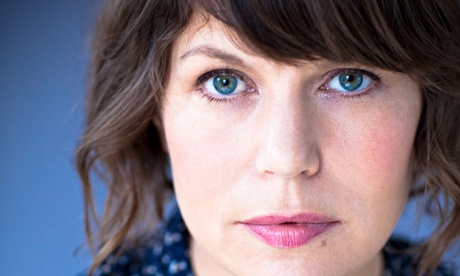
My meeting with Emily Lockhart happened by chance. Just a few weeks before, my review of her book had won an individual award in the Guardian Young Critics competition, but unlike most of the authors shortlisted for the Guardian Children’s Fiction Prize, she couldn’t make it to the ceremony. This made me feel that our meeting at my school, a few weeks later, was not coincidental.
That it was fate. However, she quickly brought me down to earth: when I asked her if she believed in fate, she answered with “No, I believe in free will!”
The coincidence was that she was visiting my school to give a talk to Year 8 and 9s. I’m in year 7, but because of my review I was given the opportunity to interview her afterwards. To break the ice, we first talked about my school, and whether it was similar to her high school in America. She answered, ‘No, well, it has the same feeling of beautiful buildings and a campus in between. You have to walk outdoors to the gymnasium or to a different lesson’. The thing that had surprised her the most when touring England was the uniforms; in the USA, she said, ‘Kids just wear whatever they want’.
My initial reactions to meeting the author whose writing had gripped, mystified and bewitched me over the summer were apprehension and slight bewilderment. However she was welcoming and warm. It really is surprising; I suppose many people think writers waltz around in flowy dresses and ride in the comfort of a limousine from a restaurant to their mansion in New York, like in my visions of Stephanie Meyer. But Emily was so down-to-earth. This was shown when I asked her where she got the name Cadence from as the heroine of her novel. Could it be someone from her past? A character in a Shakespearian novel? No! She got it off a baby naming website!
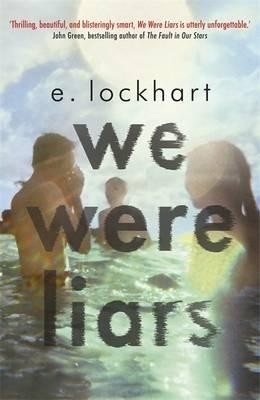
In her talk she had emphasised the importance of creativity and imagination. She said “Some people say, write about what you know. I believe you don’t have to, but if you write based on an emotion which is true to you, then you can go anywhere. For example, in We Were Liars, Cadence suffers from amnesia and chronic migraines. I have not experienced these things, however I have been heart-broken, lost and desperate, emotions similar to those Cadence experiences.”
Later, I asked her about her use of metaphor because, from my reading of her books, I find that she leaves a lot of the construction, particularly of personality in the characters, to the reader. For example, her description of Mirren, Cadence’s cousin was “Mirren she is sugar, curiosity and rain”. Emily responded to this by saying, “I think the purpose of fiction is not to give a crystal clear message. If I had a crystal clear message I would put it on a billboard. I think that fiction is meant to be interpreted in different ways by different readers in different times of life in different times in history, so I am comfortable with people reading my work any way they want to.”
Furthermore she said “If your book is based on one emotion, make that emotion active. Sadness is not active, happiness and boredom are not either. However, excitement, anger, desperation, they make you want to do something. They make your characters want to do something. This makes the book more interesting.” At first I didn’t understand but now I realise. Some emotions are conveyed with actions, others just expressions, words, slight gestures. Those emotions aren’t interesting.
I’ve often wondered how authors feel when their books are turned into films, so I asked Emily Lockhart about this. I got the impression in this discussion that she is very strong minded. “Film making is a collaborative art. Book writing is not. I have a colleague who might read my work and give me feedback, but I have the ultimate say about what’s on the page. But film making is really collaborative, with directors, screen writers actors and editors deciding which cut to use”. She summed it up by saying, “I’m not that collaborative or good natured”. (I don’t believe the second bit)
From bits of news I’ve heard, I have the impression that some people with powerful opinions (in the government?) feel that science and maths and engineering are far more important than arts and humanities so I asked Emily about her views on this. This is her reply: “I’m very much in favour of arts education. I think that literature and visual arts and music and pretty much any art that you might talk about are ways that human beings develop empathy, abstract thinking and also many small skills that are difficult to teach such as visual acuity or confidence in public speaking or collaboration. So there’s a lot of invisible things that happen when you play in an orchestra or perform in a school play, that have nothing to do with whether you become an actor or a musician”. So this confirms my view that even though I may not become a famous author like Emily Lockhart, I will continue to get satisfaction and a sense of achievement and fulfilment from my reading and writing.