When the Rehabilitation Center at Hollywood Hills submitted its emergency management plan to county administrators in July, it included details on how the nursing home would maintain clean linen, distribute canned food and ensure that residents had access to hand sanitizers.
It made no mention of how residents would be kept cool if the home lost power.
That was a tragic oversight. On Wednesday, health regulators said, eight residents of the rehabilitation center succumbed to cardiac and respiratory failure after a portable air cooling system malfunctioned.
The home's failure to foresee the catastrophic consequences of an air conditioning meltdown _ and Broward County's failure to insist that the home do so _ point to a serious statewide problem. Florida's emergency planning system for long-term care facilities is the government equivalent of a take-home exam: Providers administer the exercise themselves, drill themselves and are expected to honestly report on their shortcomings and correct them.
Efforts to contact the operators of the Hollywood nursing home for comment were unsuccessful.
In its emergency hurricane drill conducted in October 2016, the home described its communication and safety and security as good, though it noted that improvement was needed "to manage resources and assets more organized.' It said the same thing in a June 2017 hurricane drill, using the same language.
Most long-term care facilities "don't have an emergency management plan that is worth the paper it's written on," said the state's first elder affairs secretary, Bentley Lipscomb. "Because nobody requires them to. They are only required to keep patients barely alive."
Nursing homes are required only to have backup generators to power life-saving equipment such as nursing call buttons and fire alarms. Many homes keep their generators in storage and neglect to maintain them, said Lipscomb, who oversaw the Department of Elder Affairs from 1992 until 1998.
"They've got the generator in the back somewhere in a shed, or in the basement. Nobody ever checks to see if it runs, or to see whether it can make electricity for all the wonderful life-saving appliances," said Lipscomb, who headed Florida AARP from 1999 through 2008, after he left state government.
In November 2016, the federal Centers for Medicare and Medicaid Services imposed an administrative rule requiring all nursing homes to have "alternate sources of energy to maintain temperatures to protect resident health and safety." Nursing homes, however, are not required to implement the emergency preparedness rule until November 2017 _ meaning the Hollywood Hills home, and others, need not have been in compliance this hurricane season.
Notably, federal regulators have said in guidance to nursing homes that the rule does not require them to install generators. "CMS does not specify what type of alternate type of energy source or emergency and standby power system a facility chooses," the agency wrote, creating considerable confusion as to how CMS, and the state governments which will enforce the CMS rule, intend to interpret it.
Kristen Knapp, a spokeswoman for the Florida Health Care Association, the nursing home industry's trade group, said those alternative energy sources could include equipment like spot coolers and fans. The Hollywood Hills nursing home, which is not a member of the trade group, had similar equipment, which failed to keep its residents sufficiently cool Wednesday.
Medicare and Medicaid are the federal insurers for elderly and impoverished Americans, respectively. They are the financial lifeblood for most long-term care facilities.
Under state law and administrative rules, nursing homes are required to submit a "comprehensive emergency management plan" to their county government each year.
In Broward County, once the plan is filed with the emergency management division, administrators conduct a "paper review" to ensure that all portions of the plan meet requirements, said Miguel Ascarrunz, the county's director of emergency management.
"We look at the documentation of the plans and ensure that those components are in compliance," he said. "If they're not in compliance, we send them a letter saying, 'Your plan is not in compliance.' "
But the emergency management division does not send inspectors to verify what facilities report. Hazard drills, for example, are conducted on their own. The county reviews the self-assessments of their performance.
Local fire agencies conduct their own reviews of the emergency plan's fire safety procedures, Ascarrunz said.
State health care regulators merely verify that a plan has been submitted.
"All nursing home facilities and assisted living facilities are required to have an emergency management plan," said Mallory McManus, a spokeswoman for the state Agency for Health Care Administration, which regulates hospitals, nursing homes and assisted living facilities.
"This plan is required to be submitted and kept on hand by county emergency management officials. As part of the licensure process, AHCA confirms that the facility's emergency plan has been submitted to local officials," she added.
The Hollywood Hills nursing home, in what appeared to be self-conducted evaluations of its hazard drills, gave itself consistent ratings of "good" and "excellent" in 2016 and 2017. The grades were among the few good marks the facility has received: Federal health regulators gave the rehab center a health inspection rating of "much below average," and an overall rating _ including such things as staffing and fire safety _ as "below average" this year.
In a 2016 exercise simulating a Category 5 hurricane warning for the Fort Lauderdale area, the nursing home said its staffing performance was "excellent," along with patient and utility management.
"All utilities have been checked for proper operation and the generator fuel tank is filled to capacity in case we lose power and do not evacuate," it said in comments. It recommended the center "continue to monitor and provide all maintenance, keep acceptable fuel level for generator, and assure proper operation is available in case of actual emergency is present."
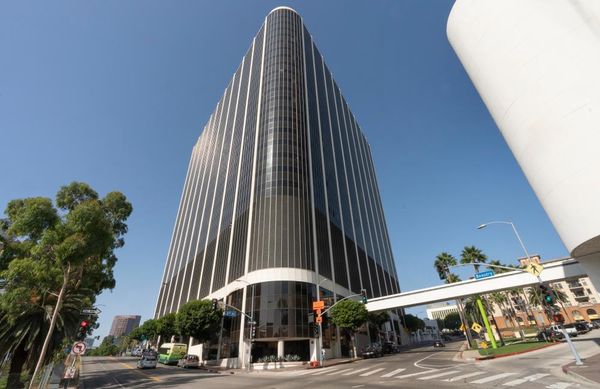
The rehab center was licensed in 1964, and it had been renovated both in 1972 and 1989, state records show. It rose two stories and held 152 beds.
State health care rules require that nursing homes maintain generators to power life-saving equipment, such as nursing call buttons, fire alarms and breathing machines. The generators are not required to power air conditioning systems. The state Agency for Health Care Administration checks the homes' generators as part of its routine survey of long-term care facilities.
A Feb. 23, 2016, life safety code inspection said, however, that the home couldn't provide any record that its temporary generator had been replaced, or that the home had made plans to buy a permanent one.
The rehab center said architectural drawings were being made to install a new generator, and pledged to "provide plans" to comply with licensing rules within six weeks.
Brian Lee, who was Florida's long-term care ombudsman from 2003 to 2011, said the state's emergency management system for nursing homes and assisted living facilities suffers from "lax oversight and no accountability."
"These plans are little more than rubber stamped by county offices and emergency management officers, and AHCA only verifies their existence," Lee said.
"It's a bureaucratic paper shuffle."