Emergency-level priority measures to prevent the spread of infections with the novel coronavirus went into effect in Tokyo, Kyoto and Okinawa prefectures on Monday, expanding the application of the measures to 45 municipalities in six prefectures.
The measures will run through May 11 in Tokyo and through May 5 in the prefectures of Kyoto and Okinawa. The measures began on April 5 in six cities in Osaka, Hyogo and Miyagi prefectures, where they will likewise run through May 5.
Provision for the measures were established in the revised special measures law to cope with new strains of influenza, which was enacted in February. Measures similar to those under a state of emergency can be applied in a selected area, such as a municipality or particularly busy area.
Governors in the six prefectures have asked restaurants and bars to shorten their operating hours and close at 8 p.m. in the designated municipalities. If businesses do not comply, the governors can issue orders to do so, and if the orders are not followed, establishments could face an administrative fine of up to 200,000 yen.
Restaurants and bars are requested to ban the entry of customers who are not wearing masks, and residents are urged to wear masks when dining out.
The priority measures also include calling on people to refrain from nonessential and non-urgent travel across prefectural borders. But in the metropolitan area centered in Tokyo, these measures only apply to the capital's 23 wards and to the six cities in the western Tama region.
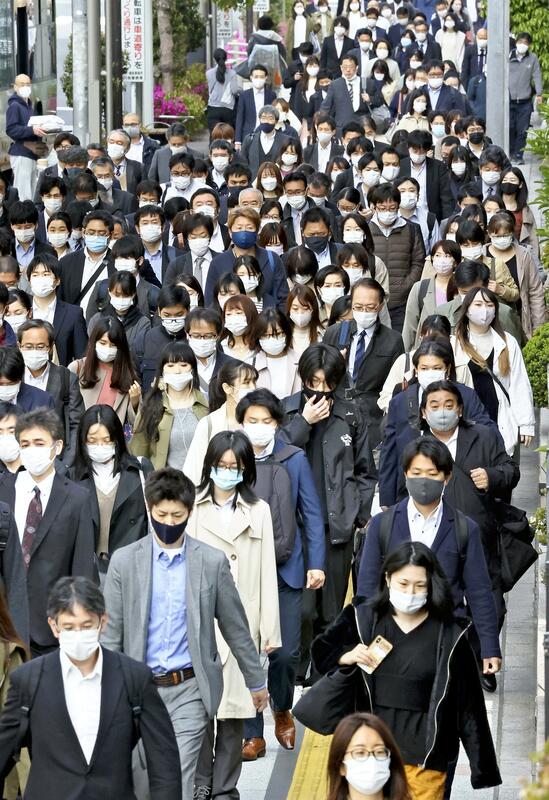
Major railway stations in Tokyo saw many commuters on Monday morning, as they did before the start of the priority measures
"The train was packed like last week," said a 35-year old company employee from Urayasu, Chiba Prefecture, after disembarking at Tokyo Station. "My company doesn't allow staggered commuting, so I've got no choice but to come to the office at this time of day."
The worker also expressed concerns about eating out and said the steps were meaningless unless they were applied over wider areas.
"Many people commute from neighboring prefectures to Tokyo, and more people will likely eat out in areas where the measures are not applied," he said.
Read more from The Japan News at https://japannews.yomiuri.co.jp/