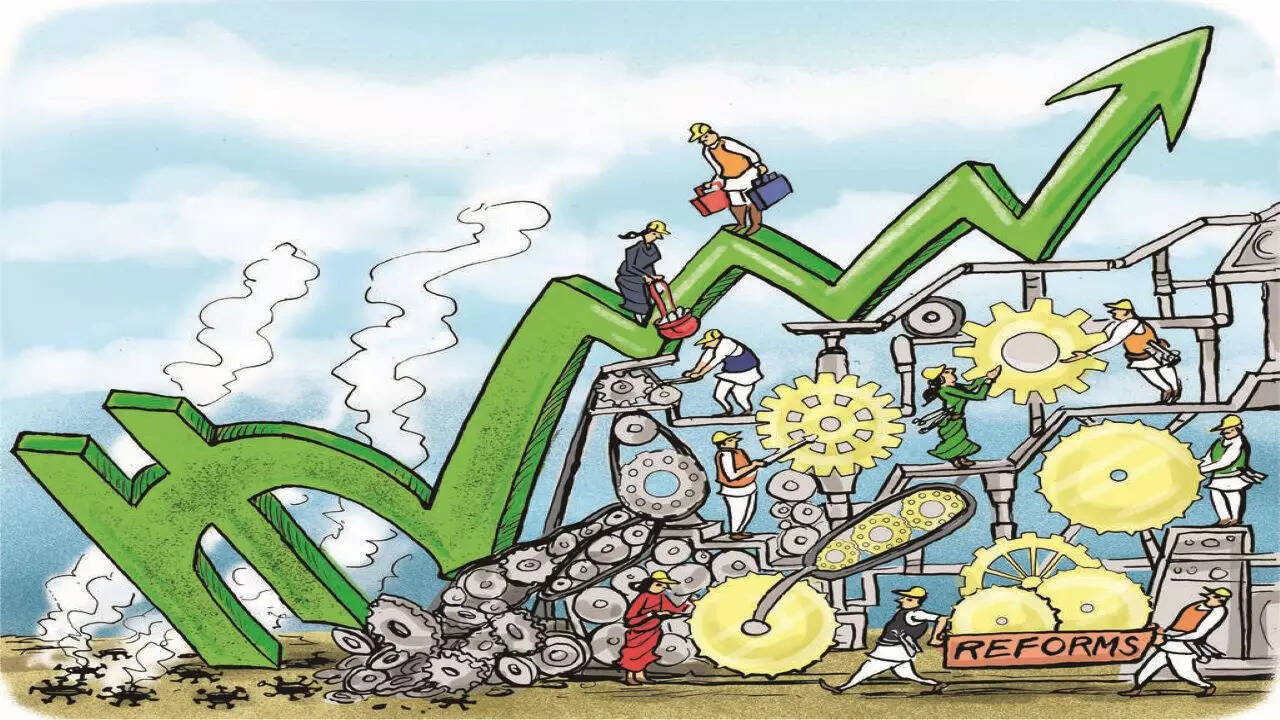
AHMEDABAD: Though demand has improved and economic activity resumed after the worst of the pandemic, MSMEs still face working capital problems. Disbursals under the Emergency Credit Line Guarantee Scheme (ECLGS) continued to see offtake grow, as inflation and high raw material and logistics costs are pushed up working capital requirements of micro, small and medium enterprises (MSMEs).
According to the latest report of the state-level bankers’ committee (SLBC), ECLGS disbursals increased from Rs 22,426 crore in 2020-21 to Rs 24,636 crore in 2021-22, a 10% increase.
“Credit requirements of industry remained high even after the pandemic. While certain sectors saw a slow recovery, others where demand and economic conditions improved were reeling from cost pressures in one form or the other. As a result, ECLGS uptake remained high,” said a top source in SLBC Gujarat.
“While a certain chunk of the loan offtake was for expansion, the majority was to meet working capital requirements. Overall credit offtake for MSMEs has remained good,” said a source in a private sector bank.
Sectors such as chemicals, textiles, engineering, foundries, ceramics and infrastructure have seen cost pressures increase due to high raw material prices.
“Since October 2020, raw material prices have risen. With Covid-19 restrictions eased, even though demand improved, the pressure of high raw material prices remained. Moreover, with fuel and power costs going up, there was a 30% to 50% increase in production costs across sectors. Therefore, industrial units had no choice but to avail themselves of credit,” said Pathik Patwari, senior vice-president, Gujarat Chamber of Commerce and Industry (GCCI).
Industry players say bankers are not releasing ECLGS credit in a timely fashion. “I applied for extended credit under ECLGS in May last year. The application has still not been entertained by the private sector lender,” said the owner of an infrastructure company in Ahmedabad.
Industry bodies made a series of representations to the Reserve Bank of India and the state and central governments asking for easier credit flows as liquidity remains a major constraint for the manufacturing sector.