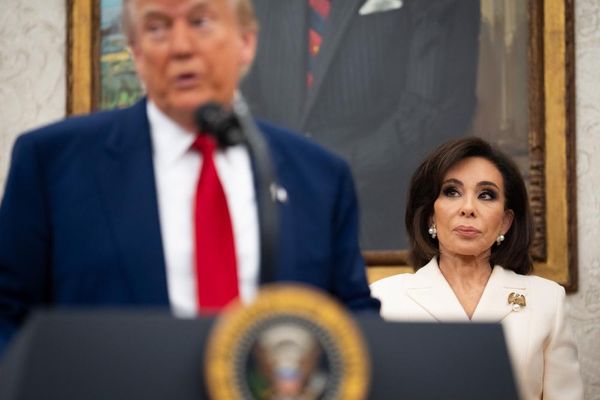
The Trump administration's Justice Department has moved to shield Elon Musk's xAI from a civil rights lawsuit, asking a federal court to keep the company's unpermitted gas turbines running beside majority-Black neighbourhoods in north Mississippi.
The Department of Justice filed on 15 June 2026 to intervene in a Clean Air Act case brought by the NAACP, then asked the court to throw it out. Government lawyers argued that cutting power to the turbines would harm national security because they feed Grok, the artificial intelligence model the Pentagon says it now depends on.
Lawyers for the affected residents called the manoeuvre a power grab with no precedent in modern environmental enforcement.
Inside The Clean Air Act Citizen Suit Against Colossus
The NAACP and its Mississippi State Conference sued xAI and its subsidiary MZX Tech on 14 April 2026 in the US District Court for the Northern District of Mississippi. Their complaint described 27 gas turbines installed between August and December 2025 at 2875 Stanton Road South in Southaven, a plant built to feed the Colossus 2 data centre roughly a mile away in Memphis.
The filing borrowed the tech industry's own slogan, accusing the company of trying to 'move fast and break things' while breaking the Clean Air Act, which requires major pollution sources to obtain a permit before they operate. A far larger share of the people living around the plant is Black than in the country as a whole, the complaint noted, placing the case squarely within the NAACP's environmental justice work.
Those 27 turbines alone could emit more than 1,700 tons of smog-forming nitrogen oxides a year, likely making the site the largest industrial source of the pollutant in the greater Memphis area. This was not xAI's first clash over unpermitted power locally, since the historically Black Boxtown community in south Memphis had already fought similar turbines at Colossus 1 less than ten miles away.

The plaintiffs asked the court to shut the Southaven plant, order the best available pollution controls, and impose penalties of up to £94,200 ($124,400) for every day of violation. When xAI kept adding units rather than seeking a permit, the NAACP requested a preliminary injunction in May, and court filings showed the turbine count climbing to 57 by the middle of the month.
Grok, Iran, And The National Security Defence
The Justice Department's Environment and Natural Resources Division told the court that the lawsuit threatens 'American national, economic, and energy security' by seeking to switch off power for AI work that underpins military operations. A sworn declaration from Cameron Stanley, the Pentagon's chief digital and artificial intelligence officer, called Grok one of only four frontier models capable of supporting national security applications across classified networks.
Stanley wrote that the model, plugged into the Maven Smart System, helped American forces strike 'over 2,000 munitions to 2,000 distinct targets within 96 hours' during the campaign against Iran. He warned that losing the data centre's power would blunt the military's ability to keep pace with adversaries.
Mississippi Governor Tate Reeves backed the company with his own letter to the court, urging the judge to 'protect these vital state and national interests' and citing roughly £15 billion ($20 billion) in xAI investment across the state. xAI separately sought dismissal, arguing the NAACP lacks standing and that Mississippi regulators had already treated its portable turbines as mobile sources exempt from permitting.
The company also claimed the Clean Air Act's citizen-suit provision is unconstitutional because enforcement should rest with the executive branch alone. The filings arrived days after SpaceX, which absorbed xAI in February, completed what was described as the largest stock market debut in history.
What The Intervention Means For Citizen Enforcement
Earthjustice and the Southern Environmental Law Center, counsel for the NAACP, branded the government's move a 'massive power grab' designed to weaken a tool communities have used for over fifty years. It is unusual for the federal government to enter such a case on the side of an alleged polluter rather than to enforce the law itself.
Citizen suits let residents enforce environmental law when regulators will not, and the lawyers cautioned that the administration's reasoning would let any White House protect a favoured polluter. They stressed that the Justice Department never disputed that the pollution breaks the law, only that the government should be free to permit it anyway.
Residents near the Southaven plant have also filed a separate class action this month over near-constant noise and vibration from the turbines. Abre' Conner, who leads the NAACP's environmental and climate justice work, told Democracy Now that communities themselves should decide what happens to the air they breathe, warning against what she called authoritarian rule. A hearing on the preliminary injunction is expected within weeks, and the court has yet to rule on the intervention or the motion to dismiss.
For the families breathing the exhaust on Stanton Road, the fight is no longer only about what xAI built, but about whether anyone still holds the power to make it stop.