Elon Musk and the financial community are at odds.
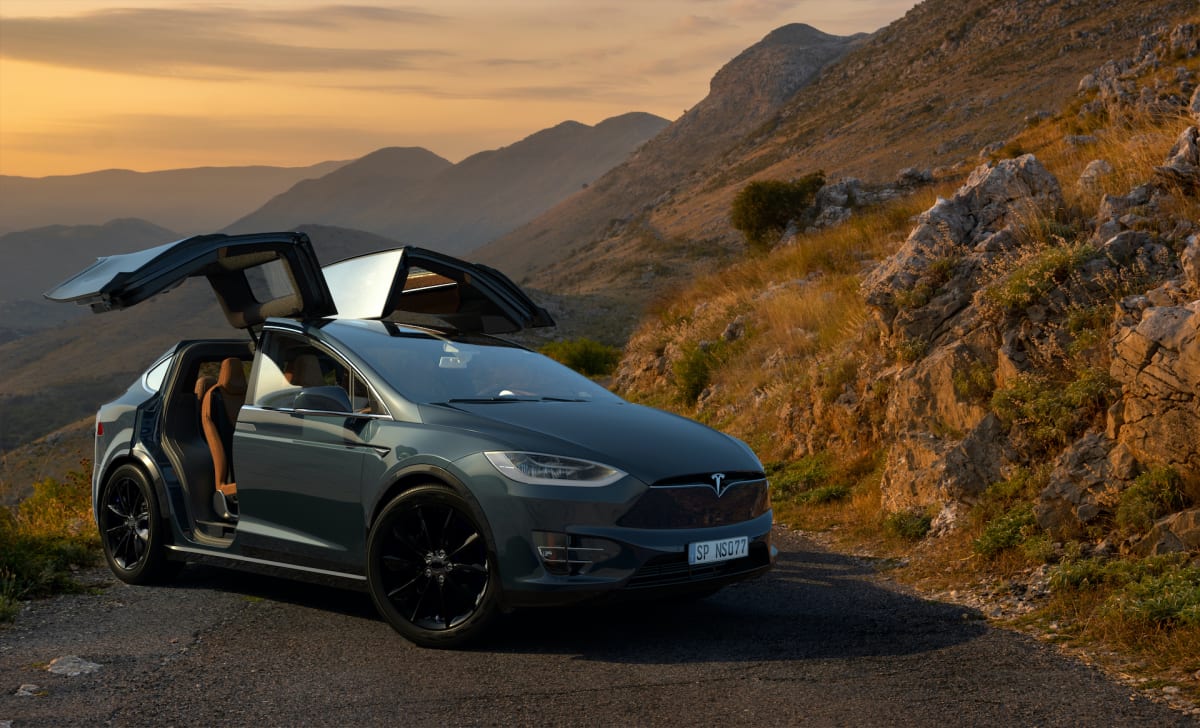
The spat emerged after Tesla, the billionaire's flagship company, reported first-quarter results. Much of his wealth is linked to the market performance of the maker of the Model Y SUV. Musk is by far Tesla's largest individual shareholder.
This dispute relates to the price-cut strategy Musk and Tesla adopted this year. The brand, whose image is associated with affluent urbanites, environmental advocates, and consumers generally with above-average purchasing power, now seems to be targeting average Americans.
Tesla (TSLA) appears more like a competitor of Ford (F) and General Motors (GM) than a rival of Mercedes-Benz (DMLRY) , BMW (BMWYY) and Porsche (POAHY) .
In four months the Austin carmaker has lowered its prices six times, including twice in April. As a result, the Model Y SUV, the world's best-selling EV, now costs significantly less than the Ford Mustang Mach-E, after buyers apply the $7,500 federal tax credit.
Tesla Competes With Ford, Not Mercedes
Many investors and analysts say this strategy comes at the expense of Tesla's profit margins. It is these wide margins, rare in the auto industry, that have fueled the spectacular stock-market rise of Tesla, currently the world's 10th-largest company by market value. At last check Tesla's market capitalization exceeded $500 billion and at one point in 2021 the figure was about twice that, over $1 trillion.
By sacrificing profit margins, Tesla, the world leader in battery-powered vehicles, is losing some ground to competitors, holders and analysts say. Potential buyers of electric vehicles today have many more models to choose from than they did two years ago. Observers conclude that the premium that was attached to Tesla's large market share is no longer as relevant.
Tesla's executives, for their part, argue that cutting prices will further popularize electric vehicles by making them affordable to many more people.
"We've taken a view that pushing for higher volumes and a larger fleet is the right choice here versus a lower volume and higher margin," Musk told analysts and investors on April 19.
"It's difficult to say what the margin will be. It depends on what the macroeconomic environment is," the billionaire said, when he was asked to provide some color on the updated range of margins the carmaker would expect in the auto business.
"If the [Federal Reserve] were to lower the rates, that would be super helpful for demand. If it isn't, that just raises the interest cost that buyers have to pay to buy a car."
In addition, Chief Financial Officer Zachary Kirkhorn said, "what happens to margins over the next couple of quarters only matters in the context of what that means for our ability to reinvest into 2024 and 2025."
Full Self-Driving Is Tesla's Future Profit Driver
For Musk, what matters today are sales volumes and not profit margins because, he has said a number of times, Tesla has a product that will become a cash machine.
This product, on which Musk is betting a good part of Tesla's future, is Full Self Driving, the company's advanced driver-assistance system.
This feature, designed to enable Tesla cars to drive themselves, currently costs $15,000. But no doubt that the closer the technology gets to enabling true autonomous driving, the more opportunity Tesla will have to increase the cost of the product and and the revenue it generates.
Musk calculates that the company could also sell the service to competitors.
"People still don't understand the implications of FSD," the techno king, as he's known within the company, tweeted on April 25.
The billionaire seems surprised that his April 19 remarks about Full Self Driving were not taken into account by investors and his critics as they evaluated Tesla following the publication of the results.
"We're not trying to, say, take pricing actions in order to deliberately undermine competitors or anything like that. We really don't think about competitors that much. We just look at do people like our cars? Can they afford our cars and those sort of things like improving service," the chief executive said last week.
He added that Tesla was designing cars to be autonomous, arguing that this generation of cars will have to be worth "a whole lot more in the future than it is now."
Tesla can sell it at zero profit, but still have the net present value of future cash flows associated with that asset.
Autonomous driving is seen as the new frontier in road transport, and Tesla's feature seems to be one step ahead of its rivals.
For now, the carmaker warns on its website: Full Self Driving's features "are designed to become more capable over time; however the currently enabled features do not make the vehicle autonomous. The currently enabled features require a fully attentive driver, who has their hands on the wheel and is prepared to take over at any moment."
Full Self Driving does allow the car to perform many maneuvers on its own. But critics believe the system isn't safe enough. The U.S. National Highway Traffic Safety Administration is currently investigating some 40 incidents involving the system.
Forget Tesla -- find out why we're all-in on this EV stock.
A Timely Safety Report From Tesla
To counter the bad publicity, Tesla has just released data showing how Full Self Driving makes the driving experience safer for drivers.
According to the carmaker's 2022 Impact Report, the average Tesla equipped with FSD Beta, driven on predominantly nonhighway sections of the road, crashes 0.31 times per million miles, compared with 1.53 times for every million miles for classic cars.
At the time of FSD's last update in early April, Musk said, "Team is closing the loop on interventions very rapidly. To get enough training examples for potential serious accidents, we have to run them in sim, as we have so few in the fleet, despite doing ~1M miles per day of FSD.”
Four days later, a Twitter user with whom Musk regularly interacts posted the following message about the new version of FSD: "Full Self-Driving Beta 11.3.6 is great. Still a few kinks to work out but dramatically better."
To which Musk replied with: "we need to predict what pedestrians will do based on their behavior, including limb angle & direction of sight. FSD currently sees all pedestrians as cuboids, so is overly cautious."
He added: "Also, diffusion seems to be more compute-efficient than transformers for vision."