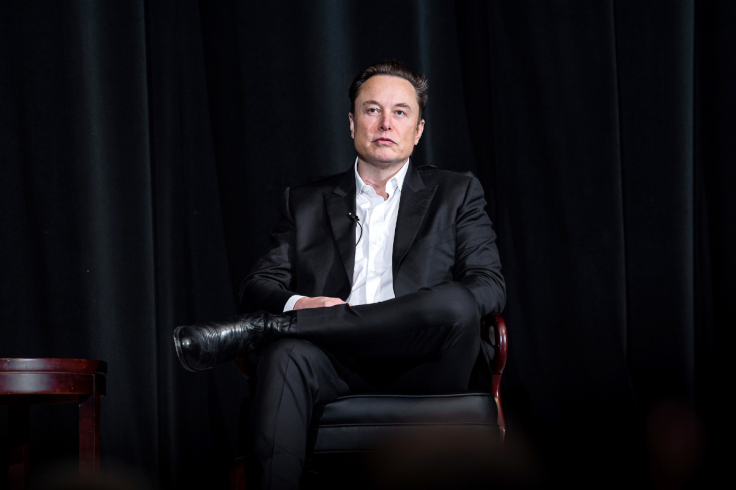
Elon Musk has criticised the practice of destroying printed books to train artificial intelligence models, pledging that SpaceXAI will preserve rare volumes instead of sacrificing them for faster digitisation.
The billionaire made the pledge after reports highlighted how some AI developers have bought printed books, including rare editions, before cutting off their spines to speed up scanning for AI training.
Responding on X, Musk said SpaceXAI would take a different approach by protecting valuable books rather than prioritising efficiency, adding another voice to the growing debate over how AI companies source training data.
Elon Musk Promises To Preserve Rare Books
Responding to concerns over destructive scanning, Musk wrote: 'I've asked the SpaceXAI team to preserve any rare books in a library and scan them the hard way vs just cutting off the spine and scanning.'
I’ve asked the SpaceXAI team to preserve any rare books in a library and scan them the hard way vs just cutting off the spine and scanning
— Elon Musk (@elonmusk) July 27, 2026
His comments came as AI firms face mounting criticism for dismantling books to create digital copies more quickly. Removing a book's spine allows pages to pass rapidly through industrial scanners, dramatically reducing the time needed to digitise large collections, but permanently destroys the original copy.
Musk's proposal instead favours slower, non-destructive scanning methods that keep rare and historically significant books intact after digitisation. While more labour-intensive, the approach prioritises preservation over speed.
Why Do AI Companies Want Printed Books?
AI developers are increasingly turning to printed books because many older titles have never been digitised and contain high-quality human-written material free from AI-generated content.
According to 404 Media, specialist supplier ISBNdb published a marketing page promoting a service that would source books for AI companies, facilitating orders ranging from 1,000 to one million books at a time. The page described printed works as valuable training material, stating: 'The world's best AI training data is sitting on a shelf.'
The marketing material also acknowledged the potential public backlash, stating: 'AI company destroys two million books' is not a headline that generates sympathy,' while offering non-disclosure agreements and encouraging customers to describe the process as 'digital preservation'.
WTF
— Shruti (@heyshrutimishra) July 29, 2026
AI companies are purchasing large quantities of used and rare books. Scanning their contents to train models. Then turning the originals to pulp.
The sum of human thought, digitized and shredded.
Every book that gets scanned disappears from the physical world permanently.… pic.twitter.com/zCDV0tFaci
Reports have suggested that buying and scanning physical books can also be more practical than negotiating digital licensing agreements for extensive collections.
Following widespread attention, ISBNdb removed the page and said it had 'never purchased, scanned, or destroyed a book' for AI training.

The company said it does not train AI models and that the page was merely 'a test of market interest' for a service that 'was never brought to life'.
It added that its business has always focused on providing book metadata to bookstores, libraries and reading apps rather than handling physical books.
Preservation Debate Intensifies
The reports have fuelled criticism from authors, archivists and preservation advocates, who argue that rare and out-of-print books should not be destroyed in the race to build increasingly sophisticated AI models.
Large-scale acquisitions of printed books and destructive scanning have intensified concerns over the loss of physical literature, while previous reports have also highlighted legal disputes surrounding AI companies' efforts to acquire extensive text archives for model training.
Although destructive scanning has long been used in some commercial digitisation projects because it is faster and cheaper, critics argue the method is inappropriate for books with historical or cultural value that cannot easily be replaced.
Musk's comments have now intensified the debate, highlighting the growing divide between companies prioritising speed and those advocating the preservation of physical books while expanding AI training datasets.