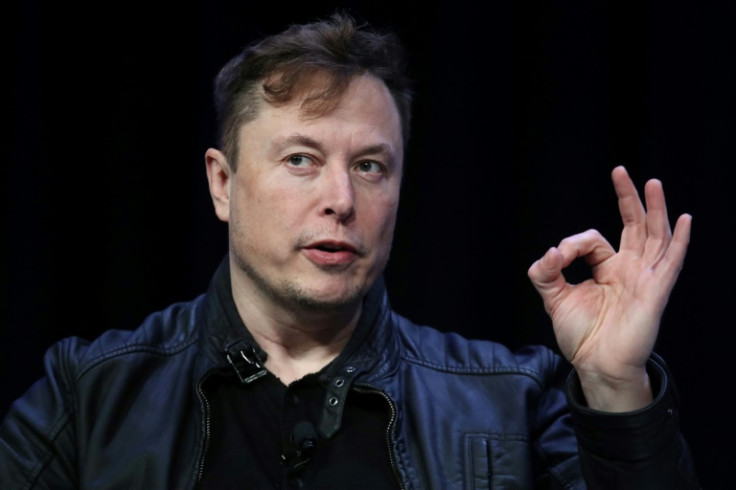
Elon Musk's dream of interplanetary travel is one step closer to becoming reality, as his rocket company SpaceX filed its IPO prospectus in an S-1 registration statement with the US Securities and Exchange Commission.
The rocket company is expected to trade under the ticker 'SPCX' on Nasdaq. It also revealed spending over $15 billion developing the Starship vehicle, which exceeds the company's original budget.
SpaceX reportedly aims to raise up to $75 billion in its IPO at a valuation of nearly $1.8 trillion, surpassing his companies like Tesla.
Tesla and SpaceX also formed the Terafab joint venture to consolidate every stage of semiconductor production. The SpaceX IPO will help fund Musk's planned orbital data centres, which he believes will be cheaper than producing AI computing power on Earth.
Musk would reportedly own around 42% of SpaceX before any dilution. To become the world's first trillionaire, SpaceX must reach a $1.6 trillion valuation. Musk's current net worth is approximately $807.7 billion, according to Forbes.

Musk Just Wanted to Ramp Up Human Curiosity for Space
While Musk focuses on orbital data centres and humanoid robots, Elon's original reason for starting SpaceX was quite different.
According to Eric Jorgenson, author of The Book of Elon, who is also an investor and the CEO of Scribe Media, the original vision for SpaceX was not to create a launch company, but to increase NASA's budget.
'He [Musk] was willing to just burn 100 million dollars on a philanthropic mission to display a greenhouse on Mars. So, he is shooting greenhouse to Mars with existing rocket technology to get this photo on the front page of every newspaper,' the author added.
The idea was to show 'a little plant on the red planet,' symbolizing how life had transferred to another planet for the first time, with the hope that this portrayal would spark human curiosity and interest in space, ultimately helping to boost NASA's budget.
In the process of promoting space, Musk discovered that the space launch market was expensive, lagging in innovation, and making only minimal progress over the years.
'That's actually how he discovered the opportunity to start SpaceX,' Jorgenson said.
Musk understood early on that the aerospace industry was primarily supported by cost-plus contracts from the government. However, these contracts don't require success economically or on the original deadline.
Musk directly approached the contract-awarding agencies, requesting an 'outcome-based' contract that incentivizes reducing costs and meeting deadlines. His ultimate goal was to compete at low cost.
Jorgenson added that Musk has achieved unprecedented things by driving costs down. He focuses on lowering expenses because his vision isn't about maximizing profit, but making Mars travel feasible.
As a result, building low-cost systems led him to win all outcome-based government contracts, which the author concluded is 'better for the government, better for taxpayers.'
Disclaimer: Our digital media content is for informational purposes only and does not constitute investment advice. Please conduct your own analysis or seek professional advice before investing. Remember, investments are subject to market risks, and past performance does not guarantee future returns.