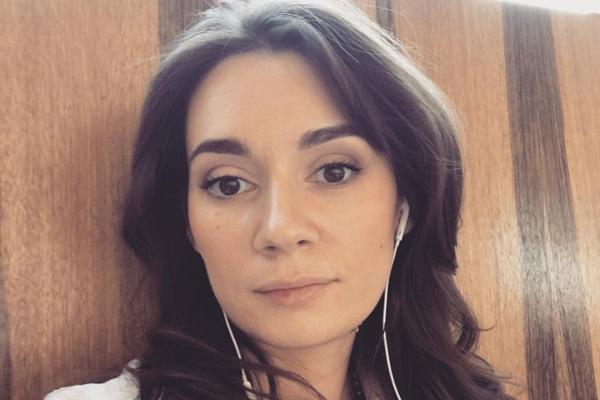
Ella Blackamore's period came late, at age 15, and when it arrived it really did not want to leave.
"My longest period that I ever recorded, I was bleeding straight for over 100 days," Ms Blackamore said.
Irregular and very heavy periods left her anaemic.
She stopped playing hockey because she would bleed on to the ground anytime she fell over.
"Zaps of lightning" in her pelvis made her vomit and rendered her unable to walk.
But Ms Blackamore said she is one of the lucky ones, receiving a diagnosis of endometriosis only three years after first having symptoms.
It takes most Australians an average of 6.5 years to be diagnosed with the chronic inflammatory condition.
"I was very lucky to have a mum that never had experienced any of my symptoms, so she knew instantly that something was wrong, and we had a fantastic GP who really fought for me," she said.


But outside the safety of home and the GP's clinic, Ms Blackamore was told extreme pain and profuse bleeding was normal.
"I still experienced an incredible amount of medical gaslighting and I went through a period where I did doubt if I actually had endometriosis," she said.
"I was just constantly told that it's in my head ... it's not that bad."
Doctors, experts and sufferers from pelvic pain conditions told an ACT Legislative Inquiry that the normalisation of period pain delays diagnosis and treatment for life-altering conditions.
Ms Blackamore said emergency room doctors told her they did not believe endometriosis existed.
"They think it's all in our head, they think it's a way for women to complain and be overdramatic and I never realised the toll that those comments had on me," Ms Blackamore said.

"It has led me to actually have to go through therapy to be OK to seek specialist care because I've been so burnt and so beaten down, simply because I'm trying to seek help."
Like others speaking to the inquiry, Ms Blackamore has been labelled a drug seeker. She went without pain relief for 36 hours, and fluids for 24 hours, in a NSW emergency department.
"They actually brought a pharmacist in to try and educate me about being a drug seeker," Ms Blackamore said.
"I was so incredibly dehydrated and in so much pain she actually yelled at the nurses and said, 'someone get a doctor in here.'"
She said diagnosis delays are partly due to self-doubt.
One person told the inquiry they thought little of sweating, shaking and vomiting from pain each month.
"I was aware that my pain was worse than my peers but thought it must be within 'normal' parameters," they wrote in an unnamed submission.
They did not pursue a diagnosis after two GPs said endometriosis was unlikely, despite painful periods and pain during sexual intercourse.
They were diagnosed with stage 4 endometriosis at age 29 when an ovarian cyst burst, requiring emergency surgery that included removing part of an ovary.
Normal period pain occurs early in a menstrual cycle, does not interfere with daily life and will disappear after taking standard pain relief or using a heat pack.
It might feel like cramping or a dull ache.
Regularly missing school, work, exercise, social events or any other ordinary activity due to pain is not normal and is a sign something is wrong.
The Royal Australian and New Zealand College of Obstetricians and Gynaecologists said pain is trivialised.
"Adolescents are frequently told that severe period pain is simply part of growing up," the organisation said.
"Families, communities, and even clinicians may inadvertently trivialise symptoms, attributing them to exaggeration or emotional distress.
"The 'just bad periods' narrative is a recognised feature of medical misogyny and diminishes the legitimacy of girls' and women's experiences, discourages help-seeking, delays diagnosis, and contributes to ongoing stigma surrounding menstrual and pelvic health."
The impact of endometriosis on Ms Blackamore's life has extended far beyond physical pain.
"A lot of the time what people are surprised about is the other impacts that it has, like the mental, the financial, the social, and the emotional impacts rather than just the pain," she said.

She missed out on a lot of school and is already exploring her fertility options at age 23, having received "devastating" news that endometriosis or polyendocrine metabolic ovarian syndrome (PMOS) could impact her ability to have children.
"That was always a fear of mine," Ms Blackamore said.
The endometriosis has grown since her last surgery, impeding one ovary and sticking her bowel to her pelvic wall.
MORE THAN CRAMPS:
"Before endometriosis was really looked at and really investigated, it was just treated as normal. I think we're still seeing the ramifications of that," she said.
"Our grandparents were told that that was normal and it wasn't. Our parents were told that that was normal and it wasn't.
"In the future, hopefully, women aren't going to have to wait so long because we won't be taught that it's normal."