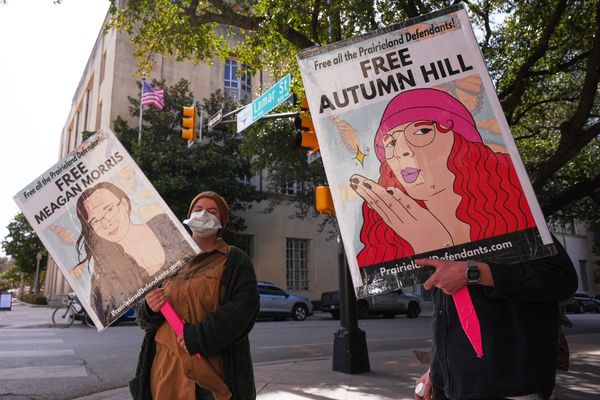
An ad by Sen. Elizabeth Warren's campaign that says Facebook has endorsed President Trump (before admitting the claim is a lie) is having its intended effect: raising tough questions about Facebook's policy of allowing politicians to make any claims they want.
Why it matters: Facebook has spent much of the last 2 years talking about its efforts to protect elections. But while Facebook is cracking down on foreign interference and deliberate voter suppression, it is giving political candidates carte blanche to distort and deceive.
Driving the news:
- Facebook has green-lighted an ad from President Trump that makes false claims about Joe Biden. (So have Twitter and YouTube.)
- Elizabeth Warren posted an advertisement saying falsely that Facebook and Mark Zuckerberg had endorsed Donald Trump. In the post, she quickly acknowledges that's not actually true, but says that by allowing falsehoods, Zuckerberg has "given Donald Trump free rein to lie on his platform — and then to pay Facebook gobs of money."
Facebook responded on Twitter Saturday that broadcast stations across the country aired this ad nearly 1,000 times, as required by law. "FCC doesn't want broadcast companies censoring candidates' speech," Facebook said. "We agree it's better to let voters — not companies — decide."
Yes, but: The broadcast networks operate under unique rules because they are using public airwaves. Businesses operating in nearly every other type of media can (and often do) set their own rules, including cable, internet and outdoor media.
History lesson: Every company or person who has ever been in charge of a platform, a message board, or a comments area knows that trolls are going to take any rule about acceptable content and stress-test it from a zillion directions.
- The problem here is what to do when those pushing the boundaries aren't everyday trolls, but rather the president of the United States and one of his leading challengers.
Facebook, for its part, has invested a lot in creating a more systematic approach to evaluating content, clarifying its community standards, bringing in third-party fact checkers, and setting up an independent "Supreme Court" appeals board to provide a final say. (Facebook says it's focusing the fact checkers' limited time on memes and hoaxes, not politicians' words.)
- Facebook argues it should take a nearly completely hands-off approach to what politicians say in their paid advertisements, and it's not alone — many critics, as well, don't want to see the social network set the boundaries of political speech. (See below for just what the social network is and isn't allowing.)
My thought bubble: As political ads inevitably keep testing Facebook's boundaries, the company's best solution may be to stop taking them altogether (as some transit agencies have, for example) — trading a modest revenue loss for the opportunity not to be blamed for swinging a second election in a row.
Go deeper: Zuckerberg talks Warren's "existential" breakup threat in leaked audio