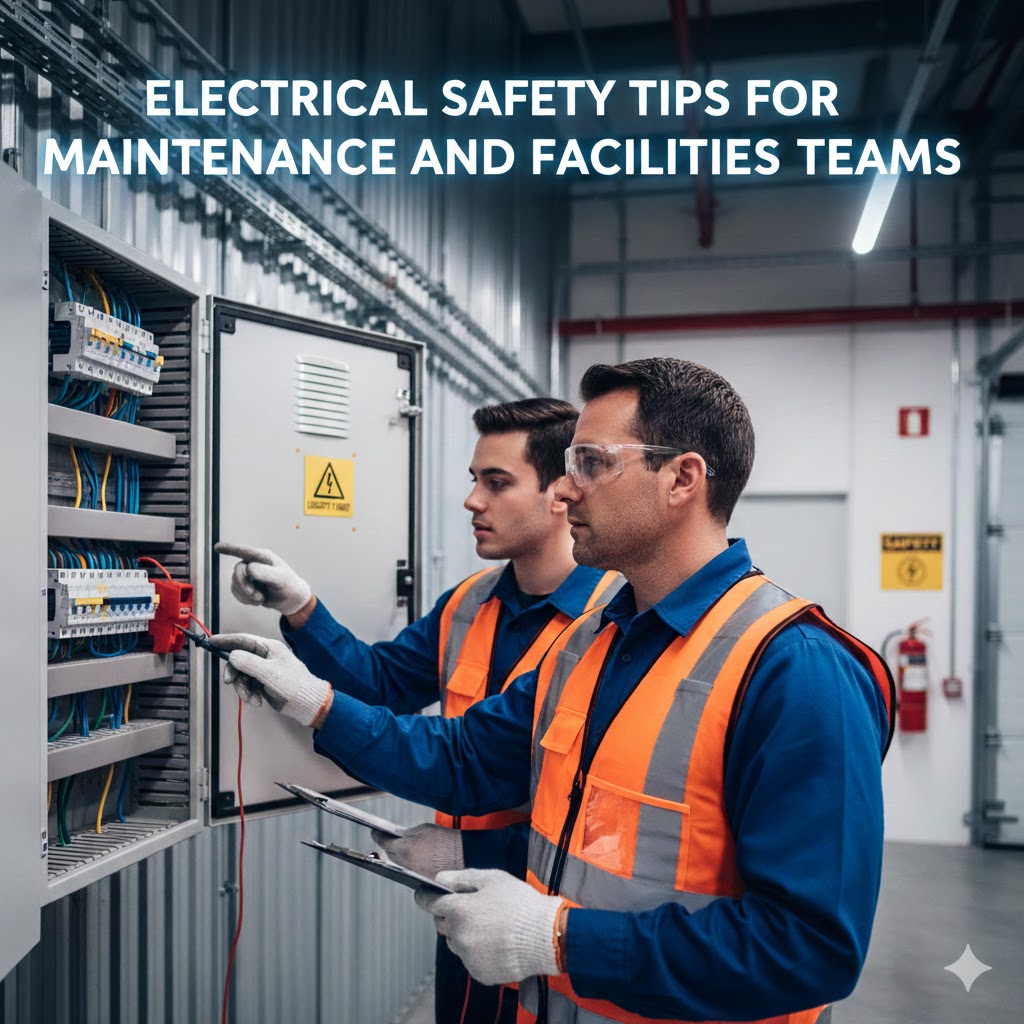
Maintenance and facilities teams deal with electrical risk as part of routine work. They open panels, check plant, reset breakers, swap parts and test equipment. These tasks can expose people to live parts, stored energy and damaged systems.
Electrical incidents often follow the same pattern. A job starts with time pressure. A fault looks simple. Controls get skipped. A person works on equipment that is not isolated, not proved dead, or not in a safe condition. The result can be shock, burns, fire, arc flash, or a fall after contact.
This guide sets out practical controls that help teams plan work, control risk and prevent incidents.
Key Electrical Safety Reminders for Facilities Teams
Simple habits prevent incidents. These habits work when they are repeated daily and checked by supervisors.
Reminders include:
- Plan the job before opening equipment
- Confirm the correct isolation point and secure it
- Prove dead at the point of work, every time
- Keep covers and barriers in place when equipment is energised
- Remove damaged tools and leads from service at once
- Do not make temporary repairs with tape and hope
- Use RCD protection where needed and investigate trips
- Keep plant rooms tidy and keep access routes clear
- Check electrical safety signs in plant rooms, switch rooms, and restricted areas
- Report defects and follow through until the repair is complete
These reminders should sit in routines. Walk rounds, defect logs, close-out checks and permit reviews all help.
Why Electrical Safety Matters in Maintenance Work
Electrical systems sit behind most building services. Lighting, HVAC, lifts, access control, pumps and process plant all rely on power. When faults happen, teams often need to respond fast. That speed increases risk if work starts before the system is made safe.
Electricity can injure in more than one way. Contact can cause shock and burns. Arc faults can create heat, pressure and molten metal. Electrical fires can spread through cable routes and voids. An electric shock can also cause a secondary injury, such as a fall from a step ladder.
Facilities sites also change over time. Alterations, temporary supplies and ageing equipment can create hidden hazards. A board label may not match what is wired. A circuit may feed more than one area. A neutral may still carry current. Good controls reduce the chance of surprises.
Common Electrical Hazards in Facilities
Facilities teams often work around a mix of fixed and portable equipment. Risk increases when systems are old, modified, damaged, or used beyond their design.
Common hazards include:
- Damaged cables, plugs and connectors, including taped repairs
- Overloaded sockets and multi-way adapters
- Poor temporary power arrangements, including trailing leads and poor routing
- Missing covers, open enclosures, or broken glands that expose live parts
- Water ingress in plant rooms, risers and external locations
- Inadequate earthing and bonding, especially after alterations
- Incorrect labelling of distribution boards and isolators
- Stored energy in capacitors, UPS systems and variable speed drives
- Unauthorised changes by contractors or tenants
These hazards often sit in plain sight. The issue is not the lack of signs. The issue is weak reporting, slow repair and jobs getting done around defects.
Training and Ongoing Competence
Training needs to match what people do on site. Maintenance and facilities work covers many tasks, so training should be role-based and refreshed.
Some roles need formal training to work safely around electrical systems. Others need clear limits, so they do not take on tasks outside their role. This is where electrical safety training can support safer decisions and work methods.
Competence should be maintained through:
- Inductions that explain site electrical hazards, isolations and rules
- Tool box talks that focus on common faults and recent near misses
- Refresher training for tasks that are done rarely
- Practical checks on safe isolation and proving dead
- Contractor checks, including method statements and permit rules
- Clear escalation routes when a job needs an electrician or specialist support
Competence also relies on culture. People need the backing to stop work when a system cannot be made safe.
Emergency Response to Electrical Incidents
Facilities teams should know what to do when an electrical incident happens. A fast response helps, but the first step is to prevent a second casualty.
Key actions include:
- Do not touch the person if they may still be in contact with a live source
- Isolate the supply if it is safe to do so
- If isolation cannot be done safely, use a non-conductive item to separate the person from the source
- Call 999 for shock, burns, loss of consciousness, or any suspected serious injury
- Start first aid once the person is clear of the live source and it is safe
- Treat burns as a medical emergency and follow site first aid procedures
- Treat any electrical shock as serious, even if the person feels fine at first
- Secure the area and keep others out until it is made safe
- Report the incident and preserve evidence for investigation
After the incident, the focus should move to learning. That means checking why isolation failed, why a defect was present, or why the job went ahead without the right controls.
The Last Check Before the Switch
Electrical incidents often start with a small skip. A missing lock. A tester not proved. A damaged lead kept in use. A label taken as fact.
Maintenance and facilities teams can reduce risk by sticking to the basics. Plan the job. Control isolation. Prove dead. Use safe kit. Stop when the conditions do not allow safe work.
That last check before the switch matters. It is where most incidents can be prevented.