The UK’s new car market saw a modest 0.5 per cent increase in October with 144,948 cars finding new homes. However, car industry bosses have warned that a looming government tax change could undo that progress and throw the market into decline.
According to latest data from the SMMT (Society of Motor Manufacturers and Traders), electric vehicles continue to lead the way. Battery-electric cars (BEVs) registrations jumped by 23.6 per cent compared with October last year, with 7,028 more EVs hitting the road. That means fully electric cars accounted for 25.4 per cent of all new registrations last month – the second-highest monthly share of 2025 so far. However, that’s still some way shy of the 28 per cent target required under the government’s Zero Emission Vehicle (ZEV) Mandate.
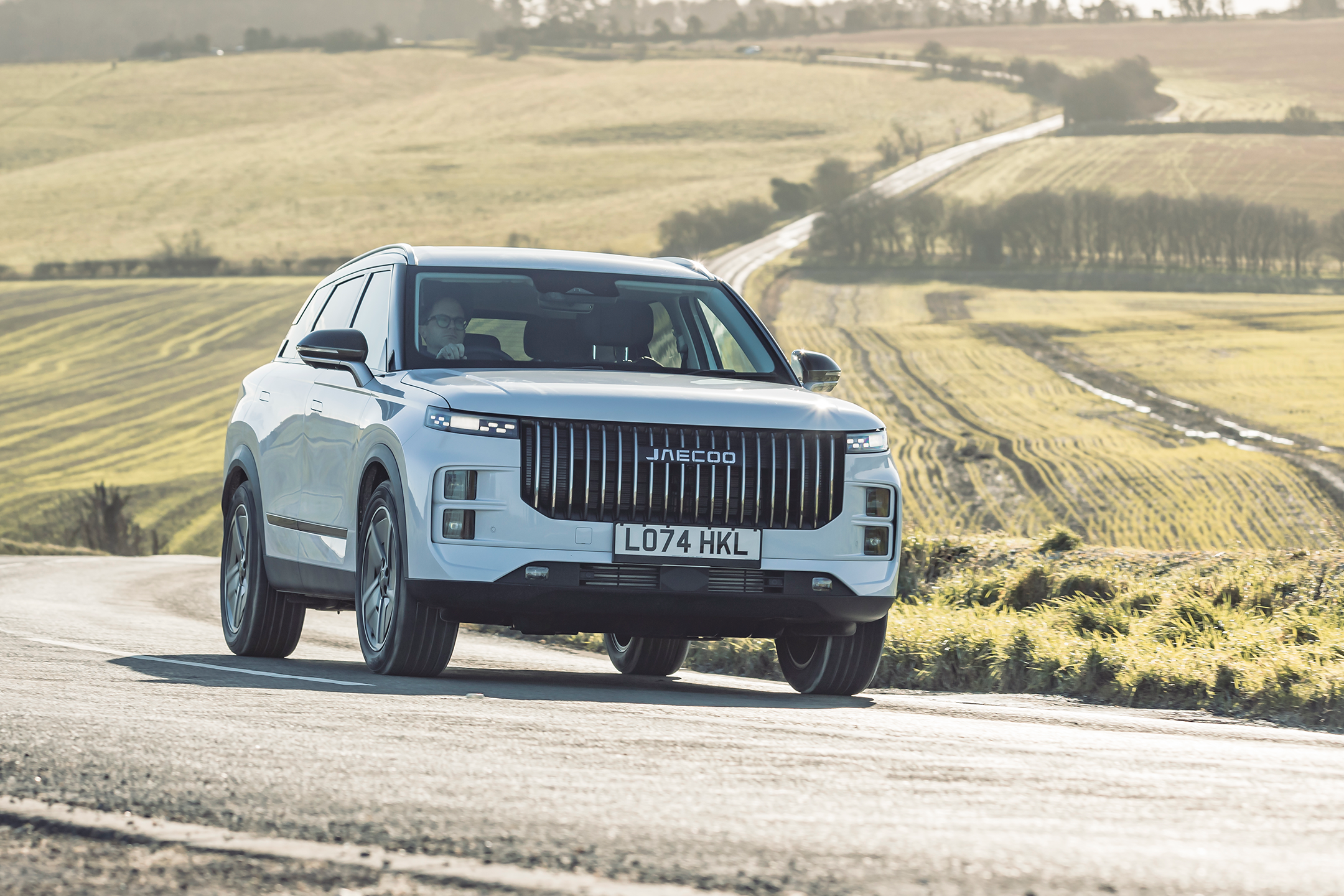
Top seller for October and the year so far is the Ford Puma, with the Kia Sportage in the runner up spot. One notable model in the top ten for October is the new Jaecoo 7 at number six, with the Chinese-made model outselling the British-built Nissan Qashqai as well as the VW Tiguan, Vauxhall Corsa and Audi A3. The Qashqai remains the third best seller of the year so far, behind the Puma and Sportage.
Plug-in hybrids (PHEVs) also performed strongly in October, up 27.2 per cent for a 12.1 per cent share of the market, while hybrids (HEVs) rose 2.1 per cent to 13.3 per cent. Taken together, electrified vehicles made up just over half (50.8 per cent) of all new cars sold last month – the second consecutive month that battery, plug-in and hybrid models have dominated UK car sales.
While October’s overall increase was small, the momentum behind electric vehicles remains clear. Year-to-date BEV registrations are up 28.9 per cent at 386,244 units – already more than the total for 2024, with two months still to go. BEVs now account for 22.4 per cent of all new car sales so far this year, helped by major manufacturer incentives as shown in the Independent EV Price Index, plus renewed government backing through the electric car grant.
Commenting on the latest registrations, Transport Secretary Heidi Alexander said, “Another month of record-breaking EV sales shows more families than ever have the confidence to go electric. Over 30,000 people have saved thousands thanks to our Electric Car Grant and, alongside public charge points hitting 86,000 and more help to install chargers at home, we’re making it easier and cheaper for families to make the switch.”
The SMMT’s latest industry outlook suggests 2025 could be the strongest year for car sales since before the pandemic. Total registrations are expected to top two million (2.012 million) for the first time since 2019, with BEVs forecast to take a 23.3 per cent share. A modest improvement is predicted for 2026, with 2.032 million total sales and BEVs at 28.2 per cent – still below next year’s target of 33 per cent required by the ZEV Mandate. The gap widens further in 2027, when the mandate demands 38 per cent of new cars to be zero-emission, yet current forecasts suggest a 32.2 per cent share.
Despite this progress, the industry is warning that a government proposal to end Employee Car Ownership Schemes (ECOS) could jeopardise growth – as highlighted by The Independent. These schemes allow employees to access new cars – often low or zero-emission models – without incurring company car tax, and they’re seen as vital in supporting both affordability and fleet turnover.
Under the proposed change, ECOS cars would become liable for Benefit-in-Kind tax, effectively ending the schemes. The SMMT estimates that around 100,000 vehicles are supplied through ECOS each year – roughly 5 per cent of the new car market. SMMT says removing them could not only stifle demand but also hit the used-car supply chain, with serious economic knock-on effects.
According to industry analysis, such a move would cost the UK automotive sector over £1 billion in lost revenue and put around 5,000 manufacturing jobs at risk. The Treasury would also lose an estimated £500 million in VAT and Vehicle Excise Duty receipts. In total, says the SMMT, the losses would more than double the value of the Electric Car Grant, cancelling out the benefits it was designed to create.
Mike Hawes, SMMT Chief Executive, urged the government to reconsider saying, “The government has backed the UK automotive sector with EV incentives and global trade deals, helping drive growth and encourage decarbonisation. But scrapping ECOS would undermine that progress – penalising workers, reducing Exchequer income and putting green investment at risk. At a time when the Budget should fuel growth, the measure will do the exact opposite. It is time for a rethink.”