Tasmania is in for its biggest political shake-up in over a generation after a redistribution locked in major changes to the electoral map.
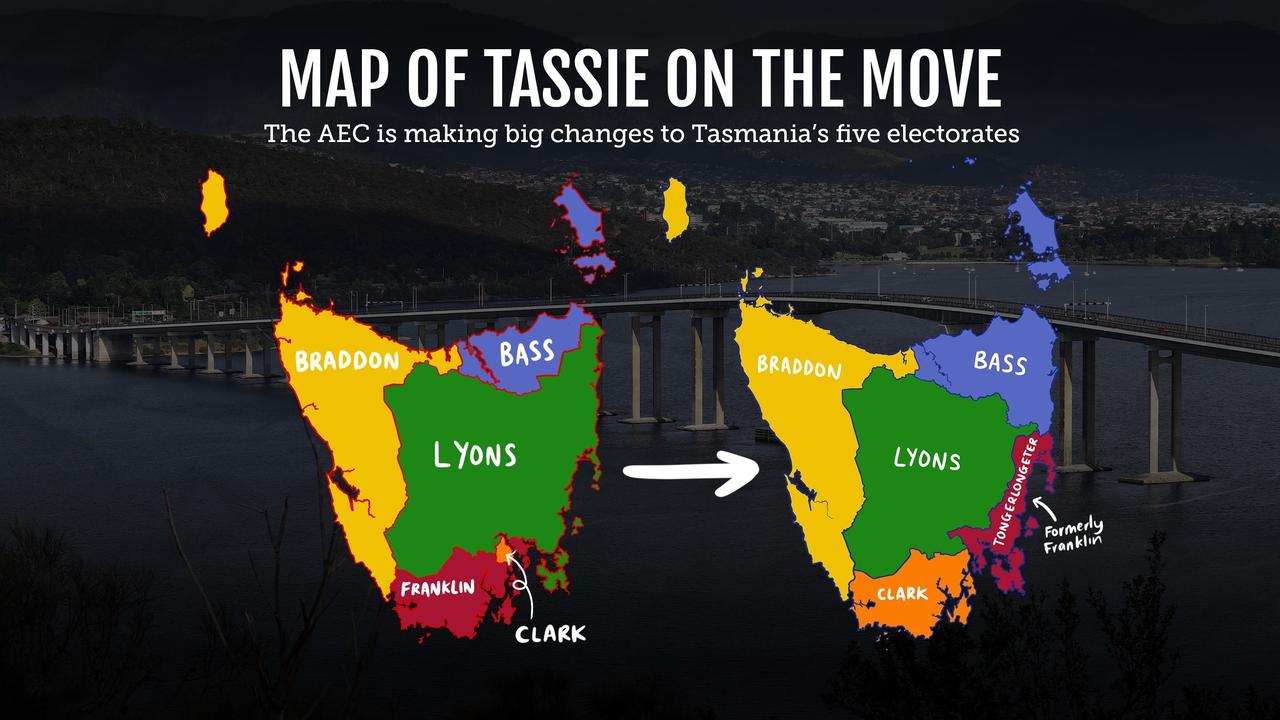
The federal parliament will also have a newly-badged division, with Labor MP Julie Collins set to represent the seat of Tongerlongeter, rather than Franklin.
The Australian Electoral Commission (AEC) released its Tasmanian redistribution on Wednesday, redrawing the state's five electorates.
More than a quarter of Tasmanians will be shifted into a new seat under the changes, which are centred on the state's south.
"It is a big change supported by the enrolment data, communities of interest, stronger alignment with geographical boundaries and many submissions and public consultation," electoral commissioner Jeff Pope said.
The rural seat of Lyons will expand into the north of Hobart, inner-city Clark will now take in the state's south, and Franklin is swapping the southern coast for much of the state's east.
The changes were foreshadowed earlier in the year, with the AEC making only minor tweaks following community consultation.
At a state level, Tasmania elects seven MPs to each of the five federal divisions for its 35-seat parliament.
Many of the state MPs in Clark, Franklin and Lyons either live or have offices in areas that have been shuffled into new electorates.
An AAP analysis has revealed as many as 10 state MPs will be dislocated by the changes and will seek to change seats.
That includes Labor leader Josh Willie, likely to move from Clark to Lyons, and southern-based Franklin MPs like Greens leader Rosalie Woodruff and former Labor leader Dean Winter, set to move to Clark.
On a federal level, the changes will mean little to two sitting members - Ms Collins and Clark independent Andrew Wilkie - who retain their safe seat status.
Bec White, the former state leader turned federal Labor MP in Lyons, will enjoy an increased margin, making it easier to hold her seat.

As part of the redistribution, the electoral commission also called for suggestions of new names that might better represent the re-drawn seats.
Community members nominated a string of names, including past premiers and places, while the AEC nominated Tongerlongeter.
Tongerlongeter was an indigenous leader of the Oyster Bay clan who fought against British colonisation in the early 19th century.
"Tongerlongeter's leadership during the Black War, his role in defending Country, and his enduring significance in Tasmanian history provide strong grounds for recognising his contribution through the naming of an electorate," the commission wrote in a statement.
Franklin, first named in 1903, honours English polar explorer Sr John Franklin, a 19th century governor of Van Diemen's Land.
Like many early administrators, he has been sharply criticised by historians for his treatment of Indigenous Tasmanians.
The proposal is out for further consultation, but should it be adopted, it would end Tasmania's status as the only state without an electorate named after an indigenous person or place.
The Liberal and Labor parties opposed renaming Franklin.