Seven sectors helped pull the London stock market higher in the wake of the Conservative party’s shock victory in the 2015 general election, largely because the threat of Labour policies in these areas has now been lifted.
The pound surged and London’s blue chip index raced ahead, with the FTSE 100 index up by 150 points, or 2%, at one stage. The FTSE 250 index – a broader measure of the UK economy – reached an all-time high.
Banks
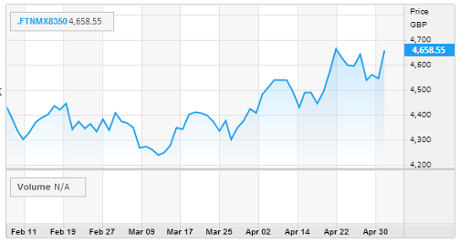
Labour had been aiming to inject more competition into the banking sector – which is already being subjected to a Competition and Markets Authority review – by calling for the creation of new challenger banks and a market share test. There could also have been a bankers’ bonus tax to help pay for its compulsory jobs guarantee.
Shares in the bailed-out Lloyds Banking Group and Royal Bank of Scotland were among the early gainers because the Conservatives have pledged to press on with sales of their shares. In the case of Lloyds, where the taxpayer stake has already dipped below 20% from 43% at the time of the bailout, there may now be an offering to retail investors.
Housebuilders and estate agents
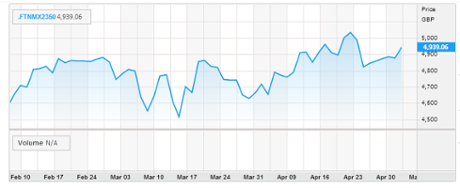
Labour had pledged to introduce a mansion tax on homes worth £2m or more to fund the NHS and also cap rent increases in the private sector to make housing more affordable for tenants, hence a sharp rally in shares in estate agents Savills, Foxtons and housebuilders Countrywide and Berkeley.
Analysts at Liberun said: “UK housebuilders should benefit given there will be no mansion tax, rental caps or immediate headwinds from the bond markets. The Conservatives have shown themselves supportive of housebuilding through the help to buy policy, which was extended to 2020, and their manifesto commits them to remain pro-housebuilding”.
Energy companies and utilities
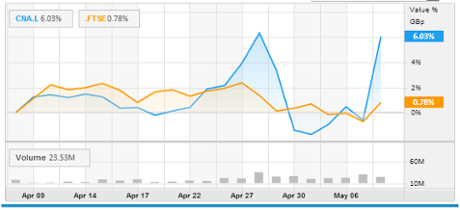
A Labour government had pledged to freeze gas and electricity bills until 2017. At one point this led Sir Roger Carr, the then chairman of British Gas owner Centrica, to warn of “economic ruin” for energy firms.
Shares in Centrica led the FTSE 100 risers, with a gain of 8%, and SSE – Scottish and Southern Energy – were also among the top risers, with a gain of just over 5%.
Bookmakers
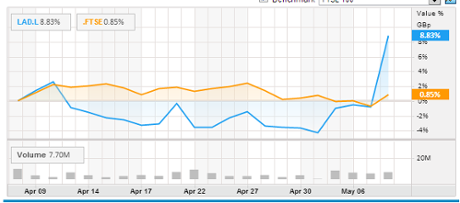
Labour had pledged to crack down fixed odd betting terminals, often described as the “crack cocaine” of the gambling industry. In its manifesto, Labour said that local councils would be able to review betting shop licences and reduce the number of terminals if needed.
Ladbrokes was greatly exposed to this set of policies, and its shares topped the FTSE 250 leaderboard with a gain of more than 10%.
Outsourcing
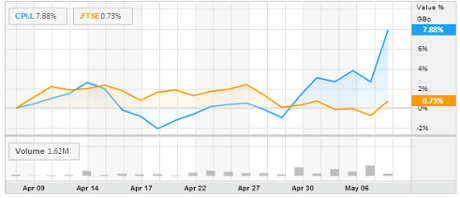
Labour had been likely to reduce the role of outsourcing companies in public sector contracts, and the uncertainty over the outcome had already seen some delays in the award of contracts to some of the main players.
With five years of Conservative government committed to cutting public spending and ideologically keen on outsourcing – despite several high-profile problems in the sector – the companies have seen their shares climb. Capita rose 5% while G4S has added 1.5% and Serco rose 6%.
Trident contractors
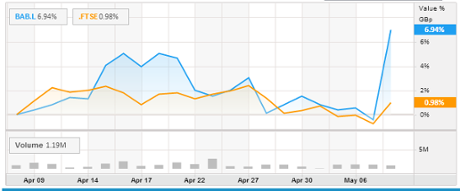
Both Labour and the Conservatives had pledged to replace the four Trident nuclear submarines in a project likely to cost more than £100bn over its 30-year lifespan. But the Scottish National party was clear it wanted to scrap the defence system, and the prospect of a Labour minority government supported by the SNP had caused uncertainty about the outlook.
Labour had also said it would launch a review of defence spending overall, while the Conservatives said they would not sanction further cuts in the regular army.
With the threat to Trident removed, contractors to the project have moved higher. Babcock International rose 8%, BAE Systems 3% and Rolls-Royce 0.5%.
Among the other defence companies, QinetiQ, the former Ministry of Defence research division, rose by more than 2%.
Transport
Labour had promised to rip up the existing rail franchise system, and had criticised the move to return the East Coast mainline from public ownership to a company jointly owned by Stagecoach and Virgin Rail.
It wanted to allow public operators to be allowed to bid for franchises alongside private sector companies, thus falling short of full nationalisation.
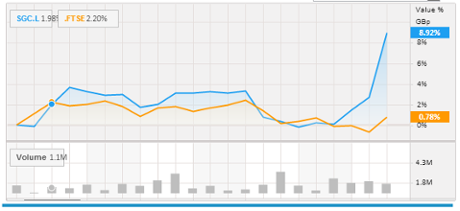
Labour wanted to give more power to cities and regions to improve bus services and integrate them with other modes of transport such as trams. But operators claimed it would push up prices. In the wake of the party’s defeat Stagecoach climbed 6.5%, Go-Ahead 4.6% and National Express 3%.