Photograph: Christopher Thomond for the Guardian
Afternoon summary
-
Liz Kendall, the shadow health minister, has become the first person to formally announce that she is running for the Labour leadership. In a well-received interview with Andrew Neil, she said that Labour lost partly because it was too negative, sounding like a “moaning man in the pub”. She told the programme:
We didn’t get people’s trust on the economy, we didn’t build a broad enough coalition of voters in different parts of the country and we didn’t set out a positive enough alternative for the future. It’s not enough to just critique what’s going [on] under this government, but actually you’ve got to set out something people can believe in that’s going to give them hope and confidence in the future ... I’ve argued for quite a long while that we’ve got to set out something positive and not just be the kind of moaning man in the pub.
Asked if she agreed with Lord Mandelson that it had been a mistake to ditch New Labour, she replied:
The words New Labour mean different things to different people and I think going back to the past isn’t what we need. We’re going to have to build something genuinely new in the future, but if what he meant by that is we’ve got to keep our working class voters and support but also reach out to Conservative supporters and middle England, that’s absolutely right. That’s just a fact that that’s what you’ve got to do to win and I think we lost some of that.
- A Labour MP and member of the party’s national executive committee, Jon Ashworth, has called for the party’s leadership ballot to take place after the autumn conference. (See 3.06pm.) And Paul Kenny, the GMB leader, has said the contest should not be rushed. (See 2.57pm.)
-
Lady Williams, the former Lib Dem leader in the Lords, has complained that party funding rules allowed big parties like the Tories to buy the election. Speaking on the World this Weekend, she said that the election involved “the selling of democracy” because the rules limiting spending in individual constituencies only apply for a limited period before the actual election. She said:
There was a decapitation strategy on the Conservative side, and then also on Labour’s side, like for example the extraordinary targeting of Simon Hughes, long-standing and much beloved member of Parliament for Bermondsey. So I think what one’s looking at is not just the normal swings and balances of politics. I think we’re looking at something much worse, which is what I’ve seen in the United States as a Harvard professor on the subject, namely the selling of democracy.
The sums that were poured into this election exceed by a very long mark any of the amounts spent in recent elections, a huge mistake when you put in for a fixed-term parliament and did not put in for a much longer period of regulated finance. It simply floods out most of the earlier expenditure on elections since, I would say, right back to Attlee’s time. And it does have an impact.
-
Douglas Carswell, Ukip’s only MP, has said that Ukip’s future lies in replacing Labour. Speaking on the Sunday Politics, he said:
Ukip’s future lies in replacing a corporatist Labour party. It is significant we came second in 120 seats, many of those seats in the north of England. The disaffection people in Scotland clearly feel towards the Labour party doesn’t stop at the border. It continues all the way down into the old Labour heartland.
I think there is a tremendous future for Ukip in displacing the Labour party with a sort of radical popular capitalism. You are not going to get any real alternative from the remains of Keir Hardie’s party. I’m convinced as a free marketer there is a case for the free market, the case for popular capitalism, has never been easier to make - the problem is the corporatist system we have in this country is giving capitalism a bad name. There is a huge space in the political ecology for a genuine radical, populist free market alternative that is not in cahoots with big business and corporatism.
That’s all from me for today.
Thanks for the comments.
Updated
Here is Liz Kendall’s interview on the Sunday Politics.
In Labour there are calls for the leadership election to be delayed until after the September conference. (See 3.06pm.) But one Lib Dem MP is saying that his party is making a mistake leaving its vote until July. (See 2.26am.)
We must not - and will not - wait till July to have a new leader in place. We need strong leadership now @LibDems #LibDemFightback
— Greg Mulholland (@GregMulholland1) May 10, 2015
Labour's Jon Ashworth says Labour leadership ballot should take place after conference
Jon Ashworth, the Labour MP and national executive committee member, says he is going to propose extending the Labour leadership contest to allow all candidates to speak at the party’s autumn conference.
We need a lship contest that tests all contenders. As NEC member I'm pushing for a long contest that allows all give speeches at Conference
— Jonathan Ashworth MP (@JonAshworth) May 10, 2015
This is what happened when the Conservatives selected David Cameron in 2005. Michael Howard had announced his intention to stand down after the election defeat in the spring, but the ballot did not take place until after the party conference. Cameron gave a very effective conference speech, and David Davis a surprisingly poor one, and this contributed to Cameron’s eventual victory.
GMB's Paul Kenny says Labour leadership contest should not be rushed
Paul Kenny, the GMB general secretary, told the Sunday Politics that he did not accept Lord Mandelson’s analysis of what went wrong with Labour’s campaign. (See 10.51am.)
He needs to go back to his deckchair in his garden. It’s a quarter of a century since Peter played a very important role in the Labour party’s history and regeneration. But that was a time when school kids didn’t have mobile phones, and we had just three TV channels. The reality of life is that the world has moved on.
He was particularly critical of Mandelson’s claim that Labour was too dependent on trade union funding. Union funding was transparent, he said.
If [Mandelson] thinks that David Cameron is going to supply the Labour party with state funding, then it’s time to call in the men in white coats.
He also dismissed the idea that Labour’s manifesto was too leftwing.
In terms of too leftwing, I make this challenge to Mandelson and lots of other people. We’re standing up for decent pay and against exploitation and protecting our NHS and fighting [against] zero-hours [contracts] and [for] rights for tenants. Is that leftwing?
And he said the Labour leadership contest should not be rushed.
Basically, we need a really decent, long, thought-through process. Because I agree with some of the candidates, that is not necessarily a figurehead we need. We need to make sure we’ve got the right cargo on the ship.
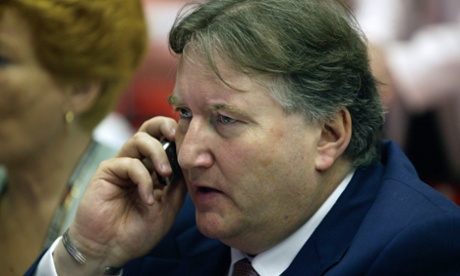
In a blog for Coffee House, James Forsyth says Liz Kendall will be a “formidable candidate” in the Labour leadership contest.
The big question now for the reformist wing of the Labour party is who does it want to back out of Kendall, Chuka Umunna, and Tristram Hunt as all three of them seem to be running. Or, is the reformist wing confident enough to believe that it can field more than one candidate and still win?
Tessa Jowell, the Labour former culture secretary and potential candidate for London mayor, has added her voice to those calling for a full debate on what went wrong. She seems to be implying it would be a mistake to rush the leadership contest.
Leadership campaign must not deny party no holds barred understanding of why we lost. How we handle now will mean we win or lose next time
— Tessa Jowell (@TessaJowell) May 10, 2015
She has also hit out at my Guardian colleague George Monbiot.
Rubbish. Labour wins when we appeal to everybody. Country rejected us, should be no-one we don't seek to win back https://t.co/26RE9imy54
— Tessa Jowell (@TessaJowell) May 10, 2015
Lib Dems announce timetable for leadership election
The Liberal Democrats have announced the timetable for their leadership election.
Nominations open - Wednesday 13 May
Nominations close - Wednesday 3 June
Ballot papers go out - Wednesday 24 June
Voting closes - Wednesday 15 July
Result announced - Thursday 16 July
Liz Kendall's Sunday Politics interview - Verdict from the Twitter commentariat
Here is some Twitter reaction from political journalists and commentators to Liz Kendall’s interview.
It is extremely positive. Chuka Umunna and Tristram Hunt did not get this sort of response this morning after their interviews.
It might be time for William Hill to revise their odds. (See 11.45am.)
From LabourList’s Mark Ferguson
Andrew Neil wants Kendall to be a Blairite. She’s not playing ball. Thank goodness. Enough of the meaningless labels
— Mark Ferguson (@Markfergusonuk) May 10, 2015
Liz Kendall has just forced Andrew Neil to answer a question. I haven’t seen that one tried before
— Mark Ferguson (@Markfergusonuk) May 10, 2015
Genuinely impressed by Kendall’s performance on the Sunday Politics there. And I had a pretty high opinion of her in the first place
— Mark Ferguson (@Markfergusonuk) May 10, 2015
From the Spectator’s James Forsyth
Liz Kendall subtly reminding people in her interview with @afneil that she had doubts about the whole Miliband strategy and message
— James Forsyth (@JGForsyth) May 10, 2015
Liz Kendall confirms to @afneil that she is running for Labour leader. Right to say education has to be at the centre of Labour’s message
— James Forsyth (@JGForsyth) May 10, 2015
From the RSA’s Anthony Painter
Liz Kendall leaning in to this interview very effectively and with a unifying message. #bbcsp
— Anthony Painter (@anthonypainter) May 10, 2015
From Miranda Green, a former Lib Dem press officer
OMG Liz Kendall just asked Andrew Neil a question and he answered it. Was I dreaming? It's like a conversation. She's good at that #bbcsp
— Miranda Green (@greenmiranda) May 10, 2015
From the Labour blogger Hopi Sen
Liz Kendall just focussed on future, said controversial, important stuff in constructive way and didn't duck, weave or dodge at all.
— Hopi Sen (@hopisen) May 10, 2015
From the Guardian’s David Shariatmadari
Liz Kendall seems to have that (among politicians) rare quality of sounding unscripted and genuine. Will be really valuable to her
— David Shariatmadari (@D_Shariatmadari) May 10, 2015
From the FT’s Janan Ganesh
Kendall the most correct and clear-thinking. Umunna the most magnetic. Burnham the most Labour. Cooper the most seasoned. Good race. #bbcsp
— Janan Ganesh (@JananGanesh) May 10, 2015
Liz Kendall confirms she is standing for the Labour leadership
Q: Are you worried about the unions having an undue influence in the Labour leadership contest?
Kendall says she is a supporter of the unions. But Labour has to reach out to all working people.
Q: Where is the Ed stone?
I’ve no idea, says Kendall.
Q: You are running.
Yes, says Kendall.
- Liz Kendall confirms she is standing for the Labour leadership.
Q: Is the real difference in Labour cultural? Between those who have done well out of globalisation, and those who haven’t?
That’s right, says Kendall.
Labour cannot just be a party that says Westminster has all the answers.
She asks Andrew Neil why he will always do well.
Q: Because I’m well paid. And I live in London.
It’s because you’ve had a great education, says Kendall.
Kendall says Labour will need to gain 100 seats to win in 2010. The task facing it is huge.
Liz Kendall's interview on the Daily Politics
Liz Kendall, the shadow health minister and another potential Labour leadership contender, is being interviewed on the Daily Politics now.
Q: Was Peter Mandelson right to say it was a mistake to ditch New Labour?
Kendall says New Labour means different things to different people. Labour needs to look forward. But if what Mandelson means is that Labour has to appeal not just to the working class, but to Conservative voters and middle England too, he is right.
In a blog for Total Politics, Total Politics’ David Singleton says that in the past Chuka Umunna has been reluctant to talk about his girlfriend. But Umunna arrived with her for his Andrew Marr interview this morning.
Chuka arrives for Andrew Marr with girlfriend he has kept out of public eye http://t.co/IKtxTI68mC @TotalPolitics pic.twitter.com/HGPRHZGCJg
— David Singleton (@singersz) May 10, 2015
The Labour MP Ian Lavery told the World this Weekend that he disagreed with Lord Mandelson’s analysis of Labour’s election defeat.
.@IanLaveryMP: Lord Mandelson "doesn't want to let go of…the New Labour project. I'm not sure if that's what the country wants" #tw2
— Nick Sutton (@suttonnick) May 10, 2015
.@IanLaveryMP: Lot of people believe New Labour forgot "the working classes… the trade unions, the poor, the unemployed, the disabled" #tw2
— Nick Sutton (@suttonnick) May 10, 2015
Lunchtime summary
-
Labour’s internal inquest into why it lost the election has turned brutal, with Lord Mandelson, the former business secretary, condemning what he called the “terrible” mistakes of Ed Miliband’s leadership. Mandelson spoke in an interview on the Andrew Marr show after Tony Blair used an Observer article to argue that Labour could recover only if it reoccupied the centre ground of British politics. In an article in the Sunday Mirror, Lord Prescott, the Labour former deputy prime minister, said Labour lost the election five years ago.
We lost this election five years ago when we failed to defend our past economic record. And it makes me damn mad.
Labour sent me to 26 constituencies across the country. Time and time again I heard from the electorate the words of George Osborne.
Labour had ‘wrecked the economy’ and ‘you lot caused the recession’ ...
The Tories and Lib Dems worked tirelessly to sow the seeds of a myth which grew into a publicly accepted ‘fact’ ...
I said to both Eds – Miliband and Balls – that it was vital we nailed these Tory lies. But I was told: ‘We want to focus on the future John, not the past.
I warned them if we didn’t defend the past we wouldn’t have a future. This election has depressingly proved that.
-
Two of the candidates to succeed Miliband as Labour leader have been arguing that Labour needs to widen its appeal. Chuka Umunna, the shadow business secretary, said Labour needed to “build a big tent”.
For middle income voters there wasn’t enough of an aspirational offer there. I was never told that there was specifically a 35% strategy but if you look at the offer that was a conclusion that people were entitled to reach.
We cannot have a message that anybody is too rich or too poor to be a part of our party. What the Labour Party does will is build a big tent of people of different backgrounds, creeds, colours, races,. religions, economic circumstances. And it is when we have an offer that is big tent and appeals to a lot of people, that’s when we win.
Umunna also said that Labour should not have been running a defict before the crash.
Going into the crash, should we have been running albeit a small and unremarkable deficit? Of course we shouldn’t.
Tristram Hunt, the shadow education secretary, delivered a similar message in an interview on Radio Five Live’s Pienaar’s Politics.
I think people felt a hesitation about the Labour party’s willingness to celebrate and accept England in all its forms.
I also think there was a hesitation about Labour being proud and optimistic about the modern country we live in.
Sometimes we told too many stories about a downhearted Britain, and zero hours, and yes, Ed Miliband’s great achievement was to address the inequality issue.
But this is also a wonderful, optimistic country which I think we needed to say more about and be more, in a sense, confident about the achievements of the last Labour government in helping to build that and then optimistic about the future.
Umunna and Hunt both sidestepped questions about whether they would stand for the leadership, but they both did nothing to dampen speculation that they will be candidates.
-
Mandelson and Hunt have expressed concerns about the way the Labour leadership contest will be conducted. Mandelson said he was worried the new leadership election system was open to abuse by the unions. (See 10.51am.) He also said the contest should not be “a short-term beauty contest”. And Hunt said the leadership contest should not be rushed. (See 12.22pm.) Others in the party are arguing that the contest should take place quickly, because a drawn-out contest in 2010 gave the Tories time to persuade the public that Labour was to blame for the crash.
-
Nicola Sturgeon, the SNP leader, has claimed that Labour infighting could leave her party as the main opposition to the Conservatives. Speaking on the Marr show, she said:
Scotland clearly doesn’t want austerity to continue, and there are discussions we will require to have about the Scottish Parliament and Scottish government’s budget, discussions that I will want to have about £12bn of welfare cuts that David Cameron didn’t specify in the election that will hit disabled people.
The will of the Scottish people has to be listened to. I think it’s likely, given that Labour are entering a period of introspection and questioning their very purpose in life, the SNP is going to be the principle opposition to the Conservatives.
-
David Davis, the Conservative backbencher, has dismissed suggestions that Tory Eurosceptics will undermine David Cameron’s government. Speaking on the Marr show, he said there would be no return to the internal warfare that damaged the party so badly when John Major’s government was passing the Maastricht legislation.
I don’t think we will repeat the Major days for three reasons. One: we have done it before and we know what it feels like. Two: people have got the option of talking to him more than before. And three: if they don’t like the outcome they can actually campaign against it in the referendum.
He also said the main task for Cameron in his EU renegotiation was to achieve an opt-out from certain EU legislation.
Freedom of movement is important but it is not the main one. The main one is that we are able to say in future to the Europeans that ‘this is too far for us’. Not a veto but an opt out. There is one already for France - a thing called the Luxembourg compromise. It’s all about restoring control of our destiny to the House of Commons.
Updated
The Sunday Mirror’s Vincent Moss is making a good point about the Labour leadership contest.
Labour leadership candidates each need support of 35 of Lab's 232 MPs (15% of PLP) = max no. of candidates is 6. Will need early momentum
— Vincent Moss (@vincentmoss) May 10, 2015
In his contribution to the Labour inquest, Chris Leslie, the shadow chief secretary to the Treasury, told Sky that Labour should have done more earlier to make it clear that it would not do a deal with the SNP.
I think we should have been very clear from earlier on that we had no truck with [the SNP].
We absolutely spelt out that we wouldn’t do deals with them and I think that was the right thing to do, but we allowed the Conservative party to peddle that myth and of course that percolated into people’s anxieties about us, and that, in many ways, is part of the reason I think we have seen a Conservative majority.
Diane Abbott says polls should be banned during election campaigns
On Sky News Diane Abbott also called for polls to be banned during election campaigns.
I just think the polls have a distorting effect and for the duration of the short campaign, we should follow the French and not have polls.
On the subject of polls, this from Lord Cooper, the Conservative peer and pollster, is interesting.
Over 1,000 voting polls in the 3+ years since 2012 'omnishambles' budget. All of them put Con vote below the 38% (GB) they got last week.
— Andrew Cooper (@AndrewCooper__) May 10, 2015
Grant Shapps, the Conservative chairman, says Labour MPs are “fighting like ferrets in a sack”. He has issued this statement.
Labour are fighting like ferrets in a sack. They’ve collapsed in Scotland and now their remaining MPs are fighting each other. They are irreconcilably divided on the economy, on the length of the leadership election and on the trade unions. It’s devastating rifts like these which show why they don’t deserve to hold power.
Tristram Hunt says Labour leadership contest should not be rushed
Tristram Hunt, the shadow education secretary, has used his Twitter feed to call for a lengthy Labour leadership contest.
To understand why we lost so badly, we need time to comprehend the reasons why. The NEC should not agree a rushed timetable.
— Tristram Hunt (@TristramHuntMP) May 10, 2015
But the Labour MP Helen Goodman is arguing the opposite.
Everyone knows we spent too long choosing a leader in 2010, so now they're calling for a 6 month process! What's the definition of madness?
— Helen Goodman (@HelenGoodmanMP) May 10, 2015
Updated
Labour’s Tom Watson has been tweeting about his campaign for the deputy leadership.
Making a formal announcement soon but I need help to get the message out. Can you help fund the campaign? http://t.co/9BVyNFWbTA
— tom_watson (@tom_watson) May 10, 2015
Diane Abbott, the Labour leftwinger, told Pienaar’s Politics that she would not be running for the Labour leadership.
I’m running for mayor of London, that’s terrain I know and I believe I’m the person to win in London.
She also took a veiled swipe at colleagues like Chuka Umunna, Tristram Hunt and Liz Kendall, accusing them of disowning a strategy that they backed until Friday.
Some of [the leadership candidates] have rushed in putting articles out that basically trash Ed Miliband’s entire election strategy. I’m slightly struck, these people sat in the shadow cabinet for nearly five years and did not say those things.
She also said Ed Miliband was not to blame for what happened in Scotland.
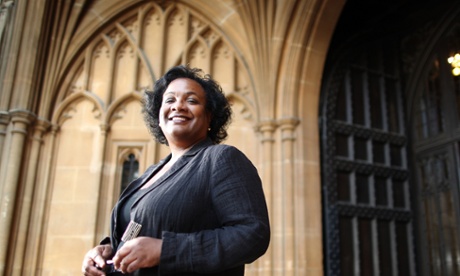
Owen Paterson, the Conservative former environment secretary, told Sky that he would be happy to take another job in David Cameron’s government. Asked about this, he replied:
That’s entirely down to the prime minister who is making his choices as we speak. Obviously, yes, we all would. We want this government to succeed. At last we have got rid of the ball and chain of the Liberal Democrats, we can crack on with a really positive, common sense programme.
Caroline Flint 'extremely likely' to run for Labour deputy leadership
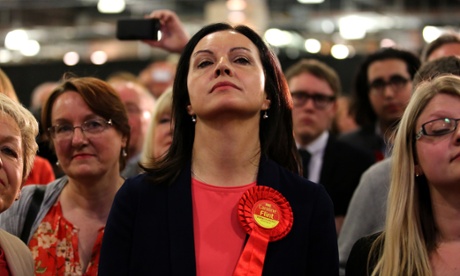
Caroline Flint is “extremely likely” to run as deputy leader of the Labour party in a challenge to the Brownite Tom Watson, the Guardian understands.
Flint, who was shadow energy secretary under Ed Miliband, will probably not declare until the timetable for the process is set out after a national executive committee meeting on Tuesday.
However, sources close to the Yorkshire MP said she was almost certain
to throw her hat into the ring at this point.
Watson is the only candidate for deputy at the moment and has launched a crowdfunding website to raise £25,000 for his bid on Sunday.
At the moment, the race to be deputy is looking set to be even starker clash between those on the left and the centrists within the party than the race for the leadership itself.
Watson, who campaigned against phone-hacking, is deeply involved in the trade union movement and very much on the left of the party.
In contrast, Flint’s politics are closer to those of Blairites Chuka Umunna and Liz Kendall than those of other potential leadership candidates Yvette Cooper or Andy Burnham.
Another possible choice for the deputy leadership are Angela Eagle, who was shadow leader of the House of Commons and delivered impressive performances in parliament against her Tory adversary William Hague.
The slate of potential deputies will be crucial to those running for leader as they seek to shape the future of the party in the aftermath of a crushing defeat at the hands of David Cameron.
There may be some pressure in the Labour party to choose a woman for the next leader, but having strong female deputy leadership candidates could address this.
Flint was often sent out to promote Labour’s campaign in the media, especially after the television debates, and trebled her majority in Don Valley at the election.
It is understood she feels Labour needs to win back working and middle class voters in the south of England but wants the party to take time to reflect on what went wrong.
Updated
In an earlier post (see 9.25am) I said David Davis told Andrew Marr that, as far as he was concerned, the key point in the EU renegotiation was to get the power to veto EU laws. That was not correct. He said the key point was to get the power to opt out of EU laws. I’ve correct that post.
William Hill has released its latest odds on the Labour leadership. Here is an extract from its news release.
Britain’s biggest bookmaker William Hill believe the race to become Labour leader is looking like a five horse race. As it stands, Chuka Umunna is the 2/1 favourite, closely followed by Andy Burnham at 3/1, whilst the big movers in the market are Dan Jarvis (7/2 from 8/1) and Tristram Hunt (6/1 from 12/1). The final contender is perhaps Yvette Cooper who has attracted the largest single bet of £2,000.
Cooper’s odds are 9/2. Other odds are 16/1 Liz Kendall, 20/1 David Miliband, and 20/1 Rachel Reeves.
Chuka Umunna, the shadow business secretary, has not even formally declared his candidate for the Labour leadership, but he has already received one firm endorsement, from the Labour MP Paul Flynn. Flynn’s declaration is surprising because he is a leftwinger and arch critic of Blairism, while Umunna is seen as the leading “Blairite” candidate (in so far as the term is useful, which is only up to a point.)
In a post on his blog, Flynn says he is backing Umunna because of his presentational skills. He thinks Ed Miliband was “an electoral liability” because he was weak in this area.
Ed’s major error was losing the audience in the Question Time Hustings. It was entirely true that the past Labour Government did not waste money. But politics is not determined by truths. It is informed by perceptions. Labour’s mythical profligacy is deeply embedded in the mass consciousness of the studio audience. A head-on challenge to the audience was a major mistake where a nuanced approach would have worked.
Tributes will now be fairly paid to Ed’s decency and commitments but the bitter lesson must be learned. There is a danger that yet again we could choose a leader because of his or her position on the political spectrum. To restore public trust in Labour we need an eloquent, charismatic personality strengthened by intellectual depth and debating skills.
I have made my choice. It’s Chuka.
John O’Farrell, the writer and Labour supporter, suggests Twitter may have contributed to Labour’s defeat in 2015.
I fear Twitter has not helped the Left since the 2010 election. We create our own digital bubble & forget that millions don't agree with us.
— John O'Farrell (@mrjohnofarrell) May 10, 2015
(A colleague points out that the Labour left was quite capable of thinking like this long before Twitter arrived.)
On Pienaar’s Politics Tristram Hunt, the shadow education secretary, also had a debate with Lord Mandelson, a backer of another potential leadership rival Umunna, who made an “unscheduled appearance” on the programme to give a further diagnosis of where Ed Miliband went wrong.
Mandelson said Miliband’s decision to draw a line under New Labour was “slamming the door in the faces” of the millions of people who voted for Tony Blair.
I read the manifesto, and I say this with Tristram here, and I hope he won’t take it amiss because he bears responsibility for this like all of the rest of them, and there is nothing in there about economic growth, about productivity, about new technologies, about the scale of the economic challenges we face as a country ... It was the big hole in the middle of the polo mint.
Mandelson also revealed that the first time he was rung up for advice during the campaign was the day before polling day when he was asked how to get Miliband into Downing Street if Labour was a close second.
The mistake that was made was the strategy that was adopted, the idea that somehow we can attack the rich, say we’re pro-poor and ignore a whole swath of voters in the middle.
Hunt agreed with most of Mandelson’s argument but insisted there had
been policies to address economic growth.
We all bear responsibility. But we did have a very strong argument on productivity ... We were making that argument but I accept it didn’t cut through.
He also made the case for Labour to support “innovative, disruptive, wealth-creating businesses”.
I don’t think they thought we were on their side. We all guffawed at those letters from business leaders ... Actually over time those add up.

The Labour MP John Mann has accused Lord Mandelson of living in the past.
Prescott, mandelson and others living in the past. It is no longer about two dimensional politics.
— John Mann (@JohnMannMP) May 10, 2015
Updated
Tristram Hunt says Labour needs to appeal more to "John Lewis" voters
Tristram Hunt, who was shadow education secretary under Ed Miliband, said he was considering running for the Labour leadership and set out his view on where the campaign went wrong on BBC Five Live’s Pienaar’s Politics.
There was a hesitation about Labour being proud and optimistic about the modern country we live in. Sometimes we told too many stories about a down-hearted Britain and zero hours. And yes, Ed’s great achievement was to address the inequality that we live in. But this is also a wonderful optimistic country that we needed to say more about and be more confident about the achievements of the last government in building that.
He said the Labour party needed to appeal to the “John Lewis community”, including those who aspire to shop there and at Waitrose, rather than its sticking to appealing to its core vote.
The debate needs to be long and deep and painful for the Labour party because we are in a real hole - a hole in Scotland and a hole in England and there are challenges in Wales as well. The issue in England is this double bind of losing traditional Labour communities often under pressure from Ukip and not speaking to an aspirational John Lewis couple who we are on their side.
Here is some Twitter reaction from political journalists to Lord Mandelson’s interview.
From the BBC’s Rebecca Keating
Co-ordinated Blairite action this morning: @johnprescott in Mirror, @tonyblairoffice in Observer & now Mandelson on #Marr
— Rebecca Keating (@RebeccaKeating) May 10, 2015
From the Sunday Times’s Tim Shipman
Mandelson has spent 5 years issuing Delphic coded critiques. This morning he has taken out a howitzer and fired it at Miliband's head
— Tim Shipman (@ShippersUnbound) May 10, 2015
Chuka not being helped here by being about 10 times less quotable than Peter Mandelson
— Tim Shipman (@ShippersUnbound) May 10, 2015
From the Times’s Philip Webster
Five years of frustration spilling out of Peter Mandelson
— Philip Webster (@Pwebstertimes) May 10, 2015
From the BBC’s Sam Macrory
Mandelson's outburst on #marr more confirmation that Miliband did remarkably well to project a (mostly) loyal + united party for five years
— Sam Macrory (@sammacrory) May 10, 2015
From the Times’s Tim Montgomerie
Time between Mandelson praising Miliband personally and then attacking everything about his policy agenda: a Milisecond #marr
— Tim Montgomerie ن (@montie) May 10, 2015
From the Guardian’s Martin Kettle
Mandelson issues big serious warning about fixing of Labour contest by trade union machines. Another argument for caretaker approach.
— Martin Kettle (@martinkettle) May 10, 2015
Updated
Lord Mandelson's Marr interview - Summary
Here are the key points from Lord Mandelson’s interview with Andrew Marr. He didn’t hold back.
-
Mandelson said that Ed Miliband’s decision to ditch New Labour was “a terrible mistake”.
The awful shocking thing about this election is that Labour could have won it, or at least come a very near second. The reason we lost is, and lost it so badly, was because in 2010 we discarded New Labour rather than revitalising it and re-energising it and making it relevant for the new times, the new policy challenges that we face. That was a terrible mistake.
-
Mandelson said Miliband’s “predators v producers” analysis of the business world was “completely useless”. Asked about the speech in which Miliband set this out, Mandelson replied:
I thought it was a completely useless label that led nowhere in any serious debate, both about the partnership that we need to have with business, but also how business needs to change. We do need a reformed and more responsible capitalism in our country. I said that, I argued that when I was the business secretary.
-
He said Miliband’s strategy since 2010 had been wrong.
We were sent off in 2010 on a giant political experiment, in which we were sent out and told to wave our fists angrily at the nasty Tories and wait for the public to realise how much they had missed us. Well, they weren’t missing us and they did not miss us. Instead, they ripped the stripes off our shoulders.
- He said Labour did not have anything to say that appealed to aspirational voters.
Literally, we were sent out and told to say things and to make an argument, if you can call it an argument, which basically said we are for the poor, we hate the rich, ignoring completely the vast swathes of the population who exist in between and who do have values like ours. They do like the Labour party, they are committed to social justice and fairness, and they do want a government like ours that leans heavily against inequalities in society. But they also want a a government that is economically competent and also realises that people have aspirations, they live in the real world, they want to better themselves, and if we are not with them in that, why on earth should they vote for us.
-
He said the challenge Labour faced if it wanted to get re-elected was as great as the challenge it faced in the late 1980s.
I was there in the 1980s and the early 1990s. I think now that the scale of the challenge we face, and the need for rethinking and remodernisation of the party, is akin to the scale of challenge what we faced in the late 1980s. That is how serious it is.
-
He said the Labour leadership should be a “thorough debate” about the party’s future, not just a “short-term beauty contest”.
Far from embarking on a short-term beauty contest of leaders, what we really need is a very, very thorough debate in the party of the sort that was denied us in 2010.
-
He said that he was worried that the new leadership election system introduced by Miliband would be open to abuse by the unions. It is a one member, one vote system, he said, with all members getting an equal vote.
But there is also provision for something in the region of 2.5m political levy-paying trade unionists who are being invited to declare themselves as Labour supporters, enrolled as affiliated supporters of the Labour party, without having to do anything else, and then given a vote.
What I say to that is if we’re going to have people declaring that they’re Labour supporters in that way and given a vote then every single one of those individuals needs to be validated by the party staff and the party headquarters.
We cannot open ourselves up to the sort of abuse and inappropriate influence that the trade unions weighed in with in our leadership election in 2010.
-
He said the unions fixed the leadership election for Miliband in 2010, and that this must not happen again.
In 2010 the trade union machine, or certain of them, basically Unite and Unison, put Ed Miliband’s photograph on the ballot papers and put his election material in the ballot envelopes. No other candidate got a look in. That is the sort of abuse by trade union machines, not by individual trade unionists, that we must guard against this time.
-
He said it was “incredibly unhealthy” for Labour to be so dependent financially on the trade unions.
I think it is incredibly unhealthy for us to be so dependent on trade union funding ... I’m not happy with the Labour party that is so clearly dependent on people who pay the piper and who, in many cases, can call the tune. That is not a good look.
-
He said Miliband “delivered a passionate and professional performance during this campaign”.

Updated
Mandelson says Labour manifesto had 'big hole' in it because it ignored economic growth
Lord Mandelson is now on Radio 5 Live’s Pienaar Politics. He repeated some of the points he made in his Marr interview, saying it was “mystifying” to the public why Ed Miliband abandoned New Labour. And he said the Labour manifesto had a “big hole” in it because it did not say anything about economic growth.
Mandelson says Miliband made a 'terrible mistake' when he discarded New Labour
Here is the key quote from Lord Mandelson.
The awful shocking thing about this election is that Labour could have won it, or at least come a very near second. The reason we lost is, and lost it so badly, was because in 2010 we discarded New Labour rather than revitalising it and re-energising it and making it relevant for the new times, the new policy challenges that we face. That was a terrible mistake.
I will post more from his interview shortly.
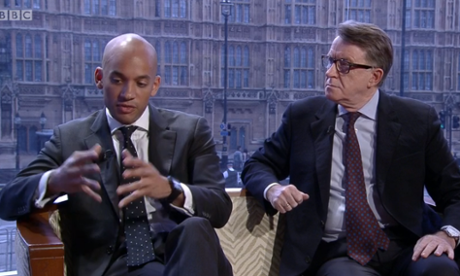
Mandelson and Umunna are on the sofa together now.
Q: Is Umunna your kind of candidate?
Mandelson says he hoped Umunna would be the new business secretary. It will take a bit longer, but he thinks he will get there [into government, he means] eventually.
Q: David Cameron might be able to get the deal he wants in the EU?
It depends what he asks for, says Cameron.
If he goes into those negotiations with an agenda supplied by his “madcap backbenchers”, he will get nowhere, Mandelson says. But there is support for sensible reform.
Q: What about giving the UK a veto on EU plans?
Mandelson says that involves giving other EU countries a veto too. Does the UK want that? In that case, there would be no European Union.
Updated
Q: Do you think Labour should settle the leadership quickly, or should it have a long contest?
Umunna says the rules were changed to open up the membership. We should allow time for a proper debate, he says.
Umunna says Labour had some pro-business policies. But people weren’t always aware of them.
Q: Did you do enough in private to fight for a more pro-business stance?
Umunna say Ed Miliband was too hard on himself when he said he took responsibility for the defeat. It was a collective failure.
Labour wins when it has a big tent offer, appealing to all groups.
Q: Did Labour spent too much before the election?
Umunna says the party should not have been running a small and “historically unremarkable” deficit before the crash.
But it was ludicrous to claim that that caused the crash.
Labour inherited a 42% debt to GDP ratio. It got it down to 37%.
He says in some quarters there was a nervousness about making the progressive case for debt repayment.
It is not progressive to be paying more on debt repayment than on schools.
Q: Are you running for the leadership?
Umunna says it is too early to say. He does not know what the timetable is.
-
Umunna says it was wrong for Labour to be running a deficit before the financial crash, even though the defict was small and “historically unremarkable”.
Chuka Umunna's interview on the Andrew Marr show
Chuka Umunna, the shadow business secretary, is being interviewed now.
Q: Are you happy with the new leadership election rules?
Umunna says the new rules have been agreed, and will be implemented by Labour.
Q: Why did Labour lose?
Umunna says Labour did not lose because of Scotland. David Cameron won in England too.
Labour does best when it combines compassion with aspiration.
There was not enough of an offer to aspirational voters, he says.
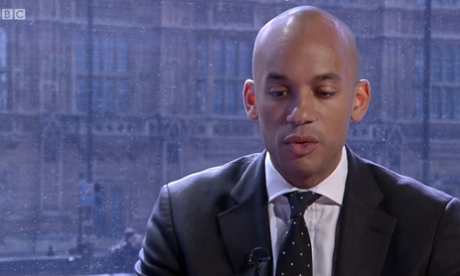
Q: What do you think of the new Labour leadership election rules?
Mandelson says, under the new rules, more than 2m union members who say they are affiliated will need to be given a vote.
Those members must be properly validated, he says.
Labour must not let the unions have undue influence.
He says in 2010 the trade unions abused the process, but sending out ballot papers iin envelopes with Ed Miliband’s face on it.
Q: Should Labour break the link with the unions?
Mandelson says it is not right for Labour to be so dependent on trade union money.
- Mandelson warns new Labour leadership election rules could give unions undue influence.
- He says Labour too dependent on union money.
Lord Mandelson’s interview on the Andrew Marr show
Lord Mandelson is being interviewed now.
Q: What do you think of Ed Miliband’s record?
Mandelson says he wants to pay tribute to him. He delivered a passionate and professional campaign.
But the awful thing is that Labour could have won this election, or come a very close second.
The problems was that “new Labour” was discarded.
That was a terrible mistake.
Mandelson says Labour were sent out, on a political experiment, to wave their fists at the Tories and wait for the public to realise how much they missed Labour. Well, they did not miss Labour.
He says the challenge Labour faces is akin to the challenge it faced in the late 1980s.
Q: That is a terrible indictment of Miliband’s leadership?
It is a measure of how far we have to go.
Mandelson says, rather than focus on a short-term beauty contest, Labour needs a thorough look at what went wrong.
Q: I met a self-employed builder who said he could not vote Labour because Labour hated people like him. Is that the problem?
Yes, says Mandelson.
Labour gave the impression that it was for the poor, and it hated the rich.
But the vast majority of people, some of whom shared our valued, felt left out.
Q: What did you think about the “predators v producers” speech?
Mandelson says this was a “completely useless” Labour message.
- Mandelson says Ed Miliband’s decision to discard New Labour was “a terrible mistake”.
- He says Labour’s problems are as deep as they were in the late 1980s.
-
He says a “beauty contest” leadership election on its own won’t solve Labour’s problems.
Q: Can you control your party?
Yes, says Sturgeon.
There are 110,000 members now.
One of the legacies of the referendum campaign is that Scotland has a population interested in and engaged with politics.
Q: In what circumstances would you have another independence referendum?
Something significant would have to change, she says, like the UK voting to pull out of Europe without Scotland agreeing.
Q: So an austerity programme on its own would not be enough to justify another referendum.
Sturgeon says the SNP will finalise its 2016 manifesto nearer the time.
Q: What about home rule all round?
Sturgeon says it is not for her what happens in England. But the more power gets decentralised from Westminster, the better she says.
Q: Alex Salmond said yesterday the election result pushed Scotland closer to independence.
Sturgeon says Salmond was saying he thought independence would happen. He has always said that.
She says she made it clear that the election vote was not a vote for independence.
She says her party is the Scottish National party, not the Scottish nationalist party. She wants to unite Scotland.
Q: What if Cameron offers you full fiscal autonomy?
Sturgeon says, if the Tories think that would be a threat to the SNP, they do not understand the SNP.
Full fiscal autonomy would take some time to introduce.
Cameron did not give her any indication he would do this. But Sturgeon says she thinks he will have to move.
Q: But you would lose the Barnett formula.
Sturgeon says she would have to make sure Scotland got a good deal.
- Sturgeon says the Tories will have to offer Scotland more devolution.
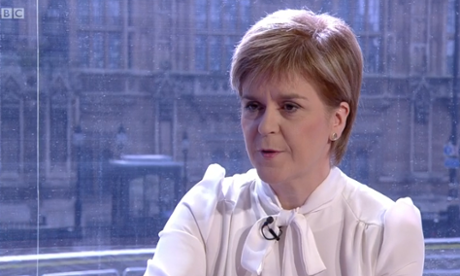
Nicola Sturgeon's interview on the Andrew Marr show
Nicola Sturgeon, the SNP leader, is being interviewed now.
Q: How was your phone call with David Cameron?
It was very courteous, she says. They congratulated each other. She says she told him business as usual could not continue.
Q: You said you want to end austerity. But you don’t have the votes to do that, do you?
Sturgeon says if Cameron thinks he can carry on as if nothing happened in Scotland on Thursday, he is wrong.
Q: But you have not got the numbers to block these plans?
Sturgeon says there will have to be discussions. The will of the Scottish people must be heeded.
With Labour entering a period of introspection, the SNP will be the main opposition to the Conservatives, she says.
- Sturgeon says SNP could be main opposition to the Conservatives.
Updated
Q: What should Cameron do about Scotland?
Davis says he has been in favour of Scotland having full fiscal autonomy for a long time.
The problem with the current arrangement is that the Scots pay 3% less tax than the English, but they get 15% more in public spending.
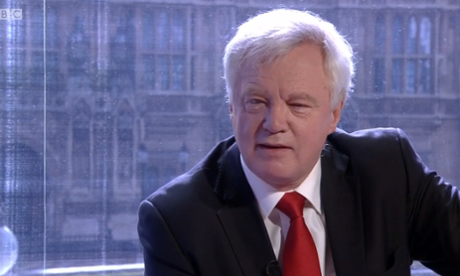
Davis says the key thing, in the EU renegotiation, is to get more power to out out of EU laws.
Benefit tourism is not such a big issue, he says. There are not many EU migrants who come here to claim benefits.
UPDATE AT 11.50AM: Earlier I said here that Davis said that the key thing was for Britain to be able to veto EU laws. That was wrong. He said the key thing was to get the power to opt out of EU laws. I’ve corrected the copy above.
Updated
David Davis's interview on the Andrew Marr show
David Davis, the Conservative MP, is being interviewed now.
He says David Cameron must reach out more to Tory MPs. The 1922 backbench committee will be very important, he says. He says it is encouraging that Graham Brady, the 1922 chairman, met Cameron on Friday.
One good thing about Cameron is that, if the situation changes, he is willing to change his mind.
Q: Will we see a repeat of the Maastricht rebellions?
No, says Davis. The Tory party remembers how much damage that caused. MPs are being consulted. And MPs will be free to vote against staying in the EU if they want.
Morning briefing
Good morning. Welcome to today’s election aftermath live blog
Here are some of today’s key developments.
Conservatives
- David Cameron’s full reshuffle is not due until tomorrow, but some new appointments have emerged. Michael Gove, the former education secretary, is set to become justice secretary, replacing Chris Grayling, who is set to become leader of the Commons. And Mark Harper is set to become the new chief whip.
Labour
Why did we do so badly there? First, we spoke to our core voters but not to aspirational, middle-class ones. We talked about the bottom and top of society, about the minimum wage and zero-hour contracts, about mansions and non-doms. But we had too little to say to the majority of people in the middle.
Second, we allowed the impression to arise that we were not on the side of those who are doing well. We talked a lot – quite rightly – about the need to address “irresponsible” capitalism, for more political will to tackle inequality, poverty and injustice (and we must never give the appearance that we are relaxed about them). But we talked too little about those creating wealth and doing the right thing.
Warning that Labour has no prospect of returning to power in 2020 unless it embarks on a “rethink about who we are and what we’re for”, she said: “Fundamental reform is essential to the future survival of our party.”
She added: “We need to show people that we understand their aspirations and ambitions for the future, and if you look right across England, we did not do enough to appeal to Conservative supporters, and we must.”
Asked whether she was running for leadership, she said: “Yes, I am considering it. But we don’t just need a new face. We need a fundamentally new approach.”
- The Mail on Sunday says, amongst Labour supporters, David Miliband is the preferred Labour leader. Of the likely candidates, Umunna is favourite.
When I mentioned more than three years ago that we seemed to have ‘no strategy, no narrative and very little energy’ I was condemned and ostracised but I was only pointing out what turned out to be the case.
Scotland
David Cameron risks stoking fresh constitutional tensions by defying Nicola Sturgeon’s demands for financial autonomy for Scotland, despite a landslide for the SNP, and the party’s mani- festo commitment to making Holyrood responsible for raising what it spends.
Sturgeon is to seek a deal with the prime minster to give Scotland sweeping new powers beyond the recommendations of the cross-party Smith Commission, which would reduce the prospect of another referendum on the break-up of Britain being staged within five years ...
But a senior Downing Street source said Cameron had no intention of going beyond the recommendations of the commission that was set up after September’s independence referendum, and which puts forward an outline for more limited financial devolution.
The source said: “He feels he’s been very clear that he wants to deliver what he has promised. He won’t say that we’re going to go further than that but he does feel that he wants to do something on this to demonstrate that he is sincere.
Today’s agenda
These are the interviews I know about.
9am: Nicola Sturgeon, the SNP leader, Chuka Umunna, the shadow business secretary, Lord Mandelson, the Labour former business secretary, and the Tory MP David Davis are interviewed on the Andrew Marr show.
10am: Eric Pickles, the communities secretary, Tristram Hunt, the shadow education secretary, and John Redwood, the Tory MP, are interviewed on Radio 5 Live’s Pienaar’s Politics.
1.30pm: Liz Kendall, the shadow health minister, Tim Farron, the Lib Dem MP and Douglas Carswell, the Ukip MP, are interviewed on the BBC’s Sunday Politics.
If you want to follow me on Twitter, I’m on @AndrewSparrow