The row between the broadcasters and Downing Street over the televised leaders’ debates rolls on. On Friday, the BBC, ITV, Channel 4 and Sky rejected David Cameron’s “final offer” and said they would go ahead with plans to hold three election debates on 2 April, 16 and 30 - two between seven party leaders, and one head-to-head between the prime minister and Labour leader Ed Miliband.
The PM’s director of communications Craig Oliver had previously written to the broadcasters to say Cameron was willing to do a seven-way debate in the week commencing 23 March - and this was his final position.
The other party leaders are unanimous in calling upon the PM to debate.
.@David_Cameron why are you running scared of TV debates? The British people want a head-to-head TV debate. Let's give it to them.
— Ed Miliband (@Ed_Miliband) March 5, 2015
Come on @David_Cameron you haven't got your own way so accept it and take part. #tvdebates
— Nick Clegg (@nick_clegg) March 6, 2015
Seems like @David_Cameron bluff has been called on the debates. Good. #GE15
— Nicola Sturgeon (@NicolaSturgeon) March 6, 2015
It remains unclear if Cameron will issue a new final, final offer, or whether the broadcasters will - or indeed can - empty-chair the PM.
Cameron discovers what it's like to have his "final offer" rejected. Good practice for Brexit 2017.
— Patrick Wintour (@patrickwintour) March 6, 2015
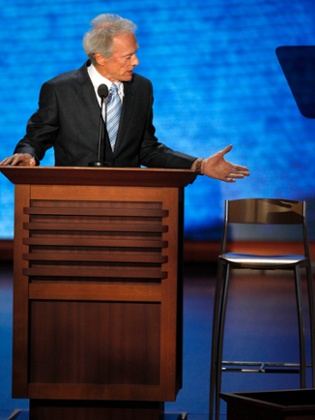
Maybe a four-way debate between Ed Miliband and Clint Eastwood might be an option.
But what does the British public think about the debates?
A YouGov poll for the Sunday Times released over the weekend reveals that voters are overwhelmingly in favour of televised debates. Nearly seven in 10 (69%) think there should be debates during the election campaign - only 19% disagree.
The format proposed by the broadcasters is supported by 45%, while 21% would prefer a different format and 14% think the debates shouldn’t be held at all. Voters appear more divided though when asked specifically if there should be a head-to-head debate between Cameron and Miliband without the other party leaders: 42% are in favour, 42% against.
More than half (57%) think the leaders’ debates are good for democracy, 8% think they’re bad and 28% feel that they are neither good or bad.
The public is also quite clear on who is to blame for the breakdown in talks
Nearly four in ten (38%) blame Cameron, 13% the broadcasters, and 23% blame both.
Half of voters say Cameron is scared of standing against the other leaders, while 32% say he is not. Almost two thirds (62%) believe the PM is actually trying to avoid a debate. Only 13% think Cameron genuinely wants there to be a debate. These figures are in stark contrast with the 65% that say Miliband genuinely wants there to be a debate, and the fraction (9%) that think he is actually trying to avoid one.
On the surface of the matter, public opinion around the debates seems clear.
However, untangling the impact that the debate about the debates could have on voting intention is a different issue.
Although the public is clear in wanting a debate, how important they think the debates - and the leaders’ different standing on these - actually are is a different question altogether.
The YouGov polls shows that 39% think the debates will help make up their mind on how to vote. 48% believe they won’t.
Looking at voting intention, the same YouGov poll had the Conservatives on 34%, one point ahead of Labour. The polling average of the two main parties is still relatively stable, and if anything support for the Tories is edging up.
The gap between the personal ratings of Miliband and Cameron remains abyssal. While the most recent Opinium/Observer poll published on Sunday had Cameron down two points, and Miliband up three points, the Tory leader still holds a comfortable lead.
So, based on limited polling evidence (there have only been a handful of polls carried out since the most recent instalment of the debate about the debates), support for both the Conservatives and for party leader David Cameron is so far unmoved by the row.
One explanation for this is that a very small proportion of the public has actually noticed the debate - just 4% in fact - according to Populus’s ranking of the past week’s most noticed news stories.
Top Ten Most Noticed news stories this week #TTMN pic.twitter.com/NC6SDq3j2x
— Populus (@PopulusPolls) March 6, 2015
Voters want a debate in principle. However, how the eventuality of not participating in one would impact Cameron’s electoral prospects in practice is a different story.
Cameron is behaving like a Bayesian
The PM’s calculation is that voters like the idea of a debate, but they don’t actually care enough about the debates to change their voting intention. The public will probably blame and view Cameron’s stance negatively, but they are unlikely to translate any of this anger into votes for his opponents.
In other words, the risks of participating in a head-to-head debate with Miliband are greater than a few days of bad headlines.
There is of course a risk inherent to Cameron’s judgement here. Debates may not be front of mind right now, but this may change as voting day nears. After all the election itself isn’t at present a salient topic either.
For starters, if the debates were to proceed without Cameron, the public would notice his non-attendance - it would become real, no longer an abstract idea but a tangible televised absence watched by millions.
Although to a lesser extent, a second scenario that could dent Cameron’s electoral chances could play out if the debates were to not take place at all. As 7 May approaches, voters will probably expect debates to happen: the hypothetical finger-pointing currently being placed on Cameron could become actual blame that hurts the PM.
As Matthew d’Ancona writes: “voters may not feel too strongly about debates, but this could change with dangerous speed if they sense they are being taken for a ride, or taken for granted.”
David Cameron’s could yet prove to be a gross miscalculation.