Afternoon summary
- The party leaders have been warned not to expect an equal share of the speaking time in Thursday’s TV debate, according to a briefing document seen by the Guardian. Under rules sent to the parties, leaders who are criticised or questioned the most will be given a greater amount of time to respond by Julie Etchingham, who is moderating the two-hour ITV debate. It suggests David Cameron, Nick Clegg and Ed Miliband are in line for a greater amount of airtime, as they will probably come under greater scrutiny than leaders of smaller parties such as Plaid Cymru’s Leanne Wood, Ukip’s Nigel Farage, the SNP’s Nicola Sturgeon, and the Green party’s Natalie Bennett.
- Two leading executives whose firms appeared to endorse a letter warning of the risks of a Labour government have today distanced themselves from any political endorsement. The chief executive of the drugs giant AstraZeneca,and the newly appointed chief executive of Ladbrokes have recanted from signatures from their companies’ executives in the letter which first appeared in the Daily Telegraph on Wednesday.
That’s all from this blog for tonight.
Theresa May, the home secretary, has fallen foul of Whitehall’s purdah rules, my colleague Alan Travis reports.
The Home Office has confirmed that key elements of Theresa May’s recent counter-extremism speech have been redacted or deleted from its departmental website.
The deletions included promises to conduct an independent investigation of Sharia law in Britain, banning orders for extremist groups, and a requirement on the police to record anti-Muslim hate crime.
It is understood that the deletions took place as part of Purdah process which sees the civil service remain impartial during a general election and the redacted sections did not fall within the coalition agreement.
David Cameron and Ed Miliband have both been meeting people too young to vote on the campaign trail today.


Hello. I’m taking over now for the rest of the afternoon. And I will be launching a new blog before 6pm which will focus entirely on the leaders’ debate.
Chuka Umunna, the shadow business secretary, has used his Twitter feed to say that AstraZeneca’s CEO Pascal Soriot has withdrawn his name for the anti-Labour business letter in the Telegraph.
Interested to learn that AstraZeneca's CEO has withdrawn his name for the Conservative's business supporters letter.
— Chuka Umunna (@ChukaUmunna) April 2, 2015
1/3 I am not at all surprised that Pascal Soriot has withdrawn his name from the Tory business supporters' letter.
— Chuka Umunna (@ChukaUmunna) April 2, 2015
2/3 Like most business leaders, Mr Soriot will want to contribute to policy debate but won't want to get involved in party politics.
— Chuka Umunna (@ChukaUmunna) April 2, 2015
3/3 On the whole I find businesses want to work with whichever party is in govt for theirs & the national interest which is as it should be.
— Chuka Umunna (@ChukaUmunna) April 2, 2015
That’s all from me today. Andrew Sparrow is now taking over for the rest of the day.
More from Natalie Bennett - the Press Association reports that the Green Party leader has suggested she will not suffer another “brain fade” in tonight’s debate - a reference to her performance during an LBC interview in February in which she struggled to explain Green Party policy.

Asked about the interview outside ITV’s Salford studios, Ms Bennett laughed and replied: “Well, I haven’t got a bad cold this time and I’ve prepared and preparations have been well in hand.”
She added: “I think we are just going to have to see what happens tonight. It really is unpredictable, it is a new era of British politics, a new era of multi-party politics in Britain, and this is a chance for voters to hear a lot of different voices that they mightn’t have heard before.
A briefing document seen by the Guardian reveals that leaders who are most criticised or questioned will be given more time to respond by Julie Etchingham during tonight’s two-hour ITV debate. Our political correspondent Rowena Mason reports:
It suggests David Cameron, Nick Clegg and Ed Miliband are in line for a greater amount of airtime, as they will probably come under greater scrutiny than leaders of smaller parties such as Plaid Cymru’s Leanne Wood, Ukip’s Nigel Farage, the SNP’s Nicola Sturgeon, and the Green party’s Natalie Bennett.
The leaders’ offices were told: “Some leaders may have more time speaking during the programme than others, taking into account the different roles and responsibilities of the individual leaders. All leaders will have an appropriate opportunity to be heard during the programme but an equality of time speaking will not be a measure of overall fairness.”
The briefing document also sets out minute details about how the debates will be run, including how applause is only allowed at the beginning and end. It also stipulates that there will be a clock telling leaders how much time they have left for answers, which will not be visible to the audience or viewers.
We’ve got a video explaining how Labour and the Conservatives are starting to pull away from the smaller parties.
Almost forgot to post our daily George Osborne in a hi-viz jacket photo:
George Osborne's 2nd Yorkshire visit in 2 days. It's almost like there are some seats up for grabs here. pic.twitter.com/tKBbJFmt8v
— James Vincent (@BBCJamesVincent) April 2, 2015
Meanwhile, Sky News are flexing their creative muscles.
Hat tip for this epic 'shopping, by the way, is @skynews superhero-loving graphics team pic.twitter.com/sp8lHstiyk
— Emily Purser (@EmilyPurserSky) April 2, 2015
Natalie Bennett has been talking about tonight’s debate, and says the Ed Miliband and David Cameron debate last week was “more about Paxman than policy”.
Leader of the Green Party Natalie Bennett: I hope tonight's debate doesn't turn out last last week's. It was more about Paxman than policy.
— Joe Tidy (@joetidy) April 2, 2015
Natalie Bennett: If we see people trying to make it personal tonight, people will make a judgement on that. They won't judge it well.
— Joe Tidy (@joetidy) April 2, 2015
YouGov poll puts Cameron on course to triumph tonight.
YouGov Q: Who do you expect to win tonight's debate: Cameron 29% Miliband 18% Clegg 3% Farage 19% Bennett 1% Sturgeon 9% Wood 0% DK 21%
— Sam Coates Times (@SamCoatesTimes) April 2, 2015
James Forsyth writes in the Spectator that the emphasis being put on a hung parliament could actually change how people vote, because if voters think no one will win a majority, they’ll be more likely to support the minor parties. “One Tory cabinet minister jokes that even if they do win a majority, the first question he’ll get on election night will still be about coalition,” he writes. So all this talk about a hung parliament - is it a self-fulfilling prophecy?
Shadow home secretary Yvette Cooper has attacked Ukip’s “chaotic” policies on immigration. She said:

Nigel Farage is all over the place on immigration. Only last month he said there would be no caps or targets under Ukip. Today he has said there will. Which is it?
And it is totally hypocritical of Nigel Farage to pretend he is concerned about the impact of immigration on the wages of British workers when his MPs voted with the Tories against Labour’s proposals to stop employers exploiting migrant workers to undercut pay, to better enforce the national minimum wage and to make serious exploitation in the workplace a criminal offence.
Given his proposed target he needs to now explain whether he would stop Britain’s world class universities taking any overseas students, even though they bring billions into our country and help fund top research.
Just like the Tories, Ukip are in chaos over their immigration policy.
Quotes have been taken from PA.
Natalie Bennett arrives in Piccadilly Gardens:
. @natalieben meeting up with @TheGreenParty activists in Manchester before the debate << RT @JamieRoss7: BENNETT. https://t.co/PVa8Q9wNfw
— Scott Redding (@Scott_Redding) April 2, 2015
My colleague Libby Brooks has sent me some positive facts on voter registration in Scotland. Numbers are up - though still not as much as the unprecedented levels seen at the end of the independence referendum campaign.
A new report from the Electoral Commission has found an increase in voter registration in advance of the general election.
Analysis of the March 2015 electoral registers in Scotland has found that there has been an increase of 18,000 entries year on year, or 0.4%. This contrasts with England and Wales where the number of register entries fell by 2% over 2014.
This analysis is being carried out now because the transition to individual electoral registration (IER) in Scotland was delayed because of last September’s independence referendum.
However, the Commission also found that the number of entries on the electoral registers has fallen since the unprecedented levels seen at the end of the independence referendum campaign. Excluding the 16 and 17 year olds who were eligible to vote last September, the Commission found that the number of register entries for those aged 18 and over had fallen by 1.8%, or 76,592 register entries.
The Commission was quick to point out that this does not mean that individuals have been deleted from the registers as a result of the transition: nobody will be removed from the registers as a result of the changes to the registration system before the end of December this year at the earliest.
The Commission also suggests that, because a significant volume of registration applications were made shortly before polling day, this may have resulted in electors being registered twice because of the time lag before their register entry at their previous address is removed.
Green Party leader Natalie Bennett is will be talking to local activists in Manchester Piccadilly Gardens now. I’ll post updates if and when I get them.
A charming cardboard cut out of Natalie Bennett in Manchester at a Green party gathering ahead of tonight's debate pic.twitter.com/9JbtMZBlem
— Frances Perraudin (@fperraudin) April 2, 2015
Good news for some leaders?
Fewer people than ever say party leaders influence their vote. Good for Miliband #massdebate #ge2015 pic.twitter.com/DPBQ8XYBTF
— Ben Page, Ipsos MORI (@benatipsosmori) April 2, 2015
Farage is still the bookies’ favourite to win tonight’s debate. Ladbrokes’ odds:
Nigel Farage 6/4
Ed Milliband 3/1
David Cameron 7/2
Nicola Sturgeon 8/1
Nick Clegg 12/1
Leanne Wood 20/1
Natalie Bennett 25/1
Think tank the Resolution Foundation have published an interesting article about how apart Labour and the Lib Dems are on fiscal policy. It predicts that a Lib-Lab coalition could signal “the end of austerity”.
Updated
Tristram Hunt has echoed Ed Miliband’s sentiments that Labour are committed to HS2, but added that Ed Balls was right to take a “really strict look” at the finances. Hunt told BBC Radio 4’s World At One:
If you look, for example, at some of the figures coming out around the Crewe junction station, at what Network Rail would have to put up for that, there does seem to be some real concerns about escalation of costs.
So we’re committed to High Speed 2 but unlike this Government we want to make every pound of public money work.
Communities Secretary Eric Pickles earlier told the programme:
For some reason, known only to Ed Balls, he’s threatened to close it down. If we’re trying to increase the strength of the economy in the North of England I can’t think of anything worse than depriving Leeds and Bradford and Manchester of the possibility of having High Speed 2.
It’s going to make an enormous difference to their economies.
Pickles claimed Labour leaders all over the North were urging Mr Balls to avoid making the “very stupid decision”.
Quotes have been taken from PA.
Our data team have conducted research into the top search questions about each UK political party on Google. Exclusive data provided to the Guardian by Google Trends reveals the commonest search terms related to each party in the UK in March.
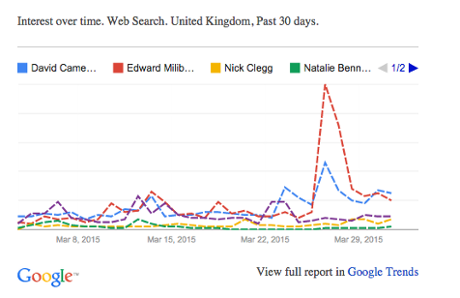
For Nigel Farage’s party it was “Are Ukip racist?” followed by “Why should I not vote for Ukip?” On the flip side, people were more interested in the policies of Ukip than any other party.
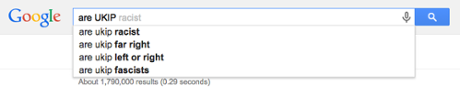
Here’s how the parties rank, when sorted by the number of Google searches for their party name, followed by “policies”:
- Ukip policies
- Green party policies
- Labour policies
- Conservative policies
- BNP policies
- SNP policies
- DUP policies
- Lib Dem policies
- Sinn Féin policies
- FUKP policies (Al Murray’s anti-Ukip protest party)
Updated
Scottish Labour Deputy Leader Kezia Dugdale has said the SNP should have the guts to admit their plan for full fiscal autonomy within the UK would be a disaster for Scotland.
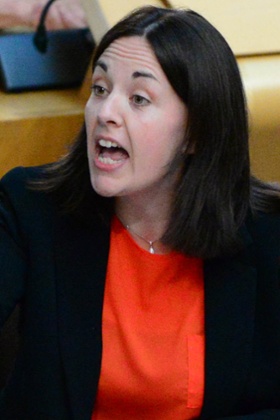
Speaking at First Minister’s Questions, Dugdale said the SNP’s plan for all public spending in Scotland to come from only taxes raised in Scotland would mean extra cuts to the NHS and schools worth £7.6 billion and the loss of 138,000 jobs. She added that full fiscal autonomy within the UK, the SNP’s central election demand, would see the block grant scrapped and Scotland’s budget becoming reliant on plummeting oil revenues.
Updated
We’ve got Cameron on video ruling out using jiu-jitsu on Nigel Farage.
Here’s our Politics Weekly podcast, complete with talk of zero-hours contracts and anti-immigration mugs. Joining Tom Clark to discuss it all are Guardian columnists Hugh Muir, Zoe Williams and Michael White.
Updated
Journalist Iain Martin has written a guide to tonight’s debate. He says Nicola Sturgeon is the major threat to the bigger parties, Miliband could triumph if he shows a little energy and humour, Cameron will be looking for a late break, Clegg will keep talking about how brave he and the Lib Dems were to go into coalition, and Nigel Farage will get “duffed up quite badly”.
George Osborne is tweeting about HS2.
Visiting @pulmansteel again with @allott4Halifax - 5 yrs ago they were struggling, now growing+creating 50pc more jobs #Longtermeconomicplan
— George Osborne (@George_Osborne) April 2, 2015
Here @pulmansteel they're literally building the #NorthernPowerhouse- providing steel for new railways for the north pic.twitter.com/Y3DMqe6btM
— George Osborne (@George_Osborne) April 2, 2015
Ed Balls threatening to put jobs + investment in Yorkshire and #Northernpowerhouse at risk by refusing to back HS2 to Leeds and Manchester
— George Osborne (@George_Osborne) April 2, 2015
Cancelling £21 bn investment would be a disaster for the North. Ed Balls should reverse. Let's stick to plan that's closing north/south gap
— George Osborne (@George_Osborne) April 2, 2015
Lunchtime summary
-
Nigel Farage has said he’d cap the numbers of people coming into the UK “below 50,000” during an appearance on the Today programme (see 8:16am).
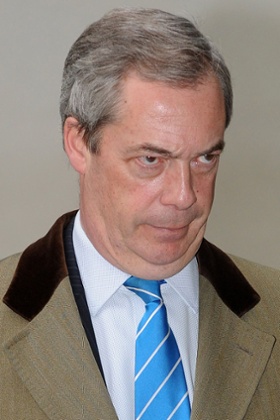
This whole debate [on caps] has devalued the debate … We have no control over the numbers that settle here.
We cannot have any debate about numbers while we are members of the European union.
I’d prefer not to be better off and have a country that didn’t go to 75 million [population] … Some things matter more than money; the shape of our communities and sense of contentment matters more.
- Farage also said the controversy his party have courted is down to “the people who’ve come from the Conservative party to Ukip”. He later accused the BBC of “clear and evident bias” in a series of tweets (see 8:48am).
-
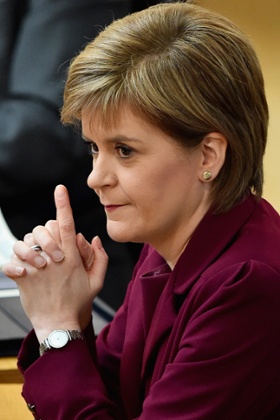
SNP leader Nicola Sturgeon has said tonight’s “historic” debate proves that the Westminster mould has been broken (see 9:01am):
This election is unprecedented in modern times and is a unique opportunity for voters in all parts of the UK. And tonight’s historic debate signals that it is not just Scotland that wants change, but people across the whole of the UK.
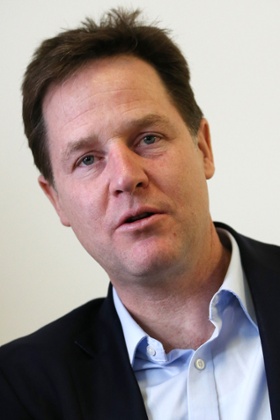
- Nick Clegg has said a multi-party coalition is “a recipe for insomnia” during a question-and-answer session on LBC this morning (see 9:45am).
- Ed Miliband has said Labour is still committed to HS2 during a talk in Bury, Greater Manchester (see 11:03am).
Updated
My colleague Frances Perraudin has sent me some quotes from Nick Clegg on the Lib Dem campaign trail.
When asked whether he could still do business with David Cameron after the next election, Clegg said:
Oh sure, of course. We managed to do so for five years through thick and thin. We had some pretty intense debates and arguments along the way. I take quite an unsentimental view of politicians’ duty to do the right thing by the country.
I don’t think politicians should start indulging in their own likes or dislikes or whims or wishes. If you go into public service as I have to try and do your bit for the good of the country that is what you’ve got to do day in day out and it means sometimes means working with people you don’t agree with. In my case working with the Conservatives who I don’t agree with and don’t agree with me.
The Liberal Democrat leader was then asked whether or not he trusted the prime minister:
We found a way of working together and that’s the bottom line, and that’s what the country expected of us in May 2010.
Clegg was asked whether he’s spoken to Ed Miliband much over the years.
Ed Miliband and I have seen each other a bit at state events and so on, of which there have been quite a spate over the past several years. But party leaders don’t spend a lot of time hanging out in the pub together, it doesn’t work like that.
He was asked whether he had had any discussions with Miliband:
No sort of structured discussions and I don’t think people would expect that. What I’ve learned over the past five years is that if you do enter into a working partnership with another party leader from a different party that wants to do different things, then you’ve really got to pin them down quite hard to the commitments that you want them to stick to in the coalition agreement.
It’s not a secret that I remain pretty sore that the Conservatives reneged and ratted on their agreement to introduce elections into the House of Lords which was both in the coalition agreement and in their own manifesto. But look, I actually think what we have succeeded in implementing from the coalition agreement is actually more important and more striking than those areas that we haven’t succeed in implementing.
Does he trust Ed Miliband?
Of course I can imagine circumstances in which the Liberal Democrats govern with another party because we’ve done it once before and we can do it again if that is what the British people want. If that is what is right for the country and we can do it in line with our values and instincts. I don’t want the Liberal Democrats to wrangle ourselves into power for the sake of it.
I personally believe that, much like last time, the instructions from the British people will be pretty clear as to what kinds of combinations could conceivably work and then its up to the parties to decide for themselves whether they want to enter into discussions and so on.
Updated
Here’s Lib Dem Candidate for East Dunbartonshire Jo Swinson discussing her party’s plans to triple paternity leave.
.@joswinson discusses our plans to triple paternity leave for fathers #GE2015 https://t.co/SR64Rep2gU
— Liberal Democrats (@LibDems) April 2, 2015
Jim Murphy has also said that Scottish Labour is pledging to boost NHS spending by 1 billion. “1 billion more for Scotland’s NHS and a thousand extra nurses,” he said.
Scottish Health Secretary Shona Robison has said the SNP would not vote against privatisation in the English health service provided it has no impact on Scottish spending. Speaking in Edinburgh this morning, Robinson said:
Obviously we don’t think the NHS in England is going in the right direction with the involvement of the private sector and so on.
But that’s up to them if they want to structure the NHS in that way as long as the impact of that doesn’t affect public spending.
If we were to see a reduction in public spending in England, that’s where it gets into the territory of affecting public spending in Scotland.
We will define the votes according to whether it has an impact on the NHS in Scotland.
Scottish Labour leader Jim Murphy responded that Robison’s “shameful” comments suggested she “couldn’t care less as to whether the NHS is in public or private hands”. He added:
The NHS is Labour’s greatest achievement, it’s got to stay in public hands.
The Labour Party will stand absolutely against the privatisation of the NHS whether it is north of the border or south of the border.
Quotes have been taken from PA.
Updated
Labour has made a manifesto promise that it will abolish fees for taking cases to an employment tribunal if it is elected to government. It’s a result of claims fallings after fees came into effect in 2013. The pledge, welcomed by trade unions, says the party would “ensure proper access to justice in the workplace by abolishing the Government’s employment tribunal fee system, as part of reforms to create a system that is quicker for employers and employees and cheaper for the taxpayer”.
We’ve got an interview with Plaid Cymru leader Leanne Wood before she takes her place on the panel for tonight’s debate. My colleague Peter Walker writes:
In the event of a hung parliament, Wood doesn’t sound especially minded to formally throw in her lot with either side. Backing Cameron is out – “we would never prop up a Conservative government” – but she has demands for Labour that seem unlikely: “We also wouldn’t be prepared to prop up a Labour government that was pursuing Conservative policies. We would want to see Labour end their commitment to austerity.
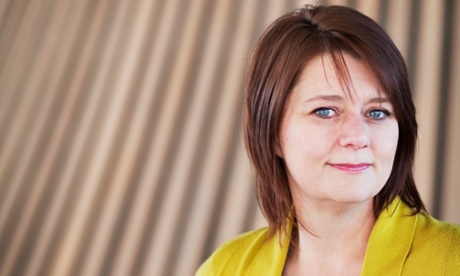
This anti-austerity rhetoric, rather than a focus on self-government – the new manifesto reaches page 36 before there’s a mention of Welsh independence – arguably puts Plaid Cymru politically closer to the Greens than their ostensible Scottish peers, the SNP, despite close Plaid-SNP links.
Wood, who describes herself as a socialist and republican, epitomises the new Plaid Cymru. Born in Rhondda, outside the party’s heartland of north and mid Wales, she is its first non-native Welsh-speaking leader, and remains far from fluent, making her possibly the only party boss to have needed a translator to follow her own annual conference.
Updated
Two of the business leaders who signed the Telegraph letter supporting Conservative policies are from companies who were named by the Government for not paying the national minimum wage.
Gets worse: "2 Tory letter signatories are bosses of comps named and shamed for cheating staff out of the min wage" pic.twitter.com/92HuprI6kt
— Kevin Maguire (@Kevin_Maguire) April 2, 2015
My colleague Libby Brooks has just sent me this about First Minister’s Questions in Scotland:
During a highly combative First Minister’s Questions, where Nicola Sturgeon was clearly warming up for tonight’s debate, both Scottish Labour’s Kezia Dugdale and the Conservatives’ Ruth Davidson challenged the SNP leader on her plans for full fiscal autonomy for Scotland.
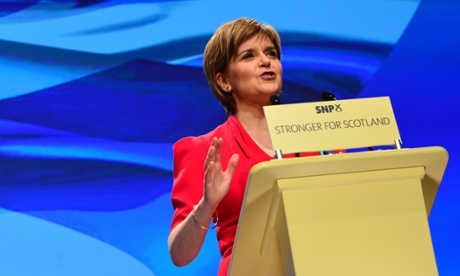
Sturgeon replied that she will work for more powers for Scotland, whether it is a Tory or Labour government after May, and challenged Labour to back the SNP in working for an alternative to the £30bn planned spending cuts, while Dugdale said that Sturgeon couldn’t bear to say the words ‘full fiscal autonomy’ because it would be a disaster for Scotland’s public services.
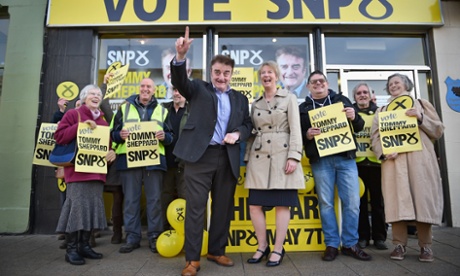
She insisted that the SNP was the only party offering a progressive alternative to austerity.
Updated
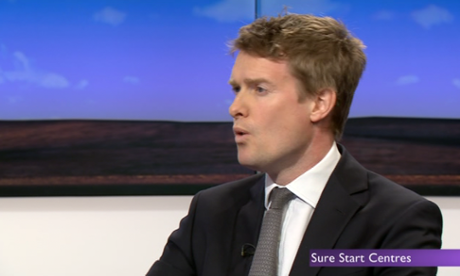
Tristram Hunt and Francis maude were just on the Daily Politics show to discuss Sure Start Centres:
Hunt:
In the vast majority of cases we’re seeing closures, we’re seeing 762 closures, and because of the extreme spending cuts by the Tories we’ll be seeing more. Before the last election David Cameron said he wouldn’t close any, and as soon as the Conservatives won they attacked those most in need of support.
Maude:
We’re not going to start closing Sure Start Centres. The only politician who’s said we should close them has been you, Tristram. There are more families using children’s centres today than has ever been the case before. What you refer to as closures are straightforward mergers.
Andrew Neil then asked Maude why spending on the centres had fallen by hundreds of millions of pounds. Maude replied that the important thing is how many families are using them, which he says is more than ever before. “We’ve shown you can deliver more and better services with less money,” he said.
Updated
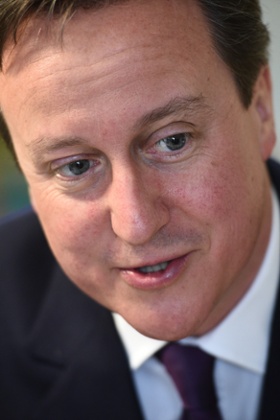
David Cameron has been asked about tonight’s debate by reporters in Warrington:
I am looking forward to it, because it is a chance to get across that we have a long term economic plan that is working ... I will be able to talk about a strong track record over the last five years.
Asked if he was nervous, Cameron said:
No, look, these things are big occasions, but the fact is if you have got a track record, you have got a long term economic plan ... then you’ve got something real to talk about, not just words.
I think it is a moment of great opportunity, the opportunity to talk about a long term economic plan that is working.
I relish the opportunity to talk about the track record, to talk about the plan, and to talk about the choice. Because of course the alternative to our plan is the chaos of a Labour government.
Quotes have been taken from PA.
Updated
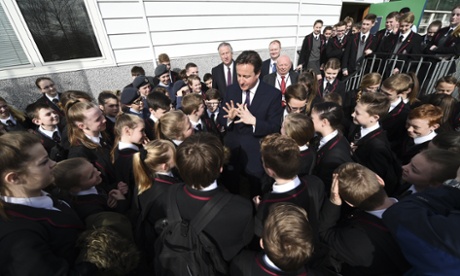
Radio interviews, visiting charities, and doing town hall Q&As – here are photos of what some of the party leaders have been up to this morning:


Updated
Cameron to reporters about his flooring Nigel Farage quip: “It was a joke, there will be no bodily contact tonight.” Well thank God for that.
Clegg now on BBC News, saying seven-way debate reflects fragmentation of British politics. He says only Cameron and Miliband want to turn the clock back to a time when blue team and red team took turns to govern the country:
Politics thankfully has become much more fluid than that.
More of the same really. I predict we’ll be getting a lot of this today.
Updated
David Cameron is meeting pupils at King’s leadership academy in Warrington.
David Cameron meets pupils at King's leadership academy in Warrington ahead of tonight's debate #warmup #GE2015 pic.twitter.com/cqhYoyhZAk
— Sallie George (@salliegeorge) April 2, 2015
"So shall I get Nigel Farage and put him on the floor?" David Cameron to a jiujitsu-loving pupil at the King's Leadership Academy
— Niall Paterson (@skynewsniall) April 2, 2015
Clegg was just on Sky News live from Cheadle, where he said the Lib Dems will do a lot better than: “the pessimistic punditry suggests”.
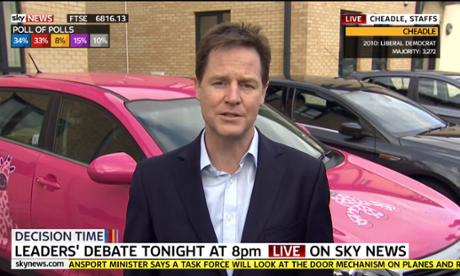
He said he went into politics because he wanted to do the right thing by the country he loves, and that it’s remarkable he’s leader of a party that has 8% of MPs in parliament and yet they’ve delivered more of their manifesto promises that the Conservatives have.
Updated
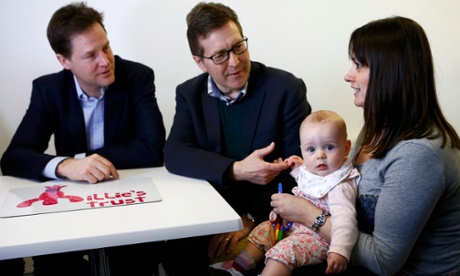
Nick Clegg is currently visiting the Millie’s Trust charity in Cheadle, which was set up in memory of Millie Thompson, the nine-month old girl who choked while eating her lunch at nursery in 2012.
Nick Clegg meets Joanne and Dan Thompson and Leo (6 weeks) at Millie's Trust charity in Cheadle pic.twitter.com/ZySqJdtopm
— Matthew Holehouse (@mattholehouse) April 2, 2015
Here’s the Guardian video of Nigel Farage talking about tonight’s debate. He says immigration should be top of the list of subjects the leaders will be debating.
Updated
This article, about certain factions of the media attempting to “other Red Ed” by Ivor Gaber, Journalism Professor at Sussex university, is worth a read:
But despite the ferocity and intensity of the ‘Red Ed’ campaign by the country’s two most popular newspapers, what is perhaps most noticeable is its lack of success. Anecdotally, this author can observe that it is rare indeed, in fact if ever, to hear the ‘Red Ed’ moniker being used in any public or private space other than the newsrooms of right-wing newspapers. But beyond anecdote is polling evidence indicating that the British public has not bought into this campaign in any significant way.
At the height of the ‘Red Ed’ campaign, the polling firm YouGov asked its respondents whether they agreed or disagreed with a number of statements about the party leaders. The statement about Miliband that ‘He is too left wing’ received the lowest ‘agree’ score (26 per cent). A month later, Ipsos MORI asked respondents to put Cameron and Miliband on a left/right scale. They found that Cameron was placed further to the right than Miliband was to the left.
Updated
Good luck, Salford.
So politcians, spin doctors, journos and rest of Westminster village going up to Manchester for tonight and trains aren't running tomorrow?
— Joe Twyman (@JoeTwyman) April 2, 2015

Reports are coming in from Miliband’s talk in Bury, Greater Manchester. I’ll post more from his talk if and when I get it.
Miliband said he valued the opportunity offered by tonight’s TV debate:
to talk directly to the British people and make a simple case”.
He added:
It’s a case for change, because I believe it is only when working people succeed that Britain succeeds.”
Miliband said:
There’s nothing that can stop our country when we work together, and that is my vision for the country. It is a country where we don’t just look after those at the top, but we look after everybody and it’s on that basis that we succeed.”
He said Labour would balance the nation’s books using:
fair taxes not unfair taxes” and said the NHS was “the bedrock of success for working families”.
Labour was “the only party at this election setting out a costed plan ... for 20,000 more nurses, 8,000 more doctors, 5,000 more care workers and 3,00 more midwives”, he said.
I’ve taken the quotes from PA.
Updated
Guardian political editor Patrick Wintour writes about Clegg’s appearance on LBC earlier (see 9:19am), in which he said multi-party coalitions were a “recipe for insomnia”. Is it a case of the Lib Dem leader limiting his options too early?
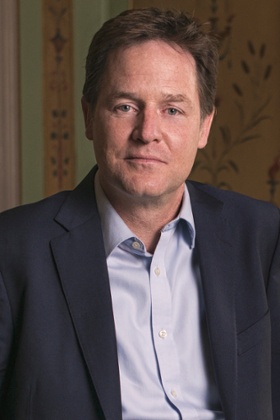
Nick Clegg, the Liberal Democrat leader, has come close to ruling out joining a multiparty coalition, saying rainbow coalitions produce messy governments.
He adds:
Opinion polls suggest there is little chance that a combination of only two parties will be able to get enough votes to secure a Commons majority. But Clegg insisted including more parties in a coalition was a “recipe for insomnia”.
The Liberal Democrats’ leader has already ruled out working in a coalition with the Scottish National party, but his latest remarks may have limited his options further.
Updated
Anxious Tories are urging David Cameron to change the tone of the party’s election campaign, my colleague Nicholas Watt reports, by following the example of Franklin D Roosevelt – the US president who won multiple White House terms during the Great Depression with the upbeat 1920s song Happy Days Are Here Again.
Perhaps Cameron can start by tweeting out this video.
Updated
Miliband says Labour is still committed to HS2. This is interesting, considering this afternoon, George Osborne is due to make a speech accusing Ed Balls of putting growth in the north at risk by “tearing up” plans for HS2.
In Bury Ed Miliband asked whether Labour is still committed to HS2 ... #GE2015
— Carl Dinnen (@carldinnen) April 2, 2015
On HS2 "The answer is yes we are committed, absolutely" #GE2015
— Carl Dinnen (@carldinnen) April 2, 2015
Ed Miliband is currently speaking in Bury. Here are some of the things he’s been talking about.
.@Ed_Miliband speaking in Bury: I'm the son of immigrants, but I'm proud to lead a party that has changed its stance on #immigration #GE2015
— DeHavilland (@DeHavilland) April 2, 2015
@Ed_Miliband is taking questions from voters in Bury and has pledged to end discrimination against immigrant workers. #GE2015
— DeHavilland (@DeHavilland) April 2, 2015
On the stump in Bury, @Ed_Miliband: "the young have been made to pay the price of hard times under this Government." #GE2015
— Andrew Woodcock (@AndyWoodcock) April 2, 2015
Ed Miliband suggests he could bring some Bury black pudding along for all the leaders at the #leadersdebates .#ge2015 pic.twitter.com/pNcGePSRWB
— Peter Hunt (@BBCPeterHunt) April 2, 2015
The latest Populus poll sees Labour leading by 2%.
Latest Populus poll (31 Mar - 01 Apr) LAB - 34% (-) CON - 32% (-2) UKIP - 15% (-) LDEM - 9% (+1) GRN - 5% (+1)
— Britain Elects (@britainelects) April 2, 2015
A bit of fun: online print and design company MOO has imagined what each party leader taking part in tonight’s debate would look like if they were houses in the popular TV show Game of Thrones (if you don’t watch the show, as you were):
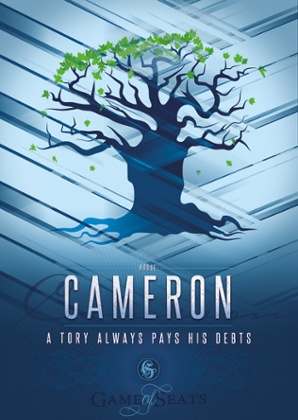
- House Cameron – Lannister-esque, the words for House Cameron reflect the Conservative Party’s focus on the economy: ‘A Tory Always Pays His Debts’. The sigil is a gothic interpretation of the Conservative’s emblem of a tree in Tory blue.
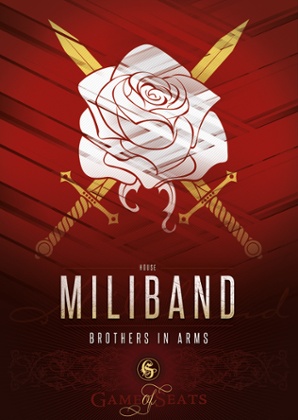
- House Miliband – The sigil for House Miliband incorporates the Labour rose between two crossed swords, representing the two brothers who competed for the party leadership. This is also reflected in the house words ‘Brothers in Arms’.
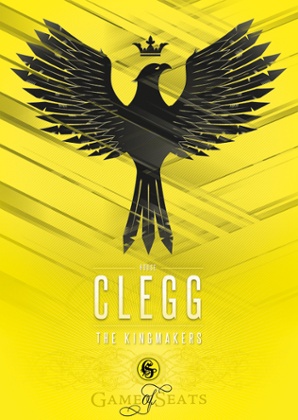
- House Clegg – ‘The Kingmakers’ are the words of House Clegg, with the Liberal Democrats instrumental in forming the coalition for the current government and likely to play a key role as ‘Kingmakers’ once more. The sigil is a gothic liberty bird taking flight with a crown above it.
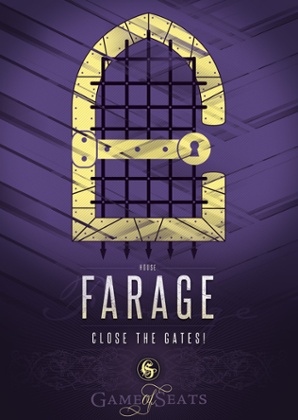
- House Farage – The sigil for House Farage incorporates UKIP’s ‘£’ symbol into a closed medieval gate along with the house words ‘Close the Gates!’ in reference to the party’s policies on immigration.
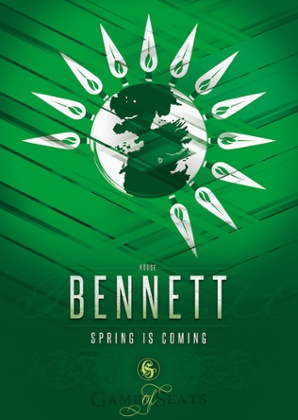
- House Bennett – While the Stark’s house words are ‘Winter is Coming’, appropriately the words for House Bennett are instead ‘Spring is Coming’. The sigil depicts protective spears as petals around a globe to form the image of a blossoming flower.
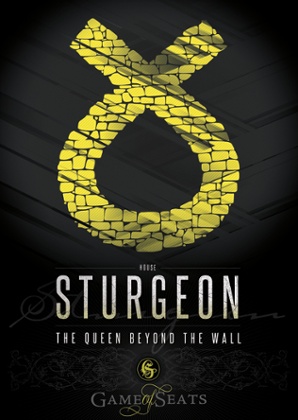
- House Sturgeon – Comparing Hadrian’s Wall to ‘The Wall’ in Game of Thrones, the sigil for the leader of the Scottish National Party incorporates yellow bricks into the party emblem on a black background. ‘The Queen Beyond the Wall’ are the house words.
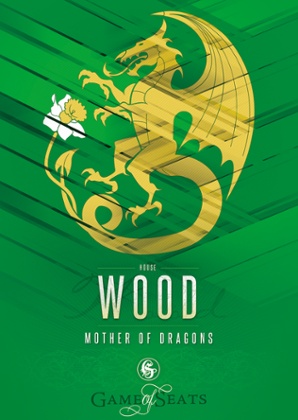
-
House Wood – Much like the Daenerys Targaryens of Game of Thrones, House Wood’s words are ‘The Mother of Dragons’ in reference to the Welsh Dragon. The party’s sigil depicts the daffodil of Plaid Cymru intertwined with the tail of a mighty yellow dragon on a backdrop of green.
Updated
Vicky Frost has written a piece for us about the “Borgenisation of British politics”. She wonders whether party leaders can do a Birgitte Nyborg and woo voters in a seven-way, Scandi-style extravaganza. I’ve included the first couple of paragraphs of her article below:
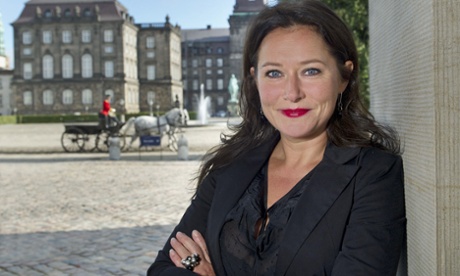
On paper, it sounded appalling. There were times when one sensed that the BBC, which had bought it in and placed it on the schedules, rather wondered aboutBorgen’s potential appeal. But by the end of its first broadcast on BBC4, the Danish drama series’ politicians were probably more popular than their real-life British equivalents.
So what made viewers swoon for Birgitte Nyborg, the pragmatic leader of a centrist party who, not unlike the show itself, subtly charmed her doubters? The same performance that swung it for Borgen’s fictional voters: her remarkable performance in a televised election debate. A debate, it bears emphasising, as we prepare for ITV’s seven-party extravaganza tonight, that also included a similar number of party leaders and gave each of them the opportunity to convince voters of their appeal.
Updated
Research from think tank British Future predicts that the next parliament will contain more ethnic minority MPs than ever before.
The think tank conducted detailed analysis of each ethnic minority candidate’s chances of winning, projecting the number of ethnic minority MPs in five different electoral scenarios depending on the national result on 7 May.
According to the first scenario in which each party wins the same constituencies it currently holds, both Conservative and Labour parties will have 18 minority ethnic MPs each.
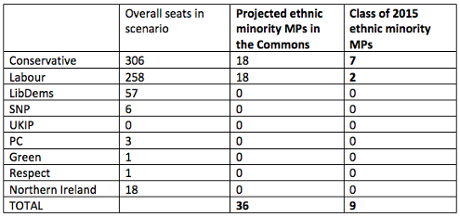
Remember, there were only 27 MPs from ethnic minority backgrounds at the 2010 elections, so this is positive news. I wonder how many of them are Lib Dems.
Updated
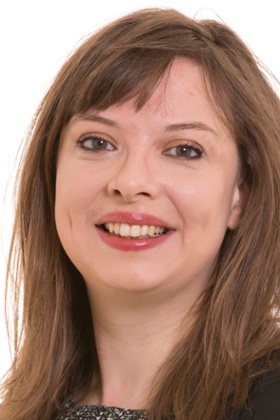
My colleague Rowena Mason has written a piece about Farage accusing the BBC of bias (see 8:48).
Nigel Farage accused the BBC of “clear and evident bias” after he came under pressure over the quality of Ukip’s general election candidates on Thursday.
She adds:
A number of them have been accused of making inappropriate comments and one was caught up in an expenses scandal, but the Ukip leader blamed Tory defectors to the party for causing the problems.
He criticised the BBC for asking him about them, saying other party leaders were not grilled about their rogue candidates.
Later he tweeted: “So the BBC admits it doesn’t think that other parties have bad eggs in their ranks. Clear and evident bias #r4today.”
Farage has previously claimed the party has become better at weeding out unsuitable candidates after it suffered similar problems during the last two years of council elections.
Updated
Research from Talkwalker, one of Europe’s biggest providers of social analytics, shows that Ed Miliband was the favourite on social media in the weeks preceding the official start of the election campaign. In March, his party got 1.24m mentions on social media. In comparison, UKIP got 784,000 and the Tories 540,000.
On the night of the leaders’ election debate, 44.5% of overall conversation went to Labour, and just 17.6% to the Conservatives. Ed Miliband also registered 70% of commentary across all online media on that evening, while David Cameron registered 23%.
I doubt social media is too telling of general public opinion though.
Former No 10 advisor Theo Bertram is currently tweeting about the debate. He reveals some interesting detail about the work that goes into debate prep, and also recalls Gordon Brown’s performance five years ago, including that unfortunate bigot-gate incident.
I worked on Gordon's team for the TV debates last time and there will be huge tension in all the camps today.
— Theo Bertram (@theobertram) April 2, 2015
Last time round there was 1 question Gordon's team hadn't anticipated but his answer was one of his best: http://t.co/n3AiUHJLiW
— Theo Bertram (@theobertram) April 2, 2015
First 30mins most important. The lobby and the spin doctors don't watch the last 15mins but start talking to each other instead.
— Theo Bertram (@theobertram) April 2, 2015
The debate team were watching Sky & waiting for Gordon to come back to prepare for the last debate. And then Mrs Duffy happened.
— Theo Bertram (@theobertram) April 2, 2015
Mrs Duffy: It felt like the roof had fallen in. Finally, he got back to the hotel, shattered, distraught but wanting to rehearse.
— Theo Bertram (@theobertram) April 2, 2015
We tried to rehearse - Alastair and I throwing questions at him - but it felt cruel. We stopped. Sarah encouraged him to sleep instead.
— Theo Bertram (@theobertram) April 2, 2015
The next day, the 3rd debate, the papers were full of Bigotgate. Some hacks openly relished the prospect of Gordon falling apart live on TV
— Theo Bertram (@theobertram) April 2, 2015
The third debate was the economy. Cameron had clear lines of attack. The financial crisis was biting. And now we had bigotgate.
— Theo Bertram (@theobertram) April 2, 2015
Given the previous 24 hours for Gordon - and the last 2 years for the economy - Cameron should have won that debate hands down.
— Theo Bertram (@theobertram) April 2, 2015
Gordon didn't self destruct. He has a deep reservoir of strength. After everything that had happened, he held Cameron.
— Theo Bertram (@theobertram) April 2, 2015
Updated
The Herald is reporting that Nigel Farage is preparing to attack Nicola Sturgeon in tonight’s debate for being an “establishment” figure, as well as being “pro mass migration” and “pro European Union”, according to party sources.
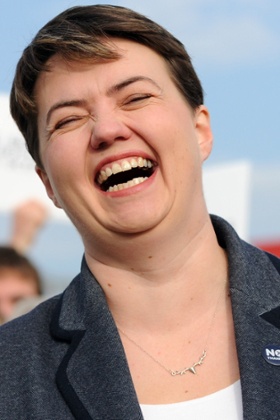
Ruth Davidson, leader of the Scottish Conservatives, has been interviewed on BBC Radio Scotland in the last of their leader interviews. She told the Good Morning Scotland programme that the public “want to see government slimmed down”.
Questioned on the Conservatives’ failure to fulfil its initial promises of deficit reduction she insisted:
We have halved the deficit and each and every one of our detractors would not have been able to do that. The Labour party has voted against every set of cuts we have put forward. The SNP tells us they would extend [the deficit] by £180bn more spending.
Asked about cuts to the benefits system she said:
We don’t believe that people should be left to rot on welfare. They should be helped back to work. One of the things I’m proudest of in the work of the coalition is that there are fewer children in workless households than at any time in the nation’s history.
Saying that she was working hard to win another seat in Scotland, she told GMS that she was delighted that David Cameron and the SNP had ruled out doing any kind of coalition deal with each other.
If the defining characteristic of a party is to break up the UK then you don’t put that party into the government of the UK.
Updated
Here’s the video of Ed Miliband on Absolute Radio yesterday.
One important factor to keep in mind ahead of tonight’s leaders’ debate is that for many voters it will be the first time that they see, or hear, from several of the participants.
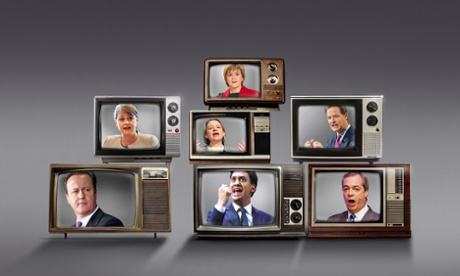
The Times reports that a YouGov panel of seven female and four male undecided voters failed to recognise the leaders of the SNP, Greens or Plaid Cymru when shown photographs earlier this week. The panellists were though able to name all the men taking part in tonight’s debate.
This same phenomenon of course greatly boosted Nick Clegg five years ago. However, Cleggmania didn’t last long as the election result wasn’t too dissimilar from the pre-debate polls.
In fact, another important thing to keep in mind is that over time few events change public opinion in a sustained way.
On the other hand, Ed Miliband will have a higher bar to clear this evening having exceeded expectations last week.
Updated
Some more from Clegg’s question-and-answer session on LBC:
- Clegg is asked what the Lib Dems can offer christian voters? “I’m not a man of faith myself but my wife and children are brought up as catholics. One of the values that is very central to liberalism is a belief in treating everyone fairly and as an individual. That’s a good instinct, because it’s all about making sure politicians play a role in giving opportunities to everybody on the most equal basis possible.”
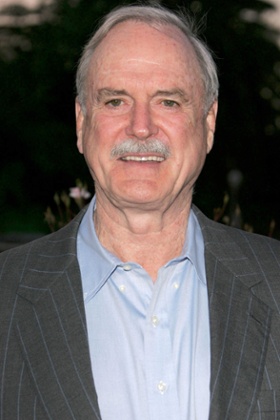
- Clegg is asked about the remarks of John Cleese, the comedian, who said he’d taken up the role of Nigel Farage to help Clegg prepare for tonight’s debate. Who’s been playing the role of David Cameron? Clegg laughs it off and says Cleese’s remark an April Fools’ joke. “No public figures have been playing the different roles.... I won.”
- Another caller asks how accurate Coalition, last week’s docu-drama on channel 4, was. Brian the caller asks: Did Paddy Ashdown want to go into coalition with labour? “There were talks about whether a labour-Lib Dem coalition was possible,” Clegg says, “It was the kind of thing Paddy and others wanted to explore. I had lengthy discussions with Gordon Brown, but there was never any sort of arithmetical possibility. The numbers quite simply didn’t add up.”
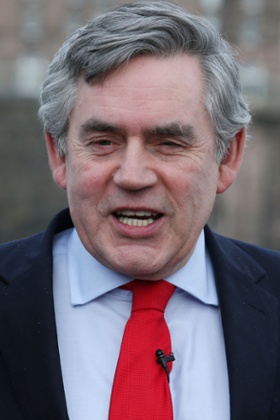
- On a scale of one to ten, how grumpy was Gordon Brown when you met him immediately after last election, asks radio host Nick Ferrari.
“In private he was good tempered and perfectly gracious. He was very adamant that one could create a rainbow coalition of different parties, and I do remember saying I don’t think that’s going to work. That’s even more relevant with this election. It’s a recipe for insomnia.
- A Stuart asks Clegg why we’re still giving aid to other countries when there’s been cut backs every where. Clegg says it’s a good thing we stuck to the commitment that we’d devote 0.7% of our national wealth to helping other parts of the world. It’s not just an act of charity, it’s also in our interest to help parts of the world that our violent or suffering from disease, he says. Stuart replies that it’s rubbish and a waste of money. Clegg, who’s starting to sound angry, asks if: “it’s a waste of money to help people with ebola? What about women and children raped in Syria?” Stuart says no money is given to cancer research in this country, and “we’ve got our own soldiers homeless on the streets! We don’t want our money given elsewhere. The taxpayer doesn’t want his money given away.” Clegg says he doesn’t get how Stuart can think it’s morally wrong for us to set aside 0.7% of our national wealth to help people suffering elsewhere.
- Clegg is then asked about yesterday’s letter to the Telegraph from business leaders supporting Conservative policies.
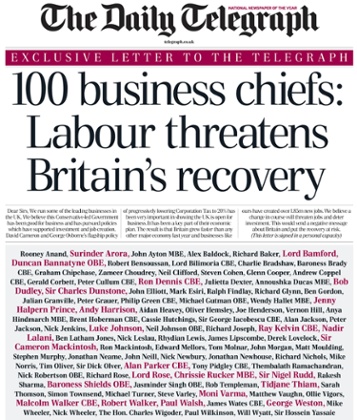
The business leaders were referring to overall strategy set by the coalition. The interesting thing was the letter said the great risk to the our economy is if we lurch one way or other. A Conservative-only government would lurch to the right. Osborne wants to impose ideologically-driven cuts.
- Clegg is then given pointers on tonight’s debate – use gags, roll your eyes, look disinterested, look at your watch, read a book, scratch your armpits, he’s told. “I’ll do that,” he laughs.
Updated
John, a caller, tells Clegg he voted Lib Dem at the last election, but he did not vote for an increase in student fees and the bedroom tax: “Many measures put in place to check balance of payments are hitting poorest hardest and are against your democratic value,” he says.
Clegg responds that he’s delivered, “in fact over-delivered”, on his manifesto promises, such as raising the point at which you pay income tax and the introduction of a pupil premium to help the education of poorest children.
He says:
We’re finally seeing the attainment gap narrow.”
- Clegg adds that people are acknowledging that no one is going to win outright at this election either:
You have to decide which parties you’d prefer working together. Having lib dems around the table is a good thing because we keep governments in centre ground.”
- He’s asked if he’d rather work with the Tories or Labour?
It’s for the voters to decide. I’ll follow the instructions of the British people. I doubt you’ll believe this, but I don’t think my whims and wishes are relevant. The only thing relevant is the cards dealt to us.
Updated
The first question for Clegg is from David. The caller says the coalition is boasting economic success, and asks Clegg why the balance of payments has decreased?
Clegg says the most conventional way to talk about our deficit and debt is as a percentage of our overall wealth, adding:
- When this government came into office our deficit was just over 10% of our GDP, its now about half that, but it needs to go down further.
- He adds: “What I think is important is to get rid of is the structural deficit, the bit of the black hole in our public finances. We hoped to get rid of that by now, but we haven’t. Tax receipts were lower than anticipated, growth was lower. We’ve cut it by half, and my party hopes to remove the rest of the structural deficit by 2017/18. Then we can start moving forward and funding public services.”
- David says Clegg isn’t answering his question. Clegg says in his view the most important thing is to make sure we pay for the day to day spending of society. He explains the concept of exporting and importing: “The most important fiscal issue isn’t balance of trade but balance in finances,” he says.
Updated
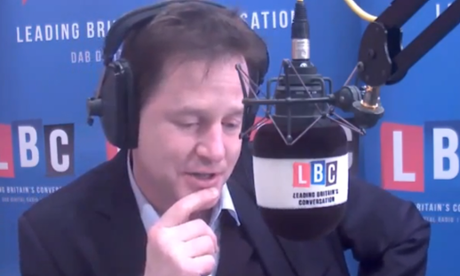
Nick Clegg's phone-in on LBC
Clegg sounds buoyant. Asked if he’s looking forward to tonight’s leaders debate, he says “I look forward to any opportunity to tell my side of the story”.
Updated
Hi all. Nadia here, I’m taking over from Claire now. Clegg’s currently on LBC, I’ll be posting a round-up of what he says very soon.
Nicola Sturgeon pre-debate statement
Another dispatch from Libby Brooks, who reports that SNP leader Nicola Sturgeon has said tonight’s “historic” debate proves that the Westminster mould has been broken:

This election is unprecedented in modern times and is a unique opportunity for voters in all parts of the UK. And tonight’s historic debate signals that it is not just Scotland that wants change, but people across the whole of the UK – it shows the mould of two and three-party politics at Westminster has been broken.
The Westminster establishment is being challenged as never before – and the likelihood of no single party commanding an overall majority is a great opportunity to bring about the change that people are looking for.
Updated
Nigel Farage – or whoever writes his tweets for him when he is simultaneously live on air – doesn’t seem too pleased about that Today programme interview with Mishal Husain.
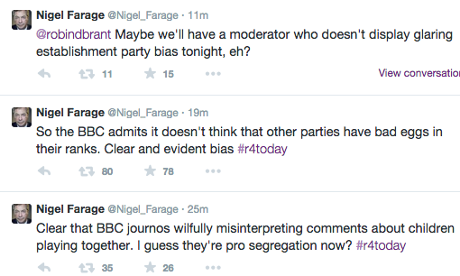
He also retweeted an indignant comment from Ukip MP Douglas Carswell:
It was not a Ukip candidate that tried to cut a deal with the EDL. It was a Conservative A lister candidate
— Douglas Carswell (@DouglasCarswell) April 2, 2015
It might be worth remembering that the Conservative candidate in question, Afzal Amin, was on the front page of most newspapers and the story about him was the lead story on the Today programme. Fair’s fair, and all that.
My colleague Libby Brooks sends this report:

Scottish Conservative leader Ruth Davidson has been interviewed on BBC Radio Scotland in the last of its series of leader interviews.
She told the Good Morning Scotland programme that the public “want to see government slimmed down”.
Questioned on the Conservatives’ failure to fulfil initial promises of deficit reduction she insisted: “We have halved the deficit and each and every one of our detractors would not have been able to do that. The Labour party has voted against every set of cuts we have put forward. The SNP tells us they would extend [the deficit] by £180bn more spending.”
Asked about cuts to the benefits system she said: “We don’t believe that people should be left to rot on welfare. They should be helped back to work. One of the things I’m proudest of in the work of the coalition is that there are fewer children in workless households than at any time in the nation’s history.”
Saying that she was working hard to win another seat in Scotland, she told GMS that she was delighted that David Cameron and the SNP had ruled out doing any kind of coalition deal with each other.
“If the defining characteristic of a party is to break up the UK then you don’t put that party into the government of the UK.”
Reader Rosemary Sutcliff points out that Boris Johnson’s venture into Twitter has a distinctly masculine air:
.@Claire_Phipps Yes the Tory candidate for Uxbridge and South Ruislip has taken to Twitter, but a male-only Twitter? pic.twitter.com/OWFFZAcNXp
— Rosemary Sutcliff (@rsutcliff) April 2, 2015
Ukip is not a negative party, Farage insists:
We’re the only party saying we should govern ourselves … actually that is a strong, positive message.
Ukip will succeed or fail depending on those people who did not vote in 2010.
It’s his job to win those people over, Farage says.
And that’s it.
So many of your candidates have to be turfed out. Do you ever as yourself if it’s you, Husain asks him.
I seriously wonder whether we have a fair system when any story about a Ukip candidate makes the news, Farage says.
It goes on and on, Husain tells him.
Farage says there is a problem with people who’ve come from the Conservative party to Ukip.
We weed out those who do say or do inappropriate things.
Why are these candidates attracted to Ukip, he is asked.
He says he’ll only answer if other party leaders are asked the same.
Don’t we need immigration, Farage is asked:
I’d prefer not to be better off and have a country that didn’t go to 75 million [population] … Some things matter more than money; the shape of our communities and sense of contentment matters more.
Farage concedes that plasterers and electricians are skilled workers, but says immigrants in those trades are not always up to the same standard as British workers.
It’s driven down the wages, and damaged the lifestyles, of British families, he says.
Husain points out that were the UK to adopt the Australian-style points system approved of by Ukip, immigrants with these skills would be able to come to the UK. You’d need a cap, she tells him.
Pushed, Farage says he’d cap the numbers of people coming into the UK “below 50,000”:
This whole debate [on caps] has devalued the debate … We have no control over the numbers that settle here.
We cannot have any debate about numbers while we are members of the European union.
Updated
Spookily, Farage is managing to tweet while live on air:
You can't cap net migration. You can't stop the people who are leaving. All this talk about government caps are ludicrous. #r4today
— Nigel Farage (@Nigel_Farage) April 2, 2015
He says the 30,000 figure touted by Ukip is not a cap; you can’t cap it when you don’t have control of who leaves the country, he says.
Nigel Farage’s Today interview

Nigel Farage is on the Today programme.
He’s asked about his claim earlier this week that children can’t play in the streets because of immigration.
I want us to live in a society that is integrated.
That might be what you want to say today, says Mishal Husain. It’s not what you said then. (Here’s the story; read for yourself.)
Just travel up the east of England, you’ll see we don’t have integration, he says; children don’t mix.
Updated
The BBC’s political editor, Nick Robinson, currently convalescing after surgery to remove a tumour, wonders what it means to “win” the TV debate (like it or not, there will be a rush to declare a victor, whatever that might mean):
Most voters – perhaps particularly the ‘undecideds’ – will come to a view of who won without actually having watched any of the debate at all. Many others will have watched for just a few minutes.
That is why the spin doctors try so hard to establish that their leader came out on top. That is why the selection of the clips that make it onto news broadcasts or onto You Tube or Facebook are so important.
Bit disappointed he didn’t mention the Guardian morning briefing, to be honest.
The TV debate format
How will it all work, I imagine you asking this morning. With seven party leaders who’d all rather hear themselves speak than give their opponents a moment’s airtime (OK, I’m guessing, but it’s a safe one), tonight’s line-up has the potential to get a bit shouty.
Here’s how it’s supposed to work.
Who stands where
The leaders stand at podiums, from left to right:
- Natalie Bennett (Green)
- Nick Clegg (Lib Dem)
- Nigel Farage (Ukip)
- Ed Miliband (Labour)
- Leanne Wood (Plaid Cymru)
- Nicola Sturgeon (SNP)
- David Cameron (Conservative)
Don’t read too much into the positioning – lots were drawn to decide the order.
Who speaks when
Bennett will be the first speaker; Cameron will get the last word.
There’s a handy grid that I added to today’s morning briefing; here it is again, as there really is no clearer way to describe it that won’t make you want to smash the screen you’re reading this on:
The order of speaking in the leaders debate #GE2015 (source: http://t.co/MA4oGWThUY) pic.twitter.com/DqHyDzRJnK
— george arnett (@grbarnett) March 31, 2015
How long do they get?
Each leader gets to make a short opening statement.
Then there are four questions (not disclosed to the contenders in advance). For each question, every leader gets one minute – uninterrupted – to answer directly. Then we move on to what ITV News promises will be “moderated discussion” between all seven leaders. That’s another 18 minutes per question.
After the four questions, they all get to try to win us over a final time with a closing statement.
The whole thing is slated to last two hours, with one ad break.
Who’s in the audience?
ITV News says:
The audience of around 200 people has been selected by polling company ICM. It is broadly demographically representative of the UK. It is also politically balanced.
Around 80% of the audience will be made up of voters who express a voting intention at the time of recruitment. Around 20% of the audience will be ‘undecided’, defined as being interested in politics and intending to vote, but not having decided which party to vote for at the time of recruitment.
Matthew Goodwin, associate professor of politics at Nottingham University and author of Revolt on the Right, on the rise of Ukip, is on the Today programme.
He says Ukip’s appeal has “dwindled” from the highs it was previously seeing.
Nonetheless, he goes on:
Nigel Farage is probably feeling really confident.
Just 8% or 9% of the vote would give Ukip a “tangible impact” on the election outcome. But many believe it will take between 10% and 13% of the national vote.
Goodwin says Ukip can also affect the outcome without actually winning those seats, in places where it take votes from the other parties.
With local elections also being held on 7 may (the highest number since 1979, Goodwin says):
We’re likely to see Ukip entrenching itself in particular parts of the country … [as well as] taking something like three to six constituencies.
As I just said on @BBCr4today the academic consensus is Ukip likely to take 10-12%, approx 3 million votes & anywhere between 1 & 5 seats.
— Matthew Goodwin (@GoodwinMJ) April 2, 2015
Updated
Morning briefing
Five weeks until polling day: I expect you’re all terribly excited. There are likely to be a few butterflies in party leaders’ stomachs today as they make the journey to Salford for tonight’s TV debates. Today’s morning briefing is your bookmark-and-keep guide to what to expect, along with all the other politics news of the day.
I’m Claire Phipps, starting off the blog this morning, before handing over to my colleagues who’ll take you right through to the debate and beyond. You can chat to me on Twitter @Claire_Phipps or in the comments below.
The big picture
Consider today one very long warm-up session for tonight’s debates (more on that further down this briefing).
Elsewhere, the row over the Telegraph letter from 100 business leaders rumbles on:
One story, two angles #tomorrowspaperstoday pic.twitter.com/mcpl3DXAJY
— Neil Henderson (@hendopolis) April 1, 2015
For that Labour letter, and its supporters, see here. The Telegraph’s latest salvo is here.
Should you want to know more about these 100 Telegraph signatories – whether any of them have had issues with tax avoidance, say, or have given sizeable sums to the Conservatives – do take a look at our full guide here.
Other things to note:
- David Cameron, in an easter message, has confessed he is “hardly a model church-going, God-fearing Christian” but vows he is not “devoid of morality”.
- Labour says a further 1,000 SureStart children’s centres could close under a future Tory government.
- Nick Clegg has scoffed at suggestions – predicted in polling by Lord Ashcroft – that he is on course to lose his own seat in Sheffield Hallam.
- And the day’s big news: Boris Johnson has joined Twitter. This isn’t the official @MayorofLondon account, but a personal one, which he might even compose himself:
Good evening Twittersphere. This is Boris, communicating to you live and direct. Watch this space for my updates from the campaign trail...
— Boris Johnson (@BorisJohnson) April 1, 2015
Nadia Khomami’s round-up of Wednesday’s main action is here.
And here’s a look at how the parties stand before tonight’s showdown:
Diary
- At 8.10am, Nigel Farage is interviewed on the Today programme.
- At 9am Nick Clegg hosts his regular LBC Call Clegg phone-in, and the Lib Dem battlebus roars up to Cheadle.
- At noon, Nicola Sturgeon faces first minister’s questions at Holyrood.
- This afternoon, on a visit to Yorkshire, George Osborne will make a speech to accuse Ed Balls of putting growth in the north at risk by “tearing up” plans for HS2.
- At 3pm Green party leader Natalie Bennett meets supporters in Manchester.
- From 8pm to 10pm, it’s the leaders’ debate on ITV, live from studios in Salford and chaired by ITV News’ Julie Etchingham.
- Straight after the debate, there will be four separate snap polls, including one by ICM for the Guardian. We’ll have them on the live blog, naturally.
- Gordon Brown is also making a speech tonight, in Kirkcaldy, where he’s expected to say that SNP policies would “break the hearts of the poor”.
The big issue
It’s the TV debate. And obviously the TV debate is just a TV debate. It’s 7 May that counts blah etc. But it would be hard to argue that how the seven party leaders (my colleague Rowena Mason has profiled them all here) perform tonight will have no bearing on how they’re viewed by voters – and by the media – in the coming days and weeks. It is the only time that the prime minister will go head-to-head with any of his opponents.
So, what to expect?
A Times poll of viewers says David Cameron is likely to win the debate; Nigel Farage is also predictably predicted to come out of it well. But striking is the climb in expectations for Ed Miliband since last week’s encounter with Jeremy Paxman:
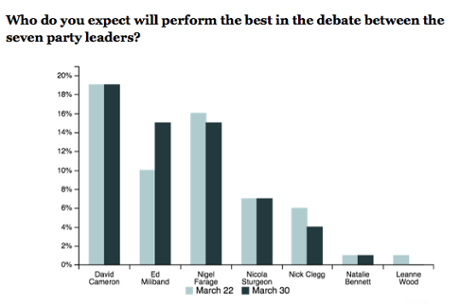
Yesterday Samantha Cameron exclusively revealed that her husband “doesn’t seem too nervous”. His tactic, we learn, will be to step back, let the others dive into a cacophony and give a shrug to the viewers: see, this is what happens when you don’t vote for a majority Tory government.
Farage, on the other hand, had his “I’m too cool to revise; I’m just going to wing it” schoolboy pose dented by his Ukip colleague Patrick O’Flynn, who told reporters the party leader was preparing in a “rigorous” way by studying briefing documents and figures.
Ed Miliband – typically written off as too awkward for media showiness – is certainly becoming more polished. My colleague Andrew Sparrow was impressed by his speech yesterday. It looks as if Operation Let Ed be Ed is taking off: witness his interview with Absolute Radio’s Geoff Lloyd, below. Some lighthearted questions, sure, but convincingly free of the cribsheeted popular culture references that often dot these encounters. For example:
I definitely don’t have time to have an opinion on Top Gear … you should talk about what you know about.
(What he knows about turns out to be baseball, Manic Miner, Geoffrey Boycott – plus there’s some policy thrown in, too. Well worth a watch if you have 15 minutes spare.)
Nick Clegg probably isn’t feeling too rusty: it might be a long time since “I agree with Nick”, but he had a run-out/run-in with Farage last year ahead of the European elections, and despite losing (the TV polls and the election itself), insisted he was “delighted” to have taken part: “I don’t feel bruised at all.”
The London-based party leaders ought to be worrying about Nicola Sturgeon (though don’t expect many “I agree with Nic”s from them). The Scottish first minister isn’t standing for Westminster, of course – nor is another of tonight’s participants, Plaid Cymru leader Leanne Wood – but her SNP party will be central to arguments this evening. Presumably Cameron and Miliband will have to tone down references to Alex Salmond in the presence of the actual party leader, but who knows?
We’re told Sturgeon is set to attack Cameron on his government’s record on welfare. Let’s hope the prime minister has come up with a better answer on food banks than he produced last week.
Green leader Natalie Bennett will speak first, a rare chance to dangle her party’s key pledges in front of several million viewers. Cameron gets to wrap up the debate. And in between we see them answer four questions. Immigration, economy and the NHS feel like good bets to me. I’m hoping the last isn’t an “and finally” funny. I can’t imagine any of us will be in the mood by that point.
Read these
- It’s a topic unlikely to come up in tonight’s debate, but Michael Gove is writing in the Spectator “in defence of Christianity”:
One of the saddest moments during my time as education secretary was the day I took a call from a wonderfully generous philanthropist who had devoted limitless time and money to helping educate disadvantaged children in some of the most challenging areas of Britain but who now felt he had no option but to step away from his commitments because his evangelical Christianity meant that he, and his generosity, were under constant attack.
- In the Guardian, Suzanne Moore is in Thanet, Farage’s target seat:
What is clear is that Farage needs Thanet more than Thanet needs him. Many locals are incensed at the publicity surrounding him, as it paints their part of the country as inherently small-minded and racist. It’s all a lot more complicated than that … Their feeling of abandonment is not conjured out of thin air, and it is no good to just say their emotions are imaginary.
-
Jenni Russell, in the Times (paywall), says the TV encounters show that David Cameron is not used to being challenged on detail:
He is surrounded by people whose job is to say yes to whatever he wants. He couldn’t take decisions and keep to his policies if he had to argue their merits at every count … A Lib Dem says that the constant opposition Cameron has faced from his coalition partners doesn’t give him the insights that arguing with a trusted insider might do. ‘He doesn’t budge in what he thinks even if he has to give way — he just gets irritable.’ Cameron sees their opposition as a problem to be handled, not as an occasion to stand in another’s shoes.
- Stephen Bush, in the New Statesman, wonders who else among the Lib Dem top team could be threatened with redundancy come 8 May:
Forget being unable to negotiate a second coalition with the Conservatives – assembling a team capable of negotiating and selling any deal with anyone to the rest of the party may be a bridge too far for whatever remains of the Liberal Democrats.
The day in a tweet
A reminder for those who haven’t committed it all to memory:
Got this memorised for Thursday? The order of speaking in the leaders debate #GE2015 (from: http://t.co/RxLamrDKSI) pic.twitter.com/YQzg3Uc53I
— Asa Bennett (@asabenn) March 31, 2015
If today were a song, it would be…
Continuing the Harry Nilsson theme commendably started in yesterday’s live blog: Everybody’s Talkin. Probably all at the same time.
The key story you’re missing when you’re election-obsessed
A UN report says the number of foreign fighters joining Isis and other terrorist groups has reached more than 25,000 from more than 100 countries.