If political leadership consists of setting the agenda of government and mobilising enough support to see it through, how have David Cameron, Ed Miliband and their many wannabe rivals been doing at the halfway mark in the 2015 general election campaign?
The short answer must be “this week has been better than last week”, when the campaign’s most memorable moment was Michael Fallon’s foolish and unsavoury attack on the Labour leader’s patriotism. It helped give Miliband a much-needed lift in public esteem and highlight the uninspiring negativity of the Tory strategy to date. Too much fear, not enough future. Vision matters.
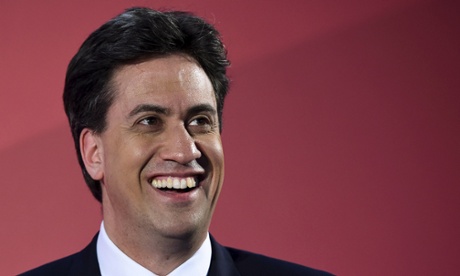
Who did better this week? Miliband for one. His sternly earnest default position, both in Thursday night’s TV debate and at Monday’s manifesto launch, could do with more cheerfulness. When he smiles properly, as he did towards the end of David Dimbleby’s debate, you start to see why all those women fought over him 20 years ago. As with his belated rectitude over public finance - Gladstone again - it may be too little too late, but in a dealigned age when the result is uniquely unclear, millions of voters will dither their way into the polling booth. A warm grin could make the difference.
Miliband’s rise from a low tabloid-engineered base to slightly prime ministerial served to remind the political class that the former Tory chairman Chris Patten had been right to warn that his party should fear him more than Ukip’s Farage. Amid all the uncertainty they encounter on the doorsteps of Middle Britain, Tory and Labour veterans both confirm that shift. Miliband as PM remains a doorstep issue, but not as potent as Neil Kinnock proved to be in 1992.
Thursday’s TV debate should have reinforced his claims. There was novelty in seeing a left-leaning Labour leader being out-leftied by three rivals whose evident distaste for austerity - except towards Trident - and all forms of Toryism would have made them natural Labour leftwingers but for thecall of nationalism (Nicola Sturgeon and Leanne Wood) or doctrinal imperative (the Greens’ Natalie Bennett). The startling fact that they were all women made it more so. They have clearly not inherited Thatcher’s taste for frugal economics.
It was, of course, ridiculously unbalanced. There were three women, three nationalists (Farage is one), four Tory-bashers, no centrist (Nick Clegg) and only one government leader in Sturgeon, who is not actually standing. Cameron’s decision to bully the hapless broadcasters into an opposition-only third debate was a mistake, likely to reinforce the prejudice that he is an over-entitled elitist, too posh to push. As a coalition partner, Clegg became collateral damage - deliberately so after 2010’s Cleggmania moment - making the debate a rare example of Hamlet without either the prince or Ophelia.
With most of the fire directed against Cameron, and less against Miliband than he must have feared, the DPM and Lib Dem policies were barely mentioned in the 90-minute session. Though his manifesto launch offered voters a deft soundbite - Lib Dems will give Labour brains and the Tories heart - Clegg has struck an uncertain note this week, sometimes sounding as if he would prefer to lose than enter coalition talks with Miliband. Perhaps he fears losing his Hallam seat, a defeat the Tories fear too.
The rose garden partners were not Thursday’s only absentees. Bennett included climate change, the Greens chief raison d’etre, almost as an afterthought in her closing statement, being much more concerned to stress her concern for mainstream issues like poverty and inequality. Whether it was a lost opportunity or a masterful tactical appeal to disgruntled Labour voters will only be known on 8 May.
Core voters will have loved Bennett’s seriousness and sincerity, but elections are never won by core voters alone, only by reaching out. This test is the key failure of all 2015’s campaigns with the Labour-wooing exception of Sturgeon. The SNP leader and Scotland’s first minister again did well in the Methodist Central Hall debate. She is a Marmite - or is that Irn Bru? - politician who arouses powerful feelings both ways.
The Glasgow lawyer is fast on her feet and her challenge to Miliband - will you save Cameron rather than vote with us? - garnered more overnight headlines than his “debate me head-to-head” challenge to Cameron. The SNP government has been marking its own homework for so long now that Sturgeon may not realise the chilling impact her words may have on Middle England. Perhaps she does and, like a tenant at the end of a long lease, is happy to wreck the UK flat for someone else to fix.
Under the quaint rules, Sturgeon’s Welsh counterpart, Carwyn Jones, whose presence might have diluted the heady cocktail of anti-austerity rhetoric, was absent, replaced by Wood, who did well enough, much as plucky FA Cup giant-killers do against better players. And Farage? As Miliband complained, he appeals to voter fears with simplistic remedies, but he does it cleverly. When he attacked the BBC’s studio audience, he was saying what Ukip voters think in their armchairs. When he blamed immigrants for the housing shortage he was being no more selective than rival leaders who denied they are any part of the problem.
Watching it all, Cameron may have felt justified in leaving viewers - and financial markets - to savour the would-be “coalition of chaos” on display. He is not a natural campaigner, not extrovert or passionate enough, too rational and pragmatic to convey a true leader’s sense of strategic conviction, just the well-bred politeness of a squire obliging with selfies while opening a fete. His manifesto launch was above his modest average, but this was the week when Cameron and his political soulmate, George Osborne - Blair and Brown without the aggro - decided they needed more than “don’t let Labour ruin it” to break the stalemate in the polls.
“Ruin what?” is the answer for millions. So they started spraying around uncosted promises – the NHS, childcare, train fares and that old Thatcherite favourite, subsidised home-buying, and talking optimistically of the good life ahead. Little wonder that assorted experts and thinktanks, led by the Institute for Fiscal Studies, have been so noisily disdainful of both his and Miliband’s more garish promises to a sceptical public.
Voters do not believe them, yet in this strange leader-lite election, they are tempted by the tree-grown theory of money expounded by Thursday’s smaller rivals. As Cameron and Miliband struggle to end the deadlock in their own favour, they may well look to leaders beyond Britain’s shore. Next week in Riga, EU leaders and Athens’s Syriza-led coalition will make one last attempt to stave off a eurozone train crash.
Signs are gloomy, but talks will go down to the wire. Perhaps the leader who will tilt those dithering British voters one way or the other is Greece’s Alexis Tsipras.