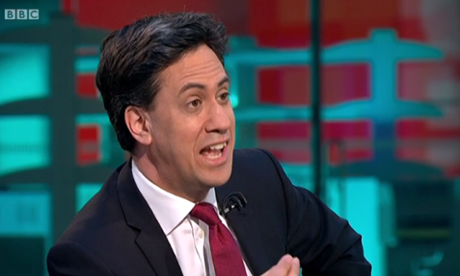
Jamie Grierson's evening summary
Nicola Sturgeon, a woman who is not even running as a candidate in this election, remained firmly at the heart of a campaign dominated by figures who once upon a time lurked in the political periphery. Politicos, columnists and journalists are fiercely divided over Sturgeon and her intentions. Piers Morgan says she’s the most dangerous woman in the world. Boris Johnson likens her to King Herod. The BBC’s Nick Robinson says she is the “undoubted star” of the campaign. The Guardian’s John Crace praises her “majesty”.
The big picture

However she is viewed, it very much feels as if the ball is in Sturgeon’s country. The other leaders are spooked. David Cameron accused the SNP leader of making a “chilling intervention” in UK politics. Danny Alexander warned Sturgeon’s spending pledges were a “death sentence” for progress in repairing the public finances. Ukip’s Nigel Farage said the other leaders had exposed “appalling weakness” in the face of the SNP. Ed Miliband has been so shaken by surging Sturgeon he has resorted to talking like an American teenager: “It ain’t gonna happen,” he said, when asked if the SNP would end up “calling the shots”.
What’s happened today
- Nicola Sturgeon had been challenged over the affordability of hefty spending pledges after she launched an explicit bid to coax Labour into an anti-Tory alliance at Westminster. The first minister openly wooed English Labour MPs by committing the Scottish National party to backing key Labour tax policies, pledging that her party would “hold out a hand of friendship” rather than seek division at Westminster.
- Leading Conservatives are playing a “short term and dangerous” game that threatens the future of the UK by building up the SNP as a way of damaging the Labour party in Scotland, Lord Forsyth, the senior Tory peer, has told the Guardian. In a sign of deep unease among senior Tories at some of the party’s tactics, Lord Forsyth of Drumlean accused the prime minister of having “shattered” the pro-UK alliance in Scotland and stirring up English nationalism after the Scottish independence referendum last year.
- Another coalition between the Conservatives and the Liberal Democrats is not going to happen, Andrew George, the Liberal Democrat MP for the highly marginal seat of St Ives has declared. His leader, Nick Clegg, has insisted his party is determined to form a coalition with either the Tories or Labour. Clegg is due to campaign in the seat for George on Monday.
- David Cameron must take some of the blame for the deaths of hundreds of migrants in the Mediterranean because of his fanaticism in toppling Muammar Gaddafi, Nigel Farage has said. The Ukip leader said the prime minister and other European leaders must take responsibility for destabilising Libya when they ousted the Gaddafi regime in 2011, arguing that fewer migrants attempted to cross the sea before then.
- Nigel Farage, the Ukip leader, is taking an even more hostile stance to the SNP than the Conservatives (see 13.23). He has issued this statement, accusing the Conservatives, Labour and the Lib Dems of all showing “appalling weakness” in the face of the SNP.
- The Conservatives remain ahead of Labour in the latest Guardian/ICM general election campaign poll – by a narrow margin. The Tories are on 34%, a big drop down from the 39% which they had risen up to with ICM last week, but still two points clear of Labour, which slips back one percentage point, to 32%.
- The Conservative party’s problem in attracting voters from ethnic minorities could cost them nine seats at the next election, and up to 50 by the middle of the next decade, according to new research. Analysis by the Runnymede Trust thinktank suggests David Cameron’s party must redouble its efforts to engage this growing group of voters, particularly in the capital.
- Eligible British residents have until midnight on Monday to register to vote in the 7 May general election, which is one of the most unpredictable the country has faced in decades. Party leaders have been making renewed efforts to persuade potential voters to register, after Office for National Statistics data showed 800,000 people dropped off the electoral roll in 2014.
- Nigel Farage, the Ukip leader, is taking an even more hostile stance to the SNP than the Conservatives. He has issued this statement, accusing the Conservatives, Labour and the Lib Dems of all showing “appalling weakness” in the face of the SNP.
- Labour has promised to retrofit 5m homes over the next decade, making them warmer and cheaper to heat, and to create a million new green jobs. Launching its green manifesto nine years to the day after David Cameron’s hug-a-husky photo opportunity in the Arctic, the party said it would establish energy efficiency as a “national infrastructure priority”.
- The Guardian’s latest projection of all polls, updated to include Monday’s ICM findings, sees Labour and the Conservatives still virtually tied (Miliband’s party is on 271 seats, Cameron’s on 270). The SNP is projected to win 55 of Scotland’s 59 seats, the Lib Dems 28 across the UK and Ukip four.
Quote of the day
It ain’t gonna happen.

Ed Miliband came over all US beatnik when Evan Davis asked him if the SNP would end up “calling the shots”.
Laugh of the day
Cool Ed Miliband sought to fuel what Channel 4 News’s Cathy Newman called “Milimania” with this hilarious parody account on Twitter.
Ed Jagger #HellYesEd #CoolEdMiliband pic.twitter.com/wiJRVvwBJD
— Cool Ed Miliband (@cooledmiliband) April 20, 2015
Hero of the day
The “most forceful voice in British social democracy”, “impressive performer”, “class act”, “undoubted star”, “majestic” - praise was heaped on SNP leader Nicola Sturgeon after she launched her party’s manifesto.

Villain of the day
“Herod”, “scorpion”, “most dangerous woman in the world”, “superiority complex”, “chilling” - Scotland’s first minister Nicola Sturgeon may have been cheered on by some, but just as many view her as a major threat to the union.
Tomorrow’s agenda
Ed Miliband will pledge to take action to “save the NHS” from day one of a Labour government with a rescue plan to boost funding and tackle a “crisis” in staffing, the Press Association reports. Highlighting records showing one third of NHS Trusts were investigated last year over concerns about safe staff levels, the Labour leader will say he would order an emergency round of nurse recruitment immediately on taking power.
BBC Daily Politics continues its debate week with foreign affairs taking centre stage. Foreign secretary Philip Hammond, shadow foreign secretary Douglas Alexander, Lib Dems Tim Farron, Ukip’s Douglas Carswell and Patrick Harvie.
And Ukip leader Nigel Farage will appear on BBC Leader Interviews with Evan Davis.
That’s it for me for today. It has been a pleasure. Join the Guardian’s election team tomorrow morning, as we bring you the latest news, reaction, analysis, pictures, video, and jokes from the campaign trail as the country’s politicians continue to play the Game of Thrones. You can all guess what I’ll be watching on catch-up when I get home.
Updated
Chuka Umunna, the shadow business secretary, said one in seven company directors should be from black or minority ethnic backgrounds, in an interview with the Evening Standard.
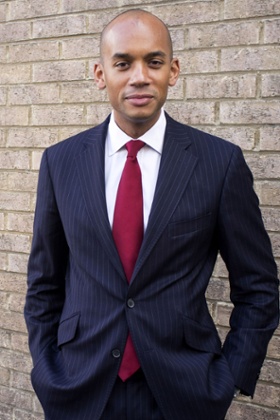
The Streatham MP, often tipped to be a future Labour leader, said that the diversity deficit in Britain’s boardrooms needed to be tackled. Umunna said a 14% black and minority ethnic representation target in boardrooms – to reflect the national population – will be recommended by a commission under a Labour government.
He told Joe Murphy, the Evening standard political editor:
We have got to go further and look at not just gender diversity but ethnic diversity in British business leadership. There are hardly any black CEOs.
On London businesses, Umunna said:
I don’t think the only reason people come to London is because of our competitive tax rates. A lot of business and financial services come here because they like UK law, they like the time zone, we have the English language, and we are a magnet for talent. People like living in a rich, diverse and creative city, and that is ultimately the draw.
He added that bankers cost the country £1.3 trillion and should not resent a bonus tax to fund jobs for the young.
Umunna also said in the interview:
I want people to make their first million — as long as they make a contribution to society.
Here’s a round up of the Twitter commentariat’s reaction to Ed Miliband’s interview on BBC Leader Interviews (see 20.50).
From the Spectator’s James Forsyth
Cautious Miliband doesn’t want to talk about borrowing http://t.co/CZTl4scDks
— James Forsyth (@JGForsyth) April 20, 2015
The Sunday Times’ David Smith
I'm sure Ed Miliband said in @EvanHD interview that productivity was lowest for 25 years. No. Depending on measure 40%-50% up over 25 years.
— David Smith (@dsmitheconomics) April 20, 2015
Telegraph’s Dan Hodges
Time Ed Miliband is spending in Scotland underlines under-reported element of SNP surge. Resources Lab having to direct up there.
— Dan Hodges (@DPJHodges) April 20, 2015
The FT’s Stefan Stern
"Growth in the economy has become detached from the living standards of ordinary families." - that is the central Ed Miliband argument.
— stefanstern (@stefanstern) April 20, 2015
Sunday Herald’s Paul Hutcheon
This is a weird BBC interview with @Ed_Miliband
— Paul Hutcheon (@paulhutcheon) April 20, 2015
BBC Newsnight’s Jess Brammar
"Hell yeah", "that ain't gonna happen"...who is telling Miliband to talk like a beatnik American teen? Not that I'm not enjoying it.
— Jess Brammar (@jessbrammar) April 20, 2015
And the Telegraph’s Asa Bennett.
Ed Miliband got sassy in #bbcdebate, and judging by #leaderinterviews with @EvanHD - he hasn't stopped pic.twitter.com/GHUE9UHDEk
— Asa Bennett (@asabenn) April 20, 2015
The BBC is currently replaying a Daily Politics election debate on the environment and climate change. Here’s a brief summary of the arguments presented by the five participants in the order they delivered their opening statements:
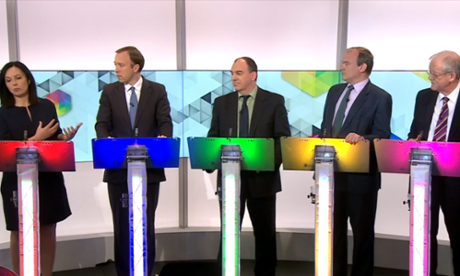
- Caroline Flint, Labour: Labour will build a “cleaner, greener Britain on sound economic foundations”. The party will protect publicly owned forests, end badger cull and defend hunting ban. It will deliver a flood adaptation programme. Labour will freeze energy prices until 2017. Labour will tackle climate change with a target to decarbonise power supply. It will provide a fully funded 10-year plan to insulate five million homes.
- Matt Hancock, Conservative: The Government has reformed “creaking energy infrastructure” while protecting the environment and controlling costs for consumers. Investment is increasing, emissions are falling and bills are coming down. Harnessing human ingenuity and with a long-term plan to secure clean, reliable energy in a way that “doesn’t cost the earth”.
- Andrew Cooper, Green Party: Greens will take power back from the big six energy providers and create an energy generating democracy where people and communities generate their own heat and power from renewable sources. The party will end cold homes and fuel poverty for millions through a mass insulation programme. Greens have a plan to reduce carbon emissions based on climate science.
- Ed Davey, energy and climate change secretary, the Liberal Democrats: Liberal Dems fought to “green the coalition”. Britain’s renewable electricity nearly trebled under Lib Dem leadership. The party led a “historic” EU deal with carbon reduction targets. Lib Dems planted one million trees. The Lib Dem manifesto has five Green laws, for Green transport, zero waste, nature. Green bills and zero carbon Britain.
- Roger Helmer, Ukip: Government’s current UK energy policy is a “disaster”. Over-investment in expensive and intermittent renewables has pushed up energy prices, forcing households and pensioners into fuel poverty. Energy prices are undermining industrial competitiveness. Energy intensive industries, like steel, aluminium, chemicals, and petroleum refining are closing and moving out of the UK and EU. Ukip will “stop this nonsense” and deliver energy based on coal, gas and nuclear.
Updated
Hello, Jamie Grierson here, back until close of play. We’ll be looking for reaction to Ed Miliband’s interview with Evan Davis before wrapping up a hectic day of campaigning that once again stretched to all corners of the UK.
There are just over three hours left to register to vote so spread the word. It should only take three minutes to register here.
Updated
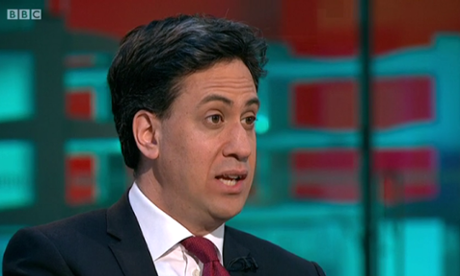
Ed Miliband's interview with Evan Davis - Verdict
There is nothing political spin doctors dislike more, especially during an election campaign, than a candidate giving journalists a story, or “committing news” in the current jargon, when they are not supposed to. On that basis, Miliband’s interview was a triumph; he did not say anything newsworthy at all.
But, just because something is not newsworthy, that does not mean it is not interesting. It might have been an unproductive interview, but it was not a dull one, and I can think of at least three “things we’ve learnt”. Here goes:
1 - Miliband is now becoming a first-rate political debater/interviewee. For a long time, as a performer on TV, he was clearly inferior to David Cameron, but during this election campaign he has shown that he has made up the gap and we saw that illustrated tonight. In other words, the very fact that the interview was so unproductive was noteworthy. I was particularly impressed by the confident way he was able to deploy a host of stock political responses. Refusing to engage with a question looks weaselly if done by someone lacking in confidence or authority, but Miliband managed this with great self-assurance. (See 8.24pm.) Likewise, the “ain’t gonna happen” put-down can make an interviewee look as if he’s engaging in wishful thinking, but when Miliband used to in relation to being held to ransom by the SNP, he sounded like a man in control. (See 7.54pm.) I also particularly admired his use of the “I take full responsibility” strategy. Like David Cameron, who uses the line often, he meant it to mean notional responsibility, not actual blame, but he projected leadership, and deflected further probing about his culpability in Scotland. (See 6pm.)
2 - Miliband is using the SNP to give Labour centrist credentials. In Tim Bale’s incisive and authoritative book on Miliband’s leadership of the Labour party, Five Year Mission, he says that David Miliband’s advisers concluded they made a terrible mistake in 2010 when they effectively “lent” of their MPs to Diane Abbott to enable her to get enough nominations to join the leadership contest. At the time they thought it would made win them goodwill from the left. But they later realised that it meant Ed was no longer the most leftwing person in the contest, and this helped him. Similarly, tonight Miliband argued that the SNP spending proposals meant that Labour was in the centre ground. He even sounded a bit like Nick Clegg.
Let me just explain the three positions. There is what you call Nicola Sturgeon’s position. She says no cuts are necessary. There’s the Tory plan which [excessive cuts]. I don’t think that’s a sensible position. And there’s our plan which is a sensible plan.
3 - Miliband really does believe that greater equality and growth are not mutually exclusive. One of the most interesting exchanges came when Davis asked about Thatcher’s views on wealth and inequality. (See 7.52pm.) Miliband said he did not accept that growing inequality was a price worth paying for more wealth all round; he argued that that model had failed. But he also said very firmly that he would have failed if people got poorer, even if inequality narrowed. In some parts of the interview he did not really engage with Davis on economics (eg, the empty glass and borrowing), but in this section Miliband sounded very engaged. We probably had a revelation into what he really thinks.
I’m handing back to Jamie now for the rest of the night.
Updated
(I wrote this post earlier, as the interview was going along, but notice now that I forgot to post it.)

Davis is now on hung parliament scenarios. And he tries this - an important question.
Q: As a matter of constitutional principle, after the election, do you think it is important that the biggest party in the Commons, the biggest party, the one with the most seats, should be given kind of time and space to form a government? That has the moral legitimacy to form a government.
But Miliband won’t get into this at all.
A: I’m really sorry to be disappointing about this but I’m afraid I’m not going to get into post election speculation.
For a really good explanation of why this is such an important question, this blog by Adam Ramsay at Our Kingdom is essential.
Updated
Davis ends by asking Miliband if he sees himself as a conviction politician like Thatcher.
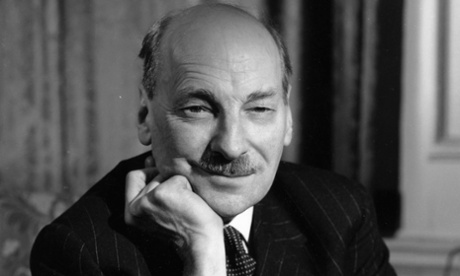
A: Well I think comparisons like that are invidious and I don’t really want to be compared to a Conservative prime minister. I’d put it slightly differently which is I’d compare myself to previous Labour prime ministers. Clement Attlee, Harold Wilson, Tony Blair – they all came in and said we need to change the old way of running things.
And that’s it. I’ll publish a quick summary shortly.
Updated
Davis asks if people should not have an extra child if they cannot afford it. Miliband says it is not for him to tell people how many children they should have.
Last week Davis asked David Cameron if he believed there were people who were undeserving rich. Now he asks Miliband if be believes in the existence of the undeserving poor.
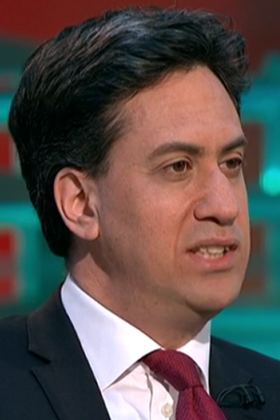
Miliband gives a straight answer.
A : I don’t like the phrase but there are definitely people who are – and it’s a minority – who could work but aren’t doing so and we need to get them back to work and we’ve got to be tough.
Updated
Davis presses him on this.
Q: If you were in charge for five years and at the end of those five years everybody was 30% richer, you had stupendous economic performance, but that the gap had widened, just supposed that had happened – it’s not likely to you say but if it did would that be failure?
A: It’s not going to happen, no. No look the evidence is just different from what you say. The evidence is – we’ve got to go by the evidence here.
Q: But it sometimes happen, no but you said it sometimes happens.
A: But let me go to the central I think test of my economic policy. The central test of my economic policy is does the growth in our economy, is it reflected in what’s happening to the living standards of working people? You see I call it the cost of living crisis, that’s what people call it and what is that about? That’s about that the growth in the economy has become detached from the living standards of ordinary families. So those at the top are getting a large share of the pie, it’s happening in the United States, it’s happening here, and other people – it’s not just the poorest by the way, that’s a new inequality. It’s not just the richest versus the poorest, it’s the richest versus everyone else. That isn’t success in my view. It doesn’t make for a successful country.
Updated
Davis shows a clip from Margaret Thatcher in the Commons waving her fingers to show that socialists don’t mind how poor people are, as long as the gap between rich and poor is smaller than if the rich were very rich.
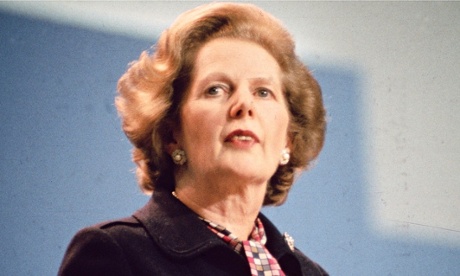
Does Miliband agree?
No, he says.
I think that misreads the evidence and the way the country succeeds – and let me explain why. Look, the old view, and this is what Lady Thatcher was saying there, is that inequality, so a more unequal society could somehow be better for everybody. Better for the richest because they’re obviously richer and better for the poorest because they were richer too. Doesn’t work like that. I mean it hasn’t worked. In fact there’s a huge amount of evidence now from around the world that more unequal societies are less successful societies. Why? Because if you don’t train your young people then you’re losing out as a country and you are less prosperous. If you try and believe that people can subsist on extremely low wages that isn’t good for people, that isn’t good for the people at the bottom of our society on the lowest wages, but it’s not for – it doesn’t make for a productive country either. You know productivity in this country is actually at its lowest level for 25 years. So if the Thatcher idea of a race to the bottom as I call it, low wages, insecure work was the way to succeed as a country, well we might be succeeding now but I don’t believe we are. So I think she’s sort of wrong in belief, wrong in evidence, wrong in outcome.
Updated
The Tories are heckling Miliband on Twitter.
Painful watching Ed Miliband trying to hide his deliberate policy to borrow every year and run a permanent overall budget deficit #GE2015
— Tory Treasury (@ToryTreasury) April 20, 2015
Miliband effectively says Ed Balls will be chancellor in a Labour government. See 6.09pm. But he won’t say so categorically.
I don’t do measuring the curtains.
Davis is now illustrating current borrowing and capital borrowing with an empty glass and a full glass. But Miliband still won’t accept that he will leave borrowing higher.
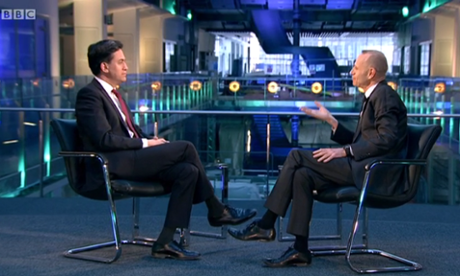
Q: There’s the current [deficit], which you say you’re going to get rid of, and there’s the other one left, the capital one. The water in this glass, this is borrowing to cover capital spending. The Conservatives say both those glasses will be empty.
A: I don’t think it’s going to happen.
Q: Right, well, that’s a question we must put to them. How much – within ten billion – do you expect to be in that second glass by the end of the parliament? How much..
A: Well, let me ex- let me... (talking together) Let me explain – let me explain, not it’s not, let me explain why. Look, we’re going to have a surplus on the current budget, right. I’ve dealt with it, let me answer the question. We want a surplus in the current budget as soon as possible in the next parliament. Now, what does that depend on? We’re going to make spending reductions, set out the tax changes we’re going to make, but it depends crucially on something else, economic growth. Why have the Tories failed on the deficit in this parliament? Because they made the cuts, but because they didn’t get the growth, the rise in living standards, tax revenues fell and they didn’t meet it. So I’m not going to – I’m not going to play a game with the glass of water.
Updated
Davis asks Miliband to admit that Labour would borrow more.
Miliband sets out his fiscal plans.
Q: But you haven’t answered the question as to whether borrowing at the end of the parliament – whether borrowing will be bigger than the Conservative plan.
A: I tell you what, I don’t believe it will. Because the Conservatives said they would eliminate the deficit in this parliament and they failed to do so. So they’ve made the spending cuts, but they haven’t cut the deficit as promised. The same will be true in the next parliament.
Davis says he is talking about Tory plans. Miliband says he does not believe the Tory plans.
Davis tries to draw a larger point.
Q: So on issues about jobs, crime, social mobility, comments, predictions made by people in your team turn out to have been wrong. These are important areas. These are not minor quibbles are they? These are huge issues that have had a large part to play in the – the last five years.
A: I don’t think that’s a judgement that people are going to make at the election.
Davis quotes Chuka Umunna saying tution fees would discourage poor people from going to university.
A: There are some – there are some more people going to university from different backgrounds.
Q: It’s gone up, it’s gone up by a third in the last –
A: And so the problem’s fixed is it?
Q: I’m not saying it’s fixed, I’m saying – do you know what the ..
A: No, let me....
Q: The judgement that was made was wrong?
A: No, I understand. No I understand. No, it wasn’t wrong, and let me explain why.
Q: But you said it isn’t good enough.
A: It isn’t good enough for me that you’re 12 times more likely to get to university from an advantaged compared to a disadvantaged background. And that goes to the big argument of this election: is this good enough for Britain? Is it good enough for Britain in jobs, in policing, in educational opportunities? I say no.
This is rather a good example of how to deflect a difficult question with a reasonable response.
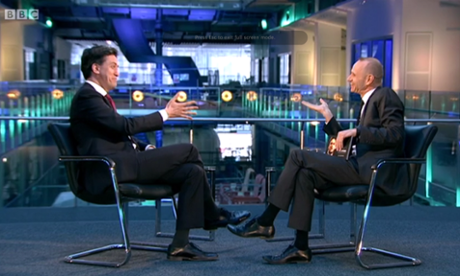
Evan Davis is interviewing Ed Miliband now.
Davis starts by asking why Ed Balls said we would never get jobs growth.
Miliband says Balls was quoting Office for Budget Responsibility forecasts.
Q: What about crime?
Some has gone up, some has gone down, says Miliband.
John Rentoul says Ed Miliband was right not to answer the interesting questions.
Ed Miliband's interview with Evan Davis
Hi, it’s Andrew Sparrow, taking over from Jamie.
I’ll be reporting on Evan Davis’s interview with Ed Miliband.
We’ve already posted the key quotes from 6pm to 6.30pm.
In a blog about the interview, Davis says the most interesting bits were where Miliband had nothing to say.
Normally, we expect the most interesting parts of an interview to be where an interviewee says something interesting.
Well, Ed Miliband turned that rule upside down today in my half hour encounter with him this morning. (This was the third of our Leader Interviews, and you can see it on BBC One at 19:30 this evening and a 10 minute version on Newsnight). The most revealing parts of the interview were where he said nothing.
For example, I had hoped to spend about eight minutes on the constitutional issues arising out of a hung parliament. In the event, we didn’t need that long. I asked him whether the biggest party in the Commons has a moral right to govern. Mr Miliband batted it away with the words “I’m really sorry to be disappointing about this but I’m afraid I’m not going to get into post election speculation”.
Updated
My colleagues Libby Brooks and Severin Carrell report on challenges to SNP leader Nicola Sturgeon’s spending plans.
The first minister openly wooed English Labour MPs by committing the Scottish National party to backing key Labour tax policies, pledging that her party would “hold out a hand of friendship” rather than seek division at Westminster, they write.
But she soon came under concerted attack from Miliband and other parties for making a series of uncosted promises, including scrapping the introduction of universal credit, raising the state pension to £160 a week across the board, building 100,000 homes a year and insisting that work on the northern stretch of the new HS2 high-speed rail link started in Scotland at the same time as in London.
It’s been a day of hard-hitting politics with SNP leader Nicola Sturgeon rallying supporters in Scotland, drawing agitated criticism from the Tories, Lib Dems and Ukip and forcing Labour to confront difficult questions about post-election tie-ups.
Offering a little light relief amid this heavy political discourse is @cooledmiliband - a Twitter account offering occasionally disturbing and always hilarious mock-up images of the Labour leader “looking cool”. Enjoy.
Ed Jagger #HellYesEd #CoolEdMiliband pic.twitter.com/wiJRVvwBJD
— Cool Ed Miliband (@cooledmiliband) April 20, 2015
Ed Solo #HellYesEd #CoolEdMiliband pic.twitter.com/ChcCOMkVO4
— Cool Ed Miliband (@cooledmiliband) April 20, 2015
Ed's Fitness #HellYesEd #CoolEdMiliband pic.twitter.com/jdxQWKKLL7
— Cool Ed Miliband (@cooledmiliband) April 20, 2015
Scotland remains the focus on the front page of tomorrow’s Morning Star as it declares “Miliband fights to win Scotland”.
Tuesday's Morning Star front page: Miliband fights to win Scotland #tomorrowspaperstoday #bbcpapers pic.twitter.com/ZLFpbpmwAv
— Nick Sutton (@suttonnick) April 20, 2015
After Ed Miliband was mobbed by a hen party on Sunday, Channel 4 News’s Cathy Newman asks whether an apparent rise in popularity for the Labour leader could escalate to full blown “milimania”.
After the hen-pecking of @Ed_Miliband is #Milimania any more durable than Cleggmania was? My blog here http://t.co/B0Ire8c1rj via @sharethis
— Cathy Newman (@cathynewman) April 20, 2015
Andrew Harrop, general secretary of the Fabian Society, has labelled SNP policy as a “fiscal fantasy”.
In a strong takedown of the SNP’s proposals on the LabourList blog, Harrop argues the manifestos offered by Labour and the SNP are “worlds’ apart” after expecting them to be much closer.
He says the SNP’s programme is a “fiscal fantasy”.
After a full week to digest Labour’s offer, I fully expected an identikit policy programme, presented as a ‘hand of friendship’ from the SNP: part of the party’s lethal campaign to minimise the differences between itself and Labour; to prove to Scots that there is nothing to fear from switching to the SNP.
But it turns out that the programmes the two parties present are worlds’ apart: Labour’s is grounded in financial reality; the SNP’s is a fiscal fantasy, overflowing with unfunded spending commitments. In an election when even UKIP has a costed manifesto, the SNP’s prospectus is an insulting indulgence.
Returning north of the border, writer and journalist David Torrance argues in the Guardian that the SNP manifesto is full of inconsistencies - but with momentum and the trust of a large chunk of the Scottish electorate on its side this doesn’t matter.
He writes:
At the launch, Sturgeon said the manifesto was “bursting with ideas and ambition”, but it was also bursting with spending pledges and very little explanation of how they’d be funded beyond generalities. At points it resembles New Labour in its 2005 pomp; even the word “prudent” appears, alongside a Republican-like promise to “enshrine in law” deficit reduction and a balanced budget.
But the contradictions – some of them substantial – hardly matter, for the SNP possesses both momentum and the trust of a large chunk of the Scottish electorate. The Conservative defence secretary Michael Fallon called the manifesto “the most expensive ransom note in history”, but it will make life even harder for the beleaguered Scottish Labour party.
We will provide full coverage of Ed Miliband’s appearance on the Leader Interviews programme at 7.30pm as it happens live.
Miliband: SNP will not call the shots in a Labour-led government
And here’s the full exchange between Evan Davis and Ed Miliband on the SNP “calling the shots”:

Q: Sorry. A lot of people think, a lot of people perhaps in England, some perhaps in Wales, think the SNP calling the shots on what a Labour government that may not have the –
A: That aint gonna happen. That aint gonna happen.
Q: But how can you say it’s not going to happen if you rely on their votes to get English measures past if you don’t have a majority of English or English and Welsh MPs? How can you say it’s not going to happen?
A: It will be – you know, the House of Commons works in a very simple way. It’s for people in the House of Commons to decide how they vote on measures put before the House of Common and that will be the case after the election. That’s one broadcast I can confidently – I can confident – I feel confident -
Q: So you’re not worried about the situation in which you might end up relying on SNP support, even without a deal in which they will tell you what measures in England are going to be –
A: They’re not going to tell us, they’re not going to tell us. Look, I’m very clear about that.
Updated
I’m looking at the full transcript for the forthcoming Evan Davis interview with Ed Miliband. Here’s the full Q and A about Labour’s failure in Scotland.
Q: Scotland. On your watch as leader of the Labour Party something huge has happened there. I think at the last election Labour got, what, about twice the votes of the SNP. In the polls now the SNP have about twice the votes of the Labour Party. Your personal standing in the polls there is behind David Cameron. Do you take responsibility for what’s happening there?
A: Of course. I take responsibility for everything that’s happening in the election, and that’s happened over the last five years. I think what we saw in Scotland was in the referendum a deeply, if you like, divisive moment, a moment that divided Scotland 45-55, Yes versus No. I think one of our tasks is to show people that this election is not rerun of the referendum, it’s about something else.
Miliband also told Davis that the Labour policy of repealing the Health and Social Care act would not amount to a “top down reorganisation of the NHS”.
Q: “Can you assure us there will be no top down reorganisation of the NHS on your watch?”
A: “Yes. We’re not going to have a top down reorganisation.”
Miliband refuses to say in the BBC interview how much a Labour-led government would be borrowing by the end of the next parliament.
The way you get credibility is not by picking out an arbitrary number today in six years’ time.
He also gave the strongest indication yet that Ed Balls would be Chancellor in a Miliband-led government.
I think Ed Balls is an excellent Shadow Chancellor. I think you can take it from my answer what I’m planning to do. I’m not going to – I’m not going to start appointing members of my Cabinet. But I think Ed Balls has shown over the last four years and in this campaign that he is somebody who’s not just capable of being Chancellor but an excellent Chancellor.

Miliband denied the SNP would be able to dictate policy of a minority Labour government, in the Leader Interviews series to be broadcast at 7.30pm.
Asked by Evan Davis if the SNP would be “calling the shots” if Labour did not have a majority, Miliband said: “That ain’t gonna happen. That ain’t gonna happen.”
The Labour leader was asked whether the SNP would be able to tell Labour which measures it could introduce. He said:
They’re not going to tell us, they’re not going to tell us. Look, I’m very clear about that.
Updated
Ed Miliband takes responsibility for Labour's poor performance against SNP

Ed Miliband has said he takes full responsibility for Labour’s poor performance against the SNP in Scotland.
In an interview with Newsnight presenter Evan Davis to be broadcast on BBC One later this evening, the Labour leader said:
I take responsibility for everything that’s happening in the election, and that’s happened over the last five years.
Updated
The Guardian is working with the pollsters BritainThinks to conduct focus groups throughout the election with 60 voters in five key marginals. Each has an app to feedback what they are noticing in the campaign in real time. Here’s their reaction to the SNP manifesto and other issues of the day:
Our Scotland reporter Libby Brooks spoke to Labour leader Ed Miliband after his appearance at the STUC conference.
Miliband warned that a vote for the SNP would push Cameron and Clegg closer to returning to government. He said:
My message to the people of Scotland is that there’s a big choice coming up in the next two and half weeks.
You can have a Labour government with progressive policies or you can take a huge gamble by voting SNP and ending up with David Cameron and Nick Clegg back in power.
And I say to the people of scotland that is a huge risk. We can have the reality of a Labour or the huge risk of another Tory government and those are the stakes.
The Labour leader said that the most significant part of the SNP’s manifesto launched earlier today regarded the possibility of another referendum on Scottish independence.
Again we see today the SNP not ruling out a second referendum in the next five years having said that this was a once in a generation decision.
He accepted that the manifesto echoed many Labour pledges
If the SNP like Labour policies that’s a matter for them. The way to got Labour policies and a Labour government is to vote Labour. The truth is that the sNP are asking people to take a gamble.
British voters have “little appetite” for an SNP deal after the election, according to this fascinating poll by ComRes for ITV News.
59% would not like the SNP to be involved in next government, compared to 19% who would.
51% wouldn’t like to see Ukip in the next government as well, compared to 32% who would.
New poll for @ITVNews shows little appetite among Brits for an #SNP deal post-election #GE2015 pic.twitter.com/wsFh46qkIf
— ComRes (@ComResPolls) April 20, 2015
As Tory activist and columnist Tim Montgomerie says, these sorts of polls will be important after the election.
1/2 Polls like this from @ComResPolls may matter a lot after exln:Lab's long-term interests will be hurt by SNP deal pic.twitter.com/60NahHkSfj
— Tim Montgomerie ن (@montie) April 20, 2015
2/2 Lab & Miliband's interests may diverge: SNP deal will be his only chance but wiser heads in Labour will say wait https://t.co/hM1unuVcDy
— Tim Montgomerie ن (@montie) April 20, 2015
Tories playing dangerous game in Scotland, says Conservative peer
The SNP continues to be a thorn in the side of just about every political party. Our chief political correspondent Nicholas Watt has this exclusive report on growing Tory unease within the Tory party.
Leading Conservatives are playing a “short term and dangerous” game that threatens the future of the UK by building up the SNP as a way of damaging the Labour party in Scotland, Lord Forsyth, the senior Tory peer, has told the Guardian.
In a sign of deep unease among senior Conservatives at some of the party’s tactics, Lord Forsyth of Drumlean accused the prime minister of having “shattered” the pro-UK alliance in Scotland and stirring up English nationalism after the Scottish independence referendum last year.
I’m just going to take a Proclaimer-like 500 mile journey south from Ayr to St Austell, in Cornwall, where Lib Dem leader Nick Clegg has been campaigning in the key south-west battleground.
According to the Press Association, Clegg has suggested control of the Department for Education could be one of the key Liberal Democrat demands in any future coalition.
The Liberal Democrat leader said he wanted his party to run the department “on our own terms” after dealing with the “zany” ideas of former education secretary Mr Gove in the current Government.
Our political reporter Frances Perraudin, has filed this image of the Lib Dem leader is at at a school in St Austell:
Nick Clegg visiting a school in St Austell to announce plans to get "the politics" (ie. Gove) out of schools policy pic.twitter.com/PFvUHagaCU
— Frances Perraudin (@fperraudin) April 20, 2015
Clegg also said his party would not join any deal or arrangement in the next parliament which involved the SNP. He dismissed the party with this personal-touch analogy:
Clegg says SNP economic plans are like him and Miriam leaving their credit card bill for their 3 little boys to pay off.
— Frances Perraudin (@fperraudin) April 20, 2015
Here’s some images coming in to the Guardian picture desk of Ed Miliband looking very serious as he delivers his speech to the annual STUC conference at Ayr Racecourse.


My colleague Libby Brooks was at Ayr Racecourse for Ed Miliband’s speech to the Scottish TUC. She reports:
In a passionate address, the Labour leader didn’t mention SNP directly and said the tide was turning against the Tories in England and Wales.
Miliband said: “I call on you the people of Scotland, and yes on behalf of the people of Wales, England and the whole of the UK, I call on you to fight as you have always done for working people.
“Together we can write a new chapter for Scotland and the whole of the UK. Today I call on you and then in 17 days for 5 years you can call on me to fight for the working people of this country.
This highlight from Ed Miliband’s interview in tomorrow’s Time Out London magazine is proving popular on Twitter. Miliband gets to grip with yoof speak, yo.
Ed Miliband has the most heartwarmingly clueless reaction to finding out what yolo means (ht @TimeOutLondon) #GE2015 pic.twitter.com/RRObEHWgVJ
— Zing Tsjeng (@misszing) April 20, 2015
Updated
Miliband’s speech in Glasgow has come to a conclusion. Footage dropped off from the event, so I’ll bring you more substance as soon as we have it. In the meantime, here’s a couple of verdicts from the BBC’s Lucy Manning and Sophy Ridge from Sky News.
Very fired up speech from Miliband to Scottish trade union congress. He knows people in the hall could be crucial to ground war in Scotland
— Sophy Ridge (@SophyRidgeSky) April 20, 2015
Short but passionate speech from Ed Miliband in Scotland. Didn't mention SNP once as called on Scotland to end Tory govt.
— lucy manning (@lucymanning) April 20, 2015
SNP leader Nicola Sturgeon’s performance at her party’s manifesto launch continues to attract favourable write-ups with the Guardian’s John Crace describing the first minister as striking the “perfect balance of coyness and majesty”.
Nicola Sturgeon has learned a thing or two about working the red carpet in recent months, and she was still on the stairs some 50 metres away. She gave a wave that struck the perfect balance of coyness and majesty – Princess Di in her prime – and then walked, ever so slowly, towards the platform.
While we’re looking at manifestos, Isabel Hardman in the Spectator has written up this critique of the overweight political pitches. It’s a great read and contains some top stats. Here’s a few highlights:
- The Tory 2015 manifesto has 82 pages and 34,000 words, up from 28,000 in 2010.
- Nick Clegg may end up with only 30 MPs after the election, but he inflicted 157 pages of promises and 36,000 words on the electorate.
- Clegg’s Lib Dems and Ukip were the most self-indulgent parties, producing around 36,000 words each. Labour’s was shorter than its 28,000 offering in 2010 – but even that was 20,000 words and 83 pages. The SNP clocked in today at a ‘concise’ 19,000.
- Labour won in 1945 with just 5,000 words, and Margaret Thatcher turned the country blue in 1979 with 8,000. Tony Blair droned on for a bit longer with a 17,000 pitch when he won in 1997.
Scottish Labour leader Jim Murphy has delivered his verdict on the SNP manifesto launch. He says by refusing to rule out another referendum, the nationalists have broken a promise to the Scottish people.
When you look at all the pressures in Scotland - the growing gap between the poor and the prosperous, the crisis in the NHS and the number of people stuck on zero-hours contracts, then Scotland surely has higher priorities than thinking about another referendum.
He added:
This is a ‘say one thing, do another’ manifesto. They claim to support a UK-wide mansion tax at the same time as committing to cutting Scotland off from UK-wide taxes.
They claim that they can stop a Tory government when a vote for the SNP is the thing that David Cameron craves in Scotland.
And they claim to be against austerity when full fiscal autonomy means 7.6 billion more cuts.
With full fiscal autonomy the SNP have signed up to bigger cuts than the Tories, scrapping the Barnett formula and ending the UK state pension in Scotland.
The feed from Miliband at STUC Conference went down so here’s an overview of what reporters on the ground are seeing and hearing.
Scottish TUC not an easy audience. Some didn't clap when Miliband introduced. But they like his policies, esp on Zero hours. #GE2015
— Carl Dinnen (@carldinnen) April 20, 2015
Ed Miliband speaking to Scottish TUC conference. His riff is "I won't tolerate that in the country I lead" pic.twitter.com/LySCYxzyBa
— lucy manning (@lucymanning) April 20, 2015
Miliband in Scotland: "the next Labour government will end Tory austerity." Miliband in England:"we are going to cut the deficit every year"
— Sophy Ridge (@SophyRidgeSky) April 20, 2015
Cheers from #stuc15 as Ed Miliband promises an end to blacklisting #GE2015
— Libby Brooks (@libby_brooks) April 20, 2015
Miliband calls for search and rescue operations in Med to be restarted

The Labour leader is addressing the Scottish TUC in Ayr Racecourse. Before turning to electioneering, he discussed the tragic migrant deaths in the Mediterranean and called for search and rescue operations to be reinstated.
I believe all of us have been shocked and appalled by events in the Mediterranean. We can’t stand by as people drown in European waters seeking to escape war-torn Syria and Libya. It was wrong to end search and rescue operations. and they should be immediately restarted.
In his latest poll, Lord Ashcroft asked people whether they were moving towards or away from each of the main parties. He said:
Swing voters, who say they don’t know how they will vote or that they may yet change their minds, were more likely to say they were moving towards Labour (35%) than the Conservatives (24%) or the Lib Dems (19%).
A higher proportion of voters said they were moving towards the three established parties, and fewer said they were moving away, than was the case when I last asked this question in July 2014.
The reverse was true for UKIP: 22% said they were moving towards the party (down three points), while 53% said they were moving away (up seven points).
Are voters moving towards or away from Con, Lab, Lib Dems and UKIP? pic.twitter.com/iCz5oOMay8
— Lord Ashcroft (@LordAshcroft) April 20, 2015
Lord Ashcroft national poll gives Tories four point lead
The Conservatives lead Labour by 34% to 30% in the latest national poll from Lord Ashcroft.
The Tories are up one point since last week and Labour are down three, according to the poll conducted over the weekend.
UKIP are unchanged at 13%, the Liberal Democrats up one point at 10%, the Greens down two points at 4%, and the SNP up two points at 6%.
Ashcroft National Poll, 17-19 April: CON 34%, LAB 30%, LDEM 10%, UKIP 13%, GRN 4%. Details on @ConHome, 4pm:
— Lord Ashcroft (@LordAshcroft) April 20, 2015
Good afternoon, Jamie Grierson here. I’m taking over the blog from Andrew this afternoon on what has been another busy day for the election campaign. The second episode of season five of Game of Thrones may be airing this evening - but I can assure you I’d much rather be here, keeping you abreast of the political developments across the country. If you want to get in touch, please Tweet me - @jamiegrierson.
Updated
Here is an SNP manifesto reading list.
The trouble for the SNP, is, having ruled out any alliance with one party, they will have a hellish time getting concessions out of the other, particularly as Ed Miliband will be loath to be seen to concede anything to the Nationalists. (And the more seats Labour lose in Scotland this time around, the less they will have to protect over the next five years.) It may be that, far from providing a stronger voice for Scotland at Westminster , the SNP find themselves largely ineffective in the Commons.
Although that, of course, isn’t necessarily the worst thing in the world as far as their big argument is concerned.
I’m sure alert readers will highlight any errors or omissions, but by my reading of the two manifestos, the only positives an SNP vote brings is a promise of a higher minimum wage, and an admirable but almost certainly doomed-to-failure commitment to scrap Trident.
Across numerous other areas, a vote for the SNP rather than Labour will have a negative effect on public spending, health, economic growth, access to education and, fundamentally, on the core aim of Scottish Labour which is to deliver a fairer Scotland.
The argument that a strong group of SNP MPs will help Scotland is blown out of the water. The more votes for the SNP the less likely a Labour government anyway, but as can be seen from this analysis, were a Labour government to be in power reliant on SNP support, it would be disastrous for Scotland.
I’m handing over to my colleague Jamie Grierson now.
But I will be back again to cover Evan Davis’s interview with Ed Miliband on BBC1 at 7.30pm.
On the last day to register to vote, these were the most searched election-related questions on Google today.
How do I register to vote?
Who should I vote for?
What is austerity?
Who will win the election?
What constituency am I in?
When is the General Election?
Am I registered to vote?
Where is Nigel Farage in the polls?
Where is Ed Miliband in the polls?
What are the latest opinion polls?
Is there some competition on today for the most preposterous Nicola Sturgeon column? Boris Johnson thought he had it all stitched up, but Piers Morgan has trounced him with this for Mail Online, branding the SNP leader “the world’s most dangerous woman”.
Today, Sturgeon unveiled the SNP’s manifesto with a speech of such dynamism that even many English voters were left drooling with admiration.
She’s made every other party leader look tame and lame by contrast and shaken the foundations of the UK’s political machinery to the very core.
But in the process, she is emerging as the world’s most dangerous woman that few outside Britain have ever heard of ....
An independent Scotland, by common rational consent, would be an economic and military disaster for the rest of the UK and, by default, its allies - notably America.
Scottish armed forces have played a consistently key role in the UK’s military actions. Without their guaranteed involvement, Britain’s capacity and effectiveness would be severely diminished which is bad news for an America which knows that, even if their actual numbers are relatively small, having British forces on the ground in places like Afghanistan and Iraq is very valuable politically.
But that’s not even the biggest threat Ms Sturgeon poses to national and international security.
She’s also made it very clear that she would not renew the UK’s “Trident” nuclear subamarine programme if it was her decision.
And she may make kicking it out of its Scottish naval base a deal-breaker for her support ...
The world has never needed stable nuclear powers more than today, as terror groups like ISIS and Al Qaeda seek to join despotic regimes like North Korea in acquiring them, and old enemies like Russia grow ever-more aggressive.
Yet if Sturgeon had her way, America would lose its most reliable nuclear ally at a stroke.
Updated
Labour has overtaken the Tories as “best to handle immigration”.
Significant: Labour now seen as better than Tories at "dealing with immigration" pic.twitter.com/atF4l8DyOi (via @MSmithsonPB)
— Alberto Nardelli (@AlbertoNardelli) April 20, 2015
This is significant for two reasons: first, Labour is now rated as the party with the best policies for two of the top three voting issues; and second, the Tories have consistently led Labour on immigration, although both parties have been squeezed on this issue due to the more recent rise of Ukip.
Nick Clegg, the Lib Dem leader, has been responding to Andrew George’s claim that another Conservative/Lib Dem coalition “is not going to happen”. (See 10am.) Clegg told journalists.
I think if we were to enter into coalition again of course there would be much greater wariness. Of course there would be. It would be bizarre if people weren’t wary after the loss of MEPs and councillors and so on. Of course people are wary.
But wariness is one thing. Imposing some pre-emptive fatwa on any coalition arrangements before people have their say is entirely another and we’re not doing that.

Paddy Power say they have now got Ed Miliband as favourite to be prime minister for the first time since October 2014. He is priced at 5/6, with David Cameron at 10/11.

Murphy accuses SNP of breaking their promise over a second independence referendum
Jim Murphy, the Scottish Labour leader, has accused the SNP of breaking their promise over a second independence referendum.
The SNP promised last year that the referendum was a once in a generation deal. By refusing to rule out another referendum in their manifesto today, the SNP have broken that promise to the Scottish people.
He also claimed SNP plans were inconsistent.
This is a ‘say one thing do another’ manifesto. They claim to support a UK-wide mansion tax at the same time as committing to cutting Scotland off from UK-wide taxes.
They claim that they can stop a Tory government when a vote for the SNP is the thing that David Cameron craves in Scotland. And they claim to be against austerity when full fiscal autonomy means £7.6bn more cuts.

Sinn Fein wants Northern Ireland to have veto on EU exit
The SNP has said that a referendum on the EU should not be able to take Scotland out of the EU unless Scotland specifically votes for exit. As the Press Association reports, Sinn Fein argued for the same for Northern Ireland at their manifesto launch this morning.
Sinn Fein has supported a binding vote in Northern Ireland alone on EU membership if the rest of the UK decides for exit.
Martin McGuinness said the Tories were “sleepwalking” toward the door, and Gerry Adams claimed decisions in Sussex should not be decisive for the lives of people in Fermanagh and Tyrone.
The party is also to seek an extra £1.5bn spending power for Northern Ireland in negotiations with an incoming British government.
That equates to the amount of spending power Stormont power-sharing ministers have lost over the course of the last parliament, the party said.
The republican party launched its manifesto in Dungannon, Co Tyrone, with the talks pledge. Adams said: “It is quite clear that the Conservative Party are determined to have a referendum.”
He added: “They are in my opinion essentially sleepwalking towards an exit from Europe, that would be absolutely economically disastrous for this island and particularly for us here in the North.”
The Conservatives have pledged an in-out referendum on EU membership during the next mandate if re-elected.
Sinn Fein leader Mr Adams said he would support a separate binding vote in Northern Ireland.
“A decision made in Sussex or Wessex or wherever other English county should not be binding on the people who live in Tyrone or Fermanagh or any other part of the Six Counties, or indeed the effect that this would have on the 32 counties as well, so it is up to the Irish government to argue that.”
Adams also made it clear that Sinn Fein MPs would not abandon their practice of refusing to take their seats at Westminster.
Any circumstances Sinn Fein would consider taking seats at W'minster? asks someone. @GerryAdamsSF "No." Cue laughter/round of applause.
— Andy Davies (@adavies4) April 20, 2015

Updated
Here is Severin Carrell’s story about the SNP manifesto launch. And here’s how it starts.
Nicola Sturgeon has greatly intensified the pressure on Ed Miliband to strike a deal with the SNP, endorsing Labour’s key tax policies and pledging “the hand of friendship” to English voters.
In an assured speech at the launch of the Scottish National party’s election manifesto, Sturgeon confirmed for the first time that her party would back Labour’s mansion tax and the banker’s bonus tax, as well as its promise to abolish zero-hours contracts.
Until now, the SNP had only endorsed reinstating the 50p upper income tax band, and pressed for a higher rate minimum wage of £8.70 an hour.
And Severin has also been tweeting some final thoughts.
Two more @theSNP manifesto launch thoughts: a) hiring the entire EICA arena can't have been cheap; b) no sign, whatsoever, of @AlexSalmond
— Severin Carrell (@severincarrell) April 20, 2015
The Local Government Information Unit reminds me that there is another election taking place on 7 May. As this graphic explains, 279 English councils have got elections, and there are also five mayoral elections.
Leanne Wood, the Plaid Cymru leader, has welcomed Nicola Sturgeon declaration at her press conference earlier that she supports Plaid’s call for Wales to get higher funding from Westminster. (See 11.58am.) Wood said:
I am very pleased to hear Nicola Sturgeon supporting Plaid Cymru’s key commitment to securing parity with Scotland for Wales.
Just as the SNP is doing for Scotland, Plaid Cymru is fighting for the best deal possible for Wales in this election.
Parity of funding with Scotland would see Wales receiving an extra £1.2bn a year - £400 for each man, woman and child.


Lib Dems say SNP plans would plunge UK further into debt
Here is more from Alistair Carmichael, the Lib Dem Scottish secretary, on the SNP manifesto.
This is a manifesto of short-term thinking leading to long-term debt.
Instead of taking the opportunity to map a route out of debt, Nicola Sturgeon is sticking with a plan to plunge the country further into it.
The policies announced today are based on billions of pounds of borrowed money. The annual interest payments for that extra debt alone is the equivalent of £305 a year for every one of the 854,000 Scottish children who would grow up to foot the bill for the SNP’s added borrowing.
They want to drag Scotland and the UK back to 2010 with their plans to borrow even more than Labour.
Boris Johnson compares Nicola Sturgeon to 'scorpion on the frog's back'
Boris Johnson, campaigning this morning in the safe seat of Uxbridge and South Ruislip, renewed his assault on the prospect of a Labour/ SNP government. Speaking to the Guardian beside a replica Spitfire outside the RAF bunker where Winston Churchill oversaw the Battle of Britain in 1940, he compared Nicola Sturgeon to “a scorpion”, adding to the list of likenesses he has applied to the SNP leader which have so far included King Herod and Lady Macbeth.
He was responding to a question about reports the SNP would block defence spending bills under a Labour government unless the replacement of the Trident nuclear deterrent.
People need to wake up to the reality that there is no way to have a Labour government except as the puppet of Scottish nationalists. There’s nothing wrong with the Scots having a strong effect on British life, of course they should. The issue you have is you have a party whose aim, ethic, charter and mission is to destroy the United Kingdom. They have no interest whatever in the political health of Ed Miliband or the UK. People need to realise that Miliband is in the position of the frog carrying the scorpion on his back. You can see already that the ransom they are starting to demand on issues like defence and welfare, reforms which the vast majority of moderate Labour supporters believe in.

Populus poll gives Labour 2-pt lead
Populus has got a poll out today. Here are the figures.
Latest Populus VI: Lab 34 (-), Con 32 (-1), LD 9 (-), UKIP 15 (+1), Greens 4 (-), Others 6 (+1). Tables here: http://t.co/E8evdFMOjW
— Populus (@PopulusPolls) April 20, 2015
Nicola Sturgeon's manifesto launch and Q&A - Summary
Here are the key points from Nicola Sturgeon’s SNP manifesto launch and Q&A.

-
Sturgeon said it was “completely outrageous and unacceptable” for David Cameron to suggest that the SNP had no right to have an impact on laws passed in Westminster.
David Cameron was one of those politicians who, entirely legitimately, sought to persuade, and ultimately successfully persuaded, people in Scotland, to vote against independence on the basis that Scotland’s voice could and would be heard within the Westminster system.
If Scotland chooses now, as it is democratically entitled to do, to make its voice heard by voting SNP, then it is completely outrageous and unacceptable for any Westminster politician to say to Scotland that that’s not acceptable. It is tantamount to saying your voice will be heard, as long as you vote the way we want you to vote. That’s not acceptable.
She also said Cameron was wrong to think that people in the rest of the UK were scared by the prospect of the SNP having influence at Westminster.
Although I should not be running the risk of giving David Cameron any unintended good advice, I think he’s making a huge tactical and strategic mistake in assuming that people are [scared of the SNP]. My experience, and it’s anecdotal, is that people across the rest of the UK are as hungry and restless for progressive change as people in Scotland are.
-
She said the proposal announced by Cameron today for an annual audit of the impact of Scottish policies on the rest of the UK was an attempt to “undermine” devolution. The so-called “Carlisle principle’ would “appal” people in Scotland, she said.
It think [Cameron’s comments] are born out of panic and desperation ... I also think they will appal people across Scotland. They are a clear attempt to undermine the principle and the practice of devolution. There is also something of an irony to hear the prime minister of a government that racked up hundreds of millions of pounds worth of debt saying that it is going to “check the homework” of a government that has balanced the books in every single year it has been in office.
-
She said that Boris Johnson’s comparison of her to King Herod (see 10.35am) was “entirely offensive”.
If he did say that, then that is an entirely offensive comment, and I think it will be treated as that not just by people in Scotland but across the UK, who, in my experience, ordinary people the length and breadth of the UK, do not see Scotland that way at all and do not see the SNP in that way at all.
-
She said she had been told that Cameron refused to sit beside her on the sofa on the Andrew Marr show yesterday.
I’m told, although I’m not sure if it’s true, I’m told that he was not keen to sit next to me on the sofa of the BBC while he made the comments. I’ll leave him to confirm or deny if that was the case.
-
She repeatedly stressed the SNP’s desire to play a “constructive” role at Westminster, working with Labour to legislate for progressive policies. Addressing voters outside Scotland she said:
Although you can’t vote SNP your views do matter to me and you have a right to know what to expect of my party if the votes of the Scottish people give us influence in a hung parliament. If the SNP emerges from this election in a position of influence we will exercise that influence responsibly and constructively, and we will always seek to exercise it in the interests of people not just in Scotland but across the whole of the UK ..
My interest is in seeking to build alliances across the UK for better politics and better policies, because that will help people in Scotland. I’m not trying to hid my political beliefs as far as independence, but I’m saying very clearly we can work together to get the change that people in Scotland want and many, many people in the rest of these isles want as well.
She said that the SNP would not be going to Westminster to bring down a Labour government, or block its budgets. But she sidestepped questions about exactly how the SNP would exert influence, refusing to say whether the SNP would always support a Labour budget if it were made a confidence issue, and refusing to deny that the SNP would expect to be consulted on the contents of a Labour Queen’s Speech.
-
She suggested she did not expect another referendum on independence within the next five years. Asked by a reporter who said he had been offered good odds on a second referendum what he should do, she said she would not place that bet herself. She said something “substantial” would have to change for the SNP to demand another referendum, and she said people voting SNP in May would not be giving it a mandate to demand another referendum.
I am being absolutely clear. If you vote SNP on May 7, you are not voting to give the SNP a mandate for a second referendum. Something substantial would have to change.

- She played down the SNP’s demand for full fiscal autonomy. In the manifesto this has been renamed full financial responsibility. Sturgeon said that, even if Westminster legislated for this, it would take several years to implement.
- She rejected claims that the SNP had not implemented progressive policies while it had been in power in Edinburgh. It had not raised taxes because it only had power to change the basic rate of tax, and that would not be progressive, she said. But it had adopted other progressive policies. (See 11.47am.)
-
She said the SNP would ask for Scotland’s fishing minister to represent the UK in EU fishing talks.
Updated
Ed Balls, the shadow chancellor, has reaffirmed Labour’s opposition to a coalition with the SNP. He said:
Ed Miliband in the debates last Thursday said no coalition is not on the table with the SNP and we are not going to start negotiating our budget with the SNP no way. The budget, tax rates or the defence of our country we produce will be written by Ed Miliband and by me, and by the cabinet.
The only reason this on this agenda is because David Cameron is flailing around in his desperate election campaign making allegation after allegation. The reality is the SNP want a Tory government and the Tories want the SNP to do well. They’re in bed together.
Here’s today’s Guardian three-minute election video, with Jonathan Freedland and Deborah Orr discussing the SNP manifesto launch.
Farage accuses Tories, Labour and Lib Dems of 'appalling weakness' in the face of the SNP

Nigel Farage, the Ukip leader, is taking an even more hostile stance to the SNP than the Conservatives. He has issued this statement, accusing the Conservatives, Labour and the Lib Dems of all showing “appalling weakness” in the face of the SNP.
David Cameron, Ed Miliband and Nick Clegg have all shown appalling weakness in the face of the aggressive tactics of the SNP which threaten the future of the United Kingdom.
All three of them have guaranteed the continuation of the Barnett Formula in its present guise, ripping-off English voters and throwing truckloads of English money over Hadrian’s Wall. All three signed that appalling pledge just before the referendum promising the Scots almost anything they wanted. Well I didn’t and I intend to speak up for England.
And none of them will guarantee that only English MPs will vote on English laws in the next parliament, meaning that any new influx of SNP MPs will be able to dictate the governance of England. This is outright appeasement and it has got to stop.
Only Ukip will stand up for the interests of English voters and Welsh voters too. Only Ukip says that votes on matters only affecting England should be limited to English MPs at every stage of the legislative process.
I particularly appeal to voters who have backed Labour in the past to switch to Ukip in order to stop the nightmare of a Labour administration that depends on the SNP for its survival. Everyone knows that it will be Nicola Sturgeon who wears the trousers in that relationship.
Traditional Labour voters are never going to vote Tory, but I am personally appealing to them to switch to Ukip to ensure that the English and the Welsh do not become second class citizens in the United Kingdom.
Updated
Alistair Carmichael, the Lib Dem Scottish secretary, has said the SNP wants to take the UK back to an economic model that has failed.
Alistair Carmichael: "SNP want to take us back to the economic model that crashed and leave future generations to pick up the debt" #GE2015
— Natalie Coupar (@natalie_coupar) April 20, 2015
Here’s a Guardian video with a clip from the SNP manifesto launch.
SNP's manifesto launch and Q&A - Verdict from the Twitter commentariat
Here is a round-up of Twitter reaction to the SNP manifesto launch and Nicola Sturgeon’s Q&A.
Generally, political journalists and commentators were very impressed.
From ITV’s Carl Dinnen
After a week of political cross dressing Nicola Sturgeon has just pinched Labour's interview suit. #GE2015
— Carl Dinnen (@carldinnen) April 20, 2015
From the Herald’s Iain Macwhirter
Nicola Sturgeon confirms that she now the most forceful voice in British social democracy. #GE2015 #snpmanifesto
— Iain Macwhirter (@iainmacwhirter) April 20, 2015
From the BBC’s Robert Peston
it has taken15 minutes for @NicolaSturgeon to mention Scottish independence. Amazing
— Robert Peston (@Peston) April 20, 2015
Vote SNP for a better Labour government is @NicolaSturgeon big simple message - hideous for @Ed_Miliband, music for @David_Cameron
— Robert Peston (@Peston) April 20, 2015
From ITV’s Chris Ship
Impressive performer Nicola Sturgeon. Answers questions fully and passionately #SNPManifesto
— Chris Ship (@chrisshipitv) April 20, 2015
From Sky’s Adam Boulton
Might be popular @Ed_Miliband were to make @NicolaSturgeon DPM
— Adam Boulton (@adamboultonSKY) April 20, 2015
From the Evening Standard’s Joe Murphy
How on earth did Scottish Labour fail to spot and recruit a talent like Nicola Sturgeon, who can put Left policies into plain English?
— Joe Murphy (@JoeMurphyLondon) April 20, 2015
(The answer to that is that she joined the SNP when she was 16, that she joined CND before she joined the SNP, and that she thought Labour started to go wrong when Neil Kinnock became leader.)
From Iain Martin
For viewers in England, this Sturgeon sermon is standard example of Scottish Left moral superiority complex.
— Iain Martin (@iainmartin1) April 20, 2015
From the Sun’s Tom Newton Dunn
"We're not going to Westminster to bring governments down," says Nicola Sturgeon. Unless it's a Tory one of course.
— Tom Newton Dunn (@tnewtondunn) April 20, 2015
From the Times’ Ann Treneman
There is no question that Nicola sturgeon is a class act...never rises to the bait ... Dave and ed will be watching with some fear ...
— ann treneman (@anntreneman) April 20, 2015
From the BBC’s Allegra Stratton
Very impressive SNP manifesto launch but I can't see its former leader here... Where are you Alex Salmond? #snplaunch
— Allegra Stratton (@BBCAllegra) April 20, 2015
From Euan McColm
watching sturgeon and my telly's just joined the snp.
— euan mccolm (@euanmccolm) April 20, 2015
From the FT’s John McDermott
One of the smartest political moves Salmond ever made was to pass on the leadership to Sturgeon after the #indyref.
— John McDermott (@johnpmcdermott) April 20, 2015
What you're seeing at the #SNP manifesto launch is what might be called policy arbitrage. It takes two forms ... [1/2]
— John McDermott (@johnpmcdermott) April 20, 2015
#SNP taking adv of 1. gap between UK and Scottish Labour. 2. gap between spending in Scotland now and if it were to be fiscally autonomous.
— John McDermott (@johnpmcdermott) April 20, 2015
Continuing the theme, here's a word cloud of @NicolaSturgeon's speech launching #SNPManifesto #GE2015 pic.twitter.com/YNJwyi8KQg
— Nick Sutton (@suttonnick) April 20, 2015
Congratulations to @NicolaSturgeon for doing a proper news conference (and calling the great @Alan_Cochrane ) - we haven't had many of those
— Adam Boulton (@adamboultonSKY) April 20, 2015
SNP-Labour alliance would be 'match made in hell', says Cameron

An SNP-Labour alliance would be a “match made in hell” for the UK economy, David Cameron has warned, as he stepped up his campaign to convince the electorate of the dangers of minority Labour government dependent on SNP support.
Speaking to an audience in the key marginal of Crewe and Nantwich in south Cheshire, the prime minister said there was a clear and present danger the Tory economic plan will be abandoned and UK government would grind to a halt.
“Make no mistake, if Labour and the SNP get into power, you are going to see an alliance between a party that wants to spend, borrow and tax more with a party that wants to spend, borrow and tax even more.
“It might be a match made in heaven for them but it is a match made in hell for the British economy.”
Cameron said that Miliband didn’t want to talk about a deal with SNP because “we all know what it would mean. Not a clean coalition agreement decided in the first couple of weeks – but permanent, messy chaos negotiating day by day, vote by vote, favour by favour”.
He said it would lead to: “Endless bargaining and backroom deals. Every single decision taking the form of a ransom note – written by the SNP.”
Updated
Tories call SNP manifesto 'the most expensive ransom note in history'
Nicola Sturgeon’s Q&A is now over. It lasted for around 40 minutes, making it longer than any of the Q&A sessions after the other manifesto launches.
I will post a summary, and a round-up of reaction, shortly.
As I write, Michael Fallon, the Conservative defence secretary, is on Sky News describing the SNP manifesto as “the most expensive ransom note in history”.
Q: The manifesto talks about full financial responsibility. In the past you said you wanted full fiscal autonomy. Is there any difference?
No, says Sturgeon. She is just using that term to make it clear Scotland would have responsibility for its own affairs.
Q: [From the Telegraph’s Alan Cochrane] There is a lot of talk about negotiations. Are you going to base yourself in London for the talks. I’ll put you up for membership of the Caledonian Club. Or will you do it from 400 miles away.
Sturgeon says she is leader of the SNP. She will be in charge of discussions.
Q: Would you like to see SNP MPs in the Scotland Office?
Sturgeon says she does not want a formal pact. Labour does not want that either. So she does not expect to see SNP MPs serving as ministers.
We are not there to get ministerial positions. We are there to stand up for Scotland.
Q: Was Stewart Hosie correct to say on 28 March that the SNP would expect to be consulted on a Labour Queen’s Speech?
Sturgeon says she is not leading the SNP to obstruct, or block or bring down. She wants the SNP to be a constructive force.
People need to vote first, she says.
After the votes have been cast, the SNP will decide how it takes things forward then, she says.

Q: A bookmaker offered me good odds on a second referendum within five years. Should I take the bet?
Sturgeon says Alex Salmond would be better placed to answer. He is a betting man. She says she’s not.
But she say she would not take the bet. If people vote SNP, they are not voting for a second referendum, she says.
Updated
Q: Will you insist on Scotland’s fishing minister taking the lead in EU talks on behalf of the UK?
Sturgeon says this is something the SNP has argued for for a long time.
Q: What would be the impact on small businesses of increasing the minimum wage to £8.70?
Sturgeon says she is talking about a phased increase.
She recognises that there is an issue here for small firms. That is why the SNP is also demanding cuts in employers’ national insurance contributions.

Q: Do think the rest of the UK wants a more leftwing government than the one Ed Miliband offers?
Sturgeon says the fact that neither the Tories nor Labour are on course for a majority suggests that the public want someone different. Labour is not offering a clear enough difference to the Tories. Ed Miliband asked at the debate last week if she was saying there was no difference between him and Cameron. She is not saying that. She is just saying there is not enough difference.
Q: What do you make of Ed Miliband?
Sturgeon says this is not about personalities. This is about politicians listening to the voters, and delivering the change voters want.
Updated
Q: Would you urge people in England to vote Labour?
Sturgeon says she is not telling people in England how to vote. All she would say is that they should vote for the most progressive candidate?
Q: Do you want Wales to get extra money?
She says she backs Leanne Wood and Plaid Cymru’s call for extra funding for Wales. But not at the expense of Scotland, she says. She says she does not accept that Scotland is over-subsidised.
.@NicolaSturgeon steps back from urging English voters back Greens & Welsh Plaid Cymru: vote for Labour candidate if s/he most progressive
— Severin Carrell (@severincarrell) April 20, 2015
Updated
Q: David Cameron is setting out what he calls “the Carlisle principle”. (See 11.28am.) What is your reaction to that?
Sturgeon says they are borne out of desperation and panic. They will be seen as an attempt to undermine the Edinburgh parliament. And it is a bit rich for a government that has racked up billions of pounds of debt to criticise a government that has always balanced the books.

Q: If Ed Miliband made his budget an issue of confidence in him, would you support that budget?
Sturgeon says she is not going to be drawn into this. The SNP does not want to block budgets. It wants to be an influence for change.
The more SNP MPs there are, the more influence it will have.
Updated
Q: If a minority government does not do what you want it to do, will you vote it out of power? Or will you just torture it for five years?
Sturgeon says she will do neither of those things.
The SNP is not going to Westminster to bring down governments or block budgets. It is going there to introduce good, positive, progressive change.
There are many people within Labour who hear what the SNP says and “perhaps agree with it more than what their own leadership says”.
Q: Why do you think the English are scared of you?
I don’t think they are, she says.
She says Cameron is making “a huge tactical and strategic mistake” in assuming that people are scared of the SNP.
Her experience suggests that people in the rest of the UK are as hungry for progressive change as people in Scotland, she says.
She repeats the point about the SNP wanting to play a constructive role at Westminster, she says.
As long as we are part of Westminster, we want that system to work better, she says.
She also says her inbox is full of emails from people outside Scotland wanting to vote SNP.
.@alextomo asks @NicolaSturgeon "why do you think the English are scared of you?" Answer: "I don't" "we will play a constructive role"
— Severin Carrell (@severincarrell) April 20, 2015
Updated
Q: You have had eight years in government to raise tax, but you have not done so. Can you name a single redistributive policy you have implemented in Scotland?
Sturgeon says she does not have those powers. All she can do is raise or lower the basic rate of income tax by 3p. People on the basic rate are not those with the “broadest shoulders”.
But Scotland is getting new powers of tax. The SNP will consider how to use those powers.
As for progressive policies, the SNP has ensured that council tax benefit is not taken away, and taken steps to mitigate the impact of benefit cuts. It has maintained educational maintenance allowance. And the council tax freeze disproportionately helps the poor, she says.
Q: Full fiscal responsibility is on the second last page of the manifesto. Will you give us full costings?
Sturgeon says even if the SNP reach an agreement on this, it would take several years for this to be implemented. It is therefore “irrelevant” to use figures from one particular year to argue that it would not work.
The impact on Scotland would depend on what happens to economic growth, she says.
She wants to win control over as many key powers as possible, she says.
The only alternative are the cuts Labour and the Tories are proposing.
Q: Where would the money come from for the NHS?
Sturgeon says the manifesto contains an alternative approach to the public finances.
Q: David Cameron says it would be frightening for the SNP to have influence on the government of the UK. Could independence come about through the back door of English disquiet, not from the front door of SNP demands?
Sturgeon says she has been told that Cameron would not sit on the sofa with her at the end of the Andrew Marr show yesterday.
If Scotland votes SNP, it is “completely outrageous and unacceptable” to argue that those votes don’t count.
It is tantamount to saying to the Scots that their votes only count if they vote for the right party.
There is no back door to independence, she says.
Updated
Q: Are you now encouraging other parts of the UK to seek independence?
No, says Sturgeon.
She says she is not seeking to create division. She wants Scotland to be independent. But she is a democrat. Scotland did not vote for independence last year.
She is offering to people elsewhere in the UK a “genuine hand of friendship”.
Q: What is your reaction to Boris Johnson’s comparison of you to King Herod? (See 10.35am.)
Sturgeon says she has not seen that comment. But if he did say that, that is an “entirely offensive” comment. People across the UK will think that. In her experience, they do not see Scotland like that.
Sturgeon's Q&A

Nicola Sturgeon is now taking questions.
She starts by asking party supporters to treat journalists with respect. They have a right to ask searching questions, she says.
Q: The SNP used to complain about rightwing policies being imposed on Scotland against its wishes. Now you are proposing to impose leftwing policies on England against its wishes. Aren’t you a hypocrite?
Sturgeon says she does not see it like that.
She says she wants to form alliances with like-minded parties.
During the referendum campaign, unionist politicians said Scotland should not leave the UK, but that it should “lead” in the UK instead.
People across the UK are desperate for change, just as they are in Scotland, she says.
Updated
Sturgeon says the SNP will always support independence.
But this election is not about independence. It is about making Scotland stronger.
The SNP will demand that the Smith commission plans are delivered in full.
And, addressing David Cameron directly, she says:
We will oppose any effort to undermine the Scottish parliament.
That is a reference to Cameron’s “Carlisle principle” proposal. This is how Cameron is explaining it in a speech this morning.
As we go further in devolving powers to Scotland, we need to make sure devolution works for all the other all parts of this country too ...
Today I want to set out a new principle - you could call it the Carlisle Principle – that we will make sure that there are no unforeseen detrimental consequences to the rest of the country from Scottish devolution. For either England, Wales or Northern Ireland.
Under a Conservative Government the Cabinet Office and Treasury will conduct an annual review of the impact of all devolved policies on the rest of the country.
It will look at what effect Scottish government policies are having: whether it’s changes to tax rates, business rates, or university tuition fees - or Scotland’s powers over energy, agriculture, transport, and public services.
Sturgeon says abolishing the bedroom tax would release the £35m that the Scottish government currently uses to mitigate the effect of that measure.
The SNP government in Scotland would use that money to address the food poverty problem that makes people reliant on food banks.
Updated

Sturgeon says the SNP would press for 100,000 new affordable homes to be built each year.
And it would press for a cut in employers national insurance. It would like to see the employers’ allowance raised from £2,000 to £6,000.
SNP MPs would vote for the minimum wage to go up to £8.70 by 2020.
And they would push for the Westminster government to become a living wage employer, as the Scottish government has done.
The SNP would keep the triple lock on pensions, and keep winter fuel payments.
And SNP MPs would vote for the immediate abolition of the bedroom tax, she says.
And @theSNP will back 100,000 extra new homes & £8.70 min wage across the UK says @NicolaSturgeon, again throwing down gauntlet @UKLabour
— Severin Carrell (@severincarrell) April 20, 2015
Updated
Sturgeon says SNP would push for an extra £9.5bn for the NHS in real terms

Sturgeon says Labour has failed to commit to the money England’s NHS needs. The Tories have committed to this, but not explained where the money could come from.
Both Labour and the Tories are selling the NHS short.
The SNP will vote for an extra £24bn for the NHS in the UK by 2020-21. That would be equivalent to a real-terms increase of £9.5bn. This will meet the amount demanded by Simon Stevens, the NHS England chief executive.
The SNP will oppose any further privatisation of the NHS, and back moves to restore it to a fully public service, she says.
.@NicolaSturgeon ups ante on #NHS UK funding by pledging a £9.5bn above inflation annual rise in funding, totalling £24bn #GE2015 @theSNP
— Severin Carrell (@severincarrell) April 20, 2015
Updated
Sturgeon says the SNP will vote for the £100bn due to be spent on Trident to be spend on education, the NHS and better childcare instead.
Sturgeon says, under her plans, the deficit and national debt would still fall each year.
But they would fall more slowly, she says.
The SNP will also back fair proposals to raise extra revenue. They will back the restoration of the 50p tax rate for the highest earners, a mansion tax and a bankers’ bonus tax.
So @theSNP moves to box in @UKLabour by backing @Ed_Miliband's 50p tax rate; bankers bonus tax; mansion tax but rejects #Trident renewal
— Severin Carrell (@severincarrell) April 20, 2015
Updated
Sturgeon says she holds out “a hand of friendship” to people in the rest of the UK.
The manifesto sets out policies for progressive change.
Its number one priority is ending austerity.
It is time to end the needless pain of Tory cuts.
Austerity has undermined public services, lowered living standards, pushed more children into poverty and held back growth.
When a policy is failing, it is time to change that policy.

Sturgeon says the SNP will make Scotland’s voice be heard more loudly at Westminster than it has ever been heard before.
That is my promise to Scotland.
But Sturgeon says she also wants to make a pledge to people in England, Wales and Northern Ireland. Even though you cannot vote SNP, “your views do matter to me,” she says.
If the SNP emerges in a position of influence, it will use that influence “responsibly and constructively”. It will act, not just in the interests of Scotland, but in the interests of the whole of the UK.
As long as Scotland is part of the UK, it has an interest in making it work.
It will not do any deals that put the Tories in power.
If there is an anti-Tory majority at Westminster, it will seek to stop a Tory government get off the ground.
Then it would seek to make a Labour government “bolder and better”.
It would use the experience of eight years in government in Scotland, eight years of “stable and successful government”.
Updated
Nicola Sturgeon's speech

Nicola Sturgeon is now speaking at the launch of the SNP manifesto.
There is a live feed on the BBC parliament channel, as well as coverage on BBC News and Sky just now.
Updated
Sturgeon arrives at back of hall to thunderous music and near-hysterical cheering pic.twitter.com/ieIyZEk59u
— Michael Deacon (@MichaelPDeacon) April 20, 2015
SNP manifesto - Early highlights
Here are some early highlights from the SNP manifesto.
No mention of independence in Sturgeon's introduction. Emphasis on austerity, NHS spending, and Trident. pic.twitter.com/Ga6axME0vk
— Jamie Ross (@JamieRoss7) April 20, 2015
SNP manifesto parks independence and moves towards "full fiscal responsibility". pic.twitter.com/yDYqFPYgka
— David Clegg (@davieclegg) April 20, 2015
This is the only mention of independence I can find in the #snpmanifesto. pic.twitter.com/0GSPPCikCy
— Jamie Ross (@JamieRoss7) April 20, 2015
The SNP would raise minimum wage to £8.70 by 2020. #snpmanifesto
— Jamie Ross (@JamieRoss7) April 20, 2015
Unusual design... A manifesto within a manifesto. #snp pic.twitter.com/XhwAH5C07v
— Alan Roden (@AlanRoden) April 20, 2015
There is a curious lack of Alex salmond in the snp manifesto - I can't imagine why
— ann treneman (@anntreneman) April 20, 2015
SNP manifesto launch
The SNP manifesto launch is just about to start.
So here it is: the LP sized #Westminster blueprint for @theSNP surge, with a non-MP @NicolaSturgeon on the cover pic.twitter.com/PtrDqQyTFP
— Severin Carrell (@severincarrell) April 20, 2015
Updated
Jim Murphy, the Scottish Labour leader, is planning to force through key parts of his manifesto from the opposition benches at Holyrood if Labour win the Westminster election, according to a report in the Herald this morning.
Murphy, whose Scottish Labour manifesto pledges on devolved areas include 1,000 extra nurses for the Scottish NHS and an additional 500 GPs, challenged first minister Nicola Sturgeon to “Vote against it if you dare.”
This would seem to be further evidence of the difficult position Scottish Labour find themselves in, essentially fighting two elections - Westminster next month and Holyrood in May 2016 - at once.
Meanwhile, ahead of a keynote speech to the Scottish Trade Union Annual Congress today, Labour leader Ed Miliband attacked Nicola Sturgeon for asking people to gamble on getting rid of a Tory government saying “the only way to guarantee getting rid of a Tory government is to vote Labour.”
The Green party has launched its youth manifesto today. The Young Greens have 17,700 members, making them the largest youth party in the UK, they say.
The Greens’ proposals include 2,000 new young people’s centres, spending £1.1bn on youth services, getting rid of tuition fees and reintroducing the educational maintenance allowance.
Lord Mason, who as Roy Mason was a Labour defence secretary and Northern Ireland secretary in the 1970s, has died, the Yorkshire Post reports.
Death of Roy Mason leaves @LordHealey as last surviving member of Wilson's 1964-70 Cabinet @LabourHistory
— Jason Beattie (@JBeattieMirror) April 20, 2015
Boris Johnson compares Nicola Sturgeon to King Herod and Lady Macbeth
Boris Johnson, the Conservative mayor of London, has compared Nicola Sturgeon to the baby-killer King Herod. Obviously, at one level it’s just hyperbole, but, still, even Johnson must have had second thoughts before hitting the keyboard with this one.
This is from his Telegraph column.
You wouldn’t get Herod to run a baby farm, would you? It would not normally occur to you to interview a convicted jewel thief for the post of custodian of the Tower of London.
You would not dream of asking a fox to look after the henhouse or a temperance campaigner to run a brewery or Attila the Hun to work as a doorkeeper for the Roman senate – and no one in their right mind would enter into a contract with a bunch of voracious weevils to protect the lovely old timbers in the tower of the local church. Would they?
Any such course of action would be totally nuts. So can someone tell me why in the name of all that is holy there are some apparently rational people who are even contemplating the elevation of the Scottish Nationalist Party to a position of effective dominance in the government of the United Kingdom – an entity that they are sworn to destroy?
As if that isn’t enough, Johnson throws in Lady Macbeth too.
It is therefore obvious to every serious political analyst that [Ed Miliband] would be in many ways the plaything of the SNP. Unless he has the support of that 40-plus bloc of Scottish secessionists, he will be stymied. If Miliband somehow manages to form a minority government, he will be peeping from Alec Salmond’s sporran like a baffled baby kangaroo. He would be the vacillating Macbeth, pushed hither and yon by Lady Macbeth, in the form of Nicola Sturgeon.
Did you see her the other night, telling him to man up, to screw his courage to the sticking place – to do what she told him to do because “you are not strong enough on your own”? The awful truth is that she is right. Without her help and her say-so, and without the support of Salmond and his troops in the Commons, there is not a single bill that Labour could get through.

Updated
Here is the poster the SNP are launching to go with their manifesto. It is going to appear on 400 poster sites in Scotland, as well as being used extensively in SNP campaign literature.
"My vow is to make Scotland stronger at Westminster": @NicolaSturgeon. Coming to a billboard near you! #GE15 #voteSNP pic.twitter.com/EMwxBwbL3o
— Peter Murrell (@PeterMurrell) April 19, 2015
It is no coincidence that it features Nicola Sturgeon, the SNP leader, prominently. As the SNP says in its new release, her approval ratings are extraordinary.
Nicola appearing on the poster reflects her exceptionally strong approval ratings - which the latest YouGov poll in Scotland showed are increasing. 71% of people think Nicola Sturgeon is doing well as first minister, compared to just 23% who think she is doing badly. The net approval rating of +48 is a significant increase on the already high +33 recorded last month.
A remarkable 71% of people who voted Labour in 2010 believe that she is doing well.
By contrast, only 34% think Jim Murphy is doing well as Scottish Labour leader compared to 52% who think he is doing badly, minus 18. Ed Miliband’s ratings are even worse than those of Mr Murphy, with just 24% thinking he is doing well, and 70% who say he is doing badly, minus 46. David Cameron is minus 25.
Andrew George, who is seeking re-election as Lib Dem MP for St Ives, has said that another Conservative/Lib Dem coalition “is not going to happen”, my colleague Patrick Wintour reports. George told a public meeting:
We have had enough of it. The Tories would not want it and I am sure my party would not go for it.
Updated
Who is ahead in the polls where you live?
The Guardian’s data and interactives team has produced this incredibly fascinating map of the UK showing exactly which constituencies are likely to change hands, based on national polling projections.
As well as digging down into the specific race where you live, you can also see some general trends across the country, such as the dogfight the Lib Dems are in in south-west England, and Ukip’s expected gains in the east.
But perhaps the most striking is the scale of the anticipated SNP earthquake in Scotland. The picture below shows the Scottish constituencies that will change hands, based on today’s polling. The swath of yellow is the expected SNP gains from Labour.
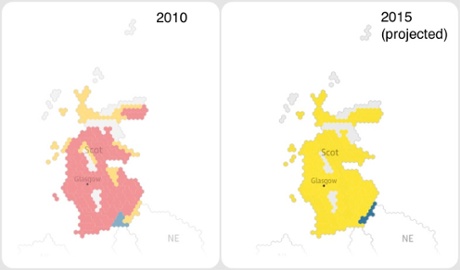
Updated
In a speech this morning David Cameron will say that, of the 2m jobs that the Conservatives want to create over the next five years, 60% would be outside London and the south east. He will say:
I’ve always been clear, right from the start: it’s not just a bigger economy we want, it’s a balanced economy, where the success is felt from North, to South, to East, to West. I didn’t come into this to create some reckless, booming economy just within the M25. That’s what we had before ...
No more. We will back business to create two million new jobs. And this is my goal - that more than 60% of these will be outside London and the South East. That is what we’ve done in the last parliament.
The 2m target is based on an assumption that the next government could create jobs at the same pace as that at which jobs have been created since 2010, and the 60% target is based on the fact that 61.5% of jobs created in the last parliament were outside London and the south east.
Four prominent environmentalists, Jonathon Porritt, Tom Burke, Charles Secrett and Tony Juniper, have put out a joint statement backing Caroline Lucas, the Green candidate in Brighton Pavilion. They are all former directors of Friends of the Earth.

Here is an extract.
As four former directors of Friends of the Earth it would be inappropriate for us to urge everyone to vote for Green Party candidates in all constituencies around the country – though we would certainly like to refute the charge that a vote for the Green Party in any of those constituencies is a wasted vote. The Green Party’s new Election broadcast spells out the case for ‘voting true, not tactical’.
But there is one constituency where a vote for the Green Party is irrefutably not a wasted vote – and that’s Brighton Pavilion. Its MP, Caroline Lucas, is currently the only Green Party MP, and in our view it’s absolutely crucial that she is re-elected.
Over the last five years, Caroline has eloquently addressed many of today’s most pressing sustainability issues while other parties have largely ignored them. From accelerating climate change to sustainable farming and from human rights to a just and sustainable economy, she has been a clear and vital voice.
Updated
The SNP are launching their manifesto at the Edinburgh climbing centre.
Coming up on @BBCNews now #ge15 #voteSNP pic.twitter.com/la9ltoP0KC
— The SNP (@theSNP) April 20, 2015
Today's Guardian seat projection - Labour 271, Tories 270
Here is today’s Guardian seat projection.
My colleague Roy Greenslade has written a good blog examining how the Tory press in London is demonising Nicola Sturgeon. (See 7.05am and 9.08am.) Here’s an extract.
The Mail is withering about the SNP’s leader. “Even by her own megalomaniac standards, Nicola Sturgeon’s language on the day of her manifesto launch is breathtaking in its arrogance”. (It does not say this in its Scottish edition, which carries a different, though avowedly unionist, editorial).
The Mail believes the SNP, a party representing less than 5% of the total electorate, is “intent on destroying the UK” and that the prospect of its ruling in company with Labour “should make anyone who believes in democracy shudder”.
Andy Burnham, the shadow health secretary, told Sky News this morning that the Conservatives were talking up the chances of a Labour/SNP pact because their own campaign was “flatlining”.

It suits [Nicola Sturgeon’s] interests and the Tories’ to talk up all these potential deals after May 7. I think it’s a bit disrespectful and will turn the public off from this election campaign.
They want to know what we are going to do - what’s Labour’s plan for the country, what’s Labour’s plan for the NHS - before they cast their vote. If we look like we are taking their vote for granted or presuming how they are going to vote on May 7, I think it will bring politics into even more disregard.
While we’re on the subject, the academic Philip Cowley thinks suggestions that the SNP would hold a minority government to ransom over Trident (see 7.05am) are misguided.
I don't understand some of today's Coalition Maths. SNP can only block defence spending if they are willing to vote with Cons & vice versa.
— Philip Cowley (@philipjcowley) April 20, 2015
Talk of voting with 'Labour rebels' to change the budget is fraudulent. Would come to nothing without support from the official opposition.
— Philip Cowley (@philipjcowley) April 20, 2015
And my colleague Patrick Wintour thinks the Times and the Telegraph got their headlines wrong.
@philipjcowley missing headline Tories to join SNP in holding Labour to ransom.
— Patrick Wintour (@patrickwintour) April 20, 2015
Updated
The verdict of our BritainThinks focus group
What do the real voters think? We have 60 in five key seats giving their view throughout the campaign as part of our polling project with BritainThinks. They each have an app and are telling us what they think of stories as they crop up. Here are some of their general thoughts as the campaign ticks over its halfway point:
Labour launches manifesto for the disabled
Labour will today launch a manifesto for disabled people, the Press Association reports.
Labour will today launch a manifesto aimed at winning over the votes of 12m disabled people, suggesting they hold the key to election victory.
Shadow work and pensions secretary Rachel Reeves said high-profile Labour pledges such as scrapping the so-called bedroom tax - or spare room subsidy - will be packaged alongside promises to include disabled people in policy committees in government.
Labour will say that if elected it will toughen up the law on disability hate crimes, reform the work capability assessment and introduce a tailored work support programme to disabled people who want to get into jobs.
The opposition said its research showed that, in the 106 most marginal constituencies in the UK, there are more disabled people than the winning majorities at the 2010 general election.
Other policies include ensuring properly qualified teachers work with disabled children and those with special educational needs, and offer parity for mental and physical health in the NHS.

Updated
Here is the Conservative response to the Labour NHS campaign launched today. (See 7.38am.) It’s from a party spokesman.
This marks a new low in Ed Miliband’s desperate attempts to weaponise the NHS. His credibility on health is in tatters because he refuses to fund the £8bn the NHS needs. By building a stronger economy, we have protected and improved the NHS with 9,500 more doctors, 6,900 more nurses, and 1.3 million more life-saving operations every year. There is only one threat to the future of our NHS and that is the economic chaos of an Ed Miliband-SNP government.
Good morning. I’m taking over now from Peter.
Here are today’s YouGov GB polling figures.
Update: Lab lead at 1 - Latest YouGov / The Sun results 19th Apr - Con 34%, Lab 35%, LD 8%, UKIP 13%, GRN 5%; APP -10 http://t.co/j41V7TQ2cr
— YouGov (@YouGov) April 20, 2015
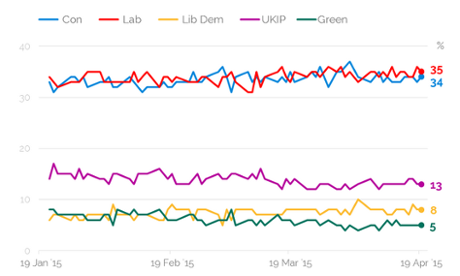
Another reminder that it’s still – just – not too late to register to vote. And reasonably large numbers are still doing so.
124,000 people registered to vote yesterday. There's still time - deadline midnight tonight. http://t.co/PaHIJmfGAe pic.twitter.com/Q1j3ICOcwx
— Nick Sutton (@suttonnick) April 20, 2015
In their wisdom, someone at the Sun has decided that veteran political pundit Trevor Kavanagh’s latest column should feature arguably the most sexist illustration of the election campaign so far. And there’s been a fair bit of competition. I won’t show it directly here – it is still early on a Monday morning – but it features a heavily-cleavaged, mini-dressed Nicolas Sturgeon, Leanne Wood and Natalie Bennett fawning over an 007-esque Ed Miliband.
In case you’d forgotten, this is the 2015 election, not 1974.
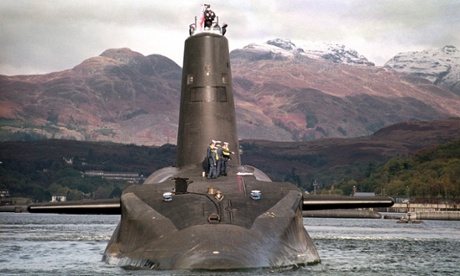
Paul Mason, Channel 4 News’ economics editor, has used his regular Guardian column to flag up anoher element of the Trident debate: if the missile system is renewed, will it even be effective?
The unpalatable truth – for those who believe in nuclear deterrence – may be that four new submarines are not enough. All the things touted as alternatives to the current Trident system – cruise missiles, free-fall bombs and static silos – might be needed on top of it. Without a clear, public assessment of the new threat, nobody knows what the new minimum deterrent really is, or if it can deter at all.
For those who oppose nuclear deterrence as a concept, the challenge is to spell out an alternative doctrine to deal with the Russian threat.
But in the election debates, we’re getting neither of the above. We’re getting instead, from all sides, a contested shopping list, whose relevance to the worsening global security situation is not immediately obvious.
Updated
The election is over and the result is in: another coalition, with one of the main parties likely to need propping up by a smaller, vehemently anti-EU group. In Finland, that is.
The Guardian’s Scotland correspondent, Severin Carrell, has some more on John Swinney’s interview on the Today programme:
Ending austerity has become the “sharp point” of the general election campaign and will be the primary focus for the SNP at Westminster, John Swinney, the Scottish deputy first minister, has told Radio 4’s Today programme.
Speaking before the Scottish National party publishes its 2015 manifesto near Edinburgh, Swinney said that fighting public spending cuts at UK level was the chief priority for the party.
“We think austerity has done enormous harm to individuals within Scotland and we want to use our strength in the House of Commons to bring an end to austerity,” Swinney told Today.
He told presenter Jim Naughtie that the SNP’s aim to win full fiscal autonomy for Scotland within the UK was a longer-term goal. “The sharp point for this election is the fact we’ve an opportunity to bring austerity to an end, and that will be the top priority of SNP MPs to make sure we make progress on that question.”
They would resist “marketisation” of the NHS in England, even though health policy and spending decisions in Scotland are entirely devolved, because that would lead eventually to cuts in health spending: under the Treasury’s funding formula for Scotland that would led to budget cuts for Scotland.
In one clash Naughtie accused Swinney of failing to say whether the SNP would bring down a minority government over Trident: Swinney insisted that was very difficult under the fixed term parliament act, a claim Naughtie disputed.
Updated
The Labour party has tweeted the poster which goes with its “NHS week” focus, being formally launched later this morning.
The NHS is on life support after five years of the Tories. Cameron is planning to double the pace of cuts next year. pic.twitter.com/v72S7neJNm
— The Labour Party (@UKLabour) April 20, 2015
The media campaign group Hacked Off has commissioned a YouGov poll which found that more than half of people believe Ed Miliband receives negative coverage in the press. A mere 17% thought he was featured positively, against 36% who believed this of David Cameron. Read the full story here.
John Swinney's interview on Today programme

John Swinney, Scotland’s deputy first minister, has just endured a somewhat testy interview on BBC Radio 4’s Today programme in which James Naughtie repeatedly pressed him on whether the SNP would potentially bring down a Labour government over the issue of Trident. By my count Naughtie asked this specific question five times. On each occasion Swinney dodged it. “You’re really avoiding the question, again, and again and again,” sighed an exasperated Naughtie.
Swinney appeared to be trying to argue that the provisions of a fixed-term parliament made it far harder for governments to be brought down on a single vote, meaning the question was an irrelevance. He did say, however, that the SNP would be aiming to be “acting constructively in the Westminster parliament.
Two other points of note:
Swinney defended the SNP’s ability to shape policy in Westminster, arguing that even with devolution Scotland was affected by many UK-wide decisions, for example over NHS strategy.
He also made it clear what the SNP hoped to get from a possible post-election coalition:
The sharp point to this election is that we have an opportunity to bring austerity to an end, and that will be the first priority of SNP MPs.
Updated
Meanwhile, not everyone is seemingly gripped by the prospect of post-election governmental chaos.
Interesting article in #CSQuarterly about the future of driving: http://t.co/a76BZZlcJw
— Sir Jeremy Heywood (@HeadUKCivServ) April 20, 2015
Updated
The Liberal Democrats have launched what they’re terming a “five-point plan for teachers and parents”, which is largely just a condensed version of their existing plans for education.
.@nick_clegg announces five point plan for teachers & parents http://t.co/sNK11sfk07 #GE2015 #libdems pic.twitter.com/FopY5xktgj
— Liberal Democrats (@LibDems) April 20, 2015
Morning briefing
Hello everyone, and welcome to another all-day chronicle of the latest election news, as we enter the second-last full week of campaigning, with all the polls still pointing towards some variant on a hung parliament. I’m Peter Walker, getting things going before Andrew Sparrow takes us through most of the day. Let us know your thoughts, whether in the comments below or via Twitter. I’m @peterwalker99, he’s @andrewsparrow.

\Today the focus is very firmly on Scotland, with the SNP launching their manifesto this morning at a climbing centre in Edinburgh, giving plenty of scope for metaphors about rapid ascents and gaining a foothold in government. Doing the honours will be Nicola Sturgeon, fresh from telling the Guardian that the SNP could have a “huge ability to change the direction” of the government” if there is, indeed, a hung parliament.
Ed Miliband will also be in Scotland, addressing the Scottish TUC. Separately, Labour are launching what their campaign terms “NHS week”, promoting their views on David Camerons plans for health.
Finally, this is the first campaign day for a while where election news is not dominating. Many minds are instead focused on the appalling death of hundreds more migrants after a boat carrying them to Europe capsized in the Mediterranean, and the EU response to the tragedy.
The big picture
It’s all about Scotland today, and the SNP. The party’s manifesto launch brings attention to two parallel themes: the SNP’s own boast to potential voters about the influence they could have on a Westminster coalition; and apocalyptic warnings from the Conservatives and their allies in the media about how damaging this would be. Neither is arguably a completely fair representation of the truth.
First the SNP view, as explained to my colleagues Libby Brooks and Patrick Wintour. Interviewed by them, Nicola Sturgeon gives her thoughts on the party’s possible influence in a likely hung parliament, notably through being a “constructive participant” in a Labour government:
With fixed-term parliaments, it gives parties in a minority-government situation – [where] hopefully the SNP will be in a position of influence – huge ability to change the direction of a government without bringing a government down.
There are very limited circumstances in that act where you can trigger a general election, but what you can do is build alliances to change the direction of a government on particular issues and that is what the SNP would seek to do.
Some of the media reaction to this view reiterates the slightly curious argument that in using its elected MPs in a normal parliamentary way to shape national policy the SNP is somehow subverting the political process – or, as two front pages have it, holding the UK “to ransom”.
THE TIMES: We will hold UK defence to ransom, SNP warns #tomorrowspaperstoday #BBCPapers pic.twitter.com/KF4HaM2O5f
— Neil Henderson (@hendopolis) April 19, 2015
TELEGRAPH: SNP's ransom note to Miliband #tomorrowspaperstoday #BBCPapers pic.twitter.com/Id6JnuyN1g
— Neil Henderson (@hendopolis) April 19, 2015
As many pundits have pointed out, the SNP’s position is perhaps less strong than billed – the party has limited its bargaining power with Labour by already saying it will not prop up a Tory-led government, while Ed Miliband has completely ruled out changing policy on Trident. Expect the Labour leader to echo such points at his Glasgow address this afternoon, and seek to shore up the dwindling Labour vote in Scotland.
The other Labour front today will be “NHS week” brings the promise of not just a poster on what Labour sees as David Cameron’s broken promises on health, but “a dossier”.
And finally, as the Mirror’s front page stresses, today is the final day on which you can register to vote if you wish to have a say on 7 May. Not done it yet? What are you waiting for? Click here.
MIRROR: Your country needs you....to vote! #tomorrowspaperstoday #BBCPapers pic.twitter.com/X1efyVc9UF
— Neil Henderson (@hendopolis) April 19, 2015
Today’s diary
Here’s what we know so far:
- 7.15am: the SNP’s deputy first minister in Scotland, John Swinney, is on BBC Radio 4’s today programme.
- 10.30am: Scottish Labour leader Jim Murphy competes against Scottish Tories in a penalty shoot-out in aid of a charity.
- 10.45am: David Cameron is giving a speech in Cheshire alongside George Osborne, before the pair go campaigning.
- 11am: Nicola Sturgeon launches the SNP manifesto.
- 11am: Labour start their “NHS week” with a launch event in south London.
- 2.30pm: Ruth Davidson, the Scottish Conservative leader, gives a speech in Glasgow warning of the SNP threat.
- 3pm: Nick Clegg campaigns in St Austell, Cornwall.
- 4pm: Ed Miliband warns that voting SNP could bring a Tory government as he addresses the Scottish TUC in Glasgow.
- 7.30pm: Miliband is the latest party leader to undergo a TV interview by Evan Davis, broadcast on BBC1.
Reading list for the day
The Times’s main leader for the day (paywall) continues the “SNP ransom” theme with some arguably overblown rhetoric:
On present evidence the Scottish nationalists are more likely than the Lib Dems to hold the balance of power on May 8. The SNP is a separatist party on the cusp of national power, and is not afraid to say how it would use it.
It would back Labour on cutting tuition fees, scrapping the coalition’s welfare reforms and fixing energy prices. The signs are that at the same time it would hold the UK budget to ransom with line-item deliberations more familiar in Washington.
Matthew d’Ancona in the Guardian has a more thoughtful variant on this theme, arguing that the way the election is shaping up is likely to leave the country with a “considerably messier” form of coalition than seen over the last five years:
Like the more earnest characters in Star Wars, the leaders of minor parties who are angling for a pact always promise to bring balance to the Force. In almost all cases, this is wildly misleading. If you think coalition was bad – backroom deals, cut-and-paste policymaking, good ideas lost in the quicksand between the two parties – then try the looser varieties of alliance.
David Steel’s account of the Lib-Lab pact of 1977-78, A House Divided, should be required reading. “The House of Commons did enjoy a period when it actually controlled the executive,” writes Steel. “Unless the government could muster by argument a majority, its measures could not pass.” All of which is fine, as long as the constituent parties understand and accept this transfer of power and are prepared for five years of gruelling parliamentary negotiation over absolutely everything.
George Osborne pens a piece for the Telegraph, repeating the well-worn arguments about finishing the economic job, and focusing in particular on the sale of Lloyds shares:
The share offer will raise billions of pounds, helping taxpayers to get back the money that the last Labour government put in, and reducing the national debt. This is another example of our long-term plan in action – cleaning up the mess we inherited, dealing with our debts, rewarding hard-working taxpayers and rebalancing the economy towards investment and saving.
While below-the-line comments are necessarily not the complete view of readers, the most-recommended view so far indicates Osborne’s message is not being wholly welcomed:
Finally, who’s going to win? Two interesting articles tackle the key question.
Keiran Pedley from pollsters GfK NOP has written a piece for PoliticalBetting.com asking whether the surveys so far might have got it wrong, noting differences in results between telephone and online polls, and raising the 1992-style issue of “shy Tories” – people who end up voting Conservatives after telling pollsters they will not.
What is clear is that the election is close and pollsters face a number of challenges in correctly reflecting voting intention in national opinion polls. There appear to be some differences when considering survey mode, at least when considering UKIP and the sheer number of parties involved present real challenges.
Any one of them being significantly out creates a potential problem. Finally, the age old problem of potential ‘shy Tory’ voters could rear its head again whilst turnout in Scotland could also have a significant impact in the eventual result too.
Meanwhile the New Statesman’s excellent May2015.com analysis site suggests that the polls so far point pretty clearly to Ed Miliband ending up in Downing Street.
Labour are only set to win about as many seats as the Tories. So why do we think Miliband must be favoured to be the next PM? Because governments aren’t necessarily formed by the largest party; the next one will be formed by whomever can cobble together 323 seats...
According to our forecast, the ‘anti-Tory’ parties – Labour, the SNP, and smaller parties like the Greens, Plaid Cymru, SDLP and Respect – are going to win 337 MPs, 14 more than they need to ‘lock Cameron out’, as Alex Salmond put it to us last month.
14 seats isn’t very many. Surely if the polls just swung slightly towards the Tories – as many pundits still expect – our ‘anti-Tory’ bloc would quickly lose at least a dozen seats?
The problem for Cameron is this isn’t really what happens. He can move ahead in the polls, as Election Forecast are predicting, or outperform them because they are overlooking ‘shy Tories’, as Elections Etc believe, and still fail to hold power. At best he would hold power by the slenderest of majorities. But any such scenario is far from the likeliest outcome.
If today were a song...
OK, so the message isn’t perhaps completely apt – the argument is the SNP do want at least some control of a future government. But Teenage Fanclub are Scottish, and it’s a lovely, gentle tune for a Monday morning. It even contains a late-song change of key, a much-neglected element in modern pop.
Non election news story
There is only one such story today, and it’s horrific: Italy’s prime minister has called for an emergency summit about the humanitarian crisis off its southern coast after as many as 700 migrants died when their overcrowded boat capsized in the Mediterranean.
Updated