Jamie Grierson's evening summary
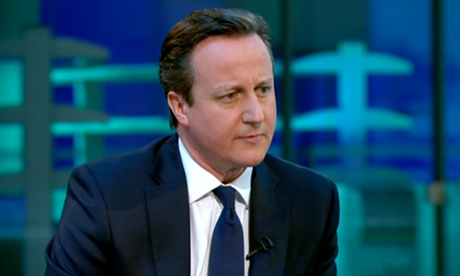
The manifesto bonanza continued this morning with the Liberal Democrats and Ukip showing the electorate what they would do if they are given the chance to run the country. Later on, David Cameron ensured his party didn’t stray too far from the spotlight with a punchy interview with the BBC’s Evan Davis.
The big picture
Nick Clegg staked his party’s claim to remain in government by promising that the Lib Dems would give “a heart” to Conservatives and “a brain” to Labour in a coalition. Launching his manifesto to party members and provoking the wrath of journalists by only permitting one media question, Clegg set out five red lines in any future coalition talks, but pointedly omitted a veto on a European Union referendum if one is demanded by David Cameron. “We won’t allow the Conservatives to cut too much and jeopardise our schools and hospitals, and we won’t allow Labour to borrow too much and risk our economy again.”

As Clegg promised voters he would prevent a “lurch to the extremes”, Ukip leader Nigel Farage delivered a manifesto unsurprisingly packed full of divisive policies - from migrant caps to slashing foreign aid to exiting the EU. Speaking at a hotel in the Ukip target constituency of Thurrock in Essex, he said: “We believe that will unleash an economic dynamism that has not been seen for a very long time. What I am proposing is a big tax giveaway of £18bn.”
With Clegg offering to balance the scales of any future coalition, our data editor Alberto Nardelli pondered the question could Nick Clegg be deputy prime minister again?. And to answer in short, yes, he could. But the numbers behind this possible outcome appear far more complex than 2010 and Clegg’s hopes of returning to Government far more tentative.
What happened today
- The Lib Dems outlined five key areas in their 2015 General Election manifesto - taxes, education, health, budget and environment. The party said it would continue with efforts to boost the income tax personal allowance to at least £12,500 by 2020. They also placed significant focus on education, promising to extend free school meals and to end illiteracy by 2020. And mental health featured strongly with a promise to increase spending by £500 million by 2016/17.
- Ukip promised a “big tax giveaway of £18bn”. The party’s policy chief, Suzanne Evans, explained this would involve abolishing inheritance tax, raising the basic- and higher-rate income tax thresholds and introduce a 30p tax rate. This would be paid for by scrapping HS2, leaving the EU, slashing foreign aid and cutting funding for Scotland. The party would also abolish the energy, culture and international development departments in Whitehall.
- Ukip’s plans to slash foreign aid were met with criticism from most of the other political parties, while campaigning group Global Justice Now labelled the proposal “a recipe for a more unequal world”.
- Nigel Farage’s party also sparked fresh confusion over its immigration policies (see 13.09) as they reinstated a 50,000-a-year cap on skilled workers – weeks after Farage said Ukip would not use arbitrary targets for migration.
- David Cameron was interviewed by Newsnight presenter Evan Davis for the BBC’s Leaders Interviews series, in which the prime minister once again fought back against the perception the Conservatives were the “party for the rich” (see 20.09). Alluding to his inner Hulk, Cameron said: “This makes me more angry than almost anything else.”
- Labour kept itself busy by launching its women’s manifesto (see 13.23). At an event packed full of baby-cuddling, the party promised to double paid paternity leave, raise the minimum wage to more than £8 an hour by October 2019 and consult on allowing grandparents to share in parents’ unpaid parental leave.
- The Green Party received a boost as its membership in England and Wales passed 60,000.
Quote of the day
“There are people who don’t pay their taxes who damn well should.” - David Cameron has a “bears in woods” moment.
Laugh of the day
Two big laughs today. First, Ruth Cadbury, Labour candidate for Brentford and Isleworth, apparently forgetting her party’s key policies. Cringe.
#Labour candidate forgets party manifesto: https://t.co/92xUbdVagb #Chiswick #UK #politics #election2015
— TheChiswickCalendar (@TheChiswickCal) April 15, 2015
Second, the poor Lib Dem battlebus croaked it for the second day running.
Lib Dem bus has broken down in Hornsey for 2nd time in 2 days. "Broken bus, broken promises," shouts one passer by. pic.twitter.com/oZSBdK1iU3
— Frances Perraudin (@fperraudin) April 15, 2015
Hero of the day
Kevin Coyne, Unite’s national officer for energy and utilities, who took down Ukip’s proposal to abolish the Department of Energy and Climate Change as “beyond barmy” (see 13.53). He said “At a time when the planning of the future energy needs of the UK is critical, the Ukip proposal to axe the energy department is beyond barmy and would create chaos.”
Villain of the day

I know I may be accused of looking out for my own here but villain of the day has to be Lib Dem leader Nick Clegg for only allowing one question from the media at his party’s manifesto launch. If journalists are unable to test a party’s proposals through thorough questioning, then how can the public be sure they’re worth the paper they’re written on?
Worst launch press conference yet by Lib Dems one question from the FT and the rest dolly drops by party members. Pathetic.
— Patrick Wintour (@patrickwintour) April 15, 2015
Tomorrow’s agenda
Tomorrow’s key event will be the opposition leaders debate on the BBC. Plaid Cymru’s Leanne Wood, Ukip’s Nigel Farage, Labour’s Ed Miliband, Scottish National Party’s Nicola Sturgeon and Green Party’s Natalie Bennett will square up for the latest televised showdown. We’ll have to wait and see if the prime minister will be putting his feet up on the Tory battlebus and rubbing his hands in glee or suffering from an unexpected attack of FOMO.
That’s it from me for today. Join the Guardian’s election team tomorrow morning, as we bring you the latest news, reaction, analysis, pictures, video, and jokes from the campaign trail. We will continue to do this every day until the UK goes to the polls on 7 May.
The Spectator’s Fraser Nelson has delivered his verdict on Cameron’s interview with Evan Davis. He says there was some “fairly fruitless wrestling on welfare”, and – like Andrew below – also picked up on the PM dead-batting Davis on the defence budget.
… Cameron was less prepared for being challenged from the right. Davis asked him on his failure to commit to the basic Nato minimum of spending 2pc of GDP on defence – in spite of his badgering other countries to do so at the Nato summit in Wales. “I don’t think that you’re willing to say Britain will stick to its international obligation on defence,” he said.
“We’re keeping it clearly this year. And next year,” said Cameron. And in future years – well, he didn’t say. Amusingly, he then started to get cross about other countries …
Updated
Evan Davis has issued an update to his earlier blogpost (see 19.29) following his interview with the prime minister. It seems that Conservative HQ took exception to his line that Cameron was using “dodgy statistics”.
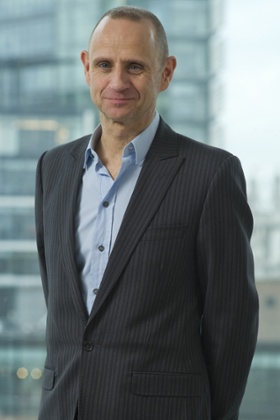
The Conservatives have called to say I’m wrong to argue David Cameron used dodgy statistics of the kind he’d been admonished for using before (see the paragraph numbered 1 in my post above). They say the PM was making a like for like comparison this time.
It remains the case however that he did try to give the impression that we are 80 per cent of the way through austerity. He said “In the last parliament, we had to make an adjustment of 120 billion in terms of spending reductions and taxes. In this parliament the figure is 30 billion”. The Institute for Fiscal Studies think these numbers do not give an accurate impression, believing we are little more than half way through austerity on the Conservative plans.
David Cameron's interview with Evan Davis - Verdict
One of Evan Davis’s strengths as an interviewer is that he is willing to ask what journalists describe as left-field question; something a bit unusual, where the answer isn’t easy to predict. And today he came out with a corker.
Do you agree that there are lot of rich people who are undeserving?
You may well have been watching, and you can read the exchange here. Yes, said Cameron, metaphorically waving his Occupy t-shirt and his copy of Piketty. Davis then went on to press Cameron about a wide range of capitalist villains - care providers that exploit their minimum wage staff, property developers, PFI contractors, and slum landlords - and, by and large, Cameron responded with the sort of angry language - “totally offensive”, “infuriating”, “maddening” - he would use if he were a candidate at the Unite hustings in a Labour leadership contest.
Was it convincing? Well, up to a point. A casual viewer, who perhaps switched on while waiting for MasterChef, may have been impressed. Cameron did sound reasonably passionate and sincere.
But sincere about what? If you listen closely, it was clear that Cameron was not willing to engage in the broader implications of Davis’s question. Asked about the undeserving rich, he only really wanted to discuss this in terms of tax dodging. He did sound genuinely worked up about this (although sadly, Davis did not pin him down on whether someone like Viscount Rothermere, the non-dom Daily Mail owner, was an example of a rich person who should be paying more tax). But Cameron did not sound bothered by why the tax avoiders have so much wealth and income in the first place and, when asked about the various examplars of unacceptable capitalism, he sounded indignant, but in fact resorted to defending government policy.
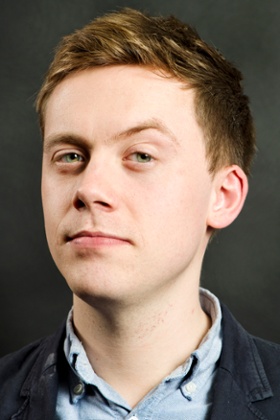
Owen, your job is safe for the moment. (See 8.03pm.)
As for the other highlights, the BBC flagged up the key quotes earlier (see 7.25pm), but it was interesting that Cameron ruled out further cuts to child benefit. (See 7.49pm.) Last night Michael Gove implied there could be further child benefit cuts.
And I found myself getting bored during the section on whether he would or would not keep defence spending at 2% of GDP. Why? Because it is becoming increasingly likely, I think, that a Tory government would spend 2% on defence, but that Cameron just wants to keep this in play as a bargaining chip to win over the DUP if he needs their support after the election. I have not been told that, and I cannot prove it, but if the exit poll on the night of 7 May shows the Conservatives the largest party, but short of a majority, I fully expect to see Gove on TV at 10.45pm saying how much he has always admired DUP defence policies.
I’m handing over now to Mark Smith.
Updated
Tim Montgomerie, the founder of ConservativeHome, seems to think Cameron is right to feel angry about being perceived as standing for the rich.
Cameron animated - almost angry - when he's accused of leading a "party of the rich" by @EvanHD. With some justice: http://t.co/E89et10Qaf
— Tim Montgomerie ن (@montie) April 15, 2015
But Labour’s David Prescott is not convinced.
Be nice if Cameron got angry about 1 million people using foodbanks & having to wait up to seven weeks to see a GP #leaderinterviews
— David Prescott (@DavidPrescott) April 15, 2015
Updated
@iainmartin1 As one Cabinet Minister said to me recently, Yes, he's an essay crisis merchant but this is exam season and he did get a first
— James Forsyth (@JGForsyth) April 15, 2015
The interview is over. I quoted that final passage at length because it seemed worth it, and you need to read the words, as well as watching what Cameron said, if you are going to make a judgment about his sincerity.
Or about whether Evan Davis needed those inverted commas around angry. See 7.29pm.
More in a moment.
Here’s David Cameron channelling his inner Owen Jones.
Q: Look, I want to move on and I want to give you a chance really to rebut what is, I think, one of the central objections people have to the Conservative Party and it’s that it’s a party for the rich. You’ve heard this before, there’s polling evidence that shows this. I can quote it to you but let’s not
A: This makes me more angry than almost anything else.
Q: I want to give you the chance to rebut it, because I think it is what puts a lot of people off the party. Let me just ask you, do you agree that there are – there are lots of deserving rich people, right, there are lots of people who’ve been enterprising, successful, they’ve created wealth and they’ve earned it. Do you agree that there are lot of rich people who are undeserving?
A: Well I believe there are rich people who should pay their taxes and should make a big contribution in terms of taxes to our country. But what infuriates me so much about this is I think of what we’ve done. We’ve taken three million of the lowest paid people out of tax. We’ve got two million more people –
Q: That’s the bottom end done but I’m focusing on the top end. I want to focus on the top end.
A: Well actually it’s the people at the bottom end that I care about. That’s what this government has been about. Is more good schools for children from low income backgrounds getting people into work who’ve been unemployed. And also the other thing
Q: Quite a lot of people, quite a lot of people think yes, there’s a policy there for the bottom but they find it very distasteful that some of the people at the top, frankly, they think, are taking the mick. Now I just wonder whether you share that view?
A: Yes.
Q: You do?
A: Yeah. There are people who don’t pay their taxes who damn well should.
Q: Is it just about taxes?
A: Well I think there’s a very important point which is, you know, we’ve got businesses in Britain that have arranged their affairs so they don’t pay taxes in Britain and we’ve gone after them. The first government to introduce a Diverted Profit tax to make sure they pay their money.
Q: But you’re reducing it to taxes and I’m wondering whether there isn’t more to people’s distaste for some of the rich than just whether they pay taxes. Let me – let me ask you this. You once said, ‘I feel physically sick when I think about giving votes to prisoners as being asked by the European Human Rights Court. I feel physically sick.’ Do you feel physically sick when you see rapacious capitalists – for example care companies telling their staff on minimum wage that they’re not going to be paid for the hours they spend driving –
A: Yes. That I find totally offensive.
Q: You find that offensive?
A: where companies –
Q: Property developers.
A: No if you’re going to ask me questions like
Q: Right, go on yeah.
A: We have put more investigative power into the authorities to get after these companies that don’t pay the minimum wage, and there are many in the care sector, and we’re actually seeing more companies pay higher penalties because of that and I’m proud of that because that does make me very angry when I see that.
Q: Right. Property developers who are building luxury flats rather than affordable homes, bamboozling local authorities into getting planning permission for things that are not suitable for lower paid people.
A: property developers should be building –
Q: Do they make you angry?
A: They should be building a range. Look, they’ve got to do what they’ve said they’re going to do. If they get planning permission for one thing and build something else that’s wrong, but property developers should be building houses. Now that means market houses, it means affordable houses, it means starter homes and there’s a very good track record there now of homes being built, and helping more people onto the housing ladder. Again –
Q: What about contractors overcharging government? You know big contractors, big companies, lots of government contracts
A: yes, infuriating, maddening. I mean yes.
Q: What is it interesting, prime minister, is that I don’t think people feel they get that.
A: Well I’m very glad you’re giving me this opportunity. Look when
Q: So do you feel physically sick?
A: I feel as prime minister I feel directly responsible for not wasting people’s money and when I find companies –
Q: Slum landlords, does that make you really annoyed?
A: Yes, of course, of course. You know go back to the last one before you jump onto the next one. You know I get – I’m infuriated when businesses overcharge government say for IT programmes for large projects. And again this government’s taken action.
Essay crisis Cameron. This is good, punchy stuff on welfare.
— Iain Martin (@iainmartin1) April 15, 2015
Cameron rules out further cuts to child benefit
Q: Excuse me. You are able to tell me the tax cuts in detail with specific numbers, the tax cuts you’re going to make in 2018,19 and 20 but you cannot tell me the bigger welfare cuts that you’re making next year. That’s terribly cynical isn’t it? It’s good news, we tell you that.
A: We’ve set out – we’ve set out the biggest ones as you say of the 12 billion. The 12 billion is half of the 21 billion that we achieved in the last parliament, but also there’s this point, Evan. Part of this is continuing with a programme that we’ve had. We have been getting people off what was called Incapacity Benefit and back into work. We’re going to continue with that, successfully reducing welfare –
Q: So Incapacity Benefit will go down? The Bill go down under –
A: we believe – it’s not called incapacity benefit anymore but we’re convinced we can go on getting people back to work.
Q: Child benefit, is that one going to go down? Is that – the people who get child benefit should they expect it to be going down if you win?
A: No, we’ve made our reforms and people can see what we’ve done. We’ve said for instance –
This is interesting. On Newsnight last night Michael Gove suggested there would be further cuts to child benefit. Cameron is now ruling that out.
-
Cameron rules out further cuts to child benefit.
Davis asks what the £12bn welfare cuts proposed by the Tories will involve. He says Cameron has identified £3bn of them, but not the other £9bn.
Cameron says it was right to reform welfare. And we need to go on, he says.
Q: Well let’s talk about 12 billion and what 12 billon is, ‘cause I think most people will find that abstract. Let’s suppose you took 12 billion in a year – that’s your saving – and you divided that across all the households in the country. What would it be roughly?
A: Well it is half as much as the 21 billion that we saved in the last –
Q: Roughly would it be per household in the country?
A: I think you’re bombarding me with things now, having complained about it.
Q: I’m just asking. So you don’t know. Shall I tell you what it is?
A: Please do.
Q: It would be £450 per household in the country. Getting in a tenner a week for every household in the country. Now you’re not going to – I don’t think – spread it across all the households in the country. If it’s an average of £450 for each household and it’s not going to be across all households it’s going to be like a thousand, two thousand quid for some households. Aren’t they entitled to say, aren’t we all entitled to say, tell us which households are going to have this cost imposed on them if they vote Conservative.
A: Well, first of all it is right to reform welfare, for the reasons I’ve given.
@EvanHD right that 2% on defence is a treaty commitment, rather than just something that it would be nice to have
— James Forsyth (@JGForsyth) April 15, 2015
Cameron says he will never put our defences at risk
Cameron goes on:
I will never put our defences at risk.
He attacks Labour for not spending enough on defence.
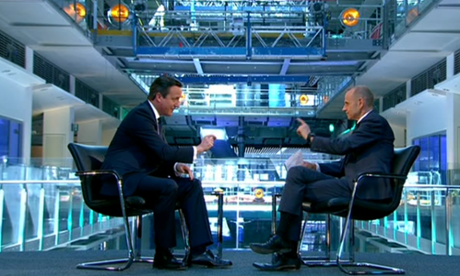
Davis presses Cameron on defence.
Q: Okay, we have a two per cent of national income on defence, NATO obligation. We’ve promised that to our NATO allies. In fact, back at the NATO summit last year you were badgering everybody to come and sign up to the two per cent and meet the two per cent like Britain does. But you’re not going to be able to say to me now, I don’t think that you’re willing to say Britain will stick to its international obligation on defence.
A: Let’s get... the first one. We have all the time I’ve been in government, we have kept that two per cent. We’re keeping it clearly this year and next year. And the other point I’d make is when we met in Cardiff there were dozens of countries in NATO that have never got anywhere near two per cent. Britain has the second biggest defence budget in NATO. And frankly it is time for other countries, particularly European countries, to at least get close to the two per cent that we’ve achieved, been achieving year after year after year.
Q: Can I be clear, we will meet the two per cent for every year that you are prime minister if you’re re-elected?
A: I will make those decision if re-elected.
Updated
Davis asks what cuts Cameron is proposing for unprotected departments.
A: Let me, let me take this to the big picture. Make it simple. What are we proposing? In the last parliament, we made, we had to make an adjustment of 120 billion in terms of spending reductions and taxes. In this parliament the figure is 30 billion. So it’s a quarter of what we had to achieve in the last parliament. In the last parliament, we cut taxes by ten –
Q: I’m getting bamboozled by – I’m getting bamboozled by figures.
A: But you normally like figures, Evan.
Q: I love them, but there’s one, I only want one. What is the average cut over the next parliament in the unprotected departmental budgets like defence? Given all your promises on health and transport and all those other things, what are the unprotected departments having to cut?
A: Departmental spending overall has to come down by two per cent.
Q: But the unprotected departments can... 15 per cent.
A: That would depend on the individual decisions.
Davis turns to defence.
Q: I want to move on to the area of defence. Now, there’s a reason why I’m picking defence, it’s because it’s one of the departments that is not protected. You’ve not ring fenced it from budget cuts under the next – your next government. Now the interesting thing is that you’ve made choices to ring fence some things, but not that one, and a lot of your maths for it to work is going to rely on cuts in departments which you haven’t ring fenced. Why have you chosen not to ring fence defence but you have protected overseas aid and you’ve protected health?
A: Well, the defence budget is three times the size of the overseas aid budget, it’s on a different scale, and rightly so. And we’ve made some important pledges about defence, we’ve said the equipment programme, which is 160 billion over ten years, absolutely essential. When you think of the mess we inherited and the black hole in the defence budget we had to sort out, that is protected and that has a guaranteed above inflation increase every year for a decade. We’ve pledged not to cut further the numbers of regular service personnel in our armed services. We’ve guaranteed to replace in full the Trident submarine, the nuclear deterrent which is essential, in my view, for our nation’s security. Now, we’ll have a full defence review and spending review if we’re in government in the autumn, and that’s the right time to make the final – to make the final choice.
Cameron’s opening answer is getting good reviews.
Love him or loathe him, this is a pretty neat answer to @EvanHD from Cameron at start of interview. pic.twitter.com/SfMjS6fLne
— Paul Waugh (@paulwaugh) April 15, 2015
Not a bad first answer from Cameron to @EvanHD in BBC interview tonight pic.twitter.com/HhFtNEJxP7
— John Rentoul (@JohnRentoul) April 15, 2015
Davis presents Cameron with the contract he offered the voters before the election. Davis says Cameron achieved many of these goals, but not all of them.
Cameron says:
But I think we went through it and we saw something like, of the 28 pledges, I think something 22 pretty well fulfilled and others in progress. So I’m prepared – I’m happy for people to look at that and to judge me on the record ...
And they turn to immigration.
Q: No, no, no. You haven’t. But look, your line is you’ve delivered well, even if you didn’t deliver exactly what you hoped at the beginning. But did you at least over-promise? Now, the reason I ask this is that you’ve been lavishing promises around in the last few days and a lot of experts, like on immigration, say these are going to be very, very difficult to pay for. We only have your word on it.
A: Well, let me answer that very directly. I don’t think we did over-promise at the last election. I was reading my 2010 manifesto today, things that you might ask me about it, and I think what comes across, even though we had a coalition government and couldn’t achieve all the things we wanted to, you know, pledge after pledge has been fulfilled. And in some cases, like on freezing the council tax or on getting people back to work, getting people off benefits, we have over-delivered on what we promised. And as for what we’re pledging in the next parliament, all of what we’ve promised is I think achievable, and in some cases it’s actually more modest that what we’ve achieved in this parliament.
Updated
Q: I’ll push you a bit harder, because you have said the job is half-done.
A: Yeah.
Q: Which would imply five out of ten. But I think you’d probably think it’s better than that.
A: Well, I think the job is half-done, because what we’ve done is turn the economy round, got Britain going again, but these are foundations on which to build.
Cameron is now talking about what more he wants to achieve.
Q: But not a ten, it wouldn’t be a ten would it? You’d never give it a ten?
A: No, no one ever achieves perfection.
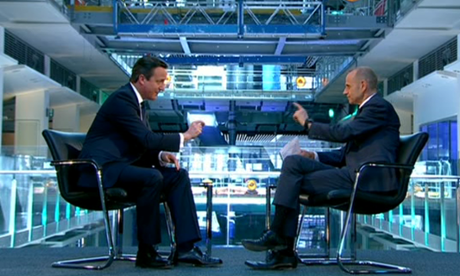
Evan Davis interviews David Cameron
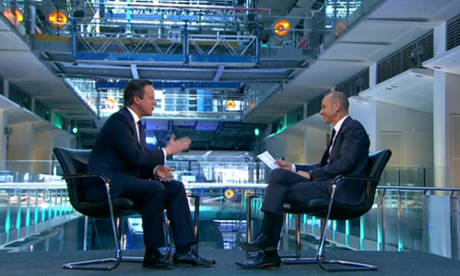
I’ve got the transcript, so I will post all the quotes I think are relevant.
Q: Prime Minister I’d like to start by asking how many marks out of ten would you give yourself for your record so far as prime minister?
A: I don’t think any prime minister should mark their own homework. We’ve taken that out of schools and we I don’t think we should have it in politics either. Look, what I’ve tried to do, leading the first coalition government for 70 years, is effectively to turn the fortunes of the country and to turn the economy round. And two million more people in work, 750,000 more businesses operating in Britain, growing faster than the other major western countries. I think that’s a strong record. But it’s a foundation on which I want to build for the next five years.
Updated
Here are the first two of Evan Davis’s three things.
1. He is willing to quote dodgy statistics. He compared spending cuts made in the last parliament with the ones to be made in the next. It sounded like most of the cuts have now been made, but the stats he used looked very similar to ones the Statistics Authority admonished him for using back in December. “The figures for ‘savings’ during this Parliament and the next Parliament are drawn from different sources, are derived in different ways, and so are not directly comparable” said the National Statistician, Sir Andrew Dilnot.
2. He is “angry” about the “undeserving rich”. He jumped at the chance to show some annoyance at rapacious capitalists. In fact, I saw more anger at the rich in my half hour with him, than I can remember seeing in the whole last five years. His problem is, as Lynton Crosby apparently likes to say, is that “you can’t fatten a pig on market day” and it may be too late to adopt that tone now, if it doesn’t chime with the message of the last few decade.
Note the inverted commas around that “angry”. Was Cameron convincing? Let’s watch and find out.
Evan Davis has written up three things he’s learnt from the interview.
Three things @EvanHD learned from his interview with David Cameron this afternoon http://t.co/ZzWkWKxN9v #newsnightlive
— Ian Katz (@iankatz1000) April 15, 2015
Cameron says claim Tories are party of rich makes him 'more angry than almost anything else'
Hello. It’s Andrew Sparrow, taking over from Jamie.
I’ll be covering the Evan Davis interview with David Cameron.
It was pre-recorded and the BBC released some quotes earlier. (See 6.49pm.)
And the BBC has just sent out the transcript. According to the BBC, here are the top lines.
Cameron would not consider himself successful if he did not win an outright majority. “We are only 23 seats short and if I fall short of those 23 seats I will feel I have not succeeded in what I want to achieve.”
- The suggestion that the Conservative Party was the party of the rich made him “more angry than almost anything else”.
- Said he found care companies who did not pay their staff for the time they spent travelling between appointments “totally offensive” and companies which overcharged government “infuriating, maddening”
- Refused to say if UK would maintain defence spending at 2% of GDP: “I will make those decisions if re-elected”
Updated
Green party membership in England and Wales passes 60,000

Membership of the Green party of England and Wales has just passed 60,000, the party has announced.
The party, led by Natalie Bennett, has since membership increase more than six-fold since 2009 when it had 9,630 members in England and Wales.
Membership of the combined UK Green parties, including the Scottish Greens and the Green Party in Northern Ireland, is approaching 70,000, the party added.
A Green party spokesperson said:
People are fed up with our tired business as usual politics and unbalanced economy and looking for a real alternative.
Updated
The former Conservative leader William Hague, who left parliament this year after 26 years in the House of Commons, has spoken to Absolute Radio’s Geoff Lloyd about his life in politics.
Hague, who led the party from 1997 to 2001, reveals that out of the many global figures he has met, US presidential hopeful Hillary Clinton is one of his favourite to enjoy a drink with.
Hague says the election is a “very important one” and he will be working “as hard as in any election in which I have been a candidate”.
Updated
Cameron says if Tories fall short of majority he will have failed

The prime minister has told the BBC the Conservatives have not “achieved everything I wanted to” as he admitted he will feel he has “not succeeded” if his party do not seal a majority at the general election.
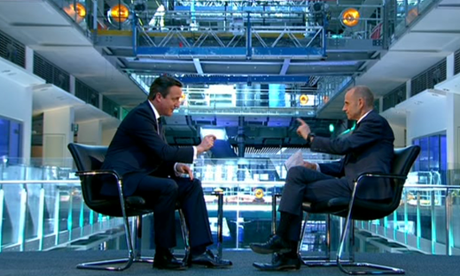
In an interview with Newsnight presenter Evan Davis, David Cameron said the perception that the Conservatives are the “party of the rich” makes him “more angry than almost anything else”.
A summary of the interview on the BBC website reads:
Asked whether he would see it as a failure if the Conservatives do not get a majority, he said: “We are only 23 seats short and if I fall short of those 23 seats I will feel I have not succeeded in what I want to achieve.”
Mr Cameron said he did not “overpromise” in the 2010 manifesto, saying “pledge after pledge has been fulfilled”, but acknowledged the Conservatives had not “achieved everything I wanted to”.
The interview will be broadcast in full on BBC One later this evening, and Andrew Sparrow will be liveblogging it here for you.
Updated
The Observer’s economics editor, Heather Stewart, has been at a debate on the parties’ manifestos at City accountancy firm Moore Stephens.
Paul Johnson, director of the Institute for Fiscal Studies (IFS), set up the debate by stressing difference between the two major parties’ fiscal plans.
Johnson said:
I see there being a very big difference, at least in terms of what they’re saying, between the Conservatives and Labour, on fiscal policy - perhaps the biggest difference for a very long time.
He added that to meet its target of eliminating the entire budget deficit - on both current and capital spending - the Conservative party would need “tens of billions of pounds worth of tax rises or spending cuts”.
Labour meanwhile has been “deliberately vague” about when it wants to achieve its more modest target of eliminating the current budget deficit, Johnson added.
Updated
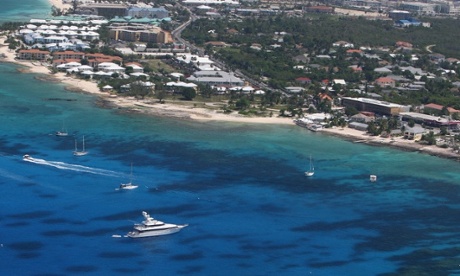
Cameron tax haven crackdown 'purely political', says Tory peer
A Conservative peer has described David Cameron’s flagship G8 anti-tax avoidance initiative as a “purely political gesture” designed to head off European attempts to curb the City of London.
My colleagues David Pegg and James Ball report on the comments made by Lord Blencathra, the former Tory home office minister David Maclean, who was ennobled by David Cameron in 2011.
They say:
The frank statement emerges from a submission made by Maclean to a consultation on tax transparency in the Cayman Islands, written in February 2014. The letter was initially held privately by the Cayman government, but has since been made public.
Maclean started by describing the political context in 2013: “In the early part of last year, the Germans and others were pushing hard for a financial transaction tax, which would have severely hurt the City of London,” he wrote. “It was and is a top UK government priority to head that off. The French were pushing for ‘blacklists’ of jurisdictions with any tax regime lower than theirs. It was also a UK government objective to head that off.”
Tory peer on what he says Cameron's real motivation was for his 2013 offshore crackdown http://t.co/IkpIkPlc45 pic.twitter.com/clffL8L1iM
— James Ball (@jamesrbuk) April 15, 2015
Updated
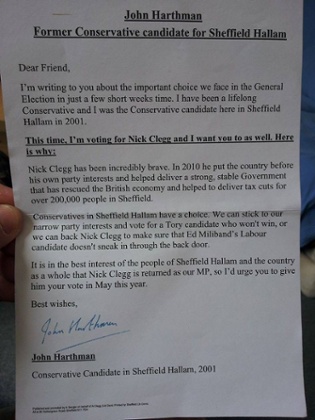
In a boost for the Lib Dems, a former Conservative party candidate for Sheffield Hallam has written to people in the area telling them to vote for Lib Dem leader Nick Clegg. My colleague Frances Perraudin has this on Clegg’s coup.
In a letter sent out by the Liberal Democrats, John Harthman – who stood against the constituency’s last Liberal Democrat MP Richard Allen in 2001 – says that Clegg was “incredibly brave” to put “the country’s interests before his own party interests” when he went into coalition with the Conservative party at the last election.
“Conservatives in Sheffield Hallam have a choice,” the letter reads. “We can stick to our narrow party interests and vote for a Tory candidate who won’t win, or we can vote Nick Clegg to make sure that Ed Miliband’s Labour candidate doesn’t sneak in through the back door”.
Harthman argues that it “is in the best interests of the people of Sheffield Hallam and the country as a whole” that Nick Clegg is returned as MP for the constituency, “so I’d urge you to give him your vote in May this year”.
Updated
The Chiswick Calendar, a website dedicated to the west London district, filmed this awkward interview with Ruth Cadbury, Labour candidate for Brentford and Isleworth, in which she appears to forget her party’s key policies. Cringe.
#Labour candidate forgets party manifesto: https://t.co/92xUbdVagb #Chiswick #UK #politics #election2015
— TheChiswickCalendar (@TheChiswickCal) April 15, 2015
ComRes/ITV poll points to Lib Dem wipeout in south-west England
Lib Dems will be disappointed by ComRes poll that shows the party’s vote is set to collapse in its south-west heartland.
New @ITVNews poll of South West Lib Dem/Tory battlegrounds: Lib Dems see vote share drop by 22 points since 2010 pic.twitter.com/vc7ve5uOWR
— ComRes (@ComResPolls) April 15, 2015
Updated
Tomorrow’s Spectator - ‘The Angry Left’.
This week's cover: The angry left. @FraserNelson @jkirchick and @alexmassie on the rise of the new left-wing populism pic.twitter.com/dxWfSQihnT
— The Spectator (@spectator) April 15, 2015
The Lib Dems had incurred the wrath of the lobby after party leader Nick Clegg accepted only one question from the gathered journalists, before the lights went out. That lucky hack was the FT’s George Parker (see 10:42am).
Perhaps it’s the party’s favoured paper – the official Lib Dem twitter account did link to the FT’s “Quick guide to the Liberal Democrat manifesto”, after all.
Quick guide to the Liberal Democrat manifesto http://t.co/pB2i7Vnmha via @FT #libdemmanifesto #GE2015 pic.twitter.com/goqDtjEhci
— Liberal Democrats (@LibDems) April 15, 2015
Our data editor Alberto Nardelli has been pondering the question could Nick Clegg be deputy prime minister again?
In short, yes, he could. But the numbers behind this possible outcome appear far more complex than 2010 and Clegg’s hopes of returning to Government far more tentative.
Alberto writes:
Cameron’s chances of extending his stay in Downing Street depend on the Tories not only beating Labour to be the largest party, but doing so by some margin. But if the Tories do emerge with the most seats, Clegg would probably talk to Cameron first, as he did in 2010.
So yes, Clegg could be Cameron’s deputy prime minister again. But he would need the Conservatives’ and Lib Dems’ tally of seats to add up to at least 326, because without the numbers in parliament a government wouldn’t see the light of day.
Brilliant front page for this week’s New Statesman, mashing up UK politics with the Great British Bake Off. And there’s that bacon sandwich again.
In this week's New Statesman | The Great British Vote Off http://t.co/QxtIgddNNY pic.twitter.com/kiIHQmYQlY
— New Statesman (@NewStatesman) April 15, 2015
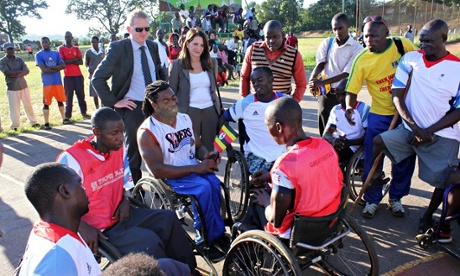
My colleague Sam Jones has written this detailed analysis of Ukip’s controversial proposals to slash foreign aid and abolish the “wasteful” Department for International Development (Dfid). Ukip intends to repeal the 0.7% commitment and bring the UK’s aid contributions in line with those of the US, which currently spends 0.2% of its national income on overseas aid.
He writes:
Much of the manifesto’s harshest language – and plans – are reserved for DfID, which spent £11.46bn on overseas aid in 2013.
Ukip wants to close the department, merging its “essential functions” with the Foreign and Commonwealth Office, but keep a single minister for overseas development.
Updated
The King’s Fund, an independent charity working to improve health and health care in England, has delivered a mixed verdict on Lib Dem proposals for the NHS.
Chief executive Chris Ham says:
The pledge to find the additional £8bn a year called for in the NHS five year forward view is welcome.
However, the detail behind the pledge indicates that most of this new funding will not be available until the latter half of the parliament, so it will not address the immediate financial pressures facing the NHS.
Updated
My colleague Patrick Wintour has flagged up another key manifesto launch - from the comedian Al Murray. The Pub Landlord, who is running against Nigel Farage in South Thanet, unveiled the Free United Kingdom party’s (FUKP) key pledges on the back of a cigarette packet.
Waiting for IFS election analysis on Al Murray manifesto. "Free dogs for all does have implications for deficit". pic.twitter.com/8nL6n4Hoij
— Patrick Wintour (@patrickwintour) April 15, 2015
Along with his “free dogs for all” promise, Murray says a country under FUKP would “teach more stuff in school”. Hard to argue with that.
Updated
Video highlights of the Lib Dem manifesto launch
Our video team have uploaded highlights of the Liberal Democrats’ manifesto launch in Battersea, south London.
Updated
This is my first live blog for the Guardian. I’m hoping not to face the sort of linguistic barriers as Ben Bloom of the Telegraph, who was too late to realise that his German skills were not the standard required for a Borussia Dortmund press conference.
Not sure I've ever regretted dropping German post-GCSE as much as I do now, while live blogging a Borussia Dortmund press conference
— Ben Bloom (@benbloomsport) April 15, 2015
Updated
Good afternoon everyone, I’m Jamie Grierson and I’ll be taking over from Andrew for the next couple of hours. I’ll be keeping an eye on the ongoing reaction to the Liberal Democrat and Ukip manifestos and later Newsnight presenter Evan Davis will be interviewing the prime minister as part of the Leaders Interviews series.
The SDLP has pledged a Scottish-style commission on devolving fiscal powers to Northern Ireland during the next parliament, the Press Association reports.
Opposition to reducing the benefit cap to £23,000 and support for remaining in Europe were among other promises made at the manifesto launch in Belfast.
The nationalist party said Northern Ireland needed a “prosperity process” to follow the peace process.
The manifesto said: “The SDLP will establish, in partnership with the British government, a Scottish-style commission to begin the devolution of further powers which will allow us to take control of additional fiscal levers.
“Through this mechanism, Scotland has succeeded in winning the argument to allow them to borrow money and issue their own bonds.
“The same powers should be extended to Northern Ireland to enable us to stimulate our private sector through infrastructure projects.”
Leader Alasdair McDonnell said: “The SDLP is offering a simple choice: prosperity not austerity.”
The SDLP won three seats in the last parliament, in Foyle, South Belfast and South Down.
McDonnell, a former GP who is fighting to defend South Belfast, ruled out joining a coalition with the Conservatives.
That’s all from me, Andrew Sparrow, for now. My colleague Jamie Grierson is now taking over.
I will be back to cover the Evan Davis’s interview with David Cameron on BBC1 at 7.30pm.

Obviously, the dramatic Lib Dem news today was the battlebus breaking down. (See 2.29pm.) My colleague Frances Perraudin has written it up.
After trying to get around a particularly sharp bend in Lynne Featherstone’s constituency of Hornsey and Wood Green, the Liberal Democrat battle bus finally gave up.
Journalists on the bus were particularly excited to have something to tweet about.
The Lib Dems had just launched their manifesto and, because of the party’s structure (every policy has to be approved by a series of committees), very few surprises had found their way into the final document.
Nick Clegg was bundled off the bus in Crouch End, North London, into an unmarked police car, and whisked off to meet activists in Alexandra Palace.
“Broken bus, broken promise,” shouted one passer by when he saw Clegg.
The rest of the bus’s passengers were evacuated in to a pub for a swift pint before having a picnic in a local park.

Updated
According to the BBC’s Allegra Stratton, some Tories are considering offering Nick Clegg the post of home secretary in a coalition.
In 2010 Clegg considered home sec as well as DPM; sources say it's in play again. Clegg rules out any dept role: https://t.co/JpTgEKSOzF
— Allegra Stratton (@BBCAllegra) April 15, 2015
But Nick Clegg has ruled this out.
Nick Clegg rules out to @BBCAllegra taking a departmental role in future government. #LibDemManifesto
— JamesClayton (@JamesClayton5) April 15, 2015
Chuka Umunna, the shadow business secretary, has given an interview to the New Statesman. In it, he says Labour needs to make a more positive case for deficit reduction.
I don’t think there is anything progressive in spending more on your debt interest repayments every year than you do on housing, than you do on transport. That is where there is an argument from a progressive position to be made for balancing the books. We need to make that argument and we need to make it more confidently. Because if we get elected . . . we’re going to have to make some really tough decisions. And we need to be clear why we’re doing this - we will be attacked from the left, not just by the Green Party but the Socialist Party and others, and we’ve got to have a confident, not a defensive position.
He also said he did not think the top rate of tax should remain at 50% permanently:

I wouldn’t want to do it permanently because, as I said, I would like to see the tax burden as low as possible. I don’t believe that you tax for the sake of taxing, you tax to fund public services and, currently, to reduce our deficit and our debt.
As the New Statesman’s George Eaton points out, this contrasts with the line Ed Miliband used during the Labour leadership campaign in 2010, when he argued that the top rate should stay at 50% because “it’s not just about reducing the deficit, it’s about fairness.”
Updated

The SNP response to the Lib Dem manifesto is much the same as Labour’s. (See 2.56pm.) This is from Stewart Hosie, the SNP deputy leader.
Having effectively ripped up their 2010 manifesto when they entered coalition with the Tories, people no longer believe a word the Lib Dems say.
We already know the reality of the Lib Dems. After five years propping up the toxic Tories, all Nick Clegg and his party have to show is a trail of broken promises. On austerity, tuition fees, Trident renewal, Lords reform, and the NHS, they have backtracked and abandoned their principles. It is no wonder trust in the Lib Dems is at rock bottom.
Here’s a Guardian video of Nigel Farage launching his manifesto.
Nick Clegg has been asked why he always refused to talk about red lines at his manifesto launch this morning.
If I may just have the freedom to chose my own language, but I think I’ve been pretty clear. We treated the front page of our last manifesto as something akin to a tablet of stone. I’ll say it again, these are the priorities we’ll stick to through thick and thin, we’ll dig our heals in, we’ll die in the trenches. How many other euphemisms will we have to use?
Clegg said the most important thing was not his use of language, but what his party did in the last parliament.
I remember very vividly in the coalition negotiations, the Tories came to the negotiation table with the idea of fiddling around with inheritance tax and this, that and the other, and we said ‘no, the single most important tax priority for this coalition government is lifting people out’ and they didn’t want to do it. They said it wasn’t affordable, wasn’t doable ... I think I am entitled to point out how stubborn, how dogged and obstinate we’ve been in seeking to push the priorities in our last manifesto and we’ll do so again next time.
Here is an extract.
Overall, the Labour and the Liberal Democrats are committed to protecting a larger part of education spending than are the Conservatives. In addition, the Liberal Democrats are committed to a faster increase in spending than the Conservatives in the period after 2017–18.
Compared with Labour, the Liberal Democrats have only committed to protecting the 2–19 education budget (which they say is currently £49.2bn). Labour have instead committed to protecting the entire Department for Education resource budget (which was £54.2bn in 2014–15 in 2015–16 prices). However, Labour have committed to protecting the education budget in real-terms, whilst the Liberal Democrat commitment currently implies increasing 2–19 education spending by 4.8% in real terms.
Therefore, the Liberal Democrats are protecting a slightly smaller definition of education spending than Labour, but have committed to increasing this by more.
The Liberal Democrats say that their commitment allows them to protect 2–19 education spending per pupil in real terms. This is true as their commitment implies a 4.8% real-terms increase in 2–19 education spending between 2015–16 and 2019–20 and the number of pupils aged between 2 and 19 is expected to grow by at a similar rate. However, it is worth noting that the number of school-age pupils (ages 5–16) is expected to grow by more – by 7% between January 2016 and January 2020. If the Liberal Democrats increase all areas of education spending in equal percentage amounts, then their commitment still implies a 2.1% real-terms fall in current school spending per pupil. This though is still more generous than what is implied by the Labour and Conservative commitments, which could both imply a 6.6% real-terms fall in current school spending per pupil between 2015–16 and 2019–20.
Updated
My Datablog colleagues have done an analysis of the words used in Nick Clegg’s speech at the Lib Dem manifesto launch, and in the manifesto itself, and what this tells us.
And here are the equivalent ones they did for the Labour manifesto and for the Conservative manifesto.
Here’s a Guardian video showing the moment the Telegraph’s Christopher Hope was booed at the Ukip press conference for asking why there was just one black face in the manifesto.
And here’s the Labour response to the Lib Dem manifesto. It’s from Harriet Harman, the deputy leader.
People know that the Lib Dems are every bit as much to blame as the Tories. They have backed the Tories every step of the way while people’s living standards have fallen and the NHS has been going backwards.
People know that the Lib Dems’ manifesto can’t be trusted. They broke the key promises in their last manifesto and are repeating them once again. People will remember the Lib Dems’ record on trebling tuition fees, wasting £3bn on the NHS and increasing VAT and know their promises for the future can’t be trusted.
More on the Lib Dem breakdown.
Libdem bus causing traffic chaos stuck on hill in North London. Chances of holding Hornsey and Wood Green narrowing by the second.
— Joey Jones (@joeyjonessky) April 15, 2015
Lib Dem battlebus breaks down
The Lib Dems aren’t having much luck with equipment today. First their press conference was hit by a power cut. (See 10.44am.) And now this ...
Lib Dem bus has broken down in Hornsey for 2nd time in 2 days. "Broken bus, broken promises," shouts one passer by. pic.twitter.com/oZSBdK1iU3
— Frances Perraudin (@fperraudin) April 15, 2015
Lunchtime summary

- Nick Clegg has offered to be the Conservative heart in any future coalition or Labour’s head as he set out five red lines in any future coalition talks, but pointedly omitted a veto on a European Union referendum if one is demanded by David Cameron. As Patrick Wintour reports, launching his manifesto to party members and taking only one media question at the event, Clegg said to cheers that his party in coalition would “add a heart to a Conservative government and a brain to a Labour one. We won’t allow the Conservatives to cut too much and jeopardise our schools and hospitals, and we won’t allow Labour to borrow too much and risk our economy again.” Avoiding the phrase “red lines” he nevertheless said the five pledges on the front page of the party’s manifesto are “our top priorities. These are the things we will fight tooth and nail for in the next parliament.”

- Nigel Farage has launched Ukip’s election manifesto with promises of £18bn in tax cuts, much stricter immigration controls and an exit from the European Union. As Rowena Mason reports, the Ukip leader claimed on Wednesday that his party had professionalised beyond recognition over the past five years, as he presented a glossy corporate-looking brochure that he claimed was fully costed and independently audited by the CEBR thinktank. Speaking at a hotel in the Ukip target constituency of Thurrock in Essex, he said: “We genuinely want to make working people better off. We will do this by making the argument for a low-tax revolution. We believe that will unleash an economic dynamism that has not been seen for a very long time … What I am proposing is a big tax giveaway of £18bn.”
- Lord O’Donnell, the former cabinet secretary, has said that the 2010 coalition negotiations were a “piece of cake” compared with the multiparty talks that are likely to start after the general election next month. He also said that after the election a minority or coalition government could try governing the country passing fewer laws, and that this might be a good thing. (See 9.20am.)
Updated
Unite says Ukip plan to abolish DECC is 'barmy'
Unite has issued a statement saying that Ukip’s energy policies are “barmy”. But what’s equally interesting is that the union is saying the Department for Energy and Climate Change (which has been under Lib Dem control for the last five years) has done a “fantastic” job. The statement is from Kevin Coyne, Unite’s national officer for energy and utilities.
At a time when the planning of the future energy needs of the UK is critical, the Ukip proposal to axe the energy department is beyond barmy and would create chaos.
We need a central department at the heart of government to co-ordinate and balance all the elements of a coherent and strategic energy policy – nuclear, coal, oil, wind, solar and fracking.
The energy department has been fantastic in co-ordinating nuclear policy which has led to much-needed new nuclear build in the UK. It has done a similar excellent job in promoting wind power which has created many good jobs and boosted economic growth.
These are complex issues, balancing competing interests from the energy companies, industry and the consumer. They can’t be left to the DIY policies of Nigel Farage.

Jim Murphy visited a social enterprise called The Social Bite in Glasgow city centre this morning, possibly the first Scottish Labour leader to brave a sandwich bar in the presence of the press since former leader Iain Gray was infamously blocked into a branch of Subway by anti-cuts protesters during the 2011 Holyrood election campaign.
Asked directly about Patrick Wintour’s interview with Nick Clegg this morning, in which the Lib Dem leader warned “the looming question in the next phase of this campaign is whether there is to be a coalition of grievance, or of conscience”, Murphy said:
There’s no reason not to have a grievance against Nick Clegg and David Cameron. This is the government that has given us a VAT hike, its one genuine growth industry has been food banks, exploitative zero hours contracts...people are right to have a grievance but they should use that grievance to elect a majority Labour government.
Repeating his party’s policy that there will be no coalition with the SNP, nor need for one, he reiterated forcefully: “There isn’t going to be a coalition after this election. I’m confident we can win this election; we can win it north and south of the border and if Labour wins there’s no need for a coalition We’re not going to have a coalition - the SNP have ruled it out, we’ve ruled it out, we’ll rule it out every day between now and the election and we’ll rule it out every day after the election.”
Updated
Here is today’s Guardian three-minute election video, with Jonathan Freedland and Gaby Hinsliff discussing the Ukip manifesto launch.
Labour’s senior female team of Harriet Harman, Yvette Cooper and Gloria del Piero have taken the party’s pink bus to a south London nursery this morning for the launch of Labour’s women’s manifesto.
It was an event heavy on baby-cuddling and mercifully low on formal speeches, as the three politicians kneeled at sandpits and got elbow deep in a water trough alongside around 15 toddlers and their parents.
The party is promising to double paid paternity leave, raise the minimum wage to more than £8 an hour by October 2019 and consult on allowing grandparents to share in parents’ unpaid parental leave.
Labour also say they will extend free childcare for working parents from 15 to 25 hours a week. That’s five hours fewer than the Tories promised in their manifesto launch on Tuesday, but Del Piero, Labour’s shadow minister for women and equalities, insisted the Conservative plan had a £600m funding gap. “Their figures don’t add up,” she said.
mYvetteCooperMP @GloriaDePiero & @HarrietHarman launching @UKLabour women's manifesto. #pinkbus pic.twitter.com/HO40SpDO08
— Labour Home Affairs (@LabHomeAffairs) April 15, 2015
More from the Ukip manifesto.
Farage using leader's privilege to boost his chances in South Thanet. The UKIP manifesto contains a pledge to re-open Manston Airport.
— Thomas Penny (@ThomasWPenny) April 15, 2015
George Osborne, the Conservative chancellor, has been campaigning in Scotland today. He has defended Conservative plans to stop Scottish MPs voting on certain aspects of income tax.
If you have a Scottish rate of income tax, a consequence of that is you have an English rate of income tax and I think it’s only right and fair that English MPs would then have a decisive say over that.
Of course the whole budget would be voted on by all the UK MPs, including Scottish MPs, and I think that’s a fair arrangement. I think people in Scotland would see it as fair, I also think people in England, Wales and Northern Ireland would see it as fair.
But Jim Murphy, the Scottish Labour leader, said this was “plain and downright wrong”.
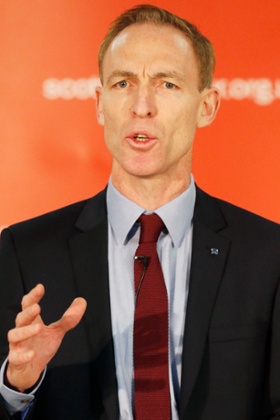
George Osborne is all over the place. He signed up to the Smith Agreement, which said explicitly that income tax is a UK tax system, but they have, with their manifesto, ripped up huge tracts of the Smith Agreement and rewritten the entire tax legislation of the United Kingdom. Now they are desperately trying to backtrack and justify a colossal mistake. They are just plain and downright wrong.
Updated
Labour says Ukip are 'party of Tory policies, Tory people and Tory money'
Labour has put out its response to the Ukip manifesto. This is from Jon Trickett, the shadow minister without portfolio.
Ukip have confirmed that they are a party which stands for a privileged few. Their manifesto backs another tax break for those at the top and they will hold the Tories’ ‘feet to the fire’ in delivering their extreme spending plans, which will threaten the NHS and put living standards at risk.
Ukip are a party of Tory policies, Tory people and Tory money.
Just as important as what is in the manifesto is what’s missing. A vote for Ukip is a vote for NHS privatisation and the Tories’ plans to cut twice as fast in the next year as last year. This is what Nigel Farage has said he believes in.
Ukip don’t represent working people - like the Tories they stand up only for a privileged few. That’s why they are preparing to do a deal with David Cameron after the election.
The Labour party has launched its women’s manifesto.
I'm at labour's women's manifesto launch at a nursery in Stockwell. The pink bus is here! pic.twitter.com/KrTTW1Wdd4
— Laura Pitel (@laurapitel) April 15, 2015
And here’s an extract.
Labour has a proud history of supporting and championing changes to ensure that women can achieve their potential and organise their lives in the ways they want. From the Equal Pay and Sex Discrimination Acts in the 1970s to the 2010 Equality Act, we have legislated to tackle discrimination in the workplace and in public life. The last Labour Government extended maternity rights, introduced paternity leave, and extended childcare, supporting women and men to balance their work commitments with family life, and took action to ensure that the criminal justice system takes domestic abuse seriously.
The next Labour Government will build on this record by working for an economy that creates the more secure and better paid jobs we need to raise living standards and support people’s choices at work and at home.
We have a clear plan for equality, tackling low pay in the sectors dominated by women and strengthening the law on maternity discrimination. We will put in place a system that reflects the realities of modern family life, with more free childcare and better leave for fathers and grandparents. We will do more to support healthy relationships, and to tackle domestic violence. And we will always lead by example when it comes to women in public and senior roles, not only to ensure fairness but because we know that the exclusion of women’s voices makes our public life poorer.
Ukip manifesto launch and Q&A - Summary
-
Nigel Farage has sought to depict Ukip as a mainstream, responsible party with the publication of a manifesto with independently-costed policies. Although it reaffirms the party’s commitment to withdrawal from the EU and tight immigration controls, it also contains detailed plans for other policy areas. Farage said:
Political party manifestos are usually filled with arbitrary, over-ambitious targets and pledges to some special interest group here or there. Ukip is different.
In this document, which should inform your choice at this election, you will find serious, fully-costed policies that reflect what our party is all about: believing in our country.

Farage spoke at the launch, but the longest speech came from Suzanne Evans, the Ukip deputy chair, and her well-received performance has renewed speculation that she is a favourite to succeed him in a future leadership contest.
-
Farage has dropped his demand for the Conservatives to get rid of David Cameron as a condition for Ukip working with them after the election. In 2013 Farage told Jeremy Vine on the Andrew Marr show: “I don’t think there’s any prospect of us doing a deal with the Conservative Party with Mr Cameron in charge.” Today, when asked if Cameron remaining Tory leader was a “red line”, Farage declined to say it was. But he did say he would like to see Cameron go.
If I was a Conservative, I would want to get rid of David Cameron, certainly. That does strike me as being really rather a good idea. You never know, next time round, they might even choose a chap who’s conservative – it’s quite possible.
-
Farage said he stood by his call in the leaders’ debate for immigrants with HIV to be kept out of the county.
Do I stand by that? You bet your life I stand by that. I find it stomach-churning that we refuse people in their 80s drugs for breast treatment and prostate treatment when we’re prepared to spend up to £1bn a year on health tourists from all over the world. It is time we put the British people first and I’m confident the vast majority of British people agree with me.
- He said he did not expect Ukip voters to vote tactically, because they were the kind of people who had given up on conventional politics. Three days ago he did suggest Ukip voters should vote tactically in seats where Ukip could not win.
-
He said he had had informal talks with Conservatives about what might happen after the election, but denied having formal talks about a possible coalition.
We have discussions with people who are in all of the other political parties, yes, of course that goes on. What was being said in one of the newspapers this morning was that formally we have been having conversations, and that hasn’t happened and it won’t be happening ... If I meet people in a social environment, I’m a gregarious cove and I generally speak to them.
- He said that Ukip’s key demand in any coalition talks would be for a “fair” EU referendum, not a government stitch-up.
-
He confirmed that Ukip were not proposing a firm cap on net migration.
The only way you can effectively set a net migration target is to be like the former Communist countries, where you don’t allow anyone to leave. Because if you don’t do that, it is impossible to have any net migration figure.
What we have said is up to 50,000 skilled workers, who will pass all the right tests using the Australian-style points system, will be welcome to come into Britain every year.
We won’t set an arbitrary cap, we will aim to bring immigration to this country back to normality, back to that figure that it ran at up to 1998, when ... we had between 20,000 and 50,000, perhaps an average of 30,000, people a year net coming to Britain.
Updated
Global Justice Now, a global social justice campaign, has criticised Ukip’s plan to slash aid spending. This is from its director, Nick Dearden.
It’s true that too much aid money is spent on consultantants and free market privatisation schemes, but Ukip’s solution – simply to cut it massively – is a recipe for a more unequal world. If you’re concerned with making the world fairer, you support real redistribution of income from the richest to the poorest, you use this money to help build decent public services around the world. What you don’t do is pretend climate change isn’t happening, cut taxes on the richest, and bung the money into the military.
Suzanne Evans - Mini profile
As I mentioned earlier, Suzanne Evans made a good impression on journalists with her speech at the launch. (See 11.53am.) Here’s a short profile of her from my colleague, Ben Quinn.
Suzanne Evans, Ukip’s deputy chairman and the author of the party’s manifesto, now benefits from an immediate boost in her national profile and is likely to be regarded as a very real potential candidate to replace Nigel Farage should he step down in future as leader.
A Parliamentary Candidate for Shrewsbury & Atcham, Evans trained as a reporter at BBC Radio Shropshire after graduating from university in Lancaster before working with the BBC in Birmingham.

She later moved to London, working as a reporter and presenter for various BBC Radio 4 and 5 programmes before setting up a PR and Marketing Consultancy.
However, her slick performance on the podium at the Ukip manifesto launch belies a particularly high profile gaffe in the wake of last year’s local election results when she blamed London’s “more media-savvy and educated” population for the party’s lack of success in the capital.
Before joining Ukip, she was a councillor in the London borough of Merton for the Conservatives and was the deputy leader of the party’s grouping on the council. She defected to Ukip but lost her seat.
She now live in the Frankwell area of Shewsbury. Outside of politics, she founded a national patient health charity, Lipoedema UK.
Updated
Ukip Kremlinologists think Mark Reckless is out of favour.
Interestingly every major @UKIP member in manifesto but no @MarkReckless. AND Farage yet to visit Rochester. Why? pic.twitter.com/V0B2Dn6olO
— Darren McCaffrey (@DMcCaffreySKY) April 15, 2015
Carswell and Reckless not here, Reckless not even in manifesto. Apparently "they're busy".
— Alex Wickham (@WikiGuido) April 15, 2015
The Telegraph’s James Kirkup points out that Nigel Farage’s answer on Cameron (see 11.57am.)
Behind the comedy act, Nigel Farage has just dropped his previous demands for Cameron to quit before any Ukip deal.
— James Kirkup (@jameskirkup) April 15, 2015
Here is more on what happened when Christopher Hope asked his question about why there was only one black face in the Ukip manifesto. (See 12pm.)
People are shouting "shame on you!" at @christopherhope. One man behind me mutters "scumbag".
— Jamie Ross (@JamieRoss7) April 15, 2015
All black & ethnic members of audience stand up when Farage is asked why UKIP manifesto only features 1 black person: pic.twitter.com/JPTXwEJmfd
— Matt Dathan (@matt_dathan) April 15, 2015
Rather than tell their supporters to stop booing journalists, Farage aides led chorus of boos
— Guido Fawkes (@GuidoFawkes) April 15, 2015
Updated
Nuttall is winding up.
He says today has shown how much more professional Ukip has become since 2010.
Ukip is buoyant and confident, he says. He expects it to do well at the election.
And that’s it. The Ukip event is over.
Q: You said in the past you would cap immigration at 50,000. Is that still the policy?

Farage says he does not support net migration targets. You can only do that if you stop people leaving. Ukip has said up to 50,000 skilled migrants would be allowed in every year. It will not have a net migration target. But it will aim to get net migration back to “normality”.
Updated
Q: Would you ban people with HIV coming into the UK?
Farage says he was widely criticised for what he said about this in the leaders’ debate. But does he stand by this? You bet he stands by this. Nicky Morgan said she found this “stomach-churning”. But what he finds stomach-churning is the fact that we cannot afford drugs for some people, when we spend £1bn a year on health tourism.
Q: You are being squeezed in the polls. Do you still think you will win more than three or four seats?
Yes, he says.
Q: You told Newsnight two weeks ago you were having discussions with Tories all the time. If that is not “putting out feelers”, what is?
Farage says he is not having formal talks with the other parties. But he does talk to people informally when he meets them. He is “a gregarious cove”, he says.
Updated
Nuttall says they have now taken more questions than the Lib Dems did.
Q: [From the Telegraph’s Christopher Hope] Are you happy that the only black face in the manifesto is on the aid pages?
This generates boos from people in the audience. A handful of ethnic minority Ukip supporters in the room stand up.
Amazing scenes, Chris hope asked about there being only one black man in manifesto. A black man stands up t... https://t.co/rfw81ifCsq
— Jamie Ross (@JamieRoss7) April 15, 2015
Farage does not address this.
Q: Do you want Ukip supporters to vote tactically?
Farage says he does not think Ukip supporters will do that. They are the kind of people who have given up on conventional politics, he says.
But he says he would like to see tactical voting in favour of Ukip. If more Tories had voted Ukip in Heywood and Middleton, Ukip would have won.
And Mark Reckless won his byelection in Rochester with the bulk of his support coming from non-Conservative voters, he says.
Updated
Ukip's Q&A
Paul Nuttall says he will now take questions.
He invites Channel 4 News’s Michael Crick to go first, on the grounds that, after Crick, things can only get better.
Q: Will it be a red line that the Conservatives get rid of David Cameron before you do a deal with them?
Nigell Farage says that if he were a Conservative, he would want to get rid of Cameron. It might be a good idea for them to choose a Conservative.
But he says he as not put any feelers out to the Conservatives, he says.
Q: You called your last manifesto drivel. Why should people trust this one?
Farage says the 486-page manifesto from last time is not relevant. Ukip is “frankly unrecognisable” from five years ago.
Q: What is your most important demand?
That we have a full, free and fair EU referendum, not a government stitch-up.
Suzanne Evans' speech - Verdict from the Twitter commentariat
Evans has now finished. She is already getting positive reviews on Twitter.
Smart move by Farage to allow @SuzanneEvans1 to lead large chunk of press conf. Tho will her diffs with Steven Woolfe be issue?
— Paul Waugh (@paulwaugh) April 15, 2015
Suzanne Evans is a really good performer for Ukip. Fluent, calm, reasonable. Also strikes a different tone to Farage.
— Isabel Hardman (@IsabelHardman) April 15, 2015
When I interviewed Farage a couple of weeks ago he virtually annointed Suzanne Evans as his chosen successor. Nothing to change that today
— Tim Shipman (@ShippersUnbound) April 15, 2015
Message & tone v different here from Farage lines in TV debate
— Ross Hawkins (@rosschawkins) April 15, 2015
Updated
Evans says she has already covered quite a lot of ground for a single-issue party.
But, turning to immigration, she says Ukip would introduce a five-year moratorium on immigration for unskilled workers.
Evans says Ukip is also the party of animal welfare.
It will end the transport of live animals for slaughter, it will put CCTV cameras in abattoirs and it will triple sentences for animal cruelty.
Evans says Ukip wants a thorough review of child safeguarding. The current system is not working, she says.
Evans says Ukip would allow a national referendum every two years on a subject of national importance, provided 2m people sign a referendum.
It would also introduce real recall of MPs, she says.
(This sounds like a section of the manifesto for Douglas Carswell.)
Evans says Ukip would put an adviser in every food bank.
It will not join a race to the bottom in welfare cuts, she says.
Evans says Ukip would increase the value of the carer’s allowance so it matches jobseeker’s allowance.
It would get rid of tuition fees for students studying medicine and science subjects.
Evans says Ukip would introduce a flexible state pension window. Just as pensioners can delay taking their pension, in return for a slightly higher amount, Ukip would let people take their pension earlier, at 65, in return for a slightly lower amount.
Ukip would ensure serving military personnel overseas do not have to pay income tax, Evans says.
It would hire more border guards. And military veterans would be offered these jobs first.
Here are the key Ukip figures (if you can read them).
UKIP's savings pic.twitter.com/A8jlnRHjw6
— Ross Hawkins (@rosschawkins) April 15, 2015
UKIP's spending pic.twitter.com/YBvlAEeU70
— Ross Hawkins (@rosschawkins) April 15, 2015
Evans says Ukip would increase spending on social care. It would put a GP in every A&E, and scrap hospital parking charges.
And it would build a dedicated, 500-bed military hospital. It would meet the need for serving personnel and veterans.
Ukip would also build hostels for homeless veterans.
Evans says Ukip would get rid of inheritance tax.
Evans says Britain had only nine cabinet minister to run the country at the start of the second world war. Now there are 22, and at least 87 ministers, she says.
Ukip would cut that, she says. It would get rid of the Department for Energy, the Department for Culture and the Department for International Aid.
Evans says replacing the Barnett formula would save £5.5bn by the end of the next parliament.
Too much of the aid budget is wasted, she says.
Aid, far from helping the starving in the world, has in some respects become a fat cat industry.
Ukip would cut aid to the same proportion of GDP as in the US, she says. That’s 0.2% of GNI (gross national income).
BBC journalist agrees with Nigel Farage shock!
Farage quite right about the absence of foreign affairs in this campaign. His 2% pledge will appeal to many Tory voters
— Andrew Marr (@AndrewMarr9) April 15, 2015
Suzanne Evans' speech
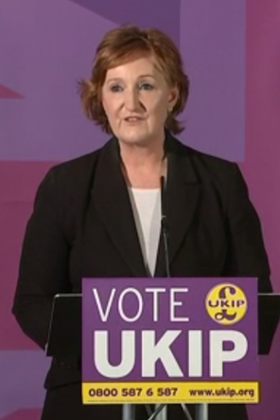
Suzanne Evans, the Ukip deputy chair and author of the manifesto, is speaking now.
Ukip has a positive vision, she says. It is optimistic about Britain’s future outside the EU.
Updated
The Sunday Times’ Tim Shipman point out we already have a veterans’ minister.
Farage demands a "dedicated minister for veterans". Which must be different from the veterans' minister: https://t.co/Tv5jnLaJNQ
— Tim Shipman (@ShippersUnbound) April 15, 2015
Farage says he congratulated Suzanne Evans and her team for producing this “excellent” manifesto.
Any questions about this manifesto will get a different answer from the one he gave about the 2010 manifesto.
Farage says Ukip will continue to urge caution and restraint before Britain goes to war.
The political class has got it wrong about defence, he says. It does matter. Ukip would spend 2% of GDP on defence initially, and then increase it later.
And the government should honour the military covenant, he says. Ukip wants a guaranteed minister for veterans.
It would also do more to help veterans adjust to public life.
Farage says Ukip’s plans for a brownfield revolution would allow 1m new homes to be built by 2020.
Farage says ordinary people have been left behind. But Ukip wants to make people better off. It will make the case for a “low tax revolution”, which it thinks will unleash economic dynamism.
It wants to raise the basic rate tax threshold to £13,000. And it wants to lift the 40p threshold to £55,000.
And it would introduce a 30p tax rate for people earning between £45,000 and £55,000.
Ukip is proposing a tax giveaway, he says.
He says all the Ukip policies have been independently costed. Ukip is setting a new gold standard in this regard, he says.
Its plans, including stopping EU contributions, cutting aid and cutting the Barnett formula, would save £32bn a year, he says.
Updated
Nigel Farage's speech
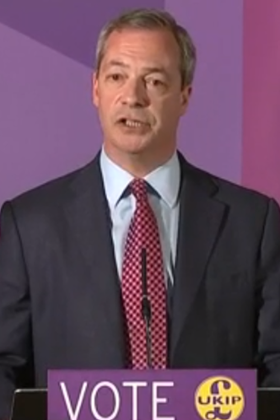
Nigel Farage says Ukip is the only party that believes in Britain. It is the only country that thinks Britain should make its own laws, and make its own trade deals.
It wants a good relationship with Europe. But it wants to be free.
There is no renegotiation to be had of any value, he says.
Only by leaving the EU can Britain control its own borders. Ukip want an Australian-style points system. That would be ethical and fair.
Foreign criminals would not be allowed into the EU. Migrants would need health insurance. And migrants would not be able to claim benefits for five years, he says.
Updated
Ukip manifesto launch
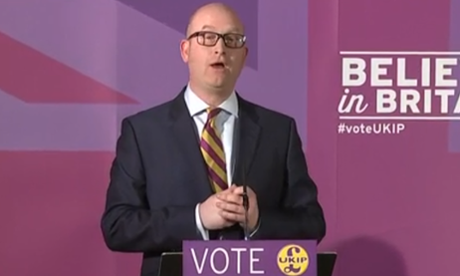
Paul Nuttall, the Ukip deputy leader, is speaking at the Ukip launch.
He says Ukip councillors hold the balance of power on Thurrock council. They want to achieve the same at Westminster.
He says Nigel Farage is connecting with people north and south, east and west. He is crossing the class divide and is recognised as the best communicator in politics.
Updated
Here’s the Ukip manifesto.
At the National Manifesto launch in Thurrock, worlds media here in force pic.twitter.com/UmEJtieBFz
— Nathan Gill (@NathanGillMEP) April 15, 2015
Updated
There are more than 100 people at the venue for the launch of the Ukip manifesto in Thurrock, in Essex.
78 men and 24 women currently sat down in room at #ukip manifesto launch
— John Stevens (@johnestevens) April 15, 2015
Packed room for ukip manifesto launch. "We've come a long way from painting trains" promises one wag pic.twitter.com/53QDMCI13N
— Alex Wickham (@WikiGuido) April 15, 2015
This is interesting.
Health overtakes immigration as an issue for the first time since the coalition came to power http://t.co/DxtukPY5ks pic.twitter.com/INz6wJddaF
— YouGov (@YouGov) April 15, 2015
And good for Labour, obviously.
Miranda Green, a former Lib Dem press officer, says that it was “madness” for Nick Clegg to take only one question from journalists.
Madness. https://t.co/OlcgPsmhrf
— Miranda Green (@greenmiranda) April 15, 2015
Philip Webster, the former Times political editor, agrees.
Clegg has messed up good presentation by taking just one question from press Lobby turning ugly #GE2015
— Philip Webster (@Pwebstertimes) April 15, 2015
Updated
Clegg provokes anger by refusing to take questions from journalists at manifesto launch
It’s official. We’ve declared the Lib Dem manifesto launch the worst so far. It’s a PR disaster.
This is from my colleague, Patrick Wintour.
Worst launch press conference yet by Lib Dems one question from the FT and the rest dolly drops by party members. Pathetic.
— Patrick Wintour (@patrickwintour) April 15, 2015
And this is from PoliticsHome’s Paul Waugh.
Unbelievable. Clegg takes one question from a journalist. Three from Liberal Democrats. Scrutiny?
— Paul Waugh (@paulwaugh) April 15, 2015
Fury from Lobby about the lack of questions to Clegg.
— David Hughes (@DavidHughesPA) April 15, 2015
Bizarre that Clegg - veteran of @LBC phone-ins and monthly press conferences - takes ONE question from a journalist #LibDemManifesto
— James Chapman (Mail) (@jameschappers) April 15, 2015
There was also a power cut.
Lights out for Nick Clegg. Power outage at the manifesto launch. Not good. #GE2015
— Peter Dominiczak (@peterdominiczak) April 15, 2015
Clegg’s opening speech was actually rather good, but inviting journalists to a launch and not taking their questions is, in media management terms, unforgivable.
Updated
If they journalists aren’t able to ask questions, at least they’ve got time to take to Twitter to point out that Clegg’s answer on the proposed EU referendum was disingenuous.
This is from the Observer’s Toby Helm.
Nick Clegg on EU referendum. "Our position remains abundantly..abundantly..abundabtly,,,,clear!!!." (not) Next question.
— Toby Helm (@tobyhelm) April 15, 2015
And this is from the Spectator’s Isabel Hardman.
Clegg says "our position remains abundantly... Abundantly... Er... Clear!" on Europe.
— Isabel Hardman (@IsabelHardman) April 15, 2015
It does not look like we’re missing much, though.
3 out of 4 questions so far at Clegg launch from Lib Dems, and definite soft balls. Given how good Clegg is in Q&A this is self-defeating
— James Forsyth (@JGForsyth) April 15, 2015
Nick Clegg taking forensic, detailed and piercing questions...from party activists
— Jason Beattie (@JBeattieMirror) April 15, 2015
Updated
The live feed of the press conference on the BBC website, and on the BBC parliament channel, has gone down.
Lib Dems hit by blackout - somebody scared of Clegg, or sign of things to come?
— Andrew Marr (@AndrewMarr9) April 15, 2015
Clegg now takes a question from the FT’s George Parker.
Q: It seems unlikely there will be an EU treaty change in the next parliament. So in what circumstances could you back a referendum?
(This is a reference to the story in today’s Times saying Jean-Claude Juncker, the EU president, has ruled out treaty change before the end of 2019.)
Wednesday's Times front page: Brussels vows to block Cameron on EU treaty #tomorrowspaperstoday #bbcpapers pic.twitter.com/VjcdfyvgVY
— Nick Sutton (@suttonnick) April 14, 2015
Clegg says his position on a referendum has not changed. There should be a referendum if a further transfer of power to the EU is proposed.
Q: Are you pushing taxes on the rich too far?
Clegg says the government still needs to balance the books. There is nothing remotely fair or progressive asking the young to pay of our debts. It is like he and his wife asking their kids to pay their credit card bill. The burden should be spread as evenly as possible. And that means starting with the rich.
Clegg's Q&A
Nick Clegg is now taking questions.
But his first question is not from a journalist, but from someone else in the audience (a party supporter, I presume).
Q: What impact will the extra spending on mental health have?
Clegg says 25% of people suffer from mental health problems at some point in their lives. But there has been systematic discrimination against them, he says.
Clegg is now winding up.
Most people want a stronger economy and a fairer society and they’re fed up of having to choose one or the other. This manifesto proves you don’t need to choose between them. If you choose the Liberal Democrats: you can have both. If you choose the Liberal Democrats, you can stop the next Government from cutting too much or borrowing too much. If you choose the Liberal Democrats, you can stop Nigel Farage or Alex Salmond holding the Government to ransom.
Clegg lists the Lib Dems’ five priorities.
We have set out our top priorities on the front page: prosperity for all, with the budget balanced fairly and investment in a high-skill, low-carbon economy; opportunity for every child, with guaranteed funding from nursery to 19 and qualified teachers in every classroom; fair taxes, with a further £400 tax cut for working people by raising the Personal Allowance to £12,500; quality healthcare for all, with an extra £8bn for the NHS and equal care for mental health; and our environment protected, with five green laws to protect nature and fight climate change.
In 2010 he ensured that the Lib Dem manifesto priorities were included in the coalition agreement. And he would take the same approach next time round, he says.
Clegg says the manifesto explains how the Lib Dems would try to influence government.
This manifesto is a blueprint for a stronger economy and a fairer society. This manifesto is a plan to finish the job of balancing the books, and to do so fairly by protecting our schools, hospitals and public services. This manifesto is an insurance policy against a government lurching off to the extremes.
At its heart is one word that is absolutely central to what Liberal Democrats believe: opportunity. No matter who you are, where you were born, what sexuality or religion you are or what colour your skin is, you should have the same opportunity to get on in life.

Clegg says three quarters of the proposals in the 2010 Lib Dem manifesto were implemented.
Updated
Clegg says Tory/Ukip government, or Labour/SNP one, would both be disastrous
Clegg suggests a Tory/Ukip government, or a Labour/SNP one would be disastrous.
Imagine for a moment, what will become of Britain in the next five years if Nigel Farage and his friends on the right wing of the Conservative Party are calling the shots. Our public services cut to the bone; our communities divided; our shared British values of decency, tolerance and generosity cast aside.
Now imagine a Britain run by Ed Miliband and Alex Salmond ... Our economy crippled by reckless borrowing; our children destined to pay for it for years to come; the future of our United Kingdom in the balance once again.
Clegg says he is talking about Alex Salmond, not Nicola Sturgeon, the SNP leader, because Salmond is standing for election at Westminster.
Clegg says vote Lib Dem to ensure Clegg holds balance of power, not Farage or Salmond
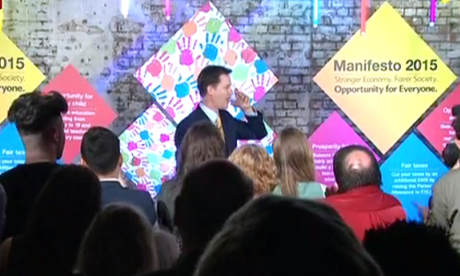
Clegg is effectively saying vote Lib Dem, to ensure that he is deputy prime minister, not Nigel Farage or Alex Salmond.
This time round, it is obvious once again that neither Labour nor the Conservatives will win a majority. The era of single-party government is over. I’m not denying that either David Cameron or Ed Miliband will be Prime Minister. One of them will. But you know and they know that neither of them will win outright. Neither of them will have a majority in Parliament.
So what really matters is who they will have by their side. Someone is going to hold the balance of power on the 8th of May and it won’t be David Cameron or Ed Miliband. But it could be Nigel Farage. It could be Alex Salmond. Or it could be me and the Liberal Democrats.
So ask yourself this: Do you want Nigel Farage walking through the door of No 10? Do you want Alex Salmond sat at the cabinet table? Or do you want the Liberal Democrats?
The Liberal Democrats will add a heart to a Conservative government and a brain to a Labour one. We won’t allow the Conservatives to cut too much and jeopardise our schools and hospitals and we won’t allow Labour to borrow too much and risk our economy again.
Updated
The Lib Dem manifesto is now on the party’s website.
Clegg says support for the Lib Dems at the last election meant the Lib Dems were able to “keep the government stable and anchored firmly in the centre ground.”
The Lib Dems could have chosen not to get involved in the coalition.

And we could have watched the Conservatives make the poorest in society pay the price. Then I could have stood in front of you on platforms like this and criticised them for it.
But the Liberal Democrats didn’t do that. We did the responsible thing. We did the fair thing. We did the gutsy thing. We stepped up to the plate and put the good of the country first even though it meant working with people we disagreed with.
Updated
Nick Clegg' speech
Nick Clegg is now speaking at the Lib Dem manifesto launch.
Five years ago, the British people chose to do things differently. You decided that no one party had the right to govern our country on their own. You chose to make politicians work together in the national interest. And, you know what, it worked.
Lib Dem election launch
Sal Brinton, the Lib Dem president, is opening the Lib Dem manifesto launch.
She says the Lib Dems have provided full costings for their policies.
On the radio this morning she heard someone say it would be a skimpy manifesto, she says. (I think it was Norman Smith.) But it is not a skimpy manifesto, she says. It contains ideas for right across government.
YouGov poll suggests almost 50% think Labour will end up increasing borrowing
A YouGov poll for the Times Red Box morning briefing suggests that almost half of voters do not think Labour will be able to resist the temptation to increase borrowing.
YouGov told respondents that the Labour manifesto said that every policy commitment in it was paid for, and that no commitment required extra borrowing. Some 20% said Labour meant this, and would keep its promise. Some 47% said Labour meant it, but in practice would not keep this promise. And 17% said Labour did not mean it.
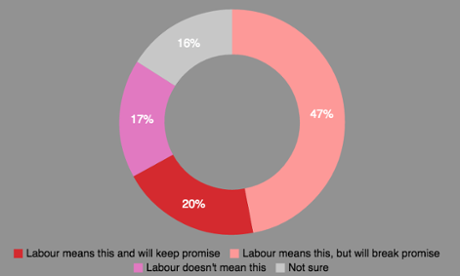
Philip Cowley, a politics professor, is sceptical about whether minority government really will lead to fewer laws. (See 9.20am.)
@AndrewSparrow Could is a big word. No evidence that it actually happened here last time we had a minority.
— Philip Cowley (@philipjcowley) April 15, 2015
But I have heard Conservative ministers talk in private about how, if they have to run a minority government, they would try to minimise the need for new legislation. One argument they make is that, because they passed major reforming bills in the last parliament, on health, schools and welfare, for example, there would be less need for similar contentious legislation in 2015-20.
UPDATE: Megan Clement has sent me this.
@philipjcowley @andrewsparrow In Australia Gillard's minority govt passed legislation at a higher rate than any other http://t.co/I7AAU9cR0g
— Megan Clement (@MegClement) April 15, 2015
Updated
The Lib Dem manifesto launch will start soon.
Guests and media arriving ahead of our manifesto launch #GE2015 o pic.twitter.com/3BFKciQgNJ
— Liberal Democrats (@LibDems) April 15, 2015
Not all those present are impressed by the venue.
Is it a night club ? A power failure ? No. It's the @LibDems manifesto launch #hipsville pic.twitter.com/0E4eXY2wit
— norman smith (@BBCNormanS) April 15, 2015
Here is the front cover of the document.
Here is the Liberal Democrat manifesto. The cover spells out the issues they will fight hardest for in any deal. pic.twitter.com/EN8wC5VOTj
— David Hughes (@DavidHughesPA) April 15, 2015
Inside it looks a bit 1970s.
Libs also going for funkee patternz inside the manifesto #party pic.twitter.com/8Xs6P7VsQb
— Isabel Hardman (@IsabelHardman) April 15, 2015
And there is some blank space too.
Like the idea Lib Dem manifesto has two blank pages of notes at the back. Space for ideas they might add during Coalition trading? #GE2015
— Jason Beattie (@JBeattieMirror) April 15, 2015
The Conversation, a website publishing articles by academics, has got a good new initiative - a manifesto check microsite, with articles checking claims in the parties websites.
There are more than a dozen articles there already (many about Plaid Cymru). Here are some of the findings.
The party claims to have “cleared out bureaucracy” and, indeed, there are 20,000 fewer managers and support staff now than in May 2010. NHS productivity has improved year-on-year, mainly due to slower recruitment of staff. And the manifesto correctly claims that The Commonwealth Fund has ranked the UK as having the best health system among 11 countries.
The official statistics contradict claims that fewer patients are waiting longer than target times. In February 2015, 18,804 more patients were waiting longer than 18 weeks – and 6,019 more than 26 weeks – for hospital admission, compared with May 2010. And although 194 fewer patients were waiting more than 52 weeks, many more patients were also waiting longer for outpatient care.
Even if the claim that those waiting over a year for cancer treatment has fallen from over 18,000 to under 500 is correct (I have not been able to verify this), the evidence shows that achievement against all cancer waiting time standards has deteriorated over the parliamentary term.
The party declares that it wishes to “look outward”, while recognising “public anxiety” and the people’s need “to feel secure in the strength of our borders.” The manifesto identifies specific public concerns, such as effects on wages, public services and “our shared way of life”. Public anxiety is undeniable, and according to research, social concerns may be more significant than economic ones.
No view is advanced by Labour as to whether these concerns are well-founded: research suggests that economic concerns, for example, are not. The evidence fails to point persuasively to any adverse impact on average wages or employment. As regards public finances, research shows that recent immigrants both contribute more in taxes than they withdraw in calls on public services and provide much of the staffing for some parts of the public sector.
The common theme here is reducing payment levels (albeit with some exceptions, most notably state pensions) and tightening the eligibility criteria for them. The Conservatives argue this will increase incentives for people to work and, via increased employment, reduce poverty.
On the first point they are likely to be right. Although these particular reforms are yet to be evaluated, there is a wealth of research evidence showing that reducing payment levels and tightening eligibility criteria for welfare benefits tends to move people off benefits often into some form of employment ...
The second claim – that tougher welfare will reduce poverty – is much more questionable, with less supportive research evidence. The rapid growth in food bank use, with benefit changes cited by many as the primary reason for their referral to a food bank, suggests recent reforms may be having the opposite effect, at least in the short term.

The Lib Dem manifesto is going to run to about 150 pages, David Laws said this morning.
David laws just mentioned Lib Dem manifesto about 150 pages - double the length of two larger parties ones we saw today #GE2015
— Ed Brown (@Edsbrown) April 15, 2015
Nick Clarke, a former Conservative leader of Cambridge county council, has defected to Ukip, the Cambridge News reports. Clarke said he did not believe the Tories would take the UK out of Europe.
I now have no confidence that the Conservative party is able to deliver on an exit from the EU. Nor am I convinced that it even wants to. The referendum, promised by the Conservatives, is clearly a token to try to hold the Conservative party together.
Minority government could lead to fewer new laws, which 'could be good', says O'Donnell
There was a fascinating interview with Lord O’Donnell, the former cabinet secretary, on the Today programme earlier. O’Donnell (then Sir Gus O’Donnell) was in Number 10 in 2010 and oversaw the talks that led to the creation of the coalition. This time round, he said, preparing for a hung parliament would be even more complicated.
Here are the key points he made.
-
O’Donnell said that after the election a minority or coalition government could try governing the country passing fewer laws. One of the things civil servants would be looking at, as they prepared for after the election, would be how to reduce the need for difficult votes in the House of Commons.
They will also be thinking about how do we manage government where you don’t want to go to the House too often with very contentious votes. So, instead of legislation, can you have other ways of doing things?
This could be a good thing, he said.
We might have fewer laws. If they are fewer, better thought through, better legislated ...[that] could be good.
According to Ed Conway in the Times, O’Donnell may be right.
Can this be really true? @EdConwaySky in today's @TheTimes http://t.co/VPuYJkBNXo pic.twitter.com/5RgBcXFCCq
— Tim Montgomerie ن (@montie) April 14, 2015
-
O’Donnell said that civil servants would probably be making plans not just for possible coalitions, or possible confidence and supply arrangements, but for a mixture of the two.
[Civil servants] will be preparing for all sorts of options, and this time round they will include minority governments, and possibly some kind of mix; there could be a party in coalition with a second party, but having a supply and confidence deal with a third party.
In his Guardian interview today Nick Clegg says “the looming question in the next phase of this campaign is whether there is to be a coalition of grievance, or of conscience”. O’Donnell seems to be making the obvious point that voters could end up with both. For example, we could see the Tories in coalition with the Lib Dems, with confidence and supply arrangements with the DUP and perhaps Ukip on the side.
- O’Donnell said that Oliver Letwin, the Conservative minister, actually drafted a confidence and supply deal with the Lib Dems in 2010 before it was decided to form a coalition.
- O’Donnell said civil servants would be studying precedents from the first half of the 20th century, when minority or coalition government was more common than majority government.
-
He said the parties were already “signalling to each other” in public what they might or might not accept in coalition talks. “There is quite a lot foreplay,” he said.
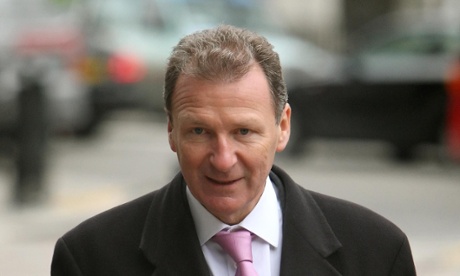
Updated

As Peter pointed out earlier, Suzanne Evans, the Ukip deputy chair, said in her interview earlier this morning that there could be exemptions from Ukip’s proposed ban on migrants coming to the UK do do unskilled work to allow temporary workers to come here to do agricultural work. (See 7.28am and 7.47am.)
The Tories are claiming this means Ukip policy is in “chaos”. They have released this quote from Charlie Elphicke, who is seeking re-election as an MP.
It only took one minute for Ukip’s manifesto chief to break her own pledge on unskilled immigration. It’s beyond chaos.
Ukip are quite literally making it up by the second. And with a vote for Ukip letting Ed Miliband into Downing Street through the back door, it’s hardworking families who will pay the ultimate price.
Updated
David Laws, the Lib Dem education minister, has been giving interviews this morning. Here are the key points he has been making.
- Laws criticised the Conservative plan for an in/out referendum on the EU, but insisted that the Lib Dems would not make this a “red line” that would block a coalition with the Conservatives.
-
He said the party’s plans to get rid of the deficit by 2017-18 made allowance for the fact the economy could suffer a downturn.
We are planning to balance the current budget by 2017-18 but the plans that we published a couple of days ago don’t just balance it to zero, but there is actually a contingency in there of a number of billion pounds beyond the level that we would need to get that. So we’re being extremely prudent and cautious, we’ve published all our figures in much greater detail than all of the other parties a couple of days ago, and to my knowledge they have survived all of the scrutiny they have had since then in a way that the other parties’ simply haven’t.
-
He refused to state a preference for a coalition with either Labour or the Conservatives.
It’s not a question of talking about one particular political party. We’ve got to fight on our policies, which are clear today in our manifesto. The public have to decide how many MPs of each party there are going to be and then we have to respect – all of the parties, not just the Liberal Democrats – the view of the public; we have to sit down if there is a hung parliament, without one party having an overall majority, and we can’t rule in or out either Labour or the Conservative party. We have to be prepared, if there is a balanced parliament, to talk to either of them.
Good morning. I’m taking over from Peter now.
As Peter reported earlier, Steven Woolfe, Ukip’s immigration spokesman, told ITV’s Good Morning Britain earlier that he would like to lead the party one day. (See 7.28am.)
Woolfe also spoke about his relationship with Suzanne Evans, the Ukip deputy chair. According to the Telegraph, Woolfe was overheard in a pub last month saying Evans did not understand the party’s immigration policy.
Mr Woolfe’s comments emerged after a series of about-turns over whether the party wants to limit the number of migrants coming to the UK every year at 30,000, 50,000 or not at all.
Mr Woolfe was overheard making the comments after a meeting about immigration in a pub in the west Midlands last month.
Asked about the apparent internal chaos over the key issue, Mr Woolfe said: “The problem is, even within my own party, my own deputy chairman, didn’t seem to understand it herself despite the fact I actually put picture graphs, I put the numbers on and the point is people confuse immigration.
“Immigration consists of loads of different numbers, the number of students, it’s asylum seekers, it’s family members.”
Mr Woolfe blamed the media for misinterpreting the fact that he was speaking about highly skilled migrants.
Speaking about this this morning, Woolfe said that it was not unusual for people who work together to disagree, but that he and Evans had now settled their differences.
I, like most people when you work with professionals who are working under intense pressure, sometimes have disagreements and I had a disagreement with Suzanne over a couple of points at that time, but they’re all cleared out. And when you see the manifesto today, you’ll see that we’re absolutely online with everybody able to understand how immigration works in this country.

Michael Gove, whose main role this election appears to be defending the day’s Tory plans on late night TV, was on Newsnight again yesterday, this time talking mainly about the right-to-buy idea.
Ahead of the Lib Dem manifesto launch my colleague Rowena Mason has been through the 2010 incarnation and totted up which promises were met, and which ones were not. In the latter category, of course, is the firm pledge to scrap undergraduate tuition fees by 2016.
Labour is also busy outlining yet more plans: the latest is a plan for grandparents who work to be able to take time off to look after grandchildren.
Here’s some fuller quotes from the Suzanne Evans interview on Today, courtesy of PA, about the Ukip manifesto:
It’s been a very interesting process. We have made sure every policy in our manifesto has been rigorously tested and of course fully costed.
What I think is going to be interesting is today we are going to be the only political party that is not just releasing a manifesto but alongside our manifesto we are going to be releasing a 20-page document that shows our policies have been fully costed and independently verified by the respected economic think-tank the CEBR.
For us this is a line in the sand: we think all political parties should follow from now on and I don’t understand why the others haven’t done the same thing. Maybe they are not as confident in their spending pledges as we are.
On unskilled immigration:
We said before we would set up a migration control commission, so in a sense this takes it out of the remit of politics and into what the country needs. If there is a case we need agricultural workers, then why on earth would we stop them? It doesn’t make any sense - Ukip is the party of common sense.
On Tory criticisms of Ukip’s spending commitments:
The Conservatives’ own spending proposals in the manifesto were ludicrous. They were quite clearly relying on some kind of weird magic money tree. The CEBR has challenged us at every single turn, we have had to change our spending plans accordingly.
People are sick to death of politicians making promises in manifestos that they cam’t keep. We are certainly 100% accurate on our numbers.
Some listeners were impressed:
Whether you agree with her or not @SuzanneEvans1 much Ukip's most assured performer. Money on her if Farage loses in Thanet
— James Chapman (Mail) (@jameschappers) April 15, 2015
A late entry to our ‘reads of the day’ list, which I forgot earlier: this very through and fascinating Guardian long read by Rafael Behr about the making of Ed Miliband as a Labour leader.
The Ukip deputy chair, Suzanne Evans, has been on the Today programme, to talk through the manifesto. Most parties would be aghast if such an item was introduced by the description of their 2010 manifesto as “a nonsense” and “drivel”. These are, of course, Nigel Fagare’s words, and Evans sounds delighted. The 2015 document is very different, she says, and fully costed.
Evans – who perhaps speaks more quickly than any politician I’ve heard – concentrates on two areas: immigration and funding. On the former, she says that a planned five-year ban on unskilled migrants arriving in the UK would have exceptions for things like farm workers. At one point she seems to suggest overseas university students could do such work, but I might have might have misunderstood that bit.
On finance, she says Ukip has identified £32bn in annual savings from four areas: ending foreign aid; scrapping HS2; leaving the EU; and stopping the Barnett formula system for distributing money around the UK. “we are the party that has the money,” she insists. Asks if promises including more than 2% of the budget on defence means Ukip are anti-austerity she replies:
Of course we’re anti-austerity. Nobody wants to live in austerity.
Economic experts will, of course, have their views on the £32bn total, especially whether leaving the EU will provide the economic benefits Evans promises.
Separately on Ukip, one of the party’s MEPs has said he would like to lead the party should Farage step down. Steven Woolfe, also the parliamentary candidate for Stockport, was speaking to Piers Morgan on Good Morning Britain, who asked: “Yes or no, if he wasn’t leader, would you want to be leader?” After some pressing, Woolfe said: “Yes of course I would.”
Updated
Morning briefing
Good morning everyone, and welcome to another incarnation of our 2015 election live blog. It’s just a fraction over three weeks now before the UK elects a new government, so we’ll be here again until late tonight again with every twist, turn, policy tweak, poll shift and alarming campaign bus incident.
I’m Peter Walker, and I’ll be getting things going before the estimable, all-knowing and somehow still genuinely enthusiastic Andrew Sparrow takes over in a bit. You can find us on Twitter via @peterwalker99 and @andrewsparrow, or you can leave a comment below.
It’s very much manifesto week, and after Labour, the Tories and the Greens we have three – well, two and a bit – more manifestos to be pored over and filleted today.
The big picture
Today is all about manifestos. More of them. In chronological order, first we have Nick Clegg unveiling the Lib Dem programme in south London. His big election pitch, as detailed in a Guardian interview this morning, is that if the nation faces another coalition then his party are more stable partners than the SNP or Ukip. He told Patrick Wintour:
Voters know no main party is going to win. Their leaders are charging round the country pretending they are going to get an overall majority, but in their heart of hearts they know it is not true, you can see it in their eyes...
Do you want David Cameron, accompanied by Nigel Farage, dancing to the tune of swivel-eyed rightwing backbenchers, or do you want a hapless Labour minority administration dancing to the tune of Alex Salmond?
Or, Clegg continues, voters could plump for the Lib Dems, a “proven rock of stability, continuity and conscience”.
The manifesto will contain several items which Clegg describes as having “a near religious status”, including guarantees for spending on education and health, notably mental health. Both these, you’d think, would seem easier to guarantee in coalition than the famous broken promise from 2010 on university tuition fees.
About an hour after Clegg comes Farage, launching the Ukip manifesto in Essex. This document, Farage promises, will be “fully costed”, unlike the 2010 incarnation which the Ukip leader long ago disowned, with its occasionally eccentric promises to make taxi drivers wear uniforms.
Rowena Mason’s preview story gives a general flavour of what we can expect, including strict curbs on immigration and more defence spending, with Farage calling his party the only option for real change.
On defence, the Ukip leader has penned a piece for the Telegraph, appealing directly to disaffected Tories by saying his party would spend “substantially more” than 2% of the budget on the military.
Finally, Harriet Harman will lead a group of Labour MPs to launch the party’s manifesto for women.
We also still have the fallout from yesterday’s big event, the launch of the Conservative’s detailed election promises, and David Cameron’s continued evolution from a Lynton Crosby-operated campaign automaton talking of little but the supposed economic peril of Labour and Ed Miliband to a more positive figure showering cash and largesse on the population with promises about housing, health and tax cuts.
Two major themes have emerged from the Tory manifesto, both somewhat controversial in their way. Firstly is the promise to extend the right-to-buy scheme to housing association properties. While wildly welcomed by supportive media – see the Sun’s page one reaction today below – some housing groups have condemned the plans as expensive and counter-productive. The Daily Mail, meanwhile, believes the fact that some opposing housing association bosses own their own homes means they are hypocrites.
Wednesday's Sun front page: Happy Ever Grafter #tomorrowspaperstoday #bbcpapers pic.twitter.com/FME4LePmOi
— Nick Sutton (@suttonnick) April 14, 2015
Another key manifesto pledge is that the principle of English MPs having a veto over legislation relating solely to England will be extended to financial matters. The Scottish Labour leader, Jim Murphy, has attacked this as “a brutal betrayal of Scotland”.
Yesterday also saw the Greens launch their avowedly radical budget, based around ending austerity and tackling environmental woes. Despite plans for extra public spending reaching almost £200bn a year in 2019, the sums do add up, leader Natalie Bennett told the launch event.
Where does all this activity leave us, poll-wise? Well, pretty much where we were, with no party opening up a consistent lead. The latest survey, in the Sun, sees Labour ahead by a mere two points.
Latest YouGov Sun poll sees LAB retain lead for 3rd consecutive day CON 34 LAB 36 LD 8 UKIP 13 GRN 5
— Mike Smithson (@MSmithsonPB) April 15, 2015
Today’s diary
Here’s what we have confirmed so far:
- David Laws and Suzanne Evans are doing the early morning broadcoast rounds for the Lib Dems and Ukip. Laws is due on BBC Radio 4’s Today programme as the main 8.10am interview, with Evans coming up at 7.15am.
- 10am: the Lib Dem manifesto launch in Battersea, south London.
- 11.15am: Ukip manifesto launch in Thurrock, Essex.
- 12.30pm: Labour women’s manfesto launch with Harriet Harman and Gloria de Piero in Stockwell, south London.
- George Osborne is due to campaign in Scotland today, highlighting the Conservative’s record over the country’s oil industry.
Reading list for the day
Let’s begin with the manifesto launches. For a taste of Nigel Farage’s pitch to disaffected Tories it’s worth reading his full piece in the Telegraph, based around a commitment to defence spending:
Over the last few years we’ve seen Army numbers slashed, we’ve seen the dishonouring of the military covenant, and we’ve seen the numbers of former servicemen and women struggling to get jobs, and struggling to get the support they need from our NHS, on the rise. For shame.
If we are to ask our men and women to serve in the defence of our country, then the least we can do is make sure they are well looked after when they return. And that’s what Ukip – as the new party of defence – intends to do.
The Telegraph (as close to a Ukip house journal as any national paper right now) also has a list of expected policies in the manifesto, everything from reduced higher-rate tax to the abolition of the Department for Energy and Climate Change.
And then there’s the on-the-battlebus interview with Nick Clegg by my colleague, Patrick Wintour, as quoted from above.
Today’s main leader in the Times (paywall) notes David Cameron’s switch over the campaign from purveyor of doom-laden warnings about Labour to a policy of “Tory sunshine”. The paper welcomes the extension of the right-to-buy scheme, but it’s hardly the most effusive endorsement ever:
At the heart of the Tory manifesto is an admirable ambition to reward work and invest in education, the two essential underpinnings of social progress. The Times welcomes Mr Cameron’s commitment to build affordable houses with the proceeds of an expanded right-to-buy policy. It may prove difficult to achieve but the ambition to help more people own their homes is sound.
Also on right-to-buy, the Telegraph has been speaking to people who benefitted from the original scheme under Margaret Thatcher. Jackie and John Rowland bought their Essex council home in 1985 for £20,800, and still live there:
We had a new kitchen put in and a conservatory put on. It was two bedrooms and we had it converted to three bedrooms so that both the boys could have a bedroom each. It was nice to put them in separate rooms, with no more arguments.
The Spectator, meanwhile, has this handy cultural guide for younger readers baffled by Cameron’s references to 1970s sitcom The Good Life. The prime minister is fond of such cultural references, writes William Cook:
The Prime Minister has a fond memory of popular culture of the 1970s: he recently announced his decision not to stand for a third term by quoting a Shreddies advert from the late 1970s (about three being two many) and says the only song he knows by heart is Benny Hill’s 1971 hit ‘Ernie (The Fastest Milkman in the West)’. So we ought not to be surprised about is talking about The Good Life, which ran from 1975 to 1978.
For those who do know the programme, the article advances the notion that Penelope Keith’s “heroic and ridiculous” Margo was something of a suburban Mrs Thatcher. It also, less convincingly, claims the young Richard Briers resembles Nick Clegg.
If today were a song...
Give Me Another Chance, by Big Star. Yes, sorry Nick Clegg, it’s a reference to the broken promises of 2010. Some of the lyrics just seem too apt:
Things I said made things seem bad / But don’t worry, ‘cos it’s going to be alright now, be OK / You know I just don’t think before I speak.
Beyond that, who wouldn’t want an early morning listen to one of the more glorious voices in the pop canon, that of the late Alex Chilton?
Non-election news story
Spring does not just mean the looming election. It’s also the season when thousands of migrants begin heading towards southern Europe from places like Libya and Egypt, many in desperately unseaworthy boats. The Times has this awful but hugely worthwhile story about the human cost. It’s behind a paywall, so here’s part of it:
Migrants who were rescued while sailing across the Mediterranean in dozens of rickety boats have said that up to 400 of their companions died on the journey. They described how one victim was tossed overboard by one of the people traffickers and torn apart by sharks.
The gruesome details emerged as hundreds of migrants arrived in the Sicilian capital yesterday, some of the 8,480 saved from the water since an armada of decrepit craft began to sail from Africa on Friday in the first calm weather of the spring.
Save the Children said that many of the 400 who perished in a shipwreck were “young men, probably minors”.
Survivors said that one man was overcome by fumes after a fuel tank spill. His body was dragged from the middle of the crowded boat and cast into the sea, where sharks were circling the inflatable dinghy.
Updated