Jamie Grierson' s evening summary
David Cameron took the rare step of letting cameras record the first Cabinet meeting of his new government, clearly wanting to showcase the first all-Tory cabinet in 18 years. There is a distinct honeymoon-period vibe to the Conservatives’ celebratory air with the new and reappointed ministers yet to face any real challenges since their surprise win on 7 May. Tory elation is perhaps enhanced by the lack of any major opposition presence, as the Labour party focus on rebuilding their deflated party - and members such as Chuka Umunna launch their leadership bid. Whispers in Westminster have it that Yvette Cooper will unveil her leadership pitch in the next few days, while the likes of Tristram Hunt and Andy Burnham could also contend. Ukip’s challenge to the “Westminster elite” they loved to deride during the campaign also hit a stumbling block as the party’s only MP Douglas Carswell reportedly clashed with the party executive over funding. In what might be a political first, Carswell has told Ukip he wants less money than he is being offered to run his parliamentary opposition and it appears many in the party couldn’t believe their ears.
The big picture

What happened today?
- The Conservatives will revive plans to decriminalise the non-payment of the BBC licence fee, the prime minister’s spokesman has said, as he mapped out some of David Cameron’s second-term agenda. Cameron had earlier chaired the first Tory-only cabinet since 1997 on Tuesday, at which Oliver Letwin, the cabinet office minister, laid out the beginnings of the government’s programme.
-
The shadow business secretary, Chuka Umunna, has confirmed he will be standing for the Labour leadership, saying he will have no truck with those who say the party faces 10 years out of office.
- David Cameron has appointed to the post of equalities minister a second Conservative MP who voted against gay marriage. Caroline Dinenage, the MP for Gosport, will join Nicky Morgan, the education secretary, in the Equalities Office.
- Nigel Farage has suggested he would like to fight a Labour-held seat in a byelection, suggesting he has not given up on entering parliament after his seventh bid to be an MP failed last week. The Ukip leader, who stood down when he was defeated in South Thanet only to be reinstated four days later, does not appear to be getting the break from politics that he said he wanted.
- Ben Bradshaw, the former culture secretary, is to stand Labour’s deputy leadership with a plea to the party to reach out to voters in southern England.
-
George Osborne has launched the Conservatives’ central second-term policy aim, opening informal talks with other European countries on how to rewrite the terms of Britain’s EU membership.
Quote of the day

North, south, west and east – we can absolutely win as a party.
Chuka Umunna launches his Labour leadership bid.
Laugh of the day
Desmond Swayne swung from desolation to joy in just 24 hours after realising he was not for the chop after all.
No calls. Arrived DFID: Pass didn't work; All my stuff packed in boxes. The End?
— Desmond Swayne (@DesmondSwayne) May 11, 2015
Honoured to return to DFID. Events in Nepal today shows how vital our work is.
— Desmond Swayne (@DesmondSwayne) May 12, 2015
Tomorrow’s agenda
The Tories will be hoping their first week as a majority government isn’t marred by poor economic figures - unemployment data is due at 9.30am from Office for National Statistics, while the Bank of England publishes is latest quarterly forecasts on GDP and inflation at 10.30.
That’s it from me for today. Join the Guardian’s politics team tomorrow morning, as we bring you the latest news, reaction, analysis, pictures, and video in the aftermath of the election.
Yvette Cooper, the shadow home secretary, is rumoured to be launching her leadership bid very soon:
Rumour among Labour MPs is that Yvette Cooper campaign launches tomorrow ie Wednesday.
— Jim Pickard (@PickardJE) May 12, 2015
Labour leadership contest
Potential “left” Labour candidates for the party’s leadership include Jon Trickett, MP for Hemsworth, and Ian Lavery, the chair of the parliamentary Trade Union Group, according to the New Statesman’s George Eaton.
He writes that his sources tell him the left of the party hope to get their favoured candidate on the ballot paper, ahead of the MPs’ nominations opening.
He adds that Andy Burnham, who will soon launch his campaign, is considered to be insufficiently radical.
However, John McDonnell, the chair of the Socialist Campaign Group, who stood in 2007 and 2010 – but failed to make the ballot – has ruled himself out of contention before the election.
McDonnell had previously said: “I’ve done it enough times and been blocked from getting on the paper. How many times can I be hit by that?”
David Cameron makes first visit as newly-elected prime minister
Cameron has visited the Tetley tea factory in Stockton-on-Tees to drive home his “government for working people” message (see 9.30).
PM visits Tetley: I'm so proud to make my first visit as the newly elected Prime Minister here in Stockton #PMvisitNE pic.twitter.com/QLVrFVvj07
— UK Prime Minister (@Number10gov) May 12, 2015
After joking about the number of cups of tea he drank during the campaign, he gave a speech to the plant’s workers, in which he promised that one of the first changes his government would bring in would be to childcare.
Jobs and training on their own are not enough, it’s about helping people with the cost of living and with living standards. And that is why one of the first things we are going to do, is to make sure that we legislate to help with childcare. I think for so many families in our country it’s absolutely essential that they get that help with childcare, so that people who want to work and want to work more hours or longer shifts, or more shifts to bring home more money, are able to do that.
Desmond Swayne, the minister who thought he might have been sacked has not been sacked.
Yesterday, Swayne, a minister in the Department for International Development (DfID), was questioning his future in government when he turned up at the department to find his pass wasn’t working and his belongings were packed up.
No calls. Arrived DFID: Pass didn't work; All my stuff packed in boxes. The End?
— Desmond Swayne (@DesmondSwayne) May 11, 2015
At one point, it appeared that his job had been given to Michael Green. Sorry, I mean Grant Shapps. That is an easy mistake to make.
Grant Shapps is the Minister of State at the Department for International Development.
— David Cameron (@David_Cameron) May 11, 2015
Swayne reacted with dismay - the following roughly translates as “In the middle of so many perils, I remain myself”.
Au milieu de tant de perils, il me reste moi
— Desmond Swayne (@DesmondSwayne) May 11, 2015
But a full list of ministerial appointments published by No 10 showed Swayne was still on the list as a DfID minister.
Full list of ministerial appointments so far: https://t.co/upzVWVdM86 #reshuffle #Ministers2015
— UK Prime Minister (@Number10gov) May 12, 2015
And Swayne was “honoured”.
Honoured to return to DFID. Events in Nepal today shows how vital our work is.
— Desmond Swayne (@DesmondSwayne) May 12, 2015
Updated
Michael Dugher, the Barnsley East MP who served as vice-chair of the party in Ed Miliband’s top team, doesn’t hold back in his postmortem on what went wrong for Labour.
“Spend time in the real world,” he says in a candid interview with the New Statesman. Talking about identity politics, he says:
We do dwell in London, the Labour Party. And London has cheek-by-jowl poverty . . . but the truth is, there is more to this country than that kind of metropolitan, multicultural, liberal left that is a big part of London
He adds:
I thought the best thing Ed did was about One Nation. And we just dropped that.”
Dugher also attacks the closed circle of advisers Miliband had, saying:
It was too many pointy-heads and too few street fighters.
His harshest words are reserved for his former Scottish colleagues, and Dugher says there was “politics of neglect” in Scotland – with some former MPs not delivering a leaflet in decades.
Updated
Ukip MEP and economic spokesman Patrick O’Flynn, who lost a bid for a parliamentary seat in Cambridge, has defended his party’s only MP amid reports of a row over funding (see 15.27).
Whoever is briefing against @DouglasCarswell does not have UKIP's best interests at heart. Idea he would do anything "improper" is absurd.
— Patrick O'Flynn (@oflynnmep) May 12, 2015
The Spectator has a fascinating interview with Jim Messina, the American elections guru hired by the Conservatives as a strategy adviser.
Messina tells the magazine he predicted 312 seats on the morning of the election - nearly in line with the shock exit poll that projected 316 seats. In the end, of course, the Tories pulled in 331.
Messina also gives his take on where the pollsters got it wrong. He says:
One, a lot of them are using a 2010 view of the electorate. Two, especially in some of them, they weren’t naming the candidates in the seats and I assume that is a recipe to get it absolutely wrong because some incumbents do really well. Three, we were doing much, much bigger sample sizes than what they were doing. Four, we were doing a mix of online and traditional phone calls … and I think that no one was doing that.
The BBC’s Robin Brant has more on the row between Ukip and its lonesome MP Douglas Carswell over party funding (see 15.27).
source says 'this is him throwing his toys out of pram because he thought nigel wouldn't be leader any more'.
— Robin Brant (@robindbrant) May 12, 2015
they said @ukip planned to give @DouglasCarswell staff but added 'at no point have we said what we expect him to do'.
— Robin Brant (@robindbrant) May 12, 2015
Another cabinet update - David Lidington will continue as Europe minister at the Foreign Office. He will no doubt play a key role in negotiations over the UK’s membership of the EU before the referendum.
Delighted to be continuing as UK Europe Minister #EU reform a key govt priority More competitive, democratic, flexible EU in interest of all
— David Lidington (@DLidington) May 12, 2015
Prince Charles's black spider memos to be published on Wednesday
Prince Charles’ secret letters to British government ministers expressing frank views that the government has warned could undermine his political neutrality will finally be published on Wednesday.
I know this is not an election story - but I thought it was of political interest so worth flagging.
My colleague Robert Booth writes:
The move follows a 10-year battle by the Guardian to expose the heir to the throne’s so-called black spider memos to public scrutiny.
The 27 letters were sent between Charles and ministers in seven government departments in 2004 and 2005 and were the subject of a Freedom of Information Act request by the Guardian journalist Rob Evans.
The government has been battling to protect the Prince of Wales from scrutiny over what the former attorney general Dominic Grieve has described as his “particularly frank” interventions on public policy in the letters.
My colleague John Plunkett has more on the fate of the TV licence here.
The spectre of the BBC having to pick up the £500m cost of free TV licences for the over-75s may return to haunt the corporation after new culture secretary John Whittingdale expressed support for the idea the last time it was proposed in 2010.
The plan was originally put forward by the former coalition government as part of the “shotgun” licence fee negotiations five years ago. It was taken off the table after the then director general Mark Thompson and the BBC Trust considered resigning in protest.
Whittingdale has said he believes it is “difficult to justify” a free licence fee, which costs £145.50, being universally available to all over-75s.
The Conservatives will revive plans to decriminalise the non-payment of the BBC licence fee, the prime minister’s spokesman has said, as he mapped out some of David Cameron’s second-term agenda.
Cameron had earlier chaired the first Tory-only cabinet since 1997 on Tuesday, at which Oliver Letwin, the cabinet office minister, laid out the beginnings of the government’s programme.
It was the first Conservative cabinet meeting since the election, and in remarks filmed by the TV cameras, Cameron pledged that his administration would deliver the party’s manifesto in full and concentrate on “bread and butter” issues.
Briefing journalists later, the prime minister’s spokesman declined to fuel the criticism of the BBC that followed the appointment as culture secretary of John Whittingdale – the Thatcherite former chairman of the culture select committee – who has previously expressed doubts about the licence fee’s long-term viability.
Unison Scotland has added to calls from trade unions Unite Scotland and Aslef for Jim Murphy to step down as Scottish Labour leader. My colleague Severin Carrell reports:
.@unisonscot says Labour's #GE2015 campaign "lacked focus and clearly voters do not regard @JimForScotland as credible messenger"
— Severin Carrell (@severincarrell) May 12, 2015
But @scottishlabour faces challenging #Holyrood elections in 2016: "very little time for a new leader to take necessary actions" @unisonscot
— Severin Carrell (@severincarrell) May 12, 2015
Joe Anderson, who as the directly-elected mayor for Liverpool is one of the most powerful figures in Labour local government, has joined those in the party saying the leadership contest should not be rushed.
He’s put a statement on the Liverpool Labour website. Here’s an extract.
We need to take our time and ask the right questions. Do we really understand how the country (all four of them) feels about what Labour has to offer? Are we offering the right things to both cities and rural areas? Do we really understand how the wider city regions and counties feel about what we want to offer?
Scotland is a case in point. The SNP haven’t locked us out of government – we lost the keys years ago when the mistakes were made. And despite fumbling around in the dark, we still haven’t found them again.
We have to face the reality that we have a lot of thinking to do. And we must do it together as one party.
Anyone who blames “new labour” or “compass” or any other grouping, is damaging the Labour party.
We need to come together and forge a new cohesive force for the country, before deciding which person we invite to lead us. We need voices from every part of the country to be included, not just those from the Westminster Bubble. We need to work out a policy direction which will give hope to every single part of our country. And we need to take our time doing it.
We have five years. Let’s get it right.
That’s all from me for today. My colleague Jamie Grierson will be running the blog now for the rest of the day.
The reshuffle has gone a bit quiet now, but that has not stopped two rival live blogs that are focusing on it exclusively. Both are worth a read.
-
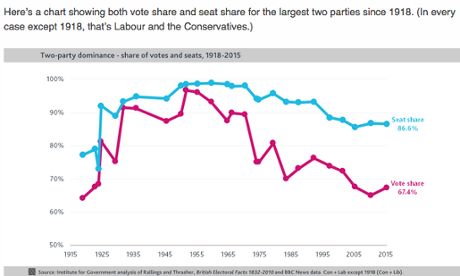
And the Institute for Government blog is particularly good for - graphs and charts. It’s got lots of them. For example, this one shows how the seat share obtained by the two biggest parties (blue line) compares with their vote share (red line), going back to 1915.
Ukip has issued a statement denying a story running on the Breitbart website saying Nigel Farage was in the room as the Ukip national executive committee voted on whether or not to accept his resignation and effectively “forced” the NEC to keep him. Steve Crowther, the Ukip chaiman, said:
There was not the slightest suggestion that the NEC was anything other than unanimous in its wish for Nigel to withdraw his resignation. He spent a considerable time making the case for his resignation, and the appointment of an interim leader, but there was no-one in the committee who did not want him to stay on. He left the room while it was further discussed. I took the views of members and they unanimously asked him to remain as leader. The NEC is 100% behind Nigel as we go forward into the referendum campaign which is already underway.
MSP quits Labour's shadow cabinet in Scotland over Jim Murphy's refusal to resign
There’s been a Labour resignation in Scotland today. Alex Rowley, an MSP, has resigned from the shadow cabinet in Holyrood, where he was local government spokesman, saying he could not accept Jim Murphy’s decision to stay on as Scottish Labour leader.
Here is an extract from the resignation letter he sent to Murphy.
I said yesterday at the meeting of Labour MSPs that I thought your speech on Friday stating that you would stay on and lead Labour into the 2016 election was a mistake, and that it would also be a mistake for the team you put in place, including your Chief of Staff, to remain in post.
As you know, I praised the level of hard work and dedication that you brought to the campaign over the last six months and I absolutely agree that the challenges facing Labour in Scotland will not be fixed solely by a change of leadership. However, we have a leader in the Scottish parliament and much of the focus of the next year will be on the Scottish parliament and the performance of the SNP government over the last 8 years in Scotland. I sincerely hold the view that you continuing as leader whilst not in the Scottish parliament, and not in an elected position holding a democratic mandate, means you will become an unhelpful distraction from the real issues that Scottish Labour must focus on.
Over the coming weeks rank and file Labour Party members must have their say on the way forward for Labour in Scotland and I want to be part of that discussion. It is clear from the discussion yesterday that dissent in public from the leadership view is perceived as disloyalty, but I am convinced we need a fundamental change in direction and strategy and therefore cannot sign up to your leadership as one of your shadow team.

Political bloggers Guido Fawkes have an intriguing report on an internal row brewing between Ukip’s solitary MP Douglas Carswell and his party over funding
Effectively, they’re claiming Carswell is arguing for less money - yes, that’s right I said less money - to run his parliamentary operation.
As an opposition party with one MP, Ukip are owed £650,000 in so-called short money to help fund its parliamentary business, travel and associated expenses - but Carswell reportedly only wants £350,000.
Guido Fawkes quote Carswell as saying:
I don’t think we need a vast amount of taxpayers’ money to do the job. We should be different, we should be prepared to reject taxpayer funding. We don’t need to be on the gravy train to fund staff. UKIP should be about saying no to the political trough. Not taking our fill.
This development also comes as reports suggest Carswell isn’t too happy with Nigel Farage’s unresignation as the party leader.
Exclusive: Carswell Fighting UKIP HQ Over £650,000 Short Money: http://t.co/zwTFye6voX
— Guido Fawkes (@GuidoFawkes) May 12, 2015
Labour has released figures about its 53 new MPs. Thirty four (65%) are women, 19 (35%) are men, and eight (15%) are black, Asian or minority ethnic.
Amongst the parliamentary Labour party as a whole, 99 of the 232 MPs (42%) are women, and 23 (10%) are BAME.
The Scottish government has said that it will withhold legislative consent on Conservative proposals to scrap the Human Rights Act.
Social justice secretary Alex Neil told the Holyrood chamber on Tuesday afternoon: “The Scottish government’s position is that implementation of the Conservative Government’s proposals would require legislative consent, and that this Parliament should make clear that such consent will not be given.”
Under devolution legislation, Acts of the Scottish Parliament and decisions of Scottish ministers must comply with European Convention rights as well as the Human Rights Act. To further complicate matters, although the Human Rights Act itself is reserved, human rights are devolved. This creates two different human rights regimes across the UK which could technically act as a lock on Westminster moves.
Alex Neil told the chamber:
There is currently insufficient detail in what is proposed to predict the impact on Scotland with any certainty, however given the almost unanimous opposition in this Parliament and amongst Scottish MPs at Westminster, it would remain open to exclude Scotland from legislation to repeal the Human Rights Act, or for the Scottish Government to pass legislation to give effect to a range of rights in policy areas which are within devolved competence.
Hi Jamie Grierson here. I’ll be keeping an eye on the election fallout for the rest of the day. Now Chuka Umunna has followed Liz Kendell and launched a Labour leadership bid, I wonder if the floodgates will open and a few more will put themselves forward before the end of the day?
I’m sorry if you’ve been having problems with blog updates. We had some technical difficulties. They seem to be okay now, but auto-refresh has been turned off, so you will have to manually refresh the blog to see the latest updates.
No 10 lobby briefing - Summary
I’m just back from an hour-long lobby briefing. Regular readers will know that these events rarely produce a cornucopia of revelations, and that hasn’t changed under the new regime, but there were some news lines that emerged.
Here is a summary.
- David Cameron still wants to decriminalise non-payment of the BBC licence fee. The last government tried to do this, but was defeated in the Lords. The BBC was alarmed by the proposal, because potentially it might to an increase in non-payment, cutting its revenue. Asked if Cameron still favoured this idea, the prime minister’s spokesman said: “He has not changed his view on this at all.” This proposal was not in the Conservative manifesto.
- Cameron intends to use the EU summit in June to present his demands for an EU renegotiation. He also intends to hold talks with fellow EU leaders ahead of that meeting to discuss his plans, the spokesman said. Since the election he has already spoken to some of them, he said.
- The spokesman said that Cameron still believes his EU reforms will require treaty change.
- The spokesman refused to deny reports that the EU referendum could take place in 2016. The prime minister’s view has not changed, the spokesman said. Cameron would like to hold the referendum before the deadline he has set himself, the end of 2017, but he recognises that the renegotiation could take time.
- George Osborne will deputise for Cameron at PMQs when Cameron is away, the spokesman said.
- The spokesman played down the prospect of the government announcing further devolution for Scotland, beyond what has already been announced, but would not rule it out. He said that it would be a mistake to underestimate how signficant the proposals in the Smith Commission actually were, that they had cross-party support, and that the government’s focus was “very much on getting on with implementing [them]”. When asked if Cameron agreed with David Mundell, the new Scottish secretary, who has said that a further transfer of powers to Holyrood has not been ruled out, the spokesman sidestepped the question. also signalled that Cameron could hold talks on this with Nicola Sturgeon, Scotland’s first minster, quite soon.
- The spokesman signalled that a communications data bill will be included in the Queen’s Speech. He said he did not want to reveal the contents of the speech, but that people would know “the importance” Cameron attached to this matter. He also said that the current legislation on communications data needed to be updated after 2016 because the emergency bill passed last year included a sunset clause.
- The spokesman dismissed suggestions that the government has decided to drop plans to cut the number of seats in parliament from 650 to 600. The spokesman said the Conservative manifesto, which said the number of seats would be cut, still applied.
- The spokesman confirmed that Boris Johnson is not a member of the government. Johnson will attend the political cabinet meetings when they are held, but he did not attend this morning’s, because it was a normal one, the spokesman said. And Johnson is not bound by government collective responsibility.
Updated
Alistair Darling backs early EU referendum

Alistair Darling, chairman of the no campaign in last year’s Scottish independence referendum, has backed suggestions for an EU referendum to be staged quickly but attacked the Tories for failing to set out what the vote was on.
There was a significant risk, he said, that staging an EU referendum could be dragged out and bogged down for months to come by David Cameron’s failure to set out a clear agenda for reform and by difficulties winning EU support for reform.
He said that a delay over the EU vote risked industry and employers postponing investment decisions while there was continuing confusion or uncertainty: there was “anecdotal” evidence he said that firms froze investments in Scotland until after the independence vote.
Darling said:
I said many times that three years was far, far too long [to debate Scottish independence], because the arguments essentially never changed – they were just ground away. Nothing else happened in Scotland and debates on everything else like education and health just didn’t take place.
I would’ve thought a three-month campaign was more than adequate but before you can campaign you need to understand what the question is. In the Scottish independence referendum, the question never really changed in 30 years but with the EU, we have no idea what we are voting for.
We don’t even know what David Cameron’s red lines are. [If] we don’t know what the deal is, how on earth would we know what the campaign should be?
The Press Association has just tweeted this handy graphic, which lays out all the important dates in the political calendar in the coming months.
Post-election timetable: What happens now? The key political events of the next 12 months pic.twitter.com/f9e7tBHAAU
— Press Association (@pressassoc) May 12, 2015
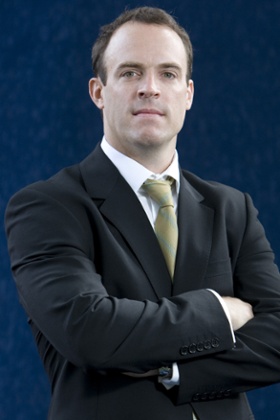
If you want to know what the new justice minister Dominic Raab really thinks about the Human Rights Act (HRA) versus a sovereign British version, handily he debated with Liberty director Shami Chakrabarti about this very matter for a Guardian article in 2011.
The conversation goes into some detail about sections 2 and 3 of the HRA, but here are some of the broad positions Raab argued four years ago:
The tabloids blame everything on the HRA and, in my view, the NGOs think it’s perfect. I think there’s a middle ground. The HRA didn’t do a great deal to protect some of our freedoms – against ID cards, the DNA database, against some of the surveillance where children were followed home from school to check their catchment area …
I would be open to argument on [giving British judges strike-down powers over parliament] in relation to protection of core freedoms, because I believe in strong judicial interpretation and applications of our freedoms. In the European Court of Human Rights (ECHR), it talks about interpretation and application. Where I have a problem is where it goes beyond that, and they are making new rights. That is undemocratic.
(HT @IanDunt)
Updated
Equalities minister voted against same-sex marriage

David Cameron’s new minister for equalities, Caroline Dinenage, voted against same-sex marriage because she said the state had “no right” to redefine marriage, Pink News reports. So perhaps some people are more equal than others.
The paper reports that in 2013, Dinenage – the daughter of the TV news presenter Fred – told a PinkNews reader that “preventing same-sex couples from being allowed to marry takes nothing away from their relationship”.
Dinenage also voted against the marriage (same-sex couples) bill at its second reading in the House of Commons, the paper says, and was absent for its third reading.
This from Pink News:
In a letter to a PinkNews reader, Ms Dinenage wrote that the Church states that “marriage is in its nature a union of ‘one man and one woman’, and went on to say “the insitution of marriage is distinctive.”
She wrote: “These proposals were not included in any of the three main manifestoes nor did it feature in the Coalition’s Programme for Government. As I have mentioned, under current law same-sex couples can have a civil partnership but not a civil marriage and I believe that there is no legitimate reason to change this.
“Preventing same-sex couples from being allowed to ‘marry’ takes nothing away from their relationship.”
Caroline Dinenage is the Parliamentary Under Secretary of State at the Ministry of Justice. She is also Minister for Equalities at DfE.
— David Cameron (@David_Cameron) May 12, 2015
The Telegraph’s Rosa Prince is reporting that Ed Miliband’s media and strategy chief Tom Baldwin has stepped down. He was widely credited with dragging the former Labour leader’s abysmal personal ratings up to give him a fighting chance of becoming prime minister.
If the reports are true, this will leave Labour even more gun-shy as it seeks to recover from its devastating poll defeat and contest the emboldened Tories’ narrative in the media.
Hearing Ed Miliband's spin doctor Tom Baldwin has fallen on his sword.
— Rosa Prince (@RosaPrinceUK) May 12, 2015
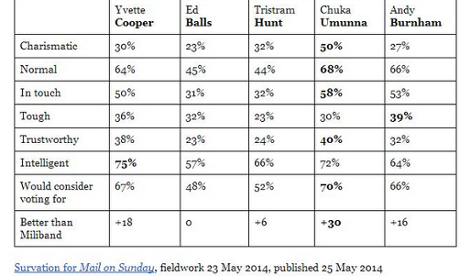
John Rentoul has flagged up on his Independent blog these figures, showing how people responded after being shown clips of potential Labour leadership candidates. The figures are from last year, but may still provide some sort of guide to how well the candidates go down with people.
The Lib Dem MP Greg Mulholland has hinted that he might also stand for the Lib Dem leadership. Normal Lamb has already announced he is standing, and Tim Farron is almost certain to stand too.
I am not taking media calls today (helpfully I am in the #QuietCoach!) but will announce my intentions having spoken to colleagues.
— Greg Mulholland (@GregMulholland1) May 12, 2015
“Having spoken to colleagues.” That won’t take him long ...
Dominic Raab becomes a justice minister
Dominic Raab has been made a justice minister.
Raab is a former Foreign Office lawyer, and so this is example of David Cameron appointing someone to a post for which they are well qualified. Raab led a big rebellion last year, which clearly has not been held against him, but the rebellion did relate to the European convention on human rights, where this government’s policy will be rather different to the last one’s.
Dominic Raab becomes new Parliamentary Under Secretary of State at Ministry of Justice
— David Cameron (@David_Cameron) May 12, 2015
Chuka Umunna's leadership announcement - Analysis
Chuka Umunna’s Facebook declaration announcement (see 11.30am) was bland and anodyne, but that does not necessarily make it foolish. In fact, it seems that cleverly designed to neutralise three of his biggest weaknesses in the Labour leadership contest.
1 - Umunna went to Swindon to counter charges that he is too metropolitan. Umunna was brought up in London, he represents a London seat (Streatham) and, before becoming a London MP, he was an employment lawyer in the City. Today he was trying to rebrand himself as the middle England candidate, or the mouthpiece for places like Swindon.
2 - He used a rather amateurish Facebook video to counter the impression that he is just too smooth. In other walks of life being smooth, urbane, trendy and sophisticated is seen as an advantage. But Umunna is applying to lead the Labour party, not run Channel 4, and so a bit less polish would help.
3 - He is using candidate endorsements to counter suggestions that he is the candidate of Labour’s Blairite elite. Tony Blair and Lord Mandelson are thought to favour him as the next Labour leader, which can be the kiss of death in Labour leadership contests (ask David Miliband). Umunna tackled this by making a point of saying that he had spoken to many Labour candidates, and including an interview with the Labour candidate for Swindon North, Mark Dempsey. Dempsey did not endorse him, but presumably he would not have participated in the video if he did not have some regard for Umunna. More interviews are apparently planned.
"Chuka will be tweeting out interviews with Labour Parliamentary candidates from across the country" this week, we're told
— Faisal Islam (@faisalislam) May 12, 2015
Will this work? You can’t change your image with one three-minute video, and initiatives like this are easy to mock.
Chuka really reaching out to England. He's managed an hour on the train to Swindon.
— Harry Cole (@MrHarryCole) May 12, 2015
Still, you have to start somewhere.
Updated
Chuka Umunna announces Labour leadership bid - video
Our multimedia team have launched video of the shadow business secretary’s announcement that he will contest the election to succeed Ed Miliband, which was originally posted on Facebook.

Jim Murphy has received the backing of an unlikely group of supporters to counter calls for him to step down as leader of the Scottish Labour party.
The petition says: “In light of the pressure being applied to Jim Murphy from people within his own party (Scottish Labour), we, supporters of the SNP and the wider independence movement, wish to offer out unconditional support to his continued leadership of Scottish Labour.”
Do you think they might be joking?
Updated
Cameron says Tories will restore 'trust and faith in politics' by delivering manifesto pledges
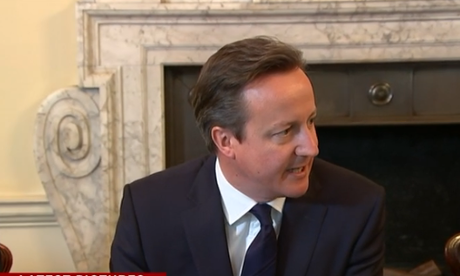
David Cameron invited a TV camera into Number 10 to film the start of cabinet. Downing Street released his words about being “the real party for working people” overnight and, when I posted them earlier, I expressed some doubt as to whether he would actually recite them as promised. (See 9.30am.) But it was a promise kept; he did. Here’s how he started.
Before we start I want everyone around this table to be absolutely clear what we are here to do and who we are here to do it for. I think it is absoluely vital that in every decision that we take, in every policy we pursue, every programme we start, it is about giving everyone in our country the best chance of living a fulfilling and good life and making the most of their talents. That is what this government is going to be about.
Cameron said that he wanted to focus on “bread and butter” issues like helping people get a job and a home and support their family. He also said that the government’s welfare and education reforms to be about “true social justice and genuine compassion, helping people to get on and make the most of their lives and supporting those who can’t”.
He also waved a copy of the Conservative manifesto, and said they had a mandate to deliver it, “all of it”
This will be a different government. It is not a coalition government, so we have proper accountability. There’s no trading away of things that are in here. The ability to deliver this, that is one of the most important things we can do to restore trust and faith in politics, when you vote for something you get it, and that is what we are going to do.
-
Cameron says the Conservatives will restore “trust and faith in politics” by delivering all their manifesto pledges

Updated
Chuka Umunna's declaration announcement - key extracts

In his declaration video, Chuka Umunna says that Labour targeted 80 Conservative seats in the election and won just four of them. He says chose to come to Swindon to make this announcement because Swindon was the place where David Cameron won his majority. There are two Swindon seats: Swindon South, where the Tory majority was 3,544 in 2010, and where it went up to 5,785; and Swindon North, where the Tory majority was 7,060 in 2010 and where it went up to 11,786. Umunna includes a comment from Labour’s candidate in Swindon North, Mark Dempsey, who says the problem was that Labour lost working class votes to Ukip and middle class votes to the Conservatives.
Umunna goes on:
Since Thursday I wanted to speak to parliamentary candidates like Mark, in areas like this where unfortunately we did not win. I managed to speak to almost half of the 80 candidates standing in those Conservative seats we were targeting ...
I have also spoken to many parliamentary colleagues and other stakeholders in the Labour party. I wanted to do that first before saying anything about my intentions with regard to the leadership of the Labour party.
I also frankly wanted to get out of London and say what I was going to do here, because for course we’ve got to be winning in a place like Swindon.
So I’m pleased today to be announcing that I will be standing for the leadership of the party.
I think we can and we should be winning in seats like in Swindon, north, south, east, west. We can absolutely do it as a party.
Some have actually suggested over the last few days this is somehow a 10-year project to get the Labour party back into office. I don’t think we can have any truck with that at all. I think the Labour party can do it in five years. I want to lead that effort as part of a really big Labour team getting Labour back into office and changing this country and building a fairer, more equal society. That is why we all joined the party in the first place.
Updated
Here is the Facebook video where Chuka Umunna announces he is standing.
Umunna recorded it in Swindon. In the video, he says he chose that location because Labour lost the election because it could not win in places like this.
I will post the key quotes shortly.
North, South, East, West - Labour can and must win in 2020 https://t.co/M5L5bMiT8f
— Chuka Umunna (@ChukaUmunna) May 12, 2015
Updated
Chuka Umunna announces he is standing for Labour leadership

Chuka Umunna, the shadow business secretary, has confirmed that he is standing for the Labour leadership.
Chuka Umunna confirms he will run for Labour leadership- and then there were two
— Laura Kuenssberg (@bbclaurak) May 12, 2015
Chuka's announcement here https://t.co/cla4e8Yuwt
— Laura Kuenssberg (@bbclaurak) May 12, 2015
Updated
Boris Johnson says Cameron should be willing to recommend EU exit if renegotiation fails
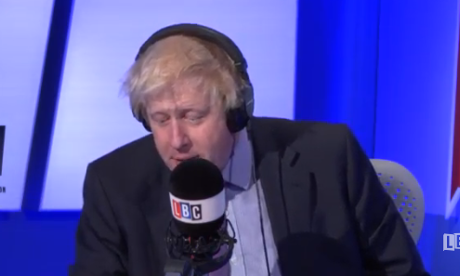
Boris Johnson, the Conservative mayor of London and new MP for Uxbridge and Ruislip South, was on LBC earlier. Here are the key points he made.
-
Johnson said David Cameron should be prepared to recommend leaving the EU if he does not get what he wants in the EU renegotiation. Johnson said that he wanted to stay in a reformed EU, but that leaving was a credible alternative.
In an EU referendum I would vote to stay in if and only if we get the reforms we need. I think we’ve got to be absolutely prepared to go into the conversation saying, ‘Look, there’s a big wide world out there, we’ve got huge interests and growing interests in the former Commonwealth countries, with America, with the developing world’. And that’s where the growth markets are. There is no reason why Britain should be necessarily fettered, tied exclusively to its relationship with Europe. And, by the way, if we did leave, we would almost instantly rebuild the single market and our membership of the common market, as it was once called, overnight because they would be utterly mad to exclude a massive economy with which they have a favourable balance of trade ...
In a negotiation where people like me and David want to see serious improvements, and we want to see less law coming from Brussels, you have got to be able to say to them, ‘Yes, there is another future’. If you don’t have that basic willingness to walk away, you cannot hope for a successful outcome in the negotiations.
-
Johnson said the Tories should not display “unnecessary triumphalism” following their election victory.
What I’m trying to just get over is there should be no unnecessary triumphalism now. Just because we got a Conservative majority I don’t think people want to see, and I’m sure this is true of Tory MPs, they don’t want to see any sort of, as I say, hubris, now.
This is a moment for humility, for trying to deliver a programme that will really benefit the whole country.
- He reaffirmed his opposition to a third runway at Heathrow and claimed the chances of the airport being expanded were “virtually nil”.
- He said he was taking a cut in his mayoral salary to reflect the fact he was now being paid as an MP.
-
He revealed that he did not write his own tweets. Asked about his Twitter account, he said “it’s more school of Rembrandt than Rembrandt.”
Tracey Crouch has been made sports minister.
Tracey Crouch is the new Minister for Sport.
— David Cameron (@David_Cameron) May 12, 2015
Frances O’Grady, the TUC general secretary, has responded to Sajid Javid saying that tightening strike laws will be “a priority”. (See 8.55am.) The Tory plans will make strikes “close to impossible”, she says.
The government’s proposals on union ballots will make legal strikes close to impossible. Union negotiators will be left with no more power than Oliver Twist when he asked for more. After five years of falling living standards the prospects for decent pay rises have just got a whole lot worse.
Damian Hinds has been made a Treasury minister.
Damian Hinds is to be Exchequer Secretary to the Treasury
— David Cameron (@David_Cameron) May 12, 2015
Nigel Farage’s Carswell conundrum

As Ukip seeks to regroup after its disappointing election night – its number of MPs was halved to just one despite getting 12.6% of the popular vote – intrigue is surrounding the relations between Nigel Farage and the party’s sole Westminster representative, Douglas Carswell.
Carswell, who was re-elected in Clacton, has refused to endorse his party leader’s “unresignation”, saying only that he learned about the decision on Twitter.
So is Carswell, whose Twitter profile doesn’t mention Ukip, about to leave the party altogether?
Bloomberg’s Robert Hutton, who was among a gaggle of journalists who chased Carswell down a flight of stairs at an event yesterday, has written this account of what the Clacton MP had to say.
“I’m delighted you asked,” he replied while taking questions after speaking at an event in London on Monday. “I heard about the ‘unresignation’ on Twitter. You’ll need to ask me about it later. I’m not going to talk about it now.”
Carswell had given some hints of his views during from the platform. He opened by saying that when it came to making the argument for leaving the European Union, “sometimes the most passionate advocates of change aren’t the best people for persuading the undecided.”
Carswell’s comments raise the question of whether the executive didn’t involve its only elected lawmaker in decision making about its leadership, and whether he is at all tied into setting the party’s broader agenda.
The Herald (subscription) has an interesting story. The next Scottish parliament will not be able to serve a four-year term, and so a decision will have to be taken as to whether it sits for three years or five years.
Here’s an extract.
A row has broken out over whether the next Scottish government, which is due to be elected a year from now, should serve a three or five year term of office.
The standard Holyrood term, laid down in the Scotland Act, is four years but a Scottish Parliament election cannot be held in 2020 because it would clash with the next Westminster poll.
A number MSPs believe the next parliament should only sit for three years, to avoid a repeat of the problem in 2025 and return Holyrood to a four year cycle.
A three year term would also allow less time for a possible independence referendum if Nicola Sturgeon were to win a majority in May next year and a mandate for a re-run of last September’s vote.
On Twitter James Nation says Rory Stewart’s appointment is not that inappropriate.
@AndrewSparrow not a complete curveball - he's been active in Cumbria on community led rural broadband schemes (with some DEFRA funding)
— James Nation (@NationJames) May 12, 2015
David Cameron has announced more ministerial appointments.
Andrew Jones is the Parliamentary Under Secretary of State at the Department for Transport.
— David Cameron (@David_Cameron) May 12, 2015
Ben Wallace is the Parliamentary Under Secretary of State at the Northern Ireland Office.
— David Cameron (@David_Cameron) May 12, 2015
Caroline Dinenage is the Parliamentary Under Secretary of State at the Ministry of Justice. She is also Minister for Equalities at DfE.
— David Cameron (@David_Cameron) May 12, 2015
Mark Lancaster is Parliamentary Under Secretary of State for Defence Personnel, Welfare and Veterans.
— David Cameron (@David_Cameron) May 12, 2015
John Penrose is to be Parliamentary Secretary at the Cabinet Office
— David Cameron (@David_Cameron) May 12, 2015
David Cameron’s decision to give Rory Stewart a job in the department for environment, food and rural affairs is getting panned by the commentariat.
From the Telegraph’s Asa Bennett
Rory Stewart, ex-chair of the Defence Committee, diplomat & dep governor in Iraq, not off to MoD/FCO as a minister but DEFRA. #reshuffle
— Asa Bennett (@asabenn) May 12, 2015
From Sky’s Katy Scholes
Rory Stewart can put those years of experience in Iraq and as Defence Select Committee Chair into his time at DEFRA...
— Katy Scholes (@KatyScholesSKY) May 12, 2015
From the Guardian’s Patrick Wintour
One of Britain's most eloquent voices on defence and foreign affairs has just been silenced. Rory Stewart has become a Defra minister.
— Patrick Wintour (@patrickwintour) May 12, 2015
From the Telegraph’s Steven Swinford
Rory Stewart, one of Tories strongest critics over 2% cuts to defence, is given a job in government as dclg minister #reshuffle
— Steven Swinford (@Steven_Swinford) May 12, 2015
They are all right, of course. Stewart, who, as well as having served in the army, worked for the Foreign Office and been an administrator in Iraq has also taught at Harvard, has immense experience in foreign affairs and defence. But he is an independent thinker, not a party hack, and hence, no doubt, considered rather dangerous by the party establishment.
Stewart may well have thoughts on farming and badgers too - he is MP for Penrith and the Border - but this could turn out to be a job that he regrets accepting.
James Wharton made minister for Northern Powerhouse
Downing Street has announced a series of new appointments.
The most interesting, perhaps, is James Wharton, because David Cameron has made him minister for the Northern Powerhouse.
Ben Gummer is to be Parliamentary Under Secretary of State at the Department of Health.
— David Cameron (@David_Cameron) May 12, 2015
Justin Tomlinson is to be Minister for Disabled People at the Department for Work and Pensions.
— David Cameron (@David_Cameron) May 12, 2015
Rory Stewart is to be Parliamentary Under Secretary of State at DEFRA.
— David Cameron (@David_Cameron) May 12, 2015
Marcus Jones is to be Parliamentary Under Secretary of State for Communities and Local Government.
— David Cameron (@David_Cameron) May 12, 2015
James Wharton is the new Parliamentary Under Secretary of State for Communities and Local Government (Northern Powerhouse).
— David Cameron (@David_Cameron) May 12, 2015
Cameron says Tories are 'the real party for working people'
Here is the message from David Cameron Downing Street released overnight that Cameron is supposedly going to give out at cabinet this morning.
Every decision we take, every policy we pursue, every programme we initiate, never forget: we’re here to give everyone in our country the chance to make the most of their life.
The pundits might call it ‘blue-collar Conservatism’, others being on the side of hardworking taxpayers. I call it being the real party for working people.
(I say supposedly because, given that it’s in the papers, one would assume that Cameron will not actually feel the need to recite it word for work to ministers who will have read it already.)
David Mundell’s Good Morning Scotland interview

David Mundell, the new secretary of state for Scotland, has come close to endorsing the Conservative push for an early EU referendum in 2016.
He told BBC Radio Scotland’s Good Morning Scotland there were lessons to be learned from the lengthy Scottish independence referendum last year.
Asked if it made sense to have the EU referendum in 2016, Mundell said: “I think from what we have seen and we can feed back from our experience in Scotland, is that a prolonged referendum campaign isn’t necessarily a positive thing.”
But Mundell said his priority as Scottish secretary was to push through new legislation to enact the Smith commission’s devolution proposals, which would give Scotland almost full control over income tax rates, over housing benefit and other minor taxes.
He insisted those measures were substantial enough to meet Scotland’s needs. Pressed on whether further powers could be added, or whether Boris Johnson was right that a federal-type solution was needed, he said the legislation was sufficiently ambitious. It could be debated and amended in the Commons.
“The government believes that the Smith package is the right package for Scotland and the right package the Scottish parliament needs to be an effective and powerful devolved parliament in the context of the UK,” he said.
Updated
Rory Stewart, the Conservative chair of the Commons defence committee, and a former Foreign Office official and administrator in Iraq, is also getting a job, it seems.
Tory chair of defence select committee Rory Stewart in to No 10 #reshuffle
— norman smith (@BBCNormanS) May 12, 2015
The cabinet is meeting at 11am. David Cameron is making more appointments before then.
It looks like James Wharton, the Conservative backbencher who introduced the private member’s bill for a referendum, is getting a job.
Possible promotion for tory behind EU referendum bill as @jameswhartonuk enters No 10 this morning #reshuffle
— norman smith (@BBCNormanS) May 12, 2015
Wharton is only 31, but was generally thought to have been quite impressive as he introduced his (doomed) bill into the Commons. He had a majority of just 332 in Stockton South in 2010, making him 7th on Labour’s list of target seats, but last week he won a majority of more than 5,000.
Sajid Javid’s comments have not stopped Nick Robinson plugging his book.
Govt goes to war with BBC? Eden, Wilson, Thatcher, Blair did. Should be a book about it. Oh...(Used copies just 1p!) pic.twitter.com/rzFEgDAiCg
— Nick Robinson (@bbcnickrobinson) May 12, 2015
Sajid Javid rejects claims that Tories going to war with the BBC
Sajid Javid, the new business secretary, has doing the interview circuit this morning. He was on the Today programme, but has given other interviews too. Perhaps the most interesting line came out when he was asked about something relating to his former post, culture secretary. He has been replaced as culture secretary by John Whittingdale, a critic of the licence fee, and that has prompted a rash of headlines about the Tories being at “war” with the BBC.
Tuesday's Telegraph front page: Tories go to war on the BBC #tomorrowspaperstoday #bbcpapers pic.twitter.com/HUtLdgE2kT
— Nick Sutton (@suttonnick) May 11, 2015
Tuesday's Times front page: Cameron’s shot across the bows to the BBC #tomorrowspaperstoday #bbcpapers pic.twitter.com/r8lZvpSdCi
— Nick Sutton (@suttonnick) May 11, 2015
Tuesday's Independent front page: BBC on edge as licence fee critic made Culture Secretary #tomorrowspaperstoday pic.twitter.com/ExEN5J1OUB
— Nick Sutton (@suttonnick) May 11, 2015
The Tories are keen to de-escalate tensions on this front, and they have already been sending out peace messages to Broadcasting House.
Tory sources play down claims of "war on the BBC" after appointment of John Whittingdale
— norman smith (@BBCNormanS) May 12, 2015
John Whittingdale is not wildly anti BBC - Tory source
— norman smith (@BBCNormanS) May 12, 2015
Javid delivered a similar message on Today.
Does this mean that the Tories are actually running up the white flag? Almost certainly not. It is probably more a case of the forthcoming battle with the corporation just being postponed.
Here are the key points,
-
Javid rejected suggestions that John Whittingdale’s appointment meant the Tories were going to “war” with the BBC. Asked if this was the case, he replied:
Not at all. There is a bit of over-excitement in those headlines. First of all, John Whittingdale is an excellent choice for culture secretary. He is someone who is hugely experienced.
He said the BBC charter review would be led by evidence.
- Javid sidestepped questions about whether he personally favoured getting rid of the licence fee. This was a matter for the charter review, he said.
- He confirmed that plans to curb the ability of unions to call strikes were “a priority” and would be included in the Queen’s Speech. The Tories would introduced a minimum 50% turnout threshold for strike ballots, insist that at least 40% of workers vote for strikes in essential public services and lift the ban on the employment of agency staff during strikes, he said.
- He did not rule out the proposed EU referendum being held in 2016. It would be held before the end of 2017, he said when asked if he would like to see it held earlier.
-
He said he could not say whether he would favour Britain staying in the EU until he knew the outcome of the renegotiation. The BBC’s Robert Peston thinks he was more Eurosceptic on this than some of his cabinet colleagues.
When @George_Osborne and @David_Cameron talk about EU, they normally say preference is to stay in. Didn't quite get that from @sajidjavid
— Robert Peston (@Peston) May 12, 2015
- He said he had not looked at plans to change maternity leave laws.
- He confirmed that the Tories would tighten welfare regulations, so that 18 to 21-year-olds will be required to undertake an apprenticeship or training in return for out-of-work benefits.
- He said he believed “passionately in free enterprise” and that this would influence his decision-making as business secretary.
- He said he wanted to take a fresh look at deregulation.
-
He said Vince Cable, his Lib Dem predecessor, “did a good job”.
Osborne says he is in Brussels with 'very clear mandate' to reform UK-EU relationship

If you want closer coverage of George Osborne’s adventures in Brussels, my colleague Graeme Wearden is covering the EU finance ministers’ summit with his typically forensic eye over on the Business live blog. Here’s the latest from Graeme.
George Osborne has just arrived in Brussels for today’s Ecofin meeting, and declared that he’s determined to reform the EU for the benefit of Britain, and the rest of Europe too.
The chancellor told the media outside the Justus Lipsius building that:
We come here with a very clear mandate to improve Britain’s relationship with the rest of the EU, and to reform the EU so that it creates jobs and increases living standards for all its citizens.
I don’t think anyone’s now in any doubt that we will hold that referendum on Britain’s membership of the European Union having conducted these negotiations.
We go into the negotiations aiming to be constructive and engaged, but also resolute and firm.
And no-one should underestimate our determination to succeed for the working people of Britain, indeed the working people of the whole of the European Union.
You can see video of Osborne’s arrival here:
#ECOFIN Council - Arrival and doorstep #UK #Osborne @George_Osborne http://t.co/6u3roNuDLZ pic.twitter.com/eWz7E6HnbP
— EU Council TV News (@EUCouncilTVNews) May 12, 2015
Austria’s finance minister, Hans Jörg Schelling, has just given a taste of the opposition Britain may face over EU renegotiations. Acording to Reuters, Scheling suggested the referendum was a sign of weakness, and that British politicians are not willing to take tough decisions on their own.
Updated
Good morning. I’m taking over from Mark.
David Cameron has been tweeting about today’s cabinet.
I'll tell the first meeting of the Conservative Cabinet, "We are the real party of working people, putting hardworking taxpayers first."
— David Cameron (@David_Cameron) May 12, 2015
Sajid Javid, the new business secretary, is on the Today programme now. He has confirmed that the government will go ahead with plans to make it harder for public sector unions to call strikes, and he has just said that newspaper reports saying the government plans “war” with the BBC are wrong.
I will post a summary shortly.
Avid readers will have noticed we’ve dispensed with the ‘diary’ element of the morning briefing; as we return to politics as normal there simply aren’t enough scheduled events happening.
But we’ll still flag up the key interviews and political set pieces. For example, Sajid Javid, the news business secretary, is the Today programme’s big interview at 8.10am, which we’ll be covering. And he’s already been popping up on the TV breakfast shows, so we’ll let you know if he’s said anything illuminating.
Norman Lamb says Lib Dems will never repeat 'debacle' of tuition fees U-turn

One of the few remaining Lib Dems in Westminster, Norman Lamb, was on the Today programme this morning to discuss his bid to replace Nick Clegg as the leader of the party.
Lamb said the “debacle” of the party’s U-turn on university tuition fees massively undermined voters’ trust and he insisted the party would never make that mistake again.
Lamb said the Lib Dems had learned an extremely painful lesson from raising tuition fees to a ceiling of £9,000 despite former Clegg promising to vote against increases before entering the last coalition government.
He said: “Trust for me is critically important and that debacle massively undermined people’s trust in the party. I believe very strongly that we have now learned a massive lesson, an extremely painful one. But I don’t think we will ever make that mistake again.”
Lamb paid tribute to Clegg, saying he played a “heroic” part in the campaign and claiming that that “history will judge his contribution well”. Lamb claims his party faced a “perfect storm” in last week’s election, with the SNP gaining seats and the Conservatives targeting the Lib Dems in many areas.
And why does he want to run?
I’ve never actually sought this top job for its own sake but the there are things that I believe in … I am at heart a conviction politician.
In very many, many respects this is a liberal age, and yet people who have liberal values, liberal views, don’t always associate themselves with our party. We have to make our party the voice of those people.
'That debacle massively undermined trust in the party...we will never make that mistake again'. Norman Lamb on Lib Dems fees U-turn #r4today
— Jamie Angus (@grvlx001) May 12, 2015
Updated
Morning briefing
Good morning and welcome to this Tuesday edition of our general election 2015 live blog, which has now morphed into a Conservative cabinet live blog, and will shortly morph into a future-of-the-union/Europe live blog, given the direction David Cameron has pointed his government.
I’m Mark Smith and I’ll be with you until I hand over to Andrew Sparrow later this morning. You can tweet us @marksmith174 or@AndrewSparrow, and we’ll be reading below the line too so please comment away.
The big picture

Cameron (or the flunky responsible for his Twitter feed) will be suffering from RSI after yesterday’s flurry of cabinet announcements. I counted 42 tweets in all, the majority of them unsurprising affirmations of the status quo – a symptom of what the BBC’s Norman Smith is calling the “continuity cabinet”. But there were a few fairly surprising moves, not least the demotion of Michael Green Grant Shapps to junior minister in DfID – “because he wants to get experience in international affairs”.
Today, Cameron will be chairing the first meeting of his cabinet – the first all-Tory cabinet since John Major’s final one in April 1997. (You can see a full list of the new cabinet here.)
Meanwhile, George Osborne is at a meeting of European finance ministers in Brussels, where he will get his first chance to lay out his government’s new negotiation position on the UK’s relationship with the EU. These talks are expected to take place on the sidelines of the summit however, as the thrust of the talks will be dominated by Greece.
Here are the other stories you may have missed from yesterday:
-
David Cameron is drawing up plans to bring forward an in/out referendum on Britain’s membership of the European Union by a year to 2016 in order to avoid a politically dangerous clash with the French and German elections in 2017. As the prime minister declared that he had a mandate from the electorate to renegotiate the terms of Britain’s membership, government sources said Downing Street was keen to move quickly on the timing of the referendum.
- David Cameron has sacked the Tory party chairman Grant Shapps from the cabinet after a series of embarrassing revelations about his alleged attempts to mould his image on social media. In a humiliating blow after he helped to deliver the first Tory parliamentary majority in 23 years, Shapps was demoted to the lesser role of minister of state at the Department for International Development.
- David Miliband has delivered a harsh critique of his brother’s election campaign, saying it appeared to push the Labour party backwards from the principles of aspiration and inclusion. Speaking to the BBC on Monday from New York, where he works as president and CEO of the International Rescue Committee, Miliband said last week’s election result was “devastating” for the Labour party and its supporters.
- Nigel Farage has withdrawn his resignation as leader of Ukip four days after standing down when he failed to win his target seat of South Thanet in the general election. The party said it had refused to accept Farage’s decision to go and his recommendation that Suzanne Evans, his deputy, be appointed as a caretaker leader.
Updated