Nadia Khomami’s evening summary
David Cameron kicked off the first weekday of his second term by appointing a shiny new cabinet, which isn’t a bad way to start a new job. The senior roles remain largely unchanged: George Osborne remains as chancellor, Theresa May remains as home secretary, Philip Hammond remains as foreign secretary, Jeremy Hunt remains as health secretary, Nicky Morgan remains as education secretrary, and Iain Duncan Smith remains as work and pensions secretary.
But of the changes, the most notable are Michael Gove as justice secretary (as previously announced), Sajid Javid – who many have billed to be Cameron’s successor - as business secretary, John Whittingdale as culture secretary, Tina Stowell as leader of the House of Lords, Anna Soubry as minister for small business, Amber Rudd as energy secretary, and Priti Patel as minister for employment. Boris Johnson will also attend the political cabinet as the mayor of London.
What stands out is that Cameron’s new cabinet has a higher number of ministers from working-class/state school backgrounds. There are also more women, a sign that the prime minister is fully intent on modernising his party.
The big picture
In between announcements, Cameron found time to address the Conservative backbench 1922 Committee in a packed out room in the House of Commons, where there was plenty of cheering and desk banging. The prime minister then posed with his new MPs, choosing to stand next to the ones who were successful in beating Ed Balls, Mark Reckless and Vince Cable.

No doubt Cameron was eager to make full use of the photo op – the future is not exactly going to be plain sailing for him. He now needs to focus on the two big challenges of his second term: keeping the union together and keeping Europe united. As he told his MPs this morning:
We will also renew our relationship with Europe, ensuring that we get a better deal for the British people – culminating in an in/out referendum. And we will renew our Union – showing respect to all four parts of our country, while recognising we are stronger together as the United Kingdom.
We are the party of one nation – and that is the way we will govern.
What happened today
-
In an indication of the predicament to come, Jose Manuel Barroso, the former EU commission president, said David Cameron is in a stronger position to make the case for staying in Europe following the election, but that the tone of the UK’s approach in negotiations was important. Barroso also said he could not imagine an EU without Britain although he noted deals to restrict benefits to EU migrants would be “extremely difficult” and dealt with on a case-by-case basis (see 08:36).
-
Nigel Farage withdrew his resignation as Ukip leader after members demanded he stay. “As promised Nigel Farage tendered his official resignation as leader of UKIP to the NEC. This offer was unanimously rejected by the NEC members who produced overwhelmingly evidence that the UKIP membership did not want Nigel to go,” Ukip chairman Steve Crowther said.
-
David Miliband ruled himself out of the Labour leadership race, stating he was committed to his job of running a global charity in New York. He also criticised his brother Ed’s approach to the Labour leadership and called for a return to aspirational politics.
-
Alistair Darling, the Labour former chancellor, said that Labour was in a worse position now than it was in 1992 (see 08:46).
-
Harriet Harman said Peter Mandelson was wrong to say Ed Miliband ignored middle-income voters. Appearing on the Today programme, the acting Labour leader said Miliband made a big issue of standing up for the squeezed middle (see 08:20).
-
Harman later told a Parliamentary Labour Party (PLP) meeting that the party needs to listen long and hard to the candidates who lost and draw on what they were told by the electorate. She also set out 3 options for the leadership timetable: 31 July; one week before conference; or after conference (see 20:05).
-
Chris Leslie was appointed to replace Ed Balls as Labour’s shadow chancellor (see 12:25).
-
Simon Danczuk, the Labour MP for Rochdale, anti child abuse campaigner and a vocal critic of Ed Miliband’s leadership, said he was running for the Labour deputy leadership (see 09:10).
-
Norman Lamb confirmed that he is going to stand for the Lib Dem leadership. He described it as a “monumental task”, adding: “I think we’ve got a lot of learning to do and we’ve got to understand where we went wrong” (see 13:37).
-
Tory MP John Baron said the Conservatives’ EU referendum pledge helped head off the threat from Ukip (see 08:01).
-
Lord Forsyth, a former secretary of state for Scotland, said only full fiscal autonomy for the Scots could save the union (see 08:21).
- Lord sugar resigned from the Labour party due to its ‘negative business policies’ (see 12:08).
Quote of the day
“The YouGov poll, the level pegging poll, I’m going to sue them for my ulcers” – David Cameron on the stresses of the general election campaign.
Laugh of the day
Ed Miliband’s getaway trip to Ibiza and the memes that followed:
Ed Miliband havin' it large in Ibiza pic.twitter.com/tD3KQ93pPe
— Elliot Wagland (@elliotwagland) May 11, 2015
Tomorrow’s agenda
Expect further updates on the Tories’ manifesto pledges and who the next Labour leader will be. There will also be revelations around the responsibility of new cabinet members, as well as debate around the EU and Scotland.
That’s it from me for today. Join the Guardian’s election team tomorrow morning, as we bring you the latest news, reaction, analysis, pictures, and video in the aftermath of the election.
Updated
Summary of Parliamentary Labour meeting – summary

“We have got to look deep in our souls, but we shouldn’t open our veins,” said Harriet Harman, the acting leader of the Labour party, as she implored her colleagues to stop bloodletting after the party’s loss and the resignation of Ed Miliband.
She paid tribute to the former Labour leader during the well-attended party meeting (see 18:17pm) and set out three options for the leadership election that will be determined by the National Executive Committee (NEC) on wednesday– which doesn’t include an announcement during party conference like five years ago:
- A short campaign with the result decided on July 31
- A longer-term campaign with the new leader chosen one or two weeks before conference
- Using conference as a final hustings with a ballot after that.
A spokesperson told reporters Harman issued a “stern message” to any leadership candidates, telling them to use their media opportunities to “prosecute and attack” the Government.
MPs were also told Ms Harman had commissioned a “forensic analysis” of what went wrong and warned there was “frustration” at the amount of commentating that had been going on.
She also praised him for putting inequality back on the agenda.
Here’s a quick twitter round-up from the meeting:
Harman: 'We do have to be truthful about what happened, but not step over the line and cause further problems.'
— Chris Mason (@ChrisMasonBBC) May 11, 2015
'Frustration' at the amount of commentating going on says HH - a pop at Mandy?
— Laura Kuenssberg (@bbclaurak) May 11, 2015
Shadow cabinet minister says there has to be time for reflection 'because we lost by 2 million votes.'
— Chris Mason (@ChrisMasonBBC) May 11, 2015
Harman: 'The SNP are going to be strutting down this corridor, they want to see us downcast, we're not going to give them that pleasure.'
— Chris Mason (@ChrisMasonBBC) May 11, 2015
Furious Ian Lavery shouting at PLP meeting that party must not return to New Labour - "we live in 2015, not 1997".
— George Eaton (@georgeeaton) May 11, 2015
Updated
Cameron has just announced Grant Shapps’ new role:
Grant Shapps is the Minister of State at the Department for International Development.
— David Cameron (@David_Cameron) May 11, 2015
Our BritainThinks focus group’s verdict on the election results
Below are some of the thoughts from our focus group (see 2:49pm) on Ed Miliband’s leadership and Labour’s loss in the aftermath of the election result:
Updated
#FarageSequels has taken off on twitter, as observers react to the Ukip leader’s non-resignation.
Let's see if we can get this going: #faragesequels
— Jamie Grierson (@JamieGrierson) May 11, 2015
Then Alex Andreou kicked things off on the social media site this afternoon:
EU Only Live Twice #FarageSequels
— Alex Andreou (@sturdyAlex) May 11, 2015
While others chipped in:
The Life of Nige #FarageSequels
— Karen Cole (@karlou) May 11, 2015
Toy Tory 2 #FarageSequels
— Pete McCulloch (@thisisnotawar) May 11, 2015
And here’s a list of favourites:
My choice of Top #FarageSequels in no particular order: pic.twitter.com/ldbQ9ZkRPZ
— Alex Andreou (@sturdyAlex) May 11, 2015
Updated
The cabinet - full list
Here is a list of all of the new cabinet members.
- Prime Minister: David Cameron
- Chancellor of the Exchequer and First Secretary of State: George Osborne
- Home Secretary: Theresa May
- Foreign Secretary: Philip Hammond
- Justice Secretary and Lord Chancellor: Michael Gove
- Health Secretary: Jeremy Hunt
- Education Secretary: Nicky Morgan
- Defence Secretary: Michael Fallon
- Work and Pensions Secretary: Iain Duncan Smith
- Leader of the House of Commons: Chris Grayling
- Leader of the House of Lords: Baroness Stowell of Beeston
- Business Secretary: Sajid Javid
- Culture Secretary: John Whittingdale
- Environment Secretary: Liz Truss
- Energy Secretary: Amber Rudd
- Communities Secretary: Greg Clark
- Transport Secretary: Patrick McLoughlin
- International Development Secretary: Justine Greening
- Scottish Secretary: David Mundell
- Northern Ireland Secretary: Theresa Villiers
- Welsh Secretary: Stephen Crabb
- Chancellor of the Duchy of Lancaster and Cabinet Office Minister: Oliver Letwin
- Chief Whip: Mark Harper
- Minister for employment: Priti Patel
- Minister without portfolio: Roberto Halfon
- Mayor of London: Boris Johnson
- Minister for small business: Anna Soubry
- Chief Secretary to the Treasury: Greg Hands
- Cabinet Office Minister and Paymaster General: Matt Hancock
Our Guardian interactive is a handy guide to who each of them are.
Updated
The new chief secretary to the treasury, Greg Hands, has some news:
For those asking, that very sensible chap Danny Alexander didn't leave a note for me in the drawer. #NoFingersByrned pic.twitter.com/ILw04NC5ZF
— Greg Hands (@GregHands) May 11, 2015
In case you were wondering...
#milifandom does not apply to david
— abby #ThankYouEd (@twcuddleston) May 11, 2015
It would appear some Labour members aren’t feeling so patient with regards to the results of the leadership contest.
Harriet Harman addressing PLP, sets out 3 options for leadership timetable: 31 July; one week before conference; or after conference.
— Paul Waugh (@paulwaugh) May 11, 2015
Harman third option prompted groans from PLP. One said "We'll be here till Christmas"
— Paul Waugh (@paulwaugh) May 11, 2015
Jeremy Wright will remain as Attorney General, David Cameron has announced. Wright was originally appointed to the position in July 2014.
Jeremy Wright is to remain as Attorney General.
— David Cameron (@David_Cameron) May 11, 2015
Updated
Harriet Harman is reportedly explaining the new leadership election rules to the PLP. She says the party needs to listen long and hard to the candidates who lost and draw on what they were told by the electorate.
You don’t need to listen to Peter Mandelson, he is not properly factually informed [on the leadership voting system].
Updated
More from the PLP meeting (I’ll post a summary when it ends):
Neither Chuka Umunna, Tristram Hunt will confirm whether or not they re going to run for leadership as they go into the PLP
— Laura Kuenssberg (@bbclaurak) May 11, 2015
Harman tells PLP meeting to put "passion and commitment" they would have put into rebuilding the country into fighting the Tories.
— George Eaton (@georgeeaton) May 11, 2015
Harman to PLP: "Tories have made promises on the NHS we know they are set to break them".
— George Eaton (@georgeeaton) May 11, 2015
Harman to PLP: "We are not commentators, we are campaigners for the next Labour government". Crosby told Tories the same.
— George Eaton (@georgeeaton) May 11, 2015
Updated
Parliamentary Labour Party meeting takes place
There’s currently a Parliamentary Labour Party (PLP) meeting taking place. The meeting is being held in the exact same committee room that hosted the Tory 1922 committee meeting earlier today. Regardless of that fact, Twitter tells me the mood is somewhat upbeat.
Great to see lots of new faces entering the PLP. But obviously far fewer than I’d have hoped. Surprisingly upbeat atmosphere
— Mark Ferguson (@Markfergusonuk) May 11, 2015
Thunderous applause at the start of the PLP meeting
— Mark Ferguson (@Markfergusonuk) May 11, 2015
Applause from within Labour PLP meeting. Even a bit of desk banging (tho that's more a Tory thing).
— Paul Waugh (@paulwaugh) May 11, 2015
Updated
Nigel Farage has written about his decision to stay on as Ukip leader in the Telegraph. Farage says he decided that as much as he wanted to spend the summer fishing, walking, “and of course, in the European Parliament”, he owed it to the party to return.
I had promised in my book, the Purple Revolution, that if I lost in the South Thanet constituency, I would stand down as Ukip leader. This might have accounted for how much negativity the Labour Party, the Conservative Party, and the trade unions threw at me in that seat over the past few months.
And I’m a man of my word. It was only about 20 minutes after the results in South Thanet had come in, that I stood on the cliffs outside the Botany Bay Hotel, surrounded by the nation’s media, and confirmed that I would be handing my resignation to the National Executive Committee today. What followed was something that had crossed my mind, but that I had never truly expected.
Tristram Hunt, one of three Labour modernisers hoping to stand for the leadership, has written in the Guardian about Labour’s need to regain the trust of the working class. Hunt says his party needs to understand not just how it failed to find an aspirational economic message, but also to appreciate the sense of loss and dislocation many traditional working-class communities have felt over the past two decades.
Cameron has made another announcement - Francis Maude, the former cabinet office minister, will become Trade Minister.
Francis Maude will become Trade Minister at Foreign Office and BIS
— David Cameron (@David_Cameron) May 11, 2015
Updated
The Home Office previously said it will refuse to accept any refugees under this week’s proposed EU emergency resettlement programme. It’s now added that it will also refuse to take part in any future permanent EU system to relocate asylum seekers who make it across the Mediterranean or to resettle refugees from outside Europe.
Updated
Here’s a clip of David Miliband criticising his brother Ed’s election approach on the BBC earlier.
Updated
Labour MP Jamie Reed is considering throwing his hat into the ring for leadership of the party. Reed said he’ll enter the race if no candidate stands who he feels represents “marginalised, peripheral communities of our country”.
As the MP for England’s most remotely accessible constituency from Westminster, I know more than most the serious lessons Labour must learn from this catastrophic defeat.
Principally, our approach to peripheral areas and non-metropolitan communities has to be fundamentally reassessed, as does our approach to England. London is not England and the next Labour leader needs to listen to the marginalised, peripheral communities of our country as the United Kingdom ‘balkanises’ in front of us.
A successful Labour Party must always seek to reach beyond special interests and the Labour base. I’m surprised and flattered to have received approaches from colleagues with regard to entering this contest. There should be no rush to elect a new leader and I will set out those areas I believe the party needs to address as part of its central mission in the following days and weeks.
At this moment, I have no intention of standing for the leadership, but these issues are so critical to the future of our county and our party that should no candidate give these issues the attention they deserve, then I will consider entering the contest to ensure that these voices are heard.
Further minsterial announcements
David Cameron has made some further announcements about his government:
Alistair Burt is the new Minister of State at the Department of Health.
— David Cameron (@David_Cameron) May 11, 2015
Jo Johnson is the Minister of State for Universities and Science at the Department for Business.
— David Cameron (@David_Cameron) May 11, 2015
Philip Dunne has been promoted to Minister of State for Defence Procurement at Ministry of Defence
— David Cameron (@David_Cameron) May 11, 2015
Edward Timpson will become Minister of State for Children and Families at Department for Education
— David Cameron (@David_Cameron) May 11, 2015
Nick Boles remains Minister of State for Skills at Department for Business, Innovation and Skills
— David Cameron (@David_Cameron) May 11, 2015
George Eustice will become Minister of State at Department for Environment, Food and Rural Affairs
— David Cameron (@David_Cameron) May 11, 2015
Andrea Leadsom will become Minister of State at Department for Energy and Climate Change
— David Cameron (@David_Cameron) May 11, 2015
Anne Milton will become Deputy Chief Whip - first female Conservative MP to hold the post
— David Cameron (@David_Cameron) May 11, 2015
Therese Coffey will become Deputy Leader of the House of Commons
— David Cameron (@David_Cameron) May 11, 2015
Harriett Baldwin will become Economic Secretary to the Treasury (City Minister)
— David Cameron (@David_Cameron) May 11, 2015
Updated
Here’s what the Twitter commentariat had to say about David Miliband’s interview.
From the BBC’s Sam Macrory:
Given that David Miliband wanted to give an interview to spell out what his brother for wrong, safe to say they're not too close these days
— Sam Macrory (@sammacrory) May 11, 2015
From the New Statesman’s George Eaton:
David Milliband: "You remain brothers for life and that's something that has to be kept." Almost sounds as if he wishes it wasn't...
— George Eaton (@georgeeaton) May 11, 2015
From the Times’ Philip Webster:
But why did not David m stop Gordon when he had t chance - at least twice,poss thrice
— Philip Webster (@Pwebstertimes) May 11, 2015
From the Spectator’s Isabel Hardman:
I just feel so sad listening to that brutal Miliband interview. Brothers are amazing people who tease and care for you not "remain in touch"
— Isabel Hardman (@IsabelHardman) May 11, 2015
From Ed Miliband biographer Mehdi Hasan:
"David Miliband criticises brother's election approach" - he's waited a while to get this off his chest: http://t.co/Q7ohfde9Pd
— Mehdi Hasan (@mehdirhasan) May 11, 2015
From the Daily Beast’s Nico Hines:
David Miliband: The British electorate "didn't want what was being offered." It was being offered his little brother.
— Nico Hines (@NicoHines) May 11, 2015
From the Independent’s Steve Richards:
David Miliband has been waiting nearly 5 years to make his critical comments on Ed. For his own sake he should have waited a little longer.
— steve richards (@steverichards14) May 11, 2015
From the FT’s Jim Pickard:
David Miliband speaks. Translation: "I TOLD YOU SO I TOLD YOU SO I TOLD YOU..."
— Jim Pickard (@PickardJE) May 11, 2015
From the Independent on Sunday’s Jane Merrick:
Omg it's like the Godfather II #DavidMiliband
— Jane Merrick (@janemerrick23) May 11, 2015
Updated
David Miliband rules himself out of Labour leadership - summary
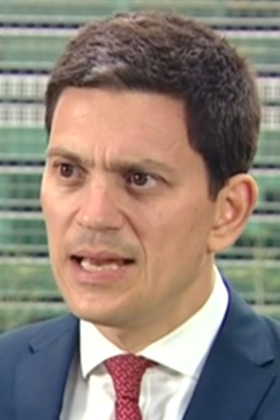
In his first interview after Labour’s abysmal electoral defeat on Thursday, David Miliband has said he had no plans of taking over as Labour leader.
-
Speaking to the BBC, Miliband said Thursday’s election was “devastating” and “the result everyone always fears.” He said that not enough effort had gone into wooing the middle classes.
There’s no point in blaming the electorate, they didn’t want what was being offered. Both in 2010 and 2015 Gordon Brown And Ed allowed themselves to be portrayed as moving backwards from the principals of aspiration and inclusion that are the absolute heart of any successful progressive political project. The answer is not to go back, the answer is to address the issues of the future. Either we build on what Labour achieved after 1997 and we have a chance to succeed, or we abandon it and we fail.
- Miliband said progressive politics is about the middle class and working class. Labour should set out to embrace people, not divide them. “The lesson of the election is we failed to do that,” he said.
- Miliband said he’s “clearly not a candidate in this leadership election.” He said he was busy in New York running a global charity, and the commitment he has to his job doesn’t change as a result of the election. “I hope friends and colleagues in the UK will take up the mantle of a dynamic of progressive politics.” He said he might be freer to contribute to that because there “wont be a soap opera” around him and his brother.
- He said this was always going to be his decision. “I’ve made a commitment here that I’m only 18 months into. The passion I have for Labour is as strong of ever, but I’m not a member of parliament. I took the decision to not be part of the soap opera.” He said he hopes people can now listen to what he has to say.
- Miliband said he’s spoken to his brother. “I think many of the attacks on him were unpleasant and unfair and I think he dealt with them with enormous dignity and courage.” He added: “you remain brothers for life and that’s something that has to be kept”.
-
When asked whether Labour sowed the seeds of its defeat by electing his brother as leader, Miliband said there’s no point looking backwards.
There’s no point in trying to press the rewind button. You don’t get the chance to rewind the tape, its important not to fall into that trap.
- He said he hoped that a range of candidates will come forward for leader. He didn’t endorse anyone, but said there should be no delusion about what happened and why it happened.
Updated
David Miliband has ruled himself out of the Labour leadership contest. He Labour should return to “progressive politics”.
David Miliband is to be interviewed on the BBC News Channel now. I’ll post updates of that as and when it happens.
John Haynes will be joining the Home Office as minister of state for security. Haynes was appointed Minister of State for Energy in 2012, and in March 2013 he was appointed Minister without Portfolio at the Cabinet Office and Senior Parliamentary Adviser to the Prime Minister. He was later appointed to the Privy Council in April 2013 and became Minister of State for Transport in July 2014.
John Hayes is the new Minister of State for Security at the Home Office.
— David Cameron (@David_Cameron) May 11, 2015
Updated
A reader has pointed out that Labour is not the only party experiencing a rise in membership numbers (see 12:25pm). The Lib Dems have got 5,000 new members since Thursday’s poll.
UPDATE: This figure is now 8,000.
Updated
Mark Francois becomes communities minister
David Cameron has made two further cabinet announcements: Mark Francois will become minister of state at the Department for Communities and Local Government, and Penny Mordaunt will become armed forces finister.
Mark Francois will become Minister of State at Department for Communities and Local Government
— David Cameron (@David_Cameron) May 11, 2015
Penny Mordaunt will become Armed Forces Minister at Ministry of Defence - first woman in this role
— David Cameron (@David_Cameron) May 11, 2015
Updated
Hello, I’m taking over from Andrew for the rest of the day. I’m on Twitter @nadiakhomami and I’ll be reading your comments below the line as well, so feel free to direct me towards any political news you think I’ve missed.
Stay tuned as we round up all the speculation and analysis from this afternoon’s cabinet reshuffle.
The Times’s Tim Montgomerie thinks Nigel Farage may be a Brussels plant.
Is Nigel Farage actually an EU plant? He couldn't be doing a better job at making Euroscepticism look unprincipled and backwards-looking.
— Tim Montgomerie ن (@montie) May 11, 2015
On that (unlikely) note, I’m now handing over to my colleague Nadia Khomami.
Ros Altmann becomes pensions minister
David Cameron has announced that Ros Altmann, the pensions expert and former head of Saga, will join the government as pensions minister. She is not an MP, so she will become a peer. Unfortunately, whoever writes Cameron’s tweets hasn’t spelt her surname correctly.
Ros Altman will become Pensions Minister at the Department for Work and Pensions
— David Cameron (@David_Cameron) May 11, 2015
The Tories said she would be made a minister if they won during the election, although at that point it was said she would be minister for consumer protection, charged in particular with tackling age discrimination in the mortgage market.
More from the reshuffle.
@faisalislam: And @AlistairBurtMP is back... Ex foreign office minister who was shuffled out in 2013, now shuffled back in again...
— Faisal Islam (@faisalislam) May 11, 2015
If Labour will see its “Short money” get a bit shorter after losing 24 seats last week, the Scottish National party’s landslide result will see its Westminster funding mushroom by some 550% after the general election.
It stands to get close to £1.2m a year in official funding from the short money system to fund opposition parties, up from £182,000 last year, based on last year’s formula for calculating the cash.
With having 56 MPs – a tenfold rise on the six it won in 2010 – the SNP will get about £935,000 a year and by winning 1.45m votes it will receive another £242,400 a year. Those figures will increase automatically slightly with retail prices. They do not include, of course, funding for each MP’s offices and staff – income which will further boost each MP’s reach and influence.
Updated
The government reshuffle isn’t as amusing as the Ukip one, but it is still going on.
It's only @rosaltmann pensions expert and now consumer protection minister pic.twitter.com/fkR9qZRqQN
— Faisal Islam (@faisalislam) May 11, 2015
And the unmistakable Right Honourable John Hayes, makes his way to Downing Street... Once told me he could box pretty well
— Faisal Islam (@faisalislam) May 11, 2015
Sean Kemp, a former Lib Dem special adviser, has a good line on Nigel Farage’s unresignation.
Nigel Farage's resignation being rejected by UKIP shows he has lost all control of the party. He should stand down immediately.
— Sean Kemp (@Sean_Kemp) May 11, 2015
Here is Damian Carrington, the Guardian’s head of environment, on Liz Truss’s reappointment as environment secretary.
Liz Truss, who was promoted to environment secretary after Owen Paterson’s sacking in July 2014, is to continue in the post. Truss has been an enthusiastic backer of British farmers and food but has been much less vocal on the natural environment.
Truss has said the highly controversial badger cull will be rolled out more widely. Most farmers support the cull, aimed at curbing tuberculosis in cattle, but scientists have declared it ineffective. The Department for Environment, Food and Rural Affairs was heavily cut in by the coalition and, as an unprotected department, faces further cuts. With the large flood defence budget now set till 2020, other areas are likely to suffer.
Updated
Here is Suzanne Evans responding to the news that she is no longer Ukip’s acting leader.
Very pleased @Nigel_Farage still at the helm. As stated previously, I tried to persuade him to stay and was never actually appointed leader!
— Suzanne Evans (@SuzanneEvans1) May 11, 2015
Greg Hands as chief secretary to the Treasury - Snap analysis
Greg Hands has been moved from the position of deputy chief whip to be chief secretary to the treasury, taking Danny Alexander’s old job. Many expected the position to go to Matthew Hancock, who has instead been made Cabinet Office minister.
The appointment is a significant promotion for Hands, the MP for Chelsea and Fulham, who went to grammar school before studying history at Cambridge University. He worked on trading floors for 10 years in the City of London and on Wall Street, first becoming a Conservative councillor in Fulham in 1998.
Hands served as shadow Treasury minister from January 2009 to May 2010, and was appointed to be parliamentary private secretary to chancellor George Osborne after the last general election.
Hands is said to speak Czech, French, German and Slovak. Hands took a gap year in West Berlin, during which time he developed a strong interest in eastern Europe. Already fluent in German and French, he also learned Czech and Slovak, spending spells in Prague during his university holidays.
Updated
What Nigel Farage said in the past about resigning
This is what Nigel Farage said about standing down as Ukip leader if he did not win a seat in parliament before the election.
In his book The Purple Revolution, published in March.
The consequences of me failing to secure a seat for myself in the Commons would be significant for both myself and the party.
It is frankly just not credible for me to continue to lead the party without a Westminster seat.
During the campaign, in the Daily Mirror.
This is my Becher’s Brook. If I don’t win, I will be a failure. I’ve achieved quite a lot in the last few years, but this one matters.
I would have to think seriously about the future – but that’s not what I’m contemplating. And, hey, all the party leaders could be gone after 7 May!
This is what Farage said on Friday, when he did not win his seat.
Me to Nigel Farage: "Are you going to resign if you lose South Thanet?" Farage: "Are you calling me a liar? I have never broken my word yet"
— Christopher Hope (@christopherhope) May 8, 2015
Farage also said:
I have just resigned as leader of Ukip. I have kept my promise. I have honoured what I said. I shall write to the NEC [national executive committee] in a minute. I shall recommend we put a caretaker leader in.
And this is what he said today.
UKIP's National Executive has rejected my resignation as leader. Please see my Facebook page for the full statement: http://t.co/VTsOFgS3Tw
— Nigel Farage (@Nigel_Farage) May 11, 2015
Nigel Farage unresigns - Twitter reaction
And here is some Twitter reaction to Nigel Farage unresigning.
From the Guardian’s Alberto Nardelli
Farage has unresigned. It's the Ukip equivalent of Easter. "On the third day after resigning he shall unresign"
— Alberto Nardelli (@AlbertoNardelli) May 11, 2015
From the Guardian’s Patrick Wintour
I am writing a book about Suzanne Evans period as UKIP leader, provisionally entitled "Four Days in May". I am looking for a publisher.
— Patrick Wintour (@patrickwintour) May 11, 2015
From BuzzFeed’s Jamie Ross
Ed Miliband and Nick Clegg are excitedly waiting by their phones for the calls from party HQ. #FarageUnresigns
— Jamie Ross (@JamieRoss7) May 11, 2015
From the Daily Mail’s James Chapman
Nigel Farage's resignation has been rejected by Ukip. The decapitated head is back on the snake, in Tory parlance
— James Chapman (Mail) (@jameschappers) May 11, 2015
From the Guardian’s Jamie Grierson
By keeping Farage in place, Ukip proving themselves to be a one-man band. Desperate.
— Jamie Grierson (@JamieGrierson) May 11, 2015
From Bloomberg’s Thomas Penny
Wonder what Kirsten Farage says now? https://t.co/3C7bn9RVr7
— Thomas Penny (@ThomasWPenny) May 11, 2015
From Macolm Harvey, a researcher
I guess it's only right for Nigel Farage to stay on as leader. He did, after all, win just as many seats as Jim Murphy did...
— Malcolm Harvey (@MalcH) May 11, 2015
From the Times’s Tim Montgomerie
Friday: "Nigel Farage says he is 'a man of my word' as he resigns". Today: We learn not so much.
— Tim Montgomerie ن (@montie) May 11, 2015
From the former Tory MP Louise Mensch
Nigel Farage ""It is frankly just not credible for me to continue to lead the party without a Westminster seat."
— Louise Mensch (@LouiseMensch) May 11, 2015
Updated
Here is Nigel Farage on his non-resignation.
UKIP's National Executive has rejected my resignation as leader. Please see my Facebook page for the full statement: http://t.co/VTsOFgS3Tw
— Nigel Farage (@Nigel_Farage) May 11, 2015
Suzanne Evans' reign as Ukip's acting leader rather shorter than that of Lady Jane Grey
— James Chapman (Mail) (@jameschappers) May 11, 2015
Nigel Farage withdraws his resignation as Ukip leader after members demand he stays
Nigel Farage’s resignation as Ukip leader did not last long. The party has just sent out this statement from Steve Crowther, the Ukip chairman.

As promised Nigel Farage tendered his official resignation as leader of Ukip to the NEC. This offer was unanimously rejected by the NEC members who produced overwhelmingly evidence that the Ukip membership did not want Nigel to go.
The NEC also concluded that Ukip’s general election campaign had been a great success. We have fought a positive campaign with a very good manifesto and despite relentless, negative attacks and an astonishing last minute swing to the Conservatives over fear of the SNP, that in these circumstances, 4 million votes was an extraordinary achievement. On that basis Mr Farage withdrew his resignation and will remain leader of Ukip. In addition the NEC recognised that the referendum campaign has already begun this week and we need our best team to fight that campaign led by Nigel. He has therefore been persuaded by the NEC to withdraw his resignation and remains leader of Ukip.
Updated
Matt Hancock, a former chief of staff to George Osborne, is going to be made a Cabinet Office minister in charge of efficiency and civil service reform. This was the job held by costcutter-in-chief Francis Maude, who retired as an MP at the election. It gives Hancock a significant influence on Whitehall belt-tightening – areas that the chancellor will want to have a close eye on as he seeks to eliminate the deficit.
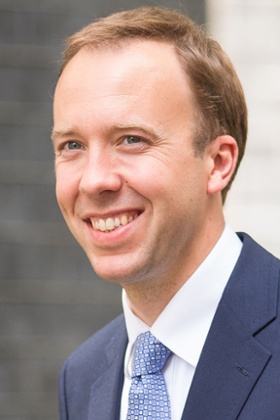
Aged just 36, Hancock for a time worked at the Bank of England but has spent most of his career in politics at Osborne’s side and later as a minister. Under the coalition, his briefs were business and energy, where he attracted criticism for taking a private plane back from climate talks in Scotland and accepting donations from a key backer of climate change sceptics.
Updated
Matthew Hancock moves from business to the Cabinet Office
Matthew Hancock, the skills minister, has been moved sideways. He was a minister of state in the business department, with the right to attend cabinet, and now he is a minister of state at the Cabinet Office, still attending cabinet.
Matt Hancock is Minister of State at the Cabinet Office. He will pursue efficiency and Civil Service reform and will attend Cabinet.
— David Cameron (@David_Cameron) May 11, 2015
Oliver Letwin as head of Cabinet Office - Snap analysis

Oliver Letwin enjoyed the title of “minister for government policy” in the last parliament. He will effectively carry on doing the same job, although David Cameron has promoted him, making him a full member of the cabinet.
All ministers have some sort of responsibility for government policy, but Letwin was the man who pulled it all together and (supposedly) ironed out any contradictions and inconsistencies. Cameron describes him as the government’s “mainframe computer”. Immensely clever, but also personable, self-effacing and even at times giggly, Letwin has been charged with resolving disputes between departments and, in the coalition, he was a key link man with the Liberal Democrats. He developed a particularly warm relationship with Danny Alexander; they used to speak on the phone every Sunday to resolve upcoming coalition difficulties.
Letwin’s role was largely a backroom one, and this is likely to continue. Although highly cerebral, Letwin is also regarded as slightly unworldly, and his dealings with the media have not always worked out well. He was shadow chief secretary to the Treasury before the 2001 election, but had to spend part of the campaign being kept away from journalists after being named as the source of a briefing saying Tory plans for cuts went far beyond what the party was publicly acknowledging.
Updated
David Mundell as communities secretary - Snap analysis
David Mundell is the only Tory MP with a seat in Scotland so really the only possible choice for what will be a difficult job in charge of negotiating devolution with the SNP and trying to hold together the union.

Mundell has been in the Scotland Office for a while as a minister so this means a promotion to replace his old Lib Dem boss, Alistair Carmichael. First on the agenda will be sorting out which tax powers will be handed to Holyrood. It is difficult for the Conservatives to claim much of a mandate in Scotland given that 56 out of 59 MPs in the country now belong to the SNP, but, for what it’s worth, the Lib Dems and Labour also only have one each left.
Before entering politics as an MSP and MP, Mundell was a solicitor who worked for BT. Not a great deal has been written about his politics but he was for a period a member of the SDP during the Thatcher era and an interview with the Herald says he is nicknamed Fluffy for his warm approachability.
Updated
Here’s a Guardian video of David Cameron posing with his new MPs.
This is from my colleague Rupert Neate.
.@dmiliband's wife says David is going to speak about Labour's future post election wipeout today. But refuses to give me any details. :(
— RupertNeate (@RupertNeate) May 11, 2015
.@DavidMilibandMP is giving an exclusive i/v to BBC in NYC today about his views on the future of the Labour party, his office @ IRC says
— RupertNeate (@RupertNeate) May 11, 2015
David Mundell becomes Scottish secretary
David Mundell, the Scotland Office minister, becomes Scottish secretary.
David Mundell will become Secretary of State for Scotland
— David Cameron (@David_Cameron) May 11, 2015
Updated
Scottish Labour officials have denied the party’s catastrophic losses in the general election will have a similarly devastating effect on the party’s finances, because Scottish Labour’s “short money” – its official opposition party funding from Westminster – will be cut.
Party officials say Scottish Labour’s employees and political staff are paid for by central UK Labour funding, as well as Scottish parliament “Short money” worth £280,000 in 2013-14, and the party’s own fundraising.
Losing 40 of its 41 Scottish MPs last Thursday will impact on UK Labour’s overall short money funding, which hit £6.7m in 2014-15, but that money goes into its Westminster and central operations, not directly to Scotland.
Party officials said losing 24 MPs overall last Thursday will only see its Westminster short money fall by about 10%, because its English election gains partly offset the cataclysm in Scotland.
The rout will see the party lose some staff: two senior press staff were employed through former shadow Scottish secretary Margaret Curran, who lost her Glasgow East seat. But Scottish Labour’s head of media, David Whitton, was on a temporary contract which ended on election day. But chief of staff John McTernan and other central office staff will remain in post.
There remains a question about Scottish leader Jim Murphy’s financial future after he lost his East Renfrewshire seat and his MP’s salary: his leader’s post is unsalaried. The party is reluctant to discuss how he can earn a salary and remain leader.
Updated
Greg Hands becomes chief secretary to the Treasury
Greg Hands has been made chief secretary to the Treasury. But, judging from David Cameron’s tweet, he has not been given full cabinet status, because Cameron is making a point of saying he will attend cabinet.
Greg Hands will become Chief Secretary to the Treasury. He will attend Cabinet.
— David Cameron (@David_Cameron) May 11, 2015
Updated
Stephen Crabb remains as Welsh secretary
Stephen Crabb is staying as Welsh secretary.
Stephen Crabb will remain Secretary of State for Wales
— David Cameron (@David_Cameron) May 11, 2015
It did not take long for the mystery of Eric Pickles’ new job to be solved. (See 2.50pm.) This is from the Daily Mail’s James Chapman.
.@EricPickles, leaving Cabinet, joins Holocaust Commission and replaces @MattHancock2015 as Govt's anti-corruptionn czar #reshuffle
— James Chapman (Mail) (@jameschappers) May 11, 2015
Oliver Letwin, the Cabinet Office minister and minister for government policy, has been promoted.
Oliver Letwin will become a full member of Cabinet and will be in overall charge of the Cabinet Office
— David Cameron (@David_Cameron) May 11, 2015
Greg Clark as communities secretary - Snap analysis

Greg Clark is likely to be pleased with his new job as communities and local government secretary as he has long spoken passionately about this policy area. He was in the shadow cabinet before the arrival of the coalition meant he got a series of more junior ministerial jobs for decentralisation, financial secretary to the Treasury, constitution and finally universities. Throughout most of that time, he clung on to the cities portfolio.
He is yet another appointment from the liberal centrist wing of the party but well liked and regarded as a competent brain by his colleagues. Clark also appears to be a genuine enthusiast about devolution, something chancellor George Osborne has recently embraced with his Northern Powerhouse agenda.
Before politics, he worked as a management consultant and for the BBC as head of commercial policy.
Updated
Eric Pickles, the outgoing communities secretary, has been tweeting about his replacement, Greg Clark. (See 2.22pm.)
I could not wish for a better successor than @gregclarkmp He will do a fantastic jog. More announcements later in the week of my new role
— Eric Pickles (@EricPickles) May 11, 2015
Maybe Clark will do a fanastic jog; no one ever saw Pickles going on one.
Updated
Jeremy Hunt is staying as health secretary.
Jeremy Hunt remains as Secretary of State at the Department of Health.
— David Cameron (@David_Cameron) May 11, 2015
Updated
Anna Soubry as minister for small business - Snap analysis

Anna Soubry was probably never expecting to have a ministerial career in this parliament. Elected MP for Broxtowe in 2010 with a majority of 389, she was eighth on Labour’s list of target seats, and constituency polls suggested she was going to lose. In fact, she was re-elected last week with a majority of more than 4,000.
A former regional television presenter and a barrister, Soubry originally got involved in Conservative politics in the 1970s (she was the only Tory on the executive of the National Union of Students), spent some time in the SDP in the 1980s, and was fast-tracked for selection as a Tory candidate after being put on the “A list” under David Cameron.
She was tipped for promotion from the moment she arrived in the Commons and joined the government as a health minister in 2012. What distinguishes her most from other ambitious colleagues is her outspokenness, brave or reckless according to taste. She once took on Nigel Farage on Question Time with a ferocity that impressed colleagues, but later prompted slightly different reactions when she said that Farage looked like “somebody has put their finger up his bottom and he really rather likes it”. She also complained in an interview that she was made public health minister because David Cameron had stereotypically decided that that portfolio was a “soft, girly option” appropriate for a woman. Cameron responded by making her a defence minister where she prospered, perhaps because the MoD is a place where bluntness goes down well.
Updated
Our BritainThinks focus group’s verdict on the election results
What do the real voters think? We have 60 in five key seats giving their view throughout the election as part of our polling project with BritainThinks. They each have an app and are telling us what they think of stories as they crop up.
Below are some of their thoughts in the aftermath of the election result – from shock and disappointment to feeling satisfied with the Tory win:

Justine Greening (DfID) and Theresa Villiers (NIO) keep jobs
Two more continuity appointments.
Justine Greening will remain Secretary of State at the Department for International Development.
— David Cameron (@David_Cameron) May 11, 2015
Theresa Villiers will remain as Secretary of State for Northern Ireland.
— David Cameron (@David_Cameron) May 11, 2015
Updated
Greg Clark becomes communities secretary
Greg Clark, the universities minister, has replaced Eric Pickles as communities secretary.
Greg Clark is the new Secretary of State at the Department of Communities and Local Government.
— David Cameron (@David_Cameron) May 11, 2015
Anna Soubry becomes minister for small business
Anna Soubry moves from defence to become minister of state for small business, with the right to attend cabinet, David Cameron has confirmed.
Anna Soubry is the new Minister of State for Small Business. She will attend Cabinet.
— David Cameron (@David_Cameron) May 11, 2015
The new Conservative MPs are holding a photocall now outside the House of Commons.

New SNP cohort pic.twitter.com/GHj5YydUf5
— Laura Kuenssberg (@bbclaurak) May 11, 2015
Updated
Here is another picture from the Conservative 1922 Committee meeting earlier.
Amazing speech by @David_Cameron at the first 1922 Committee this morning. Great to be a part of something great! pic.twitter.com/M8S7ZUfig4
— Ben Howlett MP (@ben4bath) May 11, 2015
Updated
Liz Truss is staying as environment secretary.
Liz Truss will remain as the Secretary of State for the Environment, Food and Rural Affairs.
— David Cameron (@David_Cameron) May 11, 2015
Patrick McLoughlin to remain as transport secretary
And Patrick McLoughlin is staying as transport secretary.
Patrick McLoughlin will remain as Secretary of State for Transport.
— David Cameron (@David_Cameron) May 11, 2015
My colleague Libby Brooks has been watching Nicola Sturgeon’s appearance on the ITV chatshow Loose Women, where the SNP leader faced hard-hitting questions on what she wears at home and how she deals with being on TV all the time.
Thanks to @theSNP leader @NicolaSturgeon for popping by today. Catch her full interview again on @itvplayer later pic.twitter.com/QRvHNjRbop
— Loose Women (@loosewomen) May 11, 2015
Nicola Sturgeon tells @loosewomen that Sean Connery once gave her advice on how to project her voice
— Libby Brooks (@libby_brooks) May 11, 2015
Sturgeon tells @loosewomen she wears trackies at home and...can I stop this now please?
— Libby Brooks (@libby_brooks) May 11, 2015
But she did also say that David Cameron had no right to rule out a second independence referendum for Scotland within this parliament, which he did on Channel 4 News yesterday.
Nicola Sturgeon tells @loosewomen that David Cameron has no right to rule out a second referendum
— Libby Brooks (@libby_brooks) May 11, 2015
Updated
David Cameron has confirmed that Iain Duncan Smith is staying as work and pensions secretary.
I can confirm the Iain Duncan Smith will remain as Secretary of State for Work and Pensions.
— David Cameron (@David_Cameron) May 11, 2015
Eric Pickles is going to be replaced as communities secretary, according to ITV.
Eric Pickles to be replaced as Communities Secretary, ITV News understands http://t.co/7KSh2hLjD4 pic.twitter.com/L1PZQjgEgo
— ITV News (@itvnews) May 11, 2015
Updated
Norman Lamb has confirmed that he is going to stand for the Lib Dem leadership.
Norman Lamb confirms to ITV Anglia that he will stand for the Lib Dem leadership
— samana haq (@samhaqitv) May 11, 2015
He will almost certainly be up against Tim Farron. The leaders of the Scottish and Welsh arms of the Lib Dems have today issued a joint statement saying Farron should stand, but Farron is still refusing to confirm that he will be a candidate. This is what he said about this when asked on the Today programme this morning.
I take the view that we’re a party that’s different to others, does things from the bottom up, not from the top down, so my job over the next day or two is to listen to other people’s views ... I’m in a situation where I am, to coin a phrase, ruling nothing in and ruling nothing out.
Amber Rudd's appointment as energy secretary - Damian Carrington's analysis
My colleague Damian Carrington, the Guardian’s head of environment, has written an analysis of Amber Rudd’s appointment as energy secretary. Here’s an excerpt.
At the very least, those concerned about global warming and the green economy can take heart from the fact that David Cameron has not appointed a climate change sceptic as secretary of state for the Department of Energy and Climate Change (he has form). Amber Rudd says climate science is “compelling” and has spoken strongly of the need for a strong deal at a crunch UN summit in Paris in December.
But there appears to be much more to be optimistic about than that, with her appointment meeting with broad approval from green business and campaigners. Firstly, she was climate change minister for almost a year before the election, meaning she can hit the ground running in the tortuous but crucial climate change negotiations.
One government insider told me she is “really green and no-nonsense” and can get things done, adding that her past experience as an investment banker and businesswoman will be useful in delivering the huge investment needed in the energy sector.
The key will be whether energy and climate change policy is run from Decc or the Treasury. Rudd was first elected as an MP in 2010 and rose quickly, becoming a parliamentary private secretary to chancellor George Osborne and then assistant whip. Being relatively close to the chancellor will be vital in getting Rudd’s energy policies through, but another former Decc minister and windfarm opponent, Matt Hancock, is said to be closer to the chancellor.
Whittingdale believes public service case for Strictly Come Dancing is 'debatable'
More on the new culture secretary.
Decca Aitkenhead interviewed John Whittingdale three years ago and concluded that he thought he would make a good culture secretary. Here’s an extract.
I’m pretty sure Whittingdale feels he would have made a good secretary of state for culture, and his personal tastes are certainly catholic. I ask if his legendary love of heavy metal has been overstated, and he giggles. “Er, well, no. Though I do like going to the ballet, and I like classical music too. And I was,” he adds, bursting out laughing, “a punk – for a time.” Are there photographic records of that phase? “Happily not! But I saw all sorts of bands, such as Sham 69, the Buzzcocks. The Stranglers are still a great love.” The last concert ticket he bought was for Deep Purple last year. What did he wear? He starts to grin. “I do still have one of those waistcoats with patches all over it, and a Motörhead skull on the back. But I don’t wear it now. Mainly because there would be people like you lurking everywhere. So no, I wear a pair of jeans and an open-necked shirt. I think I may have been known to wear an Iron Maiden T-shirt,” he adds coyly. “It has been known.”
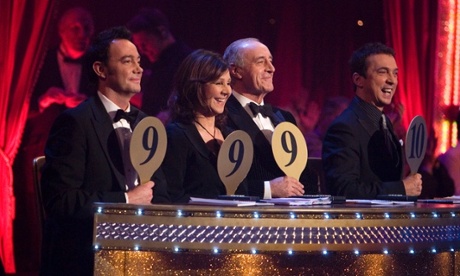
And this is what Whittingdale told my colleague Charlotte Higgins in an interview last year in response to questions about the licence fee. Whittingdale said:
I am a free market Conservative, and therefore begin with the presumption that the only things that should be in public ownership are things that have to be in public ownership, and generally things operate better if they are in private ownership and operate in a market. So the question is, do we need a BBC? And my answer to that has always been yes, because there are things which I think are in the public interest to have available for viewers but which would probably not be viable on a commercial basis, which is a definition of public service broadcasting. I mean people can argue, and my committees argue about what is public service broadcasting, but that is certainly one definition of public service broadcasting.
And it doesn’t just mean really, really sort of narrow programmes about, you know, Guatemalan hill tribes’ eating habits or whatever, I mean it does extend into high quality drama, quite risky material, certainly arts and culture. I mean news and current affairs at the core, religion, education, children ...
Is there a public service argument for Strictly? Debatable. Is there a public service argument for putting out Strictly at roughly the same time as ITV is running X Factor? No. The one thing in my view the BBC should not be thinking about is ratings, but they do because of the licence fee. That’s the problem.
I’m against the licence fee because it’s very regressive, it’s very expensive to collect, you get these ridiculous letters sort of threatening you with having your fingernails pulled out if you don’t admit that actually you’ve got a television hidden somewhere. And the level of evasion is pretty high, quite a number of people go to prison every year, failing to pay the fine.
Updated
Christian May, head of communications at the Institute of Directors, has welcomed the appointment of Sajid Javid - with a caveat:
Sajid Javid to BIS is a solid move. Experienced, understands the business world, good reputation from Treasury days. However... 1/2
— Christian May (@ChristianJMay) May 11, 2015
...will Sajid recognise business concerns on Tory immigration target? 2/2
— Christian May (@ChristianJMay) May 11, 2015
Given that Javid comes from an immigrant family, he is likely to be more pro-immigrant than most of his cabinet colleagues, although this is not a subject on which he has spoken out in the past.
Updated
If you want to know what government jobs are available for David Cameron to fill, this is handy. It is a list of people resigning from the government because they left the Commons (William Hague), lost their seats (lots of Lib Dems) or because the Lib Dems are no longer in government (some Lib Dem peers).
Of course, the reshuffle will involve David Cameron moving ministers, not just filling the vacancies. But it does illustrate how many new government posts Cameron has got to offer. He could stage a major reshuffle without having to sack anyone.
Here is Amber Rudd arriving at the Department for Energy and Climate Change to take over as the new energy secretary.
Amber Rudd MP arrives at DECC as our new Secretary of State. https://t.co/ioSSgTVNr4
— DECC (@DECCgovuk) May 11, 2015
And here is some reaction.
From John Sauven, executive director of Greenpeace UK
Amber Rudd’s appointment as secretary of state for energy and climate change is a hopeful sign that the government remains committed to implementing the Climate Change Act and achieving a strong international climate deal in Paris later this year. Ms Rudd was a key player in securing vital reforms to the EU common fisheries policy and championing a better deal for the UK’s local, sustainable fishing sector. We look forward to her bringing the same drive and ambition to securing the clean and efficient energy future Britain needs.
From Zac Goldsmith, the Conservative MP and environmentalist
Amber Rudd in DECC - that is great, great news. Big congrats @AmberRuddhr
— Zac Goldsmith (@ZacGoldsmith) May 11, 2015
Cruddas to head postmortem of Labour’s defeat

The other stories emerging from Labour’s shadow cabinet announcement are the senior figures who aren’t in it.
Sadiq Khan has resigned as shadow justice secretary – he is seeking the Labour nomination for London mayor – and has been replaced by Lord Falconer, who also assumes the role of shadow lord chancellor.
Meanwhile, Jon Cruddas, has stepped down as Labour’s policy review co-ordinator to head a postmortem on why the party was defeated so convincingly in the election.
Labourlist reports that the review – separate and independent from the party, leadership and individual leadership campaigns – will look at how the party (organisationally, politically and in policy terms) can rebuild in opposition. The website reports:
Cruddas is thought to already have the LGA and Compass on board with the review, and is approaching other groups, including the trade unions, in order to build broad support.
Updated
This is from the FT’s Jim Pickard.
John Cruddas is quitting the shadow cabinet to set up his own independent review of what went wrong for Labour - alongside Compass & others.
— Jim Pickard (@PickardJE) May 11, 2015
Labour says that 20,000 people have joined the party since Thursday night, taking the membership to 221,247. Some 60% of the new members are under 35.
Harman announces Labour shadow cabinet
It’s not just the government that is reshuffling today – the caretaker Labour leader Harriet Harman has just announced the new shadow cabinet.
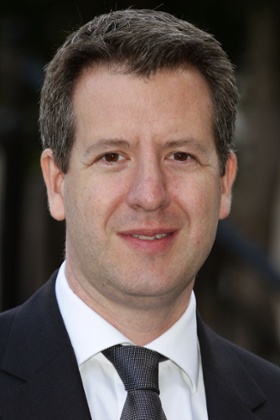
The headline news is that Chris Leslie has been appointed to fill the big shoes vacated by Ed Balls, who failed to win his Yorkshire seat in last week’s election. Leslie becomes shadow chancellor, and will be charged with resurrecting the party’s fiscal credibility and its broken relations with business (exemplified just minutes ago by Lord Sugar’s parting swipe as he severed ties with Labour). Leslie worked with Balls as shadow chief secretary to the Treasury.
Hilary Benn has been promoted from shadowing Eric Pickles’ communities department to replace Douglas Alexander – who also lost his seat – as shadow foreign secretary.
Andy Burnham, Yvette Cooper, Rachel Reeves, Chuka Umunna, Tristram Hunt and Vernon Coaker keep their jobs shadowing health, home affairs, work and pensions, business, education, and defence respectively.
Here’s the full list:
Leader of the opposition and acting leader of the Labour party
Harriet Harman MP
Shadow chancellor of the exchequer
Chris Leslie MP
Shadow foreign secretary
Hilary Benn MP
Shadow home secretary
Yvette Cooper MP
Shadow lord chancellor, shadow secretary of state for justice
Lord Falconer of Thoroton
Opposition chief whip
Rosie Winterton MP
Shadow secretary of state for health
Andy Burnham MP
Shadow secretary of state for business, innovation and skills
Chuka Umunna MP
Shadow secretary of state for work and pensions
Rachel Reeves MP
Shadow secretary of state for education
Tristram Hunt MP
Shadow secretary of state for defence
Vernon Coaker MP
Shadow secretary of state for communities and local government
Emma Reynolds MP
Shadow secretary of state for energy and climate change
Caroline Flint MP
Shadow leader of the House of Commons and chair of the national policy forum
Angela Eagle MP
Shadow secretary of state for transport
Michael Dugher MP
Shadow secretary of state for Northern Ireland
Ivan Lewis MP
Shadow secretary of state for international development
Mary Creagh MP
Shadow secretary of state for Scotland
Ian Murray MP
Shadow secretary of state for Wales
Owen Smith MP
Shadow secretary of state for environment, food and rural affairs
Maria Eagle MP
Shadow minister for the Cabinet Office
Lucy Powell MP
Shadow minister without portfolio and deputy party chair
Jon Trickett MP
Shadow minister for women and equalities
Gloria De Piero MP
Shadow secretary of state for culture, media and sport
Chris Bryant MP
Shadow chief secretary to the Treasury
Shabana Mahmood MP
Shadow leader of the House of Lords
Baroness Royall of Blaisdon
Lords chief whip
Lord Bassam of Brighton
Also attending shadow cabinet:
Shadow minister for care and older people
Liz Kendall MP
Shadow attorney general
Lord Bach
Updated
Boris Johnson described Cameron's meeting with Tory MPs as "orgiastic"
— Vicki Young (@VickiYoung01) May 11, 2015
Sky’s Sophy Ridge has noticed who David Cameron is standing next to in the group photograph.
Cameron chooses to pose next to MPs who beat Ed Balls, Mark Reckless and Vince Cable... Says a lot! pic.twitter.com/7SxlZbTLGv
— Sophy Ridge (@SophyRidgeSky) May 11, 2015
Chris Ship has written up David Cameron’s impromtu briefing with reporters before he went into the 1922 Committee meeting on his ITV blog.
Updated
The 1922 Committee meeting is over. David Cameron has been posing for a photograph with his new MPs.
Team 2015 - Cameron and his new MPs... pic.twitter.com/Bwx22CpNeh
— Theo Usherwood (@theousherwood) May 11, 2015
Updated
Treasury rumour (not confirmed as far as I know): Matt Hancock to wield the knife on spending as chief sec
— George Parker (@GeorgeWParker) May 11, 2015
Sugar says Labour's 'negative business policies' made him leave
In his statement Lord Sugar explains why he has left Labour.
In the past I found myself losing confidence in the party due to their negative business policies and the general anti-enterprise concepts they were considering if they were to be elected. I expressed this to the most senior figures in the party several times.
Sugar says that when Gordon Brown brought him into the party, it supported “true enterprise”. He says he decided to quit at the start of the year, but chose to keep this quiet until after the election because he did not want to damage the party. He had “no wish to stick the boot in”, he says.
Lord Sugar resigns from Labour
Lord Sugar has announced that he has left the Labour party.
I have resigned today from the Labour party. Full statement here: http://t.co/nQvKat7ecU
— Lord Sugar (@Lord_Sugar) May 11, 2015
Here’s my colleague Nicholas Watt on John Whittingdale’s appointment.
Lots of focus on John Whittingdale + BBC. But another big reason for appt: @David_Cameron binding in Thatcherite right to EU reform plan
— Nicholas Watt (@nicholaswatt) May 11, 2015
Tina Stowell as leader of the Lords - Snap analysis

Tina Stowell has been kept on as leader of the Lords and Lord Privy Seal, but has been made a full cabinet member. She was first appointed to the roles in July 2014, but was not made an official paid member of the cabinet, though was able to attend meetings.
Baroness Stowell of Beeston was born and brought up in the town, just outside of Nottingham, where she attended a comprehensive school. She moved to London aged 18 to join the civil service as a secretary and worked her way up to become deputy chief of staff at Conservative party HQ during William Hague’s tenure as party leader.
In 2013, as the government spokeswoman in the Lords for women and equalities, she was credited with successfully steering the same-sex marriage bill through the Lords. She told peers in a debate:
Perhaps I should declare from the outset that I am not married, and as long as George Clooney is still available I am prepared to wait. But even though I am single – and I of all people understand that not everyone wants to get married – I believe in the institution of marriage.
Updated
Boris Johnson attending political cabinet - Snap analysis
Boris Johnson had been dropping some little hints during the campaign about the possibility of a minor departmental job on the side from his job as mayor of London. In an interview with the House magazine, he said:
I could not run a big spending department at the same time as the mayoralty. I don’t see how that works, unless you sort of amalgamate it into ‘London and…’

The Telegraph even reported a year ago – long before Johnson had even been re-elected as an MP - that he was being lined up to be business secretary.
However, Cameron has given his fellow Etonian and rival the right to attend cabinet but no responsibility for a brief. This shows Cameron bringing Johnson inside the tent, but not yet in charge of anything significant. This could all change, of course, after the London mayor’s tenure ends next year when Johnson will probably expect to be rewarded for his relative loyalty during the election campaign.
Updated
Robert Halfon as Conservative deputy chairman - Snap analysis
David Cameron has reportedly called Robert Halfon the most expensive backbencher in the Commons because of the prominent role he has played in campaigning for a cut in fuel duty. But it is a mistake just to think of him as a tax-cutter, and, if he is given scope to pursue his ideas at CCHQ, his appointment could be one of the most significant this morning.

The MP for Harlow in Essex, and PPS to George Osborne, Halfon is a proponent of what he describes as blue-collar Conservatism. In part that is just small-state Thatcherism, but Halfon is also pro-union, in favour of increasing the minimum wage and anxious to ensure that people recognise a moral element within Conservatism. He set out his thinking last year in a powerful speech to a ConservativeHome conference.
Halfon was born with spastic diplegia and walks with the aid of crutches and this may help to explain his sympathy for the disadvantaged, although his disability is not a trait that he highlights. Born to a Jewish family in north London, he studied politics at Exeter University where he formed a close friendship with Sajid Javid, the new business secretary, Tim Montgomerie, the ConservativeHome founder and David Burrowes, the Conservative MP.
The Conservative deputy chairman normally takes a lead role in campaigning and Halfon has said he thinks cabinet ministers should take part in more Cameron Direct-style events. He is also going to serve as minister without portfolio in the Cabinet Office, and he will attend cabinet.
Updated
Desmond Swayne thinks his career as international development minister is over.
No calls. Arrived DFID: Pass didn't work; All my stuff packed in boxes. The End?
— Desmond Swayne (@DesmondSwayne) May 11, 2015
Updated
These 1922 committee meetings are supposed to be private, but two Tory MPs have tweeted pictures.
Sadly, there is no Periscope yet.
(If a journalist posted a picture from a Commons committee room on Twitter, they would probably be hauled out of the building. There are very strict rules about what can be photographed and filmed in the Commons, and journalists risk losing their passes if they break them.)
Not even standing room! pic.twitter.com/Q2QafU0NR8
— David Jones (@DavidJonesMP) May 11, 2015
Standing room only in Committee room 14 HOC waiting for the PM pic.twitter.com/PGkxRvnyAW
— Guy Opperman (@GuyOpperman) May 11, 2015
James Cook, the BBC’s Scotland correspondent, has this on a near-miss for Ed Miliband, which could have been excruciatingly awkward:
Ed Miliband just walked through London City airport, missing the arrival of these SNP MPs by minutes. pic.twitter.com/NUsCgE27iQ
— James Cook (@BBCJamesCook) May 11, 2015
Updated
What David Cameron said as he arrived for the 1922 Committee meeting
Here is more from David Cameron at the 1922 Committee.
It’s interesting to see that he was making a minor joke at the expense of Boris Johnson.
And he says he’s going to sue YouGov for the ulcers they caused him.
Absolutely rammed inside The Gladstone Room where PM is addressing his 331 MPs: "I can't get in" says Cameron as he arrives
— Chris Ship (@chrisshipitv) May 11, 2015
Cameron chatting to new MP sporting beginner's badge jokes 'Boris is wearing a green badge too - and quite right'
— Jason Groves (@JasonGroves1) May 11, 2015
Cameron reveals when he knew was going his way:"Nuneaton, that was Basildon"
— Paul Waugh (@paulwaugh) May 11, 2015
Cameron, in impromptu words to us hacks, on his reshuffle:"I have to admit, there are a few more Govt posts than I was expecting"
— Paul Waugh (@paulwaugh) May 11, 2015
Cameron: "The YouGov poll, the level pegging poll, I'm going to sue them for my ulcers"
— Paul Waugh (@paulwaugh) May 11, 2015
Big hug from Cameron for Victoria Borwick, newly elected MP for Kensington,
— Paul Waugh (@paulwaugh) May 11, 2015
Cameron, asked which was sweetest victory, Balls/Cable/others, says plenty to choose from but "I was very excited for Kelly in Rochester".
— Paul Waugh (@paulwaugh) May 11, 2015
David Cameron: "I maintain all the things I said" when asked if he was reevaluating whether to still stand down before 3rd term
— Matt Dathan (@matt_dathan) May 11, 2015
Cameron on way in to raucous 22 meeting: "I think today it will go well". Rueful nod to how things won't always be this good
— George Parker (@GeorgeWParker) May 11, 2015
Updated
David Cameron is addressing the Conservative backbench 1922 Committee in the House of Commons now.
The desk banging is traditional at 1922 meetings of this kind. It must be some boarding school thing.
Plenty of cheering and desk banging going on inside committee room 14 as Tory MPs assemble.
— Isabel Hardman (@IsabelHardman) May 11, 2015
Updated
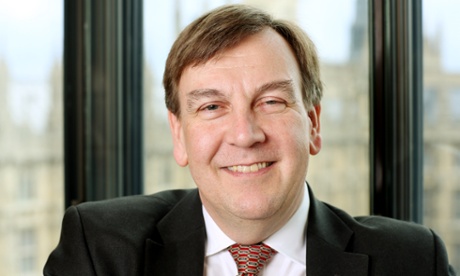
John Whittingdale as culture secretary - Snap analysis
Veteran Tory MP John Whittingdale certainly knows the brief of cuture, media and sport, having served as chairman of the select committee throughout the last parliament. He has spent almost his whole life working in politics, in Tory HQ, as a special adviser and Margaret Thatcher’s political secretary but this is his first ministerial role – straight into cabinet.
During his time on the CMS committee, he gained a reputation for leading tough questioning of News International and the Murdochs over phone hacking. Some of his views on the industry are not without controversy, however. He is a longtime critic of the BBC licence fee and will now lead negotiations for the broadcaster’s charter renewal next year.
Last year, it was reported that he told BBC bosses including James Harding, the director of news and current affairs, and Peter Horrocks, the head of the World Service:
I don’t think the licence fee will survive. There are lots of people already debating the terms of funding models. That’s exactly what my committee is doing.
At a subsequent speech, Whittingdale even compared the licence fee to the poll tax, saying it was actually worse than that because “there is no means-tested assistance whatsoever, it doesn’t matter how poor you are, you still have to pay £145.50 and go to prison if you don’t pay it”. However, he went on to say he thought the licence fee would survive for the next 10 years, but needed modifying to take into account on-demand viewing via the BBC’s iPlayer.
He is also on record as saying the BBC Trust is far too close to the BBC and needs to be shaken up. On Leveson, he accused the inquiry head of straying beyond his remit and was a vocal opponent of any statutory regulation of the press.
Regarded as a Thatcherite and eurosceptic, he has been vice-chair of the 1922 Committee of backbenchers and voted against same-sex marriage.
Updated
David Cameron has confirmed that Sajid Javid is the new business secretary.
Sajid Javid has been appointed as the Secretary of State for Business.
— David Cameron (@David_Cameron) May 11, 2015
I am now going to address the 1922 Committee and will continue making appointments at lunchtime.
— David Cameron (@David_Cameron) May 11, 2015

Updated
Priti Patel as employment minister - Snap analysis
Priti Patel, the junior Treasury minister, was a familiar face on TV during the general election campaign, putting the Conservative party line forcefully, and less robotically than many other frontbenchers put up by CCHQ. We’re going to be hearing more from her. She is replacing Esther McVey, the former employment minister who lost her seat, and she will be on the screens every month when new employment figures come out.
For a party that has been historically short of women and minority ethnic figures at the top, Patel’s promotion ticks two boxes at the same time, but she is not someone whose rise has been accompanied by offstage whispers about tokenism. She has had a long background in politics, working for the party as a press officer in the William Hague era, when joining the Tories was not an option for careerists, and she has robust, rightwing views, which she never made much effort to conceal. Before Patel joined the Conservatives, she worked for the Referendum party, Sir James Goldsmith’s Eurosceptic party, before the 1997 election. She is also one of the relatively few MPs who has openly advocated the return of hanging.
Updated
John Whittingdale becomes culture secretary

John Whittingdale, the former chair of the Commons culture committee, is the new culture secretary.
I have appointed John Whittingdale as the Secretary of State for Culture, Media and Sport.
— David Cameron (@David_Cameron) May 11, 2015
Updated
Amber Rudd as energy secretary - Snap analysis
Amber Rudd is the new energy and climate change secretary, a role previously held by the now former Lib Dem MP Ed Davey. She was a parliamentary aide to George Osborne (a sure route to promotion) under the coalition, before becoming a climate change minister. Her political outlook is considered to be on the moderate wing of the Conservative party and she is known as a campaigner on women’s issues, including work as vice-chair of the parliamentary group against FGM and chair of the group for sex equality.
On energy and climate change issues, her appointment is certainly not a victory for the Tory right who will be expecting Cameron to implement his pledge to stop the march of onshore wind farms. Unlike Owen Paterson, the former Tory environment secretary, she is a firm believer in tackling climate change, telling Business Green last year:
The first world leader to speak about climate change at the UN was Margaret Thatcher and she of course was a scientist and the science is completely compelling. If I’m challenged on it by any of my own party – although I haven’t been – I would say ‘I’m a Thatcherite – aren’t you?’
Before entering politics, she worked in the City, financial journalism and her own executive search agency. Her brother is the famous PR executive Roland Rudd, who was close to New Labour, and she was formerly married to newspaper columnist AA Gill, with whom she has two children.
Updated
Robert Halfon to be new deputy chairman of the Conservative party

Robert Halfon, the Harlow MP and George Osborne’s PPS, is the new deputy chairman of the Conservative party.
I have appointed Robert Halfon as Deputy Chairman of the Conservative Party.
— David Cameron (@David_Cameron) May 11, 2015
Updated
Here is Amber Rudd arriving at Number 10.
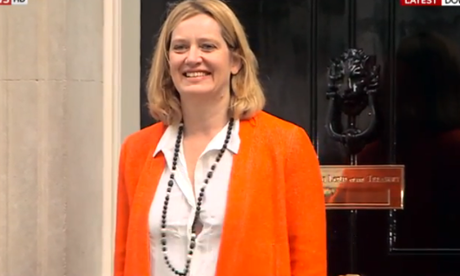
Priti Patel to become employment minister, attending cabinet
Priti Patel, the Treasury minister, is to become employment minister, attending cabinet.
Priti Patel is to be Minister of State for Employment at the Department for Work and Pensions. She will be attending Cabinet.
— David Cameron (@David_Cameron) May 11, 2015
Sajid Javid as new business secretary - Snap analysis

Few politicians have risen as quickly as Sajid Javid, and now at least he is in a job where he will have the chance to show whether or not he has the authority and heft to make him a leading candidate to take over from David Cameron when he stands down.
A former banker who, according to one report, took a 98% pay cut when he became an MP in 2010, Javid was the first member of that intake to become a cabinet minister when he was appointed culture secretary last April. But it was hardly an ideal appointment for someone whose cultural interests were thought to extend little beyond Star Trek, and for the last year, apart from making a well-argued plea for more ethnic diversity in the arts, he seems to have spent most of his time trying, with limited success, to sound enthusiastic about the many arts events he has been attending.
But at business he will be in his element. He studied economics and politics at university (Exeter), he worked in banking, and his father ran a shop. The previous business secretary, the Lib Dem Vince Cable, had a prickly relationship with George Osborne, but Javid was once Osborne PPS and is regarded as his protege, and BIS officials will be glad to have a boss with clout at the Treasury.
Javid’s shop-owning father was a Pakistani immigrant who arrived in the UK virtually penniless and had to struggle against prejudice to get on. There are very few people on either frontbench in the Commons who have risen so far from such a humble background and, although Javid is seen as a rather wooden media performer, it is thought that his life story could make him a compelling candidate to lead a party still handicapped by being seen as a beacon of privilege.
Updated
Boris Johnson did not stay long in Number 10.
On the way out, he told reporters that his job was mayor of London.
Here’s some footage of him arriving:
Updated

Boris Johnson to attend political cabinet, Amber Rudd to be energy secretary
The announcements are coming thick and fast now.
I can also confirm that Nicky Morgan will continue as Secretary of State for Education - continuing our programme of reform.
— David Cameron (@David_Cameron) May 11, 2015
Boris Johnson will be attending my Political Cabinet. As promised, he will devote his attention to his final year as Mayor of London.
— David Cameron (@David_Cameron) May 11, 2015
Amber Rudd is to be Secretary of State for Energy and Climate Change.
— David Cameron (@David_Cameron) May 11, 2015
Boris Johnson arrives at Number 10
Boris Johnson, the mayor of London and new MP for Uxbridge and South Ruislip, has just arrived at Number 10.
There has been speculation that he will be offered some sort of minister without portfolio cabinet post. During the election campaign he repeatedly said he would not be able to take a cabinet job that involved running a department while still mayor of London – implying that he was expecting a cabinet job without heavy departmental responsibilities.
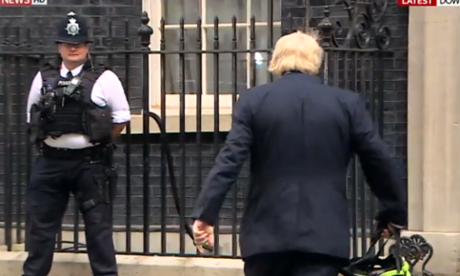
Updated
Tina Stowell will stay on as leader of the Lords
Tina Stowell will stay on as leader of the Lords, but with full cabinet status, David Cameron has confirmed.
I can confirm that Tina Stowell will be a full member of the Cabinet as Leader of the Lords and Lord Privy Seal. #Reshuffle.
— David Cameron (@David_Cameron) May 11, 2015
Sajid Javid to become new business secretary, sources confirm
Here is some more reshuffle speculation, from Sky’s Jon Craig.
Cabinet jobs: Rumour I'm hearing is David Gauke to Tr Ch Sec, Matt Hancock Energy, Sajid Javid Business & Priti Patel Comm & Local Govt.
— joncraigSKY (@joncraig) May 10, 2015
Number 10 sources are suggesting that the FT might have got it wrong about Matthew Hancock going to the Department for Energy. (See 9.36am.)
But they are effectively confirming that Sajid Javid will become the new business secretary.
Updated
One-third of MPs in new House of Commons privately educated, says Sutton Trust
The education thinktank the Sutton Trust has looked at the educational backgrounds of the new 650 MPs that make up the new House of Commons to see if they are representative of the country they represent.
The answer, of course, is still a resounding no. But the ratio of privately educated MPs has gone marginally down, from 35% in 2010 to 32% today.
The research brief, Parliamentary Privilege – the MPs, shows that around half (48%) of Conservative MPs were privately educated, compared with 14% of Liberal Democrats, 5% of SNP MPs for whom they have data and 17% of Labour MPs. Among other MPs, 24% went to a fee-paying school. However, the proportion of privately educated Conservative MPs has fallen from 54% in the last parliament and 73% in 1979.
The Sutton Trust says:
With only 7% of the general population attending independent schools, MPs are over four times more likely to have gone to a fee-paying school than their constituents. Out of those MPs who were privately educated, almost one in ten went to Eton.
Only a quarter of female MPs were privately educated compared with 35% of their male colleagues.
Updated
Sajid Javid 'to become business secretary', Matthew Hancock 'to become energy secretary'
The FT says Sajid Javid is going to become business secretary, and Matthew Hancock is going to become energy secretary
Reshuffle day & Osborne lieutenants rewarded: Sajid Javid going to business & Matt Hancock to get DECC
— Beth Rigby (@BethRigby) May 11, 2015
Alastair Campbell, Tony Blair’s former communications chief, has joined those in the Labour party saying the leadership election should not be rushed.
I see the arguments for quick leadership election but we will regret it @HarrietHarman is safe pair of hands. We need ideas debate
— Alastair Campbell (@campbellclaret) May 11, 2015
The new MPs in particular should say at PLP meeting it is not yet about Who leads but why we lost and what we are. Can take time
— Alastair Campbell (@campbellclaret) May 11, 2015
Last time Tories killed us with 'mess we inherited' as we elected leader. This time can be used differently to help us not them.
— Alastair Campbell (@campbellclaret) May 11, 2015
UPDATE: I’ve been rebutted. Campbell tells me he did not “join in”, because he was saying this on Friday too.
@AndrewSparrow I didn't join!! Said it Friday morning!! Hope all well
— Alastair Campbell (@campbellclaret) May 11, 2015
Updated
Many of the 50 new SNP MPs are travelling to London today to sort out the practicalities of their new lives as parliamentarians, and they’ve been on Twitter to document the journey.
From Aberdeen North MP Kirsty Blackman:
#TeamAberdeen new MPs at Aberdeen Airport. pic.twitter.com/UorhidTDT7
— Kirsty Blackman (@AbdnNorthKirsty) May 11, 2015
From Paisley and Renfrewshire North MP Gavin Newlands:
Was delighted to welcome this great group of @theSNP MP's to the best constituency of them all! Paisley & Ren N #SNP pic.twitter.com/vBhaiIGyCu
— Gavin Newlands MP (@GavNewlandsSNP) May 11, 2015
And the Mirror’s Jason Beattie reports that newsagents in Westminster are ordering in more Scottish papers (though someone perhaps needs to tell the newsagent that the Record backed Labour in the election).
Westminster newsagent happy: has had to order dozens more copies of the @dailyrecord
— Jason Beattie (@JBeattieMirror) May 11, 2015
David Cameron’s reshuffle continues this morning.
I'll be completing the #reshuffle of the Cabinet today. You can monitor announcements here.
— David Cameron (@David_Cameron) May 11, 2015
There are five Lib Dem posts to fill. According to Faisal Islam on Sky just now, we should get these names before David Cameron addresses the Conservative backbench 1922 Committee at 11am.
Updated
Simon Danczuk, the Labour MP for Rochdale, anti child abuse campaigner and a vocal critic of Ed Miliband’s leadership, is running for the Labour deputy leadership, the Sun reports.
EXCL Labour's Simon Danczuk throws hat into ring for Deputy Leader- as big guns plot to block Tom Watson http://t.co/kfgey9xxVX
— steve hawkes (@steve_hawkes) May 11, 2015
Updated
David Miliband to address political future later today, reports say

More on this tantalising report in the Daily Telegraph, which says that former foreign secretary David Miliband is to address his political future after his brother Ed’s devastating election defeat on Thursday night.
The paper seemed to have doorstepped him returning home from a weekend away with his wife and two children. Asked outside his Upper West Side apartment for his views about the election result, the Telegraph reports he smiled politely and said: “I’ll have something to say tomorrow.”
David, who took a job heading a humanitarian relief and refugee charity in New York in order to give Ed the space to lead Labour to the 2015 election, tweeted his commiserations to the party and to his brother on Friday.
Heart goes out to great colleagues who lost seats, Labour teams who worked so hard and of course to Ed. (1/2)
— David Miliband (@DMiliband) May 8, 2015
However, his self-imposed exile in the US has not diminished his stature in the party, and he will inevitably be linked with a leadership bid – unless he categorically rules it out. Obviously, not being an MP isn’t an ideal platform, but byelections will come up so the opportunity would be there should he wish to mount a campaign.
A quick look at his Twitter timeline shows there is already a level of support that could be tapped – and as a Blairite he would go some way to reversing the “terrible mistake” of ditching New Labour, as claimed by Lord Mandelson yesterday. One to watch today.
Updated
Alistair Darling says Labour in worse position than in 1992
Alistair Darling, the Labour former chancellor and leader of the Better Together campaign in the Scottish independence referendum, was also interviewed on the Today programme this morning. Here are the key points.
-
Darling said that Labour was in a worse position now than it was in 1992.
On polling day I walked down Gorgie Road and part of the city centre and I was struck by the fact that people just looked away. And when that happens, you are done for. The last time that happened was in 1992. And I’m afraid we are back there, in political terms, only worse, because the future of our country – Scotland in my case, the United Kingdom as well – is at stake.
The Labour party has got to get itself back on its feet and have a powerful argument about what we need to change and what we’re going to do. Let’s see who can do that. But we also need to make sure that we get the arrangements within the UK right. And we cannot wait five years to do that.
-
He said that if the United Kingdom was going to stay together, it had to move towards a federal system. The Smith Commission plans agreed by the main parties before the election were now unsatisfactory because they did not go far enough, he said.
I think the Smith Commission proposals have been completely overtaken by events. It won’t do the business for Scotland, it’s lopsided, therefore it is unfair on England – and if you compound that, as David Cameron has suggested, by saying that essentially English MPs will decide tax and spending, you are well on the way to breaking up the union.
I think we’ve always turned our backs on a federal solution simply because of the fact 80% of the population lives in England but I think you can move towards that and say for Scotland, for Wales, Northern Ireland here are substantially more powers and responsibilities – critically they have got to be more responsible for raising the money to pay for things, but at the same time you remove this anomaly where, when I was an MP, I could vote for English education, but I couldn’t vote for Scottish education.
That’s got to be dealt with, there’s no question about that. But I think if we’re intelligent about this we’ve got a chance for building a constitution for the 21st century.
-
He said that Labour lost because it was not “convincing”, it did not have an economic policy, and it did not defend its record.
Well we weren’t convincing, we didn’t have an economic policy, we didn’t repudiate the criticisms the Tories were making from when we were in government. Indeed, there were occasions when we said we didn’t do any good in 13 years, which is absolute rubbish. You have got to have confidence about what you did in the past, just as the courage to admit where you got things wrong, but we just didn’t look compelling and convincing.
I lost count of the times when people looked at us and said I’m not sure I’m not convinced. These were people who always voted Labour in the past and many of whom took their votes elsewhere.
-
He said the Labour leadership contest should focus on ideas, rather than just being a “beauty contest”.
This isn’t about a beauty contest, it is about ideas, it is about what is relevant, you know, for the second decade of the 21st century.
Updated
Jose Manuel Barroso's Today interview
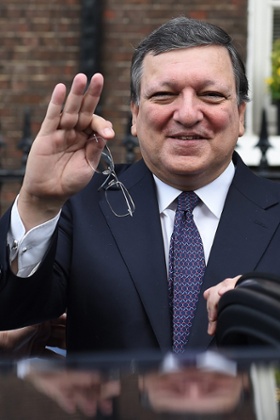
I’m catching up with the interview Jose Manuel Barroso, the former EU commission president, gave to BBC Radio 4’s Today programme about what the future may hold for the UK’s relationship with Europe with a Tory majority in power.
Barroso said David Cameron is in a stronger position to make the case for staying in Europe following the election, but that the tone of the UK’s approach in negotiations was important:
I think today there are better conditions for it to succeed and I mean for a Yes to be obtained because in fact Prime Minister Cameron now has renewed, fresh legitimacy. I think now he has internally greater authority to make the case for Europe. As you know, the anti-European Ukip party was reduced to a very small expression, almost irrelevant, its leader has resigned.
The other leaders of the European Union, all of them I know well, are willing to accommodate some concerns and points made by Britain, providing they are compatible with the overall project of European integration.
I really hope that Prime Minister Cameron will be able to not only keep the United Kingdom united – as happened with the referendum with Scotland – but also keep it European, united.
Barroso said he could not imagine an EU without Britain although he noted deals to restrict benefits to EU migrants would be “extremely difficult” and dealt with on a case-by-case basis. He added that he shared the view while president that some abuses of social security systems should be ended.
On a four-year wait before an EU migrant in Britain could receive welfare, Barroso said: “I personally have many doubts about that one and also the compatibility with the legal system we have in the European Union. That has to be discussed from a legal point of view and also negotiated politically but I think that is going to be very difficult to get that point.”
Better conditions for EU referendum negotiations bc @David_Cameron has greater authority after election win Jose Manuel Barroso says
— Nicholas Watt (@nicholaswatt) May 11, 2015
Updated
On the Today programme James Naughtie says it has just been confirmed that Angus Robertson will be leader of the SNP MPs at Westminster. He won’t be challenged for the post by Alex Salmond or anyone else.
Q: Did you think the Ed stone was a good idea?
Harman says there was nothing wrong with trying to make the point that Labour would keep its promises.
Did it cost Labour the election? No, she says.
Q: Do you know where it is?
No, says Harman.
And that’s it.
Q: People can decide if you are avoiding the question.
Harman says she is answering the question. There is no point pretending they are wise after the event. It would have been better to have been wise before the event.
Labour will now have a comradely discussion about the future.
Q: In the Guardian you say the leadership election will be taken out of the hands of the unions. That implies the last leadership election was in their hands.
Harman says the new system has abolished the electoral college. It is one member one vote. And all ballot papers will be sent out by the Labour party, not by unions.
Only full fiscal autonomy for Scotland can save the union, says Lord Forsyth
Lord Forsyth, a former secretary of state for Scotland, says the near clean sweep of seats gained by the SNP represented a “revolution” in Scotland and that only full fiscal autonomy for the Scots could save the union.
Lord Forsyth backs constitutional convention to bring stability in Scotland - not simply feeding "nationalist tiger” pic.twitter.com/9CXiiFgxMl
— BBC Radio 4 Today (@BBCr4today) May 11, 2015
Forsyth, the Scottish secretary in John Major’s government, said he backed Labour’s idea of a constitutional convention.
Interviewed on BBC Radio 4’s Today programme, Forsyth said Thursday’s election result could not be ignored. He said:
The Conservative in me was full of joy for what David Cameron achieved, but the unionist is greatly dismayed. We used to say that if the SNP won a majority of seats in Scotland, they could have independence. They got 50% of the vote and 95% of the seats. The reality is that you have to respond to that.
Forsyth said the devolution had fed the “nationalist tiger” but he suggested that full fiscal autonomy could save the union.
The government needs to set out a white paper which sets out how fiscal autonomy, devo max, call it what you will, would work in practice so that people are aware of the advantages and disadvantages. The big advantage being that Nichola Sturgeon and the SNP would not be able to produce fantasy manifestos that promised the earth without having the responsibility or raising the money to pay for it.
It may well be that if people are aware of how damaging fiscal autonomy could be to public services and the general body politic in Scotland, that people will be less enthusiastic but I think we owe it to the people who voted in such overwhelming numbers to bring forward these proposals and if they carry support to implement them.
Forsyth said the debate about English votes for English laws could not be postponed and that a solution was needed that would bring stability not just to Scotland but to the whole of the UK, and treat the constituent parts of the UK fairly.
We just can’t go on with this piecemeal additional powers and tinkering with the constitution which as we have seen simply feeds the nationalist tiger and has created this disastrous situation where the unionist parties have a single MP in Scotland representing each of them.
Updated
Harman says Mandelson was wrong to say Miliband ignored middle-income voters
Q: Dan Jarvis in the Times says more people have walked on the moon than were elected for Labour in the south, outside London.
Harman tells Naughtie not to sigh.
She says Labour has to work out what went wrong. But it also has to hold the government to account.
Q: Peter Mandelson said Labour implied it was just in favour of the poor, and against the rich. Do you agree?
No, says Harman. She says that Ed Miliband actually made a big issue of standing up for the squeezed middle.
She says, again, that she is not going to pretend she has all the answers.
-
Harman says Mandelson wrong to say Miliband ignored middle-income voters.
Updated
Harriet Harman's Today interview
Good morning. I’m taking over now from Mark.
James Naughtie is interviewing Harriet Harman, the acting Labour leader, on the Today programme.
Q: Do you agree that Labour did not speak to aspirational people?
Harman says Labour obviously was not winning over enough people. But the opinion polls were wrong. That suggests it will be hard to work out quickly what went wrong.
Q: Other frontbenchers are talking about this. Chuka Umunna says Labour sometimes gave the impression it was not with wealth creators.
Harman says she does not want to give an instant analysis.
Q: Why not? Alistair Darling says this is even worse than 1992.
I disagree with that, says Harman.
Q: It is reasonable to ask what you think?
Harman says, if she said she had the right answers now, people would want to know why she did not say this last week.
Labour needs to find out whether it was behind all along, or whether people changed their mind at the last moment.
She says she has commissioned an analysis of what happened.
And those Labour people who are arguing about this need to speak in a way that does not scapegoat people.
-
Harman says it is too early to be able to say why Labour lost the election.
Updated
Tory MP John Baron says EU referendum pledge helped head off Ukip threat
The Conservative MP for Basildon and Billericay, John Baron, who rebelled against the party leadership over Europe in the last parliament, says the Tories’ promise of referendum by 2017 played a decisive factor in the party’s election triumph.
Speaking on BBC Radio 4’s Today progamme, Baron said the pledge of an an in/out referendum helped the party fend off the political threat from Ukip.
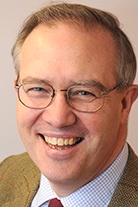
I rebelled on the fact that we wanted an EU referendum and my goodness me I’m pleased we got it because it helped a lot of colleagues up against the Ukip threat, it helped them stymie that threat. It even became one of the prime minister’s red lines during the election.
Asked what he would accept as a minimum from a renegotiated treaty with Europe, he said:
For me, and I’m not alone in this, it is about sovereignty of parliament. It is about the fact that laws governing the people of this country should be set by the people of this country. And it’s also about reorienting the relationship between one based on trade and not politics.
Updated
Morning briefing
Good morning and welcome to today’s edition of our election aftermath live blog.
I’m Mark Smith and I’ll be with you until I hand over to Andrew Sparrow later this morning. You can tweet us @marksmith174 or @AndrewSparrow, and we’ll be reading below the line too so please comment away.
It’s straight down to business for an emboldened David Cameron on this first weekday since he swept back into Downing Street on Friday morning and began anointing his new cabinet. For Whitehall staff however, it’s very much a case of ‘Meet the new boss / same as the old boss’, as there has been little sign of shuffling, let alone reshuffling so far.
But with the PM announcing the more junior posts today, there should be more opportunity for pundits like us to analyse what Cameron’s patronage choices say about the direction of his government.
The big picture
There are two key themes of the day (and let’s face it, the next two years): Scotland and the EU. The Tory Eurosceptic MP John Baron was just on the radio so I’ll bring you a summary of what he said, and Lord Forsyth, a former Scotland secretary, was discussing the new Tory majority government’s in-tray on the Smith commission.
Jose Manuel Barroso, the former president of the EU commission, is on the Today programme at 7.45am, while Harriet Harman, Labour’s caretaker leader, will be interviewed at 8.10am. We’ll bring you summaries of what they say.
Meanwhile, here are some of the key developments you may have missed while you were celebrating/commiserating over the weekend:
-
Iain Duncan Smith is to press ahead with his controversial welfare reforms after David Cameron confirmed that the former Conservative leader would remain in the cabinet as the work and pensions secretary. Downing Street said Duncan Smith would continue with his task of “making work pay and reforming welfare” as the government implements the universal credit reforms and imposes £12bn in cuts on the welfare budget.
-
Liz Kendall, the shadow health minister, has become the first person to formally announce that she is running for the Labour leadership. In a well-received interview with Andrew Neil, she said that Labour lost partly because it was too negative, sounding like a “moaning man in the pub”.
-
Michael Gove, the new justice secretary, is to press ahead with plans to scrap the Human Rights Act which could see Britain pull out of the European convention on human rights (ECHR) if the reforms are rejected by Strasbourg. Conservative party sources said that Gove, who was promoted to the post even though he has previously voiced his support for capital punishment, will implement human rights reforms that had been blocked in the coalition by the Liberal Democrats.
- According to the Daily Telegraph, David Miliband will speak publicly for the first time on Monday about Labour’s dismal defeat five years after his bitter leadership contest with his brother, Ed. Asked for his views about the election result outside his New York apartment on Sunday, he smiled politely and said: “I’ll have something to say tomorrow.”
Updated