On 7 May, around 30 million people will vote in the general election, after a long and hard campaign. But on 8 May – and for some time after that – the result of all those individual decisions is likely to remain shrouded in doubt.
With the Conservatives and Labour neck and neck in the polls, and the SNP, Ukip and Greens disturbing the old order, Election 2015 promises not only to be the tightest in living memory but also the most difficult to asses in terms of the government that will emerge.
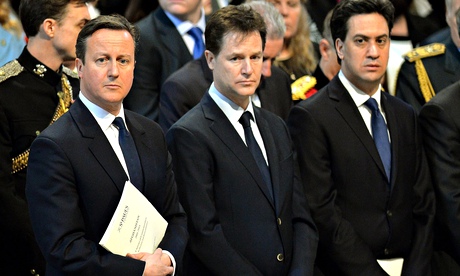
Ahead of polling day, neither David Cameron and Ed Miliband will ever tire of saying that they can win a majority. But the reality is that neither is likely to reach the total of 326 seats needed to govern alone.
At the moment, both deny they might need to make deals or sign pacts with other parties in order to govern. But they know that that is more than likely to be the reality at the start of the next parliament.
And it won’t be easy. If the Lib Dems are punished and lose many of their seats, their numbers will not be enough, alone, to take the Tories or Labour to the magic 326. Cameron and Miliband may then look to other, smaller, parties, who may be uneasy about coalitions or tie-ups that bind them too closely – unless they can extract a very good price. Or one of the two main parties could risk trying minority government, ruling without a majority.
Click on the links to see the options that may arise for the Tories, and for Labour, if they win the most seats but are left agonisingly short of a majority.