David Cameron is planning to explain how he will seek to govern in the national interest after a 20,000-strong exit poll predicted that the Conservatives would come first in the UK general election but would fall short of an overall parliamentary majority.
Senior Tories were suggesting the prime minister may have to reach out to Northern Ireland’s Democratic Unionist party if the Liberal Democrats lose all but a handful of seats – as the poll also predicted.
The exit poll, broadcast by the BBC, ITV News and Sky News, suggested the Tories would win 316 seats, Labour 239, the SNP 58, while the Lib Dems would see their number of MPs shrink from 57 to 10. The DUP had eight seats in the last parliament.
All parties treated the poll with caution.
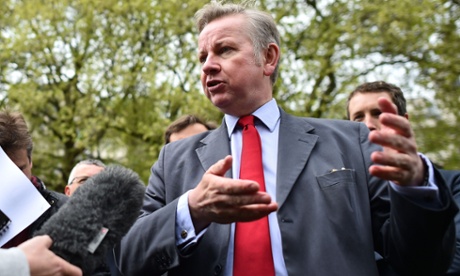
Michael Gove, the Conservative chief whip, told the BBC election programme that Cameron would explain on Friday how he would seek to lead a “strong, stable and secure government”.
The Tory chief whip said: “If this exit poll is correct, that gives the prime minister considerable authority. He will clearly have won and we should all wait for the prime minister to say tomorrow on what basis he proceeds and on what basis he wants to ensure that we have the strong, stable and secure government that we argued for, and that it seems the country has backed.”
Gove added: “If it [the exit poll] is right then it means that the Conservatives have clearly won this election and Labour have clearly lost it. We haven’t had an incumbent government increase its majority like this since 1983, and it would be an unprecedented vote of confidence in David Cameron’s leadership and in particular in the message we have reinforced throughout this campaign, which is that if people wanted to secure our economic recovery they’ve got to make sure David is in Downing Street.”
The DUP has said in the past that it would not join a coalition but would be prepared to help a Tory or Labour government if it scrapped the bedroom tax, guaranteed that 2% of GDP is spent on defence and push for changes to the EU treaty to give Britain greater control over its borders.
But the challenge of dealing with the DUP was highlighted when Sammy Wilson, a former Northern Ireland finance minister who is defending his East Antrim seat, said his party would focus solely on the economic interests of the province in any negotiations to support a government.
In a Guardian article in March, the DUP leader at Westminster, Nigel Dodds, had outlined a different approach and said that his party would focus on three UK-wide issues: the bedroom tax, defence spending and EU treaty changes to safeguard UK borders.
But Wilson told the BBC that the DUP would be prepared to support Labour or the Tories in return for greater help for Northern Ireland. He said: “David Cameron will have a number of options. He could run with a minority government and rely on our votes on an occasional basis. There would be a price to pay for that. He could seek to have a formal arrangement with us and, again, there would be a price to pay for that.
“The emphasis will be on getting the government at Westminster to recognise the economic difficulties we have in Northern Ireland in rebalancing the economy to make it less dependent on the public sector.”