Evening summary
- A range of welfare benefits are potentially facing the axe or being severely restricted by the Conservatives after the general election, according to emails seen by the BBC. The range of cuts suggested by officials include restricting child benefit so it is payable only to the first two children, and scrapping industrial injuries benefit by passing the costs to firms
- Labour leader Ed Miliband launched his party’s election campaign by vowing an incoming Labout government would impose a profits cap on private health companies in the NHS. Any company that made more than 5% from the contract would be forced to reimburse the NHS for any returns above the level of the cap.
- Chris Grayling, the justice secretary, has been accused by Simon Hughes, his Liberal Democrat ministerial colleague, of “absurd” behaviour over plans to block staff in the Ministry of Justice from paying trade union subscriptions through their pay packets.
- A Populus poll after Thursday night’s leaders’ interviews has given Labour a two-point lead over the Conservatives as electioneering begins in earnest.
That’s all from me tonight. Thanks for all your comments. Saturday’s election live blog will be a readers’ edition, so feel free to come along and discuss the morning’s political developments without a ringmaster getting in the way. Doors open at 8am.
Updated
The imperious John Crace has just launched his political sketch, heralding today’s arrival of “Confident Ed”. I repeat: John Crace’s political sketch has just launched. So read John’s political sketch here:
Ed put a hand in the air and they duly sat down. This was the new, more confident Ed. “Friends,” he said, “the Tories have said this is as good as it gets. But we know that Britain can do better than this. The Tories have said this is as good as it gets. But we know that Britain can do better than this. The Tories have said this is as good as it gets. But we know that Britain can do better than this.” The shadow cabinet was not entirely sure if he was repeating this for emphasis or his speech-writer had copied and pasted the same sentences in three times. They clapped enthusiastically anyway. Better safe than sorry.
Updated
The Guardian’s political editor Patrick Wintour has filed his take on the DWP leak, which details how options on the table include restricting child benefit to the first two children, and scrapping industrial injuries benefit.
In the story, which will be launched very shortly, Patrick writes:
A range of welfare benefits are potentially facing the axe or being severely restricted by the Conservatives after the general election, according to emails seen by the BBC.
The range of cuts suggested by officials include restricting child benefit so it is payable only to the first two children, and scrapping industrial injuries benefit by passing the costs to firms.
Emails seen by the BBC suggest if companies does not have an insurance policy they will become members of a default scheme and pay a levy to fund it. Axing the Industrial injuries compensation scheme could save £1bn.
Restricting child benefit so that none is paid for the third child and above could eventually save £1bn in the long run, but only modest amounts initially.
Other proposals aired in by Department of Work and Pensions civil servants include a regional benefits cap, taxing disability benefits and reducing eligibility for the carers’ allowance.
The Conservatives have said they want to cut £12bn from the welfare budget by 2017-18, but have indicated they will probably not set out any details as to how they intend to do so until after election - provoking a political row.
David Cameron, when interviewed by Jeremy Paxman on Channel 4 and Sky on Thursday, declined to set out any detailed thinking, referring only to a proposal to freeze working age benefits.
The Conservatives responded to the BBC leak by insisting the proposals were not party policy.
But a Conservative spokeswoman said it was not clear the proposals had reached ministerial offices, and suggested they might be part of a wide set of contingency thinking ordered by the cabinet secretary Jeremy Heywood. Collectively the cuts would save around £5bn showing how ambitious it may become for Ministers to reach £12bn.
David Cameron has already discussed cutting - the maximum amount in benefits a household can receive - from the current £26,000 to £23,000. In addition he has spoken of freezing working age benefits for a year.
Labour has responded to the BBC’s story on the Tory benefit cut options, calling them “extreme” and urging the party to “come clean” on its plans.
Rachel Reeves MP, the shadow work and pensions secretary, said:
These plans to hit the disabled and carers were drawn up for Conservative ministers to deliver their extreme cuts plan. The Tories now need to come clean about what cuts they plan to make and who will pay the price. If they are ruling out these extreme cuts for the most disabled and carers, then it is clear they will be hitting the tax credits, and support for children, for millions of working families.

Labour has a better plan to control the costs of social security, by tackling the root causes of spending in low pay and rising housing costs. We will raise the National Minimum Wage to £8 an hour, promote a living wage, and get at least 200,000 homes built a year.
Meanwhile, Channel 4 News is about to broadcast the results of an investigation into MPs expenses that reveals 46 members have claimed cash for London rent or hotels despite owning a property in the capital.
Analysis by the freelancers Guy Basnett and Paul McNamara has showed the claims have cost the taxpayer more than £1.3m since 2012.
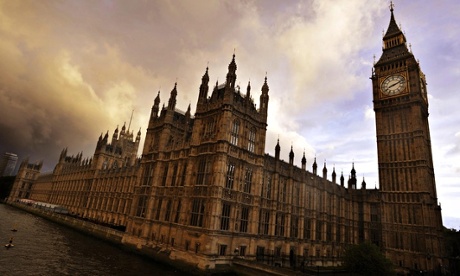
The report identifies the shadow culture minister Chris Bryant and former health secretary Andrew Lansley as particularly large claimants. The report says:
Labour’s shadow culture minister Chris Bryant claimed expenses of £35,350 in 2012/13 and 2013/14 to rent a London flat - despite already owning a penthouse in the capital. He bought the property in 2005, claiming around £1,000 a month in mortgage claims. But when the rules changed he let it out. Estate agent brochures show the two-bed apartment with a private lift and porter has since been marketed for rent for around £3,000 a month.
Conservative MP and former health secretary Andrew Lansley jointly owns a flat in upmarket Pimlico with his wife, bought with help from mortgage claims. But since 2013 he’s claimed £7,440 to stay in London hotels. The MP for South Cambridgeshire does not let his flat out, but has instead made room for his daughter who has used the property to launch a business.

Basnett and McNamara say their investigation raises questions about whether the new Ipsa expenses system allows taxpayers’ money to be used appropriately, and whether MPs can still gain.
The list of 46 MPs include 25 Conservatives, 14 Labour, and four from the Liberal Democrats.
Updated
The BBC says that meetings about these options have taken place in recent weeks between the chancellor and Duncan Smith, while the head of the civil service, Sir Jeremy Heywood, has been coordinating some of the efforts to find savings.
The government has cut around £20bn from projected welfare spending over the course of the past five years, through a range of measures from freezing payments rates to cutting housing benefit.
But Robert Joyce, a senior economist with the IFS, says finding another £12bn over the next two years will not be easy.
“The easier benefit cuts are the ones that will have been done first, so what’s left will be harder.
“In addition, the Conservatives want to do this by 2017-18, in the next two years. It means they have to be looking at less palatable options that would involve overnight takeaways from certain families.”
Rosanna Trudgian, policy officer at the charity Mencap, said the proposed changes were unfair.
“Disabled people don’t choose to have their disability. They don’t choose to pay for these additional costs related to that disability,” she told BBC News.
“For example, if you have to go to hospital on a regular basis and you are paying for those huge car parking fees. Therefore, it’s just unfair if this is treated as taxable income.”
George Eaton, the New Statesman’s political editor, calls the options being considered “grim”.
Leaked Conservative document floats idea of taxing disability benefits - grim: http://t.co/8PYX03ma8l
— George Eaton (@georgeeaton) March 27, 2015
Conservative benefit cut options leaked
The BBC has just published a story based on leaked documents from the Department of Work and Pensions that reveal the Conservative party is considering options for scrapping several benefits.
Though the plans are only at the ideas stage, the breadth of the options still on the table means it’s pretty explosive stuff.
The documents show the Tories are looking at introducing a regional benefits cap, taxing disability benefits and limiting eligibility for the carers’ allowance, the BBC reports.
BBC exclusive: Tories considering options for scrapping some benefits if still in power after #GE2015 http://t.co/Ik5s1era81
— BBC News (UK) (@BBCNews) March 27, 2015
The proposals are aimed at helping to save £12bn from the welfare budget by 2017/18, though the Conservatives insisted they are not party policy.
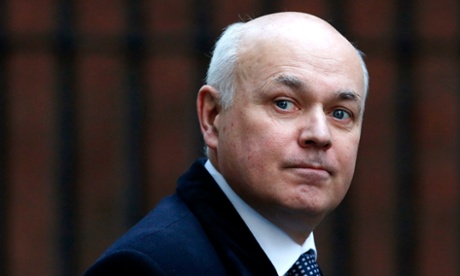
“This is ill informed and inaccurate speculation,” a spokeswoman for Work and Pensions Secretary Iain Duncan Smith told the BBC. “Officials spend a lot of time generating proposals - many not commissioned by politicians.
“It’s wrong and misleading to suggest that any of this is part of our plan.”
The BBC report goes on to list the benefits under consideration for change:
- Industrial Injuries Compensation Scheme - could be replaced by companies providing industrial injury insurance policy for employees. Any that did not would become members of a default national industrial injuries scheme, similar to the programme for asbestos sufferers. DWP predicted saving - £1bn
- Carer’s Allowance - this could be restricted to those eligible for Universal Credit. Leaked documents suggest about 40% of claimants would lose out.DWP predicted saving - £1bn
- The contributory element of Employment and Support Allowance and Job Seekers Allowance - currently claimants who have paid enough National Insurance contributions can get the benefits with little means testing; DWP analysis suggests 30% of claimants, over 300,000 families, would lose about £80 per week. DWP predicted saving - £1.3bn in 2018/19
- Disability benefits - Disability Living Allowance, Personal Independence Payments and Attendance Allowance (for over 65s who have personal care needs) would no longer be paid tax free. Possible saving - £1.5bn per annum(based on IFS Green Budget calculation )
- Council Tax Support - to be incorporated into Universal Credit. Possible saving - not known
- Child Benefit - Limiting the benefit to the first two children. Possible saving IFS estimates £1bn saving per annum in the long run but little initially
- Regional Benefit Caps - The £23,000 limit would vary in different parts of the country, with for instance Londoners receiving the top amount due to the higher cost of living. Possible saving - not known and dependent on where levels were set
I’ll bring you reaction to this story as soon as it comes in. But revelations of plans like this – even if not official policy – will not play well with centrist voters already wary of the Tories’ deep spending cuts.
Updated
Chris Grayling, the justice secretary, is embroiled in a row over trade union dues after the leak of a letter that showed he attempted to block staff in his department from paying subscriptions through their pay packets, my colleague Nicholas Watt reports.

In an internal letter, leaked to the Guardian, Hughes warned Grayling that removing the “check-off facility” would send a “negative signal” about the government’s standpoint on longstanding trade union rights.
Frances O’Grady, the TUC general secretary, said the leaked letter showed that the Tories were determined to drive trade unionism out of the public sector.
The Tories came under fire after the justice secretary announced, in an internal MoJ note, that he would remove the check-off facility that allows staff to have their trade union subscription deducted from their monthly pay cheque.
Grayling, who is obliged under the terms of the coalition agreement to consult the Lib Dems, sent out the note days before the pre-election purdah kicks in with the formal dissolution of parliament on Monday. The government is not allowed to take any big – or politically sensitive – decisions during this period.
You can read the full story here.
YouGov has revealed more detail of what floating voters thought of last night’s leaders’ interviews. And it makes interesting reading.
The panel of five men and four women from across England spoke to researchers throughout the 90-minute broadcast. The polling company’s PR manager Andrew Farmer has blogged about what the voters first impressions were.
Many of the respondents were impressed by the Labour leader – not least those who might be considered to be outside his natural constituency. Sixty-nine year-old Joe, a widower from south London, was Conservative but is leaning towards Ukip this time. He believed Ed Miliband was “quite confident”, “calm” and gave “some good responses to the questions”.
This view was echoed by Keith, a 52 year-old former Lib Dem from Oldham. He thought the Labour leader’s performance was “very relaxed and confident” and he was surprised by what he saw. “I always thought him to be evasive but tonight he is being very clear and direct in his answers.”
Mr Miliband also managed to alter his perception among erring Labour voters. Forty year-old mother-of-three Jennifer voted Labour in 2010 and was a supporter of David Miliband. However, last night’s TV encounter made her reassess her view of his Labour leader brother. During the session she thought Ed Miliband was “coming across extremely well.”
Two of the panel that were leaning Conservative remained slightly hesitant about the Tory pronouncements on the economy. Twenty year-old Alex from outer London thinks of himself as a natural Conservative but says the party’s “‘long-term economic plan’ needs to be spelled out if we buy into it.” He explained that it “has been drummed into my head so much I do like to believe it, however I want to see concrete evidence.”
The pitfalls of campaigning in the run-up to Easter …
#GE15 Which high profile politician was butt of the yolk, as someone forgets to dot their i? http://t.co/tmHV2CeYw6 pic.twitter.com/BJKXjPDjLT
— Paul Harrison (@SkyNewsEditor) March 27, 2015
There is something of a Twitter debate on use of the lock as a rhetorical device.
How many locks do you need, just to be on the safe side? For example, I’ve currently got just one lock on my bike - am I asking for trouble? Maybe I should get two, just to be on the safe side. But only three would make it really safe.
It’s heading the way of razorblades – soon a quadruple lock will be all the rage.
What is it with locks in politics? The pensions "triple lock." Now Labour's NHS "double lock." What's wrong with a good single lock?!
— Chris Mason (@ChrisMasonBBC) March 27, 2015
@ChrisMasonBBC the requirement for multiple lock undermines my underlying confidence in locks
— Alex Hilton (@alexhilton) March 27, 2015
Thanks Andrew. I’ll be taking the blog through to Friday evening, pointing you in the direction of our best political content and sniffing round the stories that might be in your Saturday papers.
First up, our video team have just launched a recap of Ed Miliband’s speech from east London earlier today, in which he described this as the “tightest election for a generation”.
Leading psephologists have been holding a conference at the LSE today where they have heard presentations from teams who are trying to forecast the results of the election. Twelve individuals or teams have provided predictions. And all of them expect a hung parliament.
Here is an extract from the LSE news release.
A total of 12 forecasting teams, many of which correctly predicted that the 2010 election would be a hung parliament, agree no single party will win the 326 seats required for a majority.
Half of the forecasters predict that the Conservatives will be at least narrowly ahead, while half predict Labour will win the most seats.
On average, the twelve forecasts point to a close finish with Labour on 282 seats, and the Conservatives on 275.
All but one of the forecasters agree the Liberal Democrats will lose a substantial number of constituencies, winning a total of 25 seats, 32 fewer than in the 2010 election.
Most believe the SNP are set to make sweeping gains, on average predicting a total of 41 seats. Consequently the SNP is likely to find itself in a pivotal position when inter-party negotiations take place after the election.
Here is a quote from Stephen Fisher, associate professor in political sociology at the University of Oxford, and one of conference organisers.
While it seems clear Britain is heading for a hung parliament – and most likely one in which no party is even close to an overall majority – it is far from certain which party will emerge with most seats. Much could turn on whether a relatively small number of votes switch in one direction or the other. During the next six weeks voters genuinely have the fate of David Cameron and Ed Miliband in their hands.
And here is a chart with some of the forecasts.
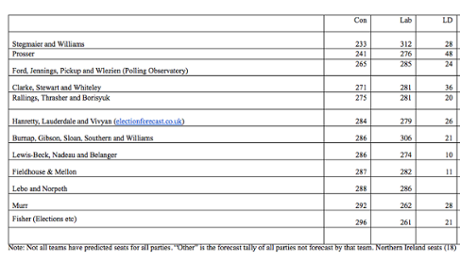
One team is forecasting the Lib Dems just getting 10 seats.
Lewis-Beck forecast Lab 31.8% 274 seats Con 34.4% 286 seats LD 8% 10 seats Others 25.8% 80 seats #LSEforecasting
— Matthew Goodwin (@GoodwinMJ) March 27, 2015
On that note, I’m wrapping up for the day.
My colleague Mark Smith will be updating the blog until we close it a bit later.
Thanks for the comments.
Five things you can learn about coalition government from Simon Hoggart's The Pact
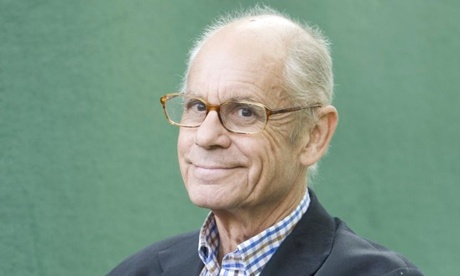
At a party for the launch of Simon Hoggart’s last book before he died a colleague said that Simon had written “the best book on coalition politics” published in Britain. I was surprised because, although I had read a few of Simon’s books, I did not know what this was referring to. It turned out to be a book he had co-written in 1978 with Alistair Michie on the Lib-Lab pact, called The Pact. A while later I got hold of a copy, read it and realised that that, yes, it may well be the best book available on how coalitions actually work at Westminster (even if the Lib-Lab pact wasn’t a full coalition).
And so I’m delighted to tell you all that it is being republished by Faber & Faber, with new prefaces from David Steel and Roy Hattersley. In his preface, Steet writes about how the pact “laid the foundations for the later unfortunate but necessary coalition with the wrong party”.
You will have to have some interest in the politics of the late 1970s to enjoy the book, but what is remarkable is how quite a lot of it is applicable to the Conservative/Lib Dem coalition formed more than 30 years after The Pact was written. To underline the point, here are five things you can learn about coalition government from the book.
1 - Coalition government leads to Westminster conventions being rewritten.
Over the years the Palace of Westminster has accumulated, almost silted up within its walls, a mass of procedure and convention. This determines how the House of Commons and the House of Lords run themselves and how, indirectly, they govern us. The procedure is laid down in the massive 1,089-page volume of ‘Erskine May’ ... but the convention is not written down anywhere. Nobody had realised until 1977 and 1978 just how much of this convention could be conveniently ignored by a government determined to save its own life.
Simon would have loved the chance to sketch Danny Alexander delivering his alternative budget statement in the Commons, and his yellow despatch box, but he had seen all this coming. (Alexander was setting a precedent for minor party coalition ministers making their own party political finance statements from the despatch box.) What makes this insight particularly important is the prospect of more convention-busting after 7 May. For example; I have already heard experts suggesting that a minority government could actually lose a vote on the Queen’s Speech without having to resign.
2 - Political parties are culturally quite different, and they don’t always understand each other very well.
Political parties in Britian generally misunderstand each other. Labour MPs tend to believe that Liberals are as keen to hold office and to cling on to their seats as they are. Liberal MPs fail to comprehend the intensity of the socialist faith which still burns within some Labour MPs. To the average Labour cabinet minister, the concerns and the beliefs of an Ulster Unionist are as strange and unfathomable as the initiation rites in his Ballymena Orange Lodge. The Conservative party provides as many mysteries as any Brazilian forest tribe or Tibetan monestery. Nor are the parties particularly keen to understand one another, since like all institutions the subject they find most fascinating is their own internal politics.
This is the opening passage of the book, and it contains a great truth about British politics. One of the problems with the Conservative/Lib Dem coalition was that it took Nick Clegg and David Cameron a while to realise that they had less in common than they first thought in those heady days of the rose garden press conference.
3 - Minority government can offer a small party a wonderful chance to be important.
Just before Steel took over, the Liberal party was going nowhere at all. It lacked ambition, it lacked a lot of drive, and it lacked a leader who had any concept of what might be done with the votes and the support that the party had accumulated through the early 70s. What Steel offered was direction, a purpose and an ambition. Within months of becoming leader he had placed the party absolutely at the centre of British political life, and had made it too important to be ignored by anybody. His aspirations may end in disaster, or they may end in triumph. But the alternative to them was a continued dull stagnation with Steel has swept away forever.
Replace Steel with Clegg, and alter the timings a bit, and this could apply to the current Lib Dem leader. (Now, of course, we realise that those aspirations do “end in disaster”.)
4 - Liberal are not always good at choosing popular causes.
Like many other causes which are close to the Liberal heart, it is extremely important, it is very complicated, it extends the principle of democracy (or at least it allows people to vote more often, which is not quite the same thing) and it is to all except the cognoscenti, horrendously dull.
Simon was writing here about devolution. But he could have written almost exactly the same about AV.
5 - Minority parties in a pact/coalition need to be stubborn.
In the end they had nothing more to negotiate with than sheer bloody-mindedness, a quality of which most Liberals are extremely short. They could have used a bit more in 1977.
And over the health and social care bill too, you could argue. Some Lib Dems are now saying they should have shown more “bloody-mindedness” in the early days of the coalition.
Updated
Last night at least two organisations produced data trying to establish who won the Cameron/Miliband showdown using Twitter sentiment analysis.
Now TheySay, another company, has produced its own figures. It says Ed Miliband won - just.
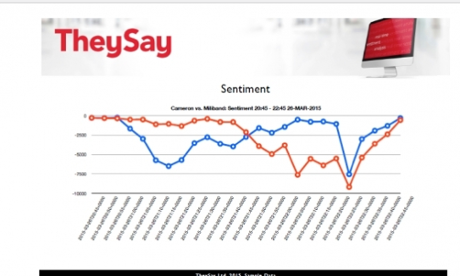
TheySay monitored 210,864 Cameron tweets and 284,896 Miliband tweets,
Miliband scored 52% positive, 48% negative, TheySay say.
And Cameron scored 47% positive, 53% negative.
Last night the Centre for the Analysis of Social Media, using similar techniques, said Miliband won. But comparable research for SunNation said there was no overall winner.
The Royal College of Midwives has also welcomed Labour’s pledge to increase health spending. Jon Skewes, its communications director, said:
We welcome the vital extra money for the NHS that Labour is pledging to provide. The RCM is very pleased to see the clear and specific commitment to 3,000 more NHS midwives. So long as the number of births does not start to rise again, these extra midwives could potentially eliminate England’s long-standing midwifery shortage.
BMA welcomes Labour's health plans
Mark Porter, the British Medical Association council chair, has welcomed Ed Miliband’s NHS announcement. He said:
The test of any health policy should be whether it benefits patients, yet 95% of doctors do not believe the quality of patient care has improved under the Health and Social Care Act 2012.

He added:
Proposals to remove the most damaging elements of the Health and Social Care Act 2012, to support more joined-up care and to prevent the private sector from cherry-picking the most profitable services are a step in the right direction. The BMA wants a publicly-provided and funded health service, and believes the NHS should always be the preferred provider.
Updated
Jim Murphy, the Scottish Labour leader, has launched the Scottish Labour campaign in Glasgow. My colleague Libby Brooks has filmed a short interview with him.
Murphy told her that Ed Miliband was “brilliant”, “passionate” and “angry” in the TV showdown last night.
Lunchtime summary
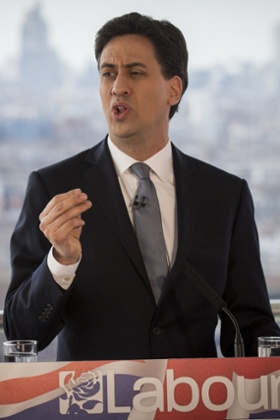
- Ed Miliband has announced that Labour would impose a cap on the profits that private providers can make from NHS contracts. The cap would normally be imposed at 5%, and would just cover clinical services. On the World at One just now, Andy Burnham, the shadow health secretary, has said that most providers would be affected because the typical profit margin in the sector is between 5% and 10%.
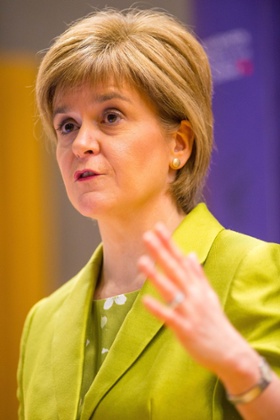
- Nicola Sturgeon, the SNP leader and Scottish first minister, has said says her message to people across the UK is that they have a progressive ally in the SNP, at the end of a week in which the former first minister, Alex Salmond, threatened to “exploit Labour weaknesses” if his party held the balance of power after May’s general election. She was speaking before the start of the SNP’s spring conference in Glasgow. With 3,000 people attending, it is the party’s biggest conference ever.
Updated
Populus poll gives Labour 2-pt lead
Populus has a poll out today. Here are the figures.
Latest Populus VI: Lab 33 (-), Con 31 (-), LD 9 (-), UKIP 16 (-), Greens 5 (-), Others 6 (-). Tables here: http://t.co/7XhlYV48U6
— Populus (@PopulusPolls) March 27, 2015
Labour has confirmed that its proposed profits cap on private NHS providers would only apply to clinical services.
Labour confirms its 5% cap applies only to clinical services: MT @LabourHealth We're talking about contracts for clinical services
— Dave West (@Davewwest) March 27, 2015
That answers this question.
Policy Q: does Labour's proposed 5% profit cap on private companies supplying NHS services cover pharmaceutical makers, chemists and GPs?
— Robert Hutton (@RobDotHutton) March 27, 2015
Hunt says Labour's proposed cap on private health firm profits could cause 'chaos'
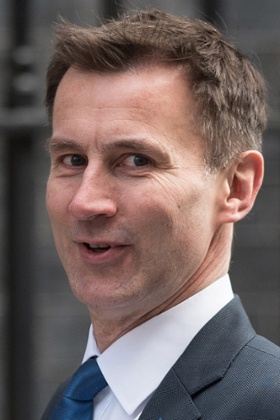
Jeremy Hunt, the Conservative health secretary, has claimed that Labour’s proposed cap on profits for firms with NHS contracts could lead to “chaos” for the NHS.
If you bankrupt the economy like Labour did last time, then you’ll put our NHS at risk. We can only have a strong NHS if we have a strong economy, but Ed Miliband doesn’t have an economic plan.
He added:
We all know Labour want to ‘weaponise’ the NHS but this is another policy from Ed Miliband that looks ill-thought through. It risks higher infection rates, higher waiting times and chaos for our NHS. This incompetence is exactly why Ed Miliband is simply not up to the job.
Independent commentators confirm that use of the private sector has grown at half the rate under this government as it did under Labour, so this is no more than a gimmick to scare people about privatisation that isn’t happening.
The real issue for the future of the NHS is how to fund the growing needs of an ageing population, and by tearing up an economic plan that is working, Labour would threaten the real increases in funding that Conservatives are promising. No-one can deliver a strong NHS without a strong economy.
Updated
Labour on profit-making and cherry picking in the NHS
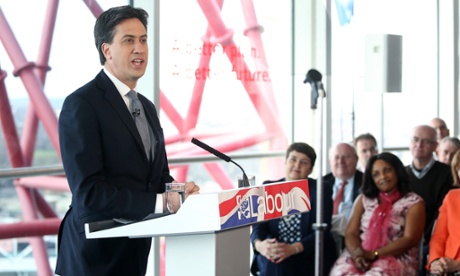
There were two key policy announcements in Ed Miliband’s speech.
First, he announced plans for a cap on the profits private firms can make from NHS contracts. And I’ve already quoted what the Labour briefing note claims about the threat posed by NHS privatisation under the Tories. (See 11.36am.)
Second, he announced measures to stop private firms “cherry picking” the easiest, most profitable cases when taking on NHS work. This is what the Labour briefing note says about profit-making and cherry picking.
· Doctors have raised concerns over private companies “winning contracts that have multi-million pound profit margins.” (Pulse, May 2014)
· The National Audit Office has called for greater use of profit controls in government contracts, saying “Excessive profits can undermine public confidence and contractors should not be able to make a profit by acting against their customer’s (the government’s) interest” and calling for the use of “gain-share mechanisms, claw-back of excess profits and post-contract reviews.” (National Audit Office, 2014).
· The Health Select Committee has raised concerns about cherry picking: “evidence submitted to us supports the view that anomalies in the National Tariff contribute to the phenomenon known as “cherry picking”, that is, the inappropriate selection of patients on economic rather than clinical grounds” (Health Select Committee report, 26 February 2013)
· The Royal College of Opthalmologists is one example of a professional body that has raised concerns about cherry picking: “The AQPs [firms contracted on an any qualified provider basis] are coming in and obviously helping themselves to the easy stuff but leaving the difficult stuff for the NHS departments, and that is causing considerable concerns around budgets.” (Carrie MacEwen, president of the Royal College of Ophthalmologists, BMJ, December 2014)
Updated
Q: You have a poster about the Tories cutting health spending “to the bone”. But it has been protected. You are just scaremongering, aren’t you?
Burnham says the government has slashed spending on care. That is at the root of the NHS problems. Care cuts are effectively NHS cuts, he says.
Q: You will spend an extra £2.5bn on the NHS. You will get the money from the mansion tax and tax loopholes. But that won’t flow immediately. So where will the money come from?
Burnham says Ed Balls has said that he will bring these in with immediate effect.
Q: What is the first tax loophole you will close down?
Burnham says it is a tax loophole used by hedge funds to avoid tax.
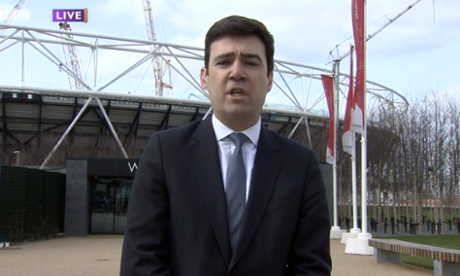
Andy Burnham, the shadow health secretary, is being interviewed by Andrew Neil on the Daily Politics.
Q: Why is public dissatisfaction with the NHS at a record low?
Burnham says there is lots of good treatment in the NHS. But A&E waiting times are getting worse. And that is a barometer for future problems.
Q: So why is satisfaction at is second highest level?
Burnham says the government inherited an NHS in good condition. If Neil thinks there are no problems with the NHS, he is wrong. It is heading backwards. The King’s Fund confirmed that yesterday.
Q: Do you regret the level of outsourcing under Labour. It increased twice as fast under Labour as it has under the coalition.
Burnham says it has increased under the coalition. The BMJ recently found that one in three services is going to the private sector. (See 11.36am.) That is not included in the figures David Cameron quoted on this yesterday.
Burnham says, as health secretary, he changed policy to make the NHS the preferred provider. Ed Miliband confirmed that today.
Updated
Miliband is wrapping up.
Addressing the Labour people in the audience, he says “the fight starts here”.
Q: Aren’t you scaremongering about the NHS? No one is being asked to pay.
Miliband says the Health Act was all about giving more role of the private sector. If the Tories get back in, there will be more of this. This is not the way forward, he says. He says the experts agree.
As for people having to pay, the Tory plans could lead to people either having to wait, or having to go private. That is what happened in the past, he says.
Q: Are you relaxed about fewer NHS contracts to private firms. Why not cap the involvement of private firms in the NHS?
Miliband says Andy Burnham has led on calling for an integrated service. A fragmented service cannot be an integrated service.
It is right to cap profits because the NHS should not be losing money through excess profits. This is a common sense measure. He hopes other parties will adopt it.
Q: How do you rate your performance last night?
Miliband says he will leave the “scores on the doors” to others. He valued the chance to speak directly to the people. That is what he will be doing over the next six weeks.
Miliband's Q&A
Miliband says he is just taking a couple of questions.
Q: Jim Murphy said today Scotland could pick the winner of the campaign. Are English voters being frozen out?
Miliband says the one way to get the Tories out is to elect a Labour government. The only coalition he is interested in is a coalition of working families.
Milband at the top of The Orbit. pic.twitter.com/V0POQPCQ8s
— George Eaton (@georgeeaton) March 27, 2015
Updated
Miliband confirms the profits cap:
And, for the first time, we will cap the profits that private health companies can make from our National Health Service.
The standard rule will be a five per cent cap.
Because the money we pay for our health care should be invested for patient care not for excess profits for private firms.
Updated
Miliband says privatisation is wrong for the NHS
Miliband says Labour would stop creeping privatisation within the NHS.
Privatisation of the NHS is no longer simply out of step with our principles, it is out of step with the needs of the time.
If the task of health care in the future is integrating services, bringing them together, the last thing we need is to fragment and privatise.
Because it sets hospital against hospital, service against service.
Privatisation cannot meet the needs of 21st century healthcare.
We’re going to restore the right principles to our National Health Service.
With the next Labour government:
We’ll scrap David Cameron’s market framework for the NHS and stop the tide of privatisation.
The NHS will be the preferred provider.
No company working with the NHS will be able to profit by cherry picking: rejecting patients with the more complex and expensive needs for their own advantage.
Updated
Miliband proposes 'double lock' to protect the NHS
Miliband turns to the new health proposals unveiled today.
He says they amount to a “double lock” to protect the NHS.
With a Labour government there will be a new double-lock to protect our National Health Service.
Guaranteeing proper funding.
And stopping its privatisation.
Updated
Miliband is now summarising Labour’s election pledges.

Miliband says TV encounter showed Cameron 'living in a different world'
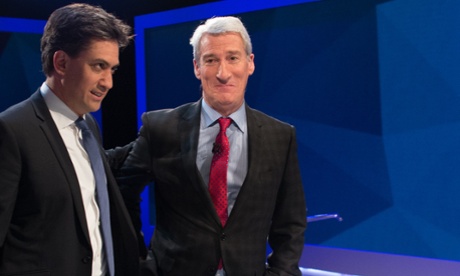
Miliband says Labour are the optimists in this campaign. And his opponents are pessimists.
And he turns to last night’s TV encounter.
We saw a rattled prime minister, running from his record.
And we heard a prime minister living in a different world.
Asked about the soaring use of food banks?
He says it’s not because of the bedroom tax or falling living standards or payday lenders.
It’s because of more effective advertising by the government.
Asked about the explosion of zero hours contracts?
He says it’s not because of the growth of low-paid insecure work on his watch.
It’s really because people want zero hours contracts.
But then he says, oh no, he couldn’t live on a zero hours contract.
I say, if it’s not good enough for you, prime minister, it’s not good enough for the people of Britain.
Updated
Ed Miliband speaks at Labour's campaign launch
Ed Miliband is just starting his speech now. He was introduced by Harriet Harman and a nurse called Agnes (I did not catch her surname).
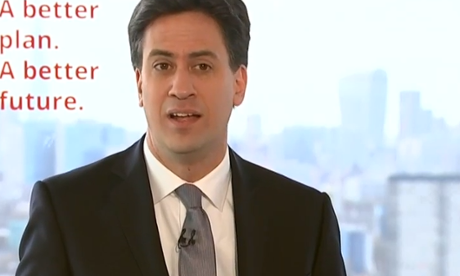
He says he is at the site of the Olympics, an event that showed Britain at its best.
And what was at the heart of those games?
A spirit of optimism.
A belief that Britain can do better.
And that same spirit is at the heart of our election campaign.
It is that spirit that is going to drive us on in the next few weeks.
Because we know Britain can do better than this.
Updated
Labour on the threat posed by NHS privatisation under the Tories
Labour has sent out a briefing note with details of its policy announcement. The key elements are already in Patrick Wintour’s story. (See 11.16am.)
This is what Labour is claiming about the threat posed to the NHS about privatisation under the Tories.
David Cameron’s Health & Social Care Act imposes a market framework on the NHS, forcing services to be put out to tender even if doctors do not think they should be. As a result, more and more private sector contracts are being awarded:
· Private providers have secured a third of contracts for NHS clinical services since the Health & Social Care Act came into force (BMJ, December 2014)
· The amount of the NHS budget spent on non-NHS providers increased by 60% between 2009/10 and 2013/14 (House of Commons Hansard, 16 December 2014)
· The BMA has said: “The Government flatly denied the Act would lead to more privatisation, but it has done exactly that.” (December 2014)
This increases the risk of excessive profit-taking. At a time when the NHS is under huge financial pressure, resources should go into patient care, rather than being diverted into excessive profits, and private companies should not be able to make profits by only treating patients with simpler needs – so-called ‘cherry picking’.
On Twitter I’ve been asked if GPs, dentists and pharmacists count as “private firms” for the purposes of Labour’s proposed profits cap. The answer is no.
@AyrGJH @AndrewSparrow not apply to dentists GP practices or pharmacists, according to Labour.
— Patrick Wintour (@patrickwintour) March 27, 2015
Updated
John Plunkett tells me that around 300 people have now complained to Channel 4 about alleged bias in the questioning of David Cameron and Ed Miliband by Jeremy Paxman and Kay Burley last night. That is on top of the 110 complaints to Ofcom (see 10.58am), taking the total number of complaints to more than 400. We are still waiting to hear about complaints to Sky.
A profits cap would be imposed on private health companies by an incoming Labour government, Ed Miliband will say today when he launches the party’s election campaign at the Orbit Tower at the Olympic Park in East London.
He will say all outsourced NHS contracts over a value of £500,000 will be required to include a profit cap with the default level which will be set at 5 %. NHS commissioners would have the power to lower or raise this profit level to take account of particular issues relating to the contract .
Any company that made more than the 5% threshold from the contract would have to reimburse the NHS for any returns above the level of the cap.
Miliband is also expected to announce that a Labour government will try to stop cherry picking of profitable contracts by:
developing a more cost reflective tariff system to ensure that the prices paid better reflect patient complexity”.
The aim will be to stop providers getting over reimbursed if they only treat simple cases and ensure that NHS hospitals who have to treat all cases are not short changed.
Commissioners will have powers to terminate contracts if they judge the private sector provider is not providing high quality care.
Labour claims concern has been expressed both by the health select committee and the National Audit Office over excessive profiteering.
Miliband will say the new profits cap alongside the commitment to extra funding for the NHS already announced represents a double lock to save the NHS. The proposals will cause anger with the independent providers as well as some concern amongst those Blaiirites in the party that believe there is a legitimate role for the private sector in providing additional services or driving up standards through competition.
Miliband will claim another five years of Tory control would see the full marketisation of the NHS including forced tendering even when clinicians are opposed to the move.
Miliband is expected to reaffirmhe would repeal the Health and Social Care Act and ensure the NHS is the preferred provider when bids are made.
In a policy note Labour said:
There is a limited role for independent sector providers in providing services but that must be to support the NHS not to break it up.”
Private health companies are pocketing a record £18m each day from the NHS budget as more and more health contracts are passed over to the private sector.
New figures from the Department of Health show that last year £6.6bn was taken from the NHS coffers to pay private health providers - a 50% rise from before the coalition took power.
Critics of the coalition government’s health reforms say this trend of allowing private companies to cream off NHS cash is set to increase.
Updated
Ed Miliband has been tweeting from the Labour campaign launch, which is at the Olympics site in East London.
I'm in east London for the launch of our campaign this morning - voters have a big choice in this election. https://t.co/IfsNN53lIO
— Ed Miliband (@Ed_Miliband) March 27, 2015
Updated
So, here’s a summary.
- Labour would impose a profits cap on private firms with NHS contracts. Its default level would be 5% on contracts worth more than £500,000.
-
Excess profits would be returned to the NHS.
More from Patrick.
NHS commissioners would have power to lower/raise the 5% cap to take account of circumstance. Excess profits would have to sent back to NHS.
— Patrick Wintour (@patrickwintour) March 27, 2015
Labour says will introduce a more cost reflective tariff system to ensure that prices better reflect patient complexity. ps Easier said...
— Patrick Wintour (@patrickwintour) March 27, 2015
Labour plans profits cap on private firms with NHS contracts
My colleague Patrick Wintour has a scoop from Labour’s campaign launch.
Labour to impose a profits cap on all outsourced NHS contracts over a value of £500,000 with default level set at 5 %.
— Patrick Wintour (@patrickwintour) March 27, 2015
Updated
Ofcom receives 110 complaints about anti-Miliband bias in TV showdown
My colleague John Plunkett has sent me more about last night’s Cameron/Miliband TV showdown. He’s got three new lines.
-
Ofcom has received 110 complains about anti-Miliband bias.
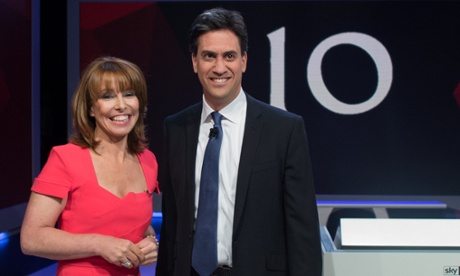
The media regulator Ofcom has received 110 complaints from viewers about “alleged bias” in the treatment of Ed Miliband and David Cameron in last night’s Channel 4/Sky News programme.
Certainly a lot of commentators - and instant Twitter reaction last night - thought Kay Burley was a lot tougher on the Labour leader, interrupted him more and asked more questions in the segment in which questions were put by the studio audience.
An Ofcom spokesperson said: “We are assessing the complaints before deciding whether or not to investigate.”
There’s no word yet from C4/Sky about complaints they may have received.
-
The Sky audience was 322,000, taking the total audience (see 9.45am) to almost 3m.
Last night’s leader interviews had another 322,000 viewers on Sky News (which simulcast it with Channel 4) giving it a combined audience including C4 of nearly 3m, a big hit for both.
Channel 4 peaked with 3m viewers, Sky with 371,000, way up on the news channel’s average ratings.
-
More people were watching when Jeremy Paxman started interviewing Miliband than when he started interviewing Cameron.
More details on the ratings. If Miliband’s decision to go second last night was an attempt to avoid a big TV audience, it failed.
More people were watching at 9.45pm when Miliband started (2.8m) than were watching when Paxo pounced on Cameron (2.5m) at the top of the programme at 9pm.
Updated
I posted a summary of Twitter reaction to last night’s Cameron/Miliband showdown here. And Guardian commentators posted their verdicts here.
Here are some of the other comment pieces I’ve seen about the event this morning that I found interesting.
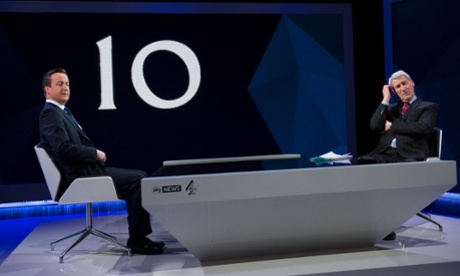
Cameron always seemed reluctant to concede fault and mistakes during his watch. Miliband, in contrast, readily admitted to past failures on immigration and inequality – though not on the level of the fiscal debt in Labour’s later years in office.
But while admitting mistakes may seem more honest, it may not necessarily persuade voters that you have learnt from them.
In any event, according to an instant poll conducted by ICM for The Guardian, neither man scored a decisive victory. Viewers put Cameron slightly ahead – by 47% to 41% – when respondents were asked who won the debate.
However, according to ICM only 8% said that watching the debate had changed their mind about how they would vote, and even then in some cases this apparently meant they were now simply firmer in their prior inclination.
Amongst those who supposedly did change their mind, Miliband apparently won more votes than Cameron. Perhaps for some he exceeded the low expectations they previously had of him, whereas Cameron was being judged by a higher standard. Either way though, Miliband will probably have to be a lot more persuasive in the next six weeks if he is to emerge as the more popular of the two leaders.
The central weakness of the Labour party’s campaign — the sense that it cannot be trusted with economic policy — was left intact by this encounter. On the critical question, asked by Mr Paxman, of whether Labour borrowed and spent too much, Mr Miliband stuttered his way to the wrong answer. It is hard to go before the country and seek high office with an answer to vital economic questions that is still so far from credible. He also had a difficult personal moment on his “strained” relations with his brother. On immigration, the mansion tax and relations with the SNP, where Labour policy is again weak, Mr Miliband also struggled.
The instant verdict of an ICM poll was that Mr Cameron had won the debate 54-46. That probably reflects the substance rather than the style of the debate which will probably not settle the election but it did allow the two principals to exhibit their different conceptions of the problems that face Britain. There is a genuine choice on offer in this election and it was on display on prime time television. There was also one obvious winner last night: Jeremy Paxman.
As for David Cameron, he was wrong-footed and looked it. Jeremy Paxman portrayed him as a rich kid who breaks every promise he makes. Mr Cameron has for years avoided long-form TV interviews, not least under the advice of Andy Coulson (not sure he’s still quite as rich as Mr Paxman painted him – certainly he’s not as rich as Mr Paxman). Last night the rustiness that comes with hiding from folk like Jeremy Paxman showed.
Andrew Cooper, David Cameron’s former pollster, said the programme would not shift a single swing vote. He knows a thing or two about the TV habits and profile of swing voters.
But Team Cameron will be aware that some polls say there are more “undecideds” than ever around this time round and that if last night built into a sustained series of under-performances, it could start to tarnish their man’s lead on leadership credentials and tighten a contest just as David Cameron thinks he is pulling away in front.
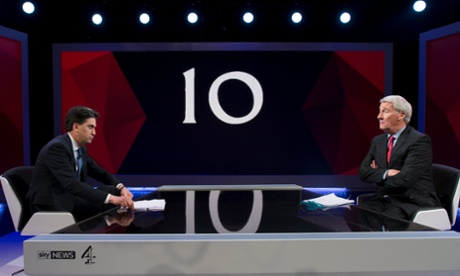
Miliband’s response to the “could you stand up to Putin question” was painful: “Hell yes I’m tough enough.” No normal person in Britain talks like that. He also called the audience Q&A a “town hall meeting”. Perhaps his expensive American advisers had too much of an effect on him.
He also came up with some surprisingly crude anti-Americanism, however, claiming that he had stood up to Barack Obama, whom he mystifyingly called “the leader of the free world”, over Syria. This is a travesty of what actually happened, when Miliband was in favour in principle of strikes to punish Assad until he realised how unpopular they were.
And his attempt to claim that he had stood up to Rupert Murdoch was contradicted in real time when Murdoch tweeted:
“Thanks for 2 mentions, Ed Miliband. Only met once for all of 2 minutes when you embarrassed me with over the top flattery.”
If the election campaign goes like that programme, Miliband will avoid humiliation, but he won’t do well enough to win.
Team Cameron was correct: the experience of watching the Labour leader can only beat expectations, which is why they were right to avoid a head-to-head debate. I thought Miliband’s guff about his brother was pitiful shlock, but Paxman’s sneering and drawling had the counter-productive effect of working the live audience round to Miliband’s side.
Of course a “debate” won’t win the election. It may have only the most marginal impact. It may be forgotten come election day, after a few more of these set piece events. But if it has an impact at all, it will be to remind those who have underestimated Miliband, who have traduced him, mocked him and written him off, that he’s a more than capable politician on his day. That’s not to ignore his flaws or excuse the mistakes that he has doubtless made. But a few more days like this in the coming weeks and he may just get to show he’d be a capable Prime Minister too, with a far more energised party behind him.
Updated
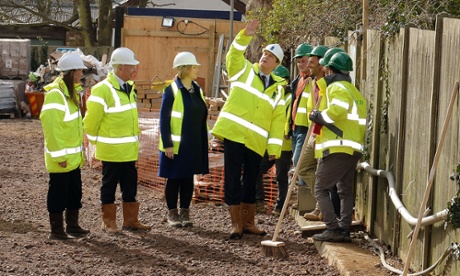
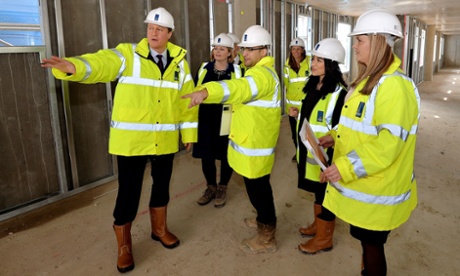
David Cameron has been doing a Help to Buy visit this morning.
As usual, he’s been in a hard hard and a high-vis jacket.
PM @David_Cameron in hard hat and hi vis again. pic.twitter.com/4n0yKSkgMj
— David Hughes (@DavidHughesPA) March 27, 2015
Updated
Grant Shapps, the Conservative chairman, has just tweeted this.
When Obama beat McCain 54-46 in a head-to-head it was called a landslide. But for the BBC that's called "no clear winner". Odd!
— Grant Shapps MP (@grantshapps) March 27, 2015
But Shapps seems to be referring to the result of the presidential election, not the result of a debate. And, although Obama won just 53% of the popular vote (to be precise), he won 365 seats in the electoral college, against McCain’s 173, so, in that case, “landslide” seemed appropriate.
2.6m people watched Cameron/Miliband TV showdown on Channel 4
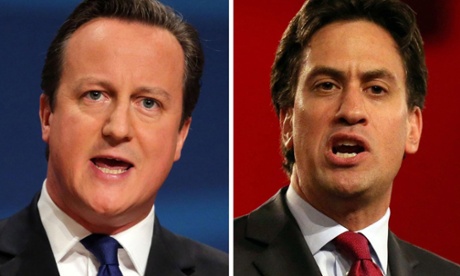
We’ve just had the ratings for last night’s Cameron/Miliband TV showdown. My colleague John Plunkett has the details.
Ratings just in - Channel 4 had 2.6m viewers for Paxo’s grilling of Cameron and Miliband.
These are big numbers, beating ITV documentary The Triplets Are Coming! (1.7m) and, with an 11.7% share of the audience, around double what C4 typically gets in primetime. They will be delighted.
That’s not as big as the debates in 2010 but, then again, this wasn’t a debate. C4 didn’t have one five years ago, so we can’t do straight comparison.
We’re still waiting for what it got on Sky News, which also broadcast it.
Updated
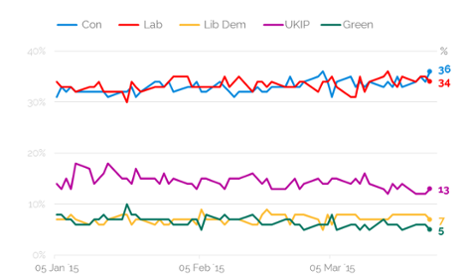
YouGov poll gives Tories 2-pt lead
Here are today’s YouGov GB polling figures.
Update: Cons lead at 2 - Latest YouGov / The Sun results 26th Mar - Con 36%, Lab 34%, LD 7%, UKIP 13%, GRN 5%; APP-12 http://t.co/uRDMHyWTZE
— YouGov (@YouGov) March 27, 2015
Updated
According to the Daily Mail, Theresa May, the home secretary, wants to change immigration laws so that illegal immigrants are deported before they get the chance to appeal.
Illegal immigrants would be put on a plane before they get the chance to appeal under Conservative plans to rip up deportation laws.
Home secretary Theresa May wants to implement a new regime of ‘deport first, appeal later’.
The rules, to be brought in if the Tories are re-elected, would apply to anyone with an expired visa or those living in Britain without permission.
The only exceptions would be asylum-seekers or migrants who could suffer ‘irreversible’ harm if sent back to a dangerous country. The move seeks to end the racket of thousands of illegal immigrants being able to prolong their stay in Britain for months or even years by lodging a string of appeals and judicial reviews.
Asked about this on ITV’s Good Morning Britain, Douglas Alexander, Labour’s election strategy chair, said that if this was such a good idea, May should have introduced it earlier.
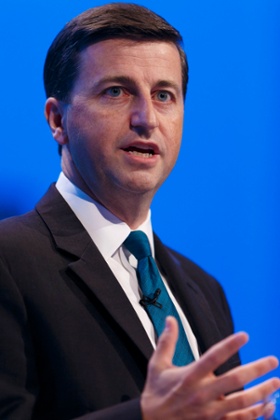
If Theresa May is so worried about this, she’s been the home secretary for five years – I think your viewers will reasonably say: why is she announcing with six weeks to go to the general election a policy she could have implemented many years ago?
Updated
According to the Mirror, Ed Miliband was “punched and shoved” by a small group of protesters yesterday at noon, before last night’s showdown with David Cameron.
UPDATE AT 12.37PM: Earlier I said the incident happened after the TV showdown. I’ve changed that because it reportedly happened at noon, before the TV event.
Updated
Good morning. I’m taking over now from Claire.
Lucy Powell, vice chair of Labour’s election campaign, has also been giving interviews this morning about last night’s not-quite-a-debate. She said people got the chance to see the real Ed Miliband.
What you saw last night is for the first time, the public got to see the real Ed Miliband – Ed Miliband unmediated by sections of the press who are out to get him and want to portray him as something that he isn’t. Last night was an opportunity for the public to see the real Ed Miliband and they liked that Ed Miliband and he came across much more strongly than David Cameron and I think he proved a lot of people wrong last night.
She also said that people were tired of questions about Miliband’s decision to stand against his brother in 2010.
She said people were growing tired of constant questions about Mr Miliband’s decision to stand against his brother for the Labour leadership in 2010.
But even people who should know better can’t get David Miliband out of their heads.
My debate other half @BBCNews @Kevin_Maguire just announced David Miliband won the #cameronvsmiliband And who are we to disagree?
— anne mcelvoy (@annemcelvoy) March 27, 2015
Douglas Alexander:
I think it [the interview] will have begun a process of reappraisal.
It’s clearer why Lynton Crosby wanted to avoid a head-to-head debate between the two leaders, he adds.
I think that speaks volumes … He’s run a mile from that debate.
Updated
Labour election campaign chief Douglas Alexander is on now. He says Miliband had not practised the “hell yes, I’m tough enough” line. He was just answering the question, Alexander says.
Tory party chairman Grant Shapps is on the Today programme now.
He says David Cameron last night sounded like a man with a plan for the country.
The polls said Cameron won the contest, he says.
If Labour is elected, if Ed Miliband is prime minister, I think it would be pretty chaotic.
Updated
Nicola Sturgeon: we can lock the Tories out of government
Nicola Sturgeon, Scotland’s first minister and SNP leader, has just been interviewed by John Humphrys on the Today programme.
Quizzed on Alex Salmond’s recent comments that the party could “lock out” the Tories from forming a government after 7 May, she said:
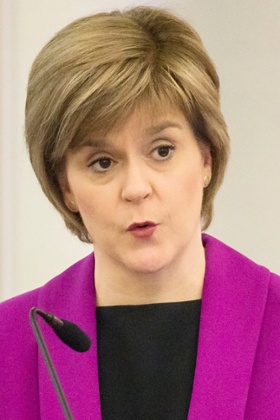
We would in no circumstances support a Conservative government.
It’s a matter of simple arithmetic: if there are more anti-Tory MPs then we can lock the Tories out of government.
If the Tories can’t command a majority, they don’t deserve to form a government.
She denies Humphrys’ suggestion that this is “breathtakingly arrogant”.
She added that her party was “unlikely” to form a coalition with Labour – something that Ed Miliband has also ruled out:
Of course he’s not going to say that [that Labour would work with the SNP] this side of an election.
He’s clinging to pretence he’s got some chance of winning a majority when everyone know that’s not going to happen.
But Sturgeon repeated that the SNP would be prepared to support a minority Labour government on a vote-by-vote basis. Her party, she pointed out, is experienced in the realities of minority government in Scotland.
You might have the power to bring down or prevent the formation of a Labour government, Humphrys puts to her:
We can beat them issue by issue … We would use our influence to try to pursue an alternative to austerity, the end of Trident … that’s the way minority government works.
Scotland is usually ignored in Westminster, Sturgeon adds:
If people choose to vote SNP, they’ll make sure Scotland’s voice is heard in Westminster.
SNP will have 'a lot of support from some Labour backbenchers for some things we want to do, like ending austerity', @NicolaSturgeon says
— James Chapman (Mail) (@jameschappers) March 27, 2015
She adds that she believes SNP policies would win support in England as well as Scotland.
And on the inevitable question of another independence referendum:
We’re not goiong to get another referendum by voting SNP in the general election …
It will be determined by the people of Scotland in the normal way.
Updated
It seems Grant Shapps will be making an appearance on the Today programme at around 8.20am to discuss the fallout from last night’s TV interviews.
The Tory party chairman has been keeping quite a low profile following Guardian revelations about his second life as millionaire online marketing expert Michael Green.

Ed Miliband – who, despite what many watchers thought was a creditable performance last night, did not topple Cameron in the post-interview polling – will be looking to bounce back this morning. Political editor Patrick Wintour sends this report:
Ed Miliband will launch his party’s election campaign this morning at the Olympic Park in East London with a promise he will fight an election campaign suffused with optimism and determined to show that Britain can do better. He will repeatedly claim Labour are the optimists and the Tories the pessimists.
The Labour leader will insist the spirit of optimism will be at the heart of a campaign intended to get the party back into Downing Street after five years in opposition.
Referring to the Tories he will claim:
Five million people paid less than the living wage. They say: this is as good as it gets. We say: Britain can do better than this.
Morning briefing: everything you missed *because* of last night’s TV interviews
A quick sweep-up of the day’s other business:
The big picture
- William Hague, the outgoing leader of the house, suffered a humiliating rebuff on the final day of his parliamentary career when a Tory backbench rebellion saw off an attempt to secure the ousting of the Speaker, John Bercow. A motion to ensure there was a secret ballot to elect the Speaker in the next parliament was defeated by 228 to 202.
- Labour will make important gains in London in the general election, according to a Guardian/ICM telephone poll. The party is set to advance by five percentage points to reach 42% – a full 10 points ahead of the Tories, who fall back 3 points from their 2010 result to 32%.
- David Cameron has asked the Queen to summon the new parliament to meet on Monday 18 May, suggesting he expects a new government to be in place by then, 11 days after polling day. The state opening of parliament, and the Queen’s Speech, has been set for Wednesday 27 May.
You can catch up with yesterday’s politics news on Thursday’s live blog here.
And here’s our regular update on the latest polling figures:
Diary
- Nicola Sturgeon is on Radio 4’s Today programme at 7.50am.
- This morning sees the official launch of the Labour election campaign.
- The Guardian’s latest Battleground Britain profile comes from Ealing Central. Read previous dispatches from Glasgow East, South Thanet, Taunton Deane and Dewsbury.
Read these
I’ll do a round-up of CamvMili columns and comments soon. Here is a taster of the other reads out there this morning:
- In the Times, Philip Collins analyses the fallout from yesterday’s supreme court ruling – in a case long-fought by the Guardian – that letters from Prince Charles to ministers should be published:
We can be categorical about this. Charles has absolutely no right to do any of this. It is an empty platitude, often heard, that Charles has as much right to his opinion as anyone else. So he does, but not everyone has an open line to ministers and his use of it explodes any notion that these letters are ‘private’ …
If he wants to be a private citizen, with the protection of privacy which is due, he knows what to do. Then, having abdicated, he is free to scribble spiders all day long and we’ll see how many of them get answered.
If it is accepted that the head of state is going to have opinions, and perhaps give them an airing for time to time, then – for a newspaper of principled republicanism, at least – the answer is clear. Not any longer to allow the job to be filled by accident of birth, but instead to select for the post by democratic means.
Perhaps that is a discussion for another day. But after Thursday’s ruling, the immediate point is simply that mail that comes on his majesty’s service must no longer be kept from his majesty’s subjects.
- And Peter Franklin over at ConservativeHome poses a heretical thought: that politicians need a bit more downtime:
The reality is that most MPs – and especially those in ministerial and leadership positions – have punishing schedules …
The real question is this: Do we want the people making important decisions on our behalf to be well-rested and clear-minded, or should we keep them sick, stressed-out and exhausted?
The day in a tweet
One of biggest digital moments in British political history. The #Battlefornumber10 produced 246K. That's 2778Tweets a minute.
— Ben Page, Ipsos MORI (@benatipsosmori) March 26, 2015
Commons hero of the day
Charles Walker, the chairman of the procedure committee, which first called for the matter of the vote for the Speaker to be debated more than two years ago. Yesterday, as Patrick Wintour reports, Walker brought Labour MPs to their feet in applause with his speech in the Commons as MPs debated a last-minute attempt to change the rules:
I have been played as a fool and when I go home tonight I will look in the mirror and see an honourable fool looking back at me, and I would much rather be an honourable fool in this, and any other matter, than a clever man.
How you treat people in this place is important. This week I went to the leader of the house’s leaving drinks. I went into his private office and was passed by the deputy leader of house yesterday, all of whom would have been aware of what they were proposing to do.
I also had a number of friendly chats with our chief whip yesterday and yet I found out last night that this leader of the house is bringing forward my report.
If today were a movie franchise, it would be…
The Hangover (part one).
The key story you’re missing when you’re election-obsessed
In Italy, a panel of judges will finally determine today whether it finds Amanda Knox and her former boyfriend Raffaele Sollecito guilty of the murder of British university student Meredith Kercher in Perugia in 2007.
Updated
Morning briefing: everything you missed in last night’s TV interviews
A two-part briefing this morning, as we first digest last night’s interviews, before turning to a light breakfast of the day’s other politics news.
Good morning and welcome to day five of the Guardian’s election live blogs. I’m Claire Phipps and I’ll be steering the blog this morning before handing over to Andrew Sparrow. As always, I’m on Twitter @Claire_Phipps and also checking out your comments below the line.
For those who missed last night’s interviews – or those who just want more of it, or whose attention might have wandered a little halfway through – here’s a rundown of the key bits:
How they scored
In the polls immediately after the interviews, David Cameron came out on top.
A Guardian/ICM poll of 1,123 viewers taken directly after the questions to both men gave the prime minister an eight-point advantage, by 54% to 46%.
A YouGov app poll for the Times put things rather closer, with 51% saying Cameron was the winner, against 49% for Ed Miliband.
Twitter came up with a different verdict again, with Miliband attracting more positive reactions – but with only a fraction of the tweets seen about Cameron:
How did Twitter react last night? Great analysis by @carljackmiller & co. Miliband clearly won but 1/4 as many tweets pic.twitter.com/bZ3lVI4UX8
— May2015 (@May2015NS) March 27, 2015
Guardian commentators’ verdicts: in a word
-
Polly Toynbee: Cameron = dull; Miliband = human; Paxman = rude; Burley = impatient.
-
Jonathan Freedland: Cameron = rattled; Miliband = assertive; Paxman = withering.
-
Matthew D’Ancona: Cameron = wooden; Miliband = tetchy; Paxman = grudging.
-
Hugh Muir: Cameron = supplicant; Miliband = hardened; Paxman = acid.
-
Gaby Hinsliff: Cameron = miserable; Miliband = punk; Paxman = sadistic; Burley = cooed.
-
Aditya Chakrabortty: Cameron = burbled; Miliband = regrets; Paxman = incisors.
If, for some reason, you’d like to read more than just one word about the combatants, you can see the full verdicts here.
David Cameron: what we found out
- He thinks food bank usage has gone up since 2010 because the previous Labour government didn’t let jobcentres advertise their existence.
- He couldn’t live on a zero-hours contract.
- He thinks questions about his rich friends (and the jobs he gave to some of them) were “ridiculous”.
- He accepts he has failed to meet the pledge to reduce immigration to the tens of thousands.
- He says he had to raise VAT in 2010, despite saying he wouldn’t, because the economy was in a bigger mess than he’d expected when he took over at No 10.
- He says it were not in Britain’s interests, he would not recommend staying in the EU come a referendum.
- He does not think Uncle Tom Cobley is his likely successor.
- He shouldn’t have called Ed Miliband despicable, but wah, he started it.
- He didn’t want to make cuts, but there are lots more coming.
- He still loves the NHS. But he likes private companies too.
Ed Miliband: what we found out
-
He says leaving the EU would be a disaster, so there’s no need for a referendum.
- His mum is pretty tough, even when her two sons were “bruising” each other.
- He thinks Cameron got it right on equal marriage and overseas aid spending.
- He accepts Labour got it wrong on the banks, and Ed Balls definitely thinks so too.
- Oh, and they also got it wrong on immigration.
- What was that millennium dome all about, eh?
- He would cut the winter fuel allowance for wealthy pensioners.
- Not all the mansion tax money will go to Scotland. Some will go to Newcastle.
- He won’t need to negotiate with Alex Salmond, because Labour will win a majority.
- HELL YES, he is tough enough for No 10.
And what we never quite found out
Here’s a neat round-up of the questions that Cameron didn’t really know how to answer:
Whereas Ed Miliband really, really wanted the opportunity to explain:
The #notadebate in tweets
Because we don’t know anything until we know what Twitter thinks.
Labour probably won’t mind this one:
It's the phil Collins mistake! vote labour, as often as possible pic.twitter.com/cbj7gCrTyJ
— John Harris (@johnharris1969) March 26, 2015
This one’s a bit more uncomfortable for Miliband:
Thanks for 2 mentions, Ed Miliband. Only met once for all of 2 minutes when you embarrassed me with over the top flattery.
— Rupert Murdoch (@rupertmurdoch) March 26, 2015
And this one will have ruined Ed’s night:
Farage tells me: "I might vote Labour."
— Tim Shipman (@ShippersUnbound) March 26, 2015
The Ukip leader said he would rate Miliband as 7 out of 10, with Cameron on a measly four.
Jeremy Paxman’s best faces


How the two leaders would cope with the onslaught from a Paxman who’d been out of the cut-and-thrust of political interviewing for a while was always – in the absence of a genuine head-to-head between Cameron and Miliband – going to be the real test.
“Cameron’s most uncomfortable 20 minutes in an interview for ages,” was my colleague Andrew Sparrow’s analysis last night.
The Labour leader was generally thought to have put up a punchy defence. But for Stuart Heritage, there was one runaway winner:
If the people of Britain were allowed to go to the polls immediately after Cameron & Miliband: the Battle for Number 10, there’d a landslide. And our new prime minister would be Jeremy Paxman.
This was a man who’d clearly been straining at the leash since he left Newsnight; a man who’d spent too many months trapped indoors, fruitlessly barking questions at potplants.
John Crace agreed, pointing out: “If Paxo was a closet Tory, he was keeping it well hidden”:
Don’t Jeremy me,’ Jeremy salivated, while giving his trademark thousand-yard death stare. God, he had missed this. So had we.
‘Could you live on a zero-hours contract?’ Paxman demanded. ‘That’s not the question,’ Dave simpered. It was, though, and Paxman asked it again. And again.
By the end, Dave couldn’t even remember his own name, let alone any of the key economic statistics. Did he know how much the country was borrowing? ‘No, but I’m sure you will tell me, Daddy,’ Dave mumbled.
‘I don’t want to sound rude,’ Paxo lied. ‘You’ve failed.’ It was all Dave could do to stop himself from nodding.
Question of the night
“Are you ok, Ed?” (Spoiler alert: he’s ok. They’re both ok. Everyone is ok.)
Updated