
Evening summary
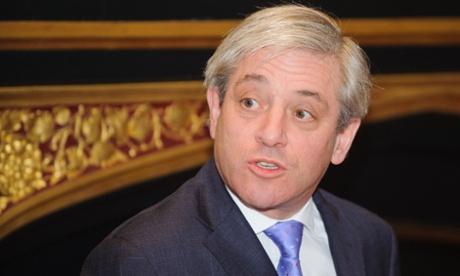
- The Government has tabled a motion to oust John Bercow, the Speaker of Commons. The motion, put forward by William Hague, will see MPs voting tomorrow to introduce rules that would allow a secret ballot to eject the speaker (see 8.19pm). Labour MP Lindsay Hoyle is being billed as Bercow’s replacement.
- Argentina has branded Britain’s plans to beef up defences in the Falklands a provocation and a pre-election stunt. Argentina’s foreign minister, Hector Timerman, said: “We are committed to dialogue and international law. They’re facing elections, so they resort to cheap nationalism to put all of British society on tenterhooks over a military matter” (See 5.41pm).
-
A whistleblower has revealed that police conducted spying operations on a string of Labour politicians during the 1990s, covertly monitoring them even after they had been elected to the House of Commons. These include Labour’s current deputy leader, Harriet Harman, the former cabinet minister Peter Hain and the former home secretary Jack Straw (see 6pm). In a comment piece for the Guardian, Hains wrote:
That special branch had a file on me dating back 40 years ago to Anti-Apartheid Movement and Anti-Nazi League activist days is hardly revelatory. That these files were still active for at least 10 years while I was an MP certainly is and raises fundamental questions about parliamentary sovereignty.
That’s all from me for this evening. Join us again tomorrow for what promises to be an action-packed day.
Updated
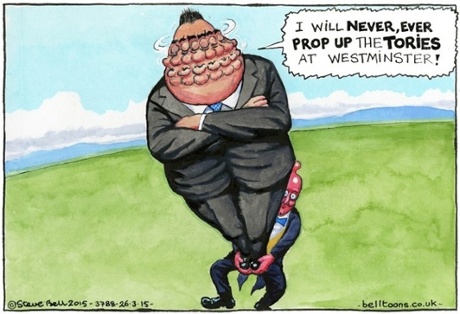
Steve Bell, the guardian cartoonist, on Alex Salmond ruling out a deal with the Tories:
An article in the Independent asks if young people could hold the keys to power in Britain.
Clearly there is a desire among the young public to be involved in politics, but MPs simply aren’t introducing policies into the public arena that are relatable to young people.
At the turn of the year, Demos think tank found that political parties needed to use social media more effectively to engage 18-25 year olds, in a survey of over 1, 000.
Furthermore, 44 per cent of 18-25 year olds have yet to decide which party to vote for, demonstrating the lack of policies made by all the major political parties to appeal to young people.
The Scottish referendum was a good example of young people engaging with the political process. There are currently 7,247,000 18-25 year olds in Britain, imagine what could happen if they all made their voices heard.
The New Statesman’s George Eaton writes that Labour will have the upper hand in the event of an ultra-hung parliament.
“As Cameron stumbles, there is hope among Labour strategists that Miliband will win belated admiration for his resilience after having ‘the kitchen sink, the washing machine and any spare cutlery’ thrown at him,” he says.
Updated
More information about #dumpbercow from the Mail:
Under existing procedures, if a Speaker’s re-election is opposed there is a public vote of all MPs which can deter opponents from voting against the incumbent for fear of being blacklisted if the bid to dump them fails.
Under Mr Hague’s plan, around a dozen MPs would be required to call out in the Commons that they opposed Mr Bercow staying in the job he has held since 2009.
A secret ballot would then be held, allowing MPs to vote against Mr Bercow without fear of reprisals.
The motion states that if Mr Bercow’s return is contested, “it shall be determined by secret ballot, to take place on the same day under arrangements made by the Member presiding, who shall announce the result of the ballot to the House as soon as is practicable”.
Updated
Bercow was only told of tomorrow’s ballot at 5.30pm today. What a way to end the day.
John Bercow only told at 5.30 of a vote tomorrow on a secret ballot to elect post election Speaker. Underhand but Bercow will be re-elected.
— steve richards (@steverichards14) March 25, 2015
It’s been revealed that the motion was put forward by William Hague.
Labour sources describe William Hague move to hold HoC vote tomorrow for secret ballot in Speaker election as "coup d'état against Bercow".
— joncraigSKY (@joncraig) March 25, 2015
Proper skulduggery afoot as Tories apparently plot to scupper Bercow. Rather jarring final gesture from gentlemanly @WilliamJHague.
— Joey Jones (@joeyjonessky) March 25, 2015
Labour aren’t happy...
Utterly shabby performance of @WilliamJHague tabling last minute change to commons standing orders tomorrow
— Chris Bryant (@ChrisBryantMP) March 25, 2015
Particularly shabby of @WilliamJHague as he's not standing and has no mandate for this motion. Gratuitous cowardly attack on Speaker.
— Chris Bryant (@ChrisBryantMP) March 25, 2015
Labour sources describe William Hague move to hold HoC vote tomorrow for secret ballot in Speaker election as "coup d'état against Bercow".
— joncraigSKY (@joncraig) March 25, 2015
I will be returning to Westminster tomorrow to vote against this shameful, grubby behaviour by the Conservative Party #Bercow
— Jonathan Reynolds MP (@jreynoldsMP) March 25, 2015
Updated
Labour MP Lindsay Hoyle is being billed as Bercow’s replacement if tomorrow’s last-minute motion is approved.
Conservative MPs plan to back popular Deputy Speaker Lindsay Hoyle, a Labour MP, as Bercow's replacement if secret ballot is approved
— James Chapman (Mail) (@jameschappers) March 25, 2015
Labour protesting about #dumpbercow plan. But they know that if Bercow is ousted, jon likely to go to Lindsay Hoyle (MP for Chorley)
— Matt Chorley (@MattChorley) March 25, 2015
Government tables motion to oust Speaker of Commons
Just in - the Tories and the Lib Dems are planning to oust John Bercow from his position as speaker of the house of commons. In a move that has been referred to as a “Bercoup”, MPs are to vote tomorrow on introducing rules that would allow a secret ballot to eject the speaker.
Senior Tory: "It's payback time." #dumpbercow
— Matt Chorley (@MattChorley) March 25, 2015
Tories and Libs agree 'Dump Bercow' plot: MPs will vote tomorrow on changing rules to allow secret ballot to eject Speaker #dumpbercow
— James Chapman (Mail) (@jameschappers) March 25, 2015
Interesting last minute parly shenanigans tonight in attempt to stitch up John Bercow as 2010-15 session comes to an end
— Laura Kuenssberg (@bbclaurak) March 25, 2015
Labour say they will struggle to get numbers to oppose rule changing making it easier to get rid of Bercow after election #dumpbercow
— Matt Chorley (@MattChorley) March 25, 2015
@MattChorley Bercoup?
— Glyn Ley (@GlynLey) March 25, 2015
Updated
Tomorrow’s Guardian editorial calls the issue of taxes in the election a “dangerous taboo” which could have enduring consequences.
If the pre-election noises are lacking in candour, that is depressing; if they reflect a genuine determination to do what George Osborne’s published plans suggest, and leave tax alone while pushing all pain on to the public realm, then that’s terrifying.
On our revelation that 10 Labour MPs were covertly monitored in the early years of Tony Blair’s first government, a second editorial expounds that the surveillance is:
Both a grotesque breach of police power and a grave intrusion on the privilege of elected MPs, a privilege that exists to allow them to be guardians of their constituents’ freedoms.
The Evening Standard’s Iain Martin takes a look at all those who could be in contention to succeed Cameron.
So far, although much of the attention has focused on the chances of favourites Boris Johnson and Theresa May, they are likely to be joined by a large field of runners and riders. Think of it as Westminster’s less well-ordered equivalent of the Grand National.
While Chancellor George Osborne is realistic about his limited chances, his friends want him to run in case the favourites fall. Sajid Javid, the Culture Secretary, previously close to Osborne, is intensely ambitious. The chairman of the backbench 1922 Committee, Graham Brady, has prepared well and he is likely to get far more votes than expected.
Former Defence Secretary Liam Fox, former Environment Secretary Owen Paterson and former shadow home secretary David Davis could all run seeking to represent the traditional Right. Then there are others, junior members of the cabinet such as Elizabeth Truss, or the combative defence minister Anna Soubry, who may fancy trying to shake up what is, beyond Theresa May, too much of a boys’ club.
Ultimately, Martin predicts that the Tories will opt for Boris because of his “magic”. Though my bet’s still on the “babe unborn”.
More from Nick Clegg’s question-and-answer session at Mumsnet. On whether he’d form a new coalition with the Labour or the Conservatives, Clegg recalled the negotiations in 2010:
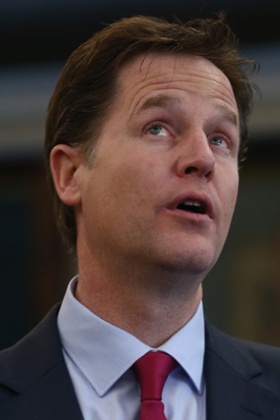
It was brutal arithmetic. The only way that a government could be formed to take decisions to govern the country for five years was a combination of Conservatives and the Liberal Democrats. I sat with Gordon Brown, I kept trying to explain to him - he’s a highly intelligent man, I said the sums don’t add up. There was no alternative and so we did in a sense what was in line with the instructions that you the voters gave us.
Updated
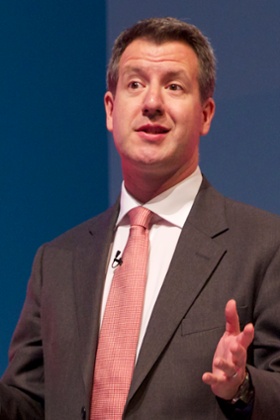
Chris Leslie, Labour Co-op MP for Nottingham East, and Sajid Javid, the culture secretary, have appeared on Channel 4 News to discuss today’s news about VAT increases. An extract from the exchange:
Leslie:
[Lying about VAT] is part of the DNA of the Conservative Party, they’ve been doing it for the past 40 years. Be very aware, there’s only one direction where vat will be going, and thats up.
Javid:
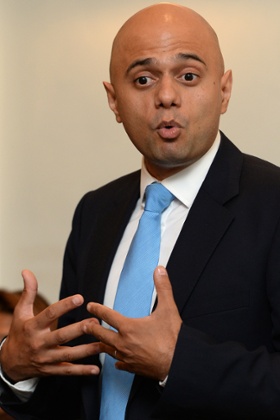
VAT will not be going up. What Labour has signed up to is £30bn of tax consolidation.
Leslie:
You’ve made this up, Sajid.
Javid:
No increases in taxes is required.
Cathy Newman, the Channel 4 news anchor, then asked Javid if he was upset at not being named as a potential future Tory leader by Cameron, to which he responded:
The good news is there isn’t a leadership battle going on, there’s a general election. It’s choice of competence and chaos.
Updated
A new poll for MailOnline has asked voters to sum up political leaders in a single word.
The most frequent response to David Cameron was “arrogant”, followed by “smug”, “leader”, “liar” and “Prime Minister” (say what you see).
The most popular response to Ed Miliband was “weak” followed by “idiot”, “Labour”, “useless” and “untrustworthy”.
Similarly, the most popular response to Nick Clegg was “weak” followed by “liar”, “don’t know”, “untrustworthy” and “useless”.
Updated
Ed Miliband is a guest speaker at this evening’s Muslim News Awards. The biggest reveal of his speech so far:
@Ed_Miliband quashes rumors that @SadiqKhan will replace @zaynmalik at #InspiringMuslims event in Central London. pic.twitter.com/XDycrzgy9D
— Imran Azam (@moiazam) March 25, 2015
Miliband also spoke about islamophobia and praised diversity.
"We know that islamophobia is on the rise. We have stories of Muslims being bullied in schools after the Charlie Hebdo killings."
— The Muslim News (@themuslimnews) March 25, 2015
.@Ed_Miliband praises diversity at Muslim News Awards. But "immigration" a key issue for the party? #inspiringmuslims
— Siraj Datoo (@dats) March 25, 2015
Updated
Good point, perhaps politicians can start telling us what they will do, instead of what they won’t do.
The Guardian’s Polly Toynbee has written a piece for the European Magazine about Cameron’s wrongheaded approach to the EU. Alongside trade and security reasons for staying within the EU, as well as the unlikeliness of Merkel and Holland agreeing to open up treaties for revision, Polly predicts that if the UK left the EU our union would fall apart – particularly due to the predicted success of the SNP. She writes:
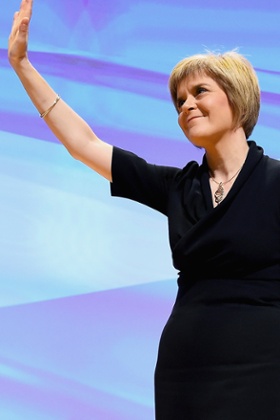
Projecting from its strong showing in the opinion polls, the Scottish National Party looks likely to do well in the May election. These gains will serve as a springboard for the Scottish parliamentary elections due in May 2016. The platform will be predictable: Scotland will not be led out of the EU by a Tory government. So victory for Cameron in the EU referendum would trigger another referendum on Scotland’s place in the UK. On present evidence, the advocates of independence would win it.
So what will it be for separatists, Europe and Scotland, or neither?
Updated
The New Statesman has published a video looking back at the best of PMQs over the past five years. It includes this memorable quote by Harriet Harman in response to a 2008 GQ interview with Nick Clegg, in which the Lib Dem leader said he’d slept with “not more than thirty women”. Look out for Ed Balls’ reaction.
Since [Clegg] became deputy prime minister, he’s had the opportunity to appoint seven cabinet members. Can he remind the house how many of them have been women?
He’s reluctant to answer the question, which is unlike him, because normally when he’s asked about numbers and women he’s quite forthcoming.
Clegg told Mumsnet earlier today that he believes the Lib Dems should use quotas to get more female and BME MPs if no progress is made in the upcoming elections. One small step at a time.
Updated
Jason McCartney, Alistair Burt and Diana Johnson have released a statement in response to the publication of the Penrose Inquiry into the contaminated blood scandal. They call today’s apology from the prime minister “a significant moment in a long struggle for recognition of the scale of this tragedy”, but point out that the current support system “is simply not meeting the needs of those it is meant to help”.
Statement from myself, @AlistairBurtMP & @DianaJohnsonMP on behalf of the APPG in response to #penroseinquiry pic.twitter.com/mquF7q6ScL
— Jason McCartney MP (@JasonMcCartney) March 25, 2015
The Spectator’s Alex Massie has written about the Tory party’s “cynical” attitude towards Scotland, particularly Grant Shapps’ remark that “Alex Salmond is threatening to undermine a government chosen by the British people”.
If the Conservatives cannot lead a government that is supported by a majority of MPs that’s their problem.
Accusing the SNP of undermining democracy – ! – makes as much sense as accusing the Labour party of doing the same. Actually, it’s worse than that. Because it suggests that these revolting, uppity, Jocks should know their place. They may be led to water but on no account may they be allowed to drink.
The majority of sketches from this afternoon’s PMQs focus on Ed Miliband’s own goal.
The Guardian’s John Crace writes:
Ed began rifling through his papers looking desperately for a prepared response that he always knew wasn’t there. “This is a complete outrage,” he blustered. “When I ask the prime minister for a straight answer to a straight question the last thing I expect is for him to give one. How can the country ever trust him again?” Thinking on his feet was proving tricky; the Labour leader isn’t always the sharpest pencil at the despatch box.
“Go Daddy,” Nancy mouthed, as Daddy smelt blood. The quality of Cameron mercy is sometimes quite easily strained. “I have ruled out VAT,” said Daddy, keeping his fingers firmly crossed. “Will he rule out national insurance contributions? Yes or no?” Miliband was so dazed he didn’t even realise it wasn’t supposed to be him answering the questions. “Um, er, I’m not sure.”
And the Telegraph’s Michael Deacon writes:
The look on Mr Miliband’s face. It was as if an eagle had swooped out of the sky and swiped the sandwich from his hands.
Updated
The election forecast site suggests that there is only an 8% chance that one of the two main parties will win a majority.
Probability of majority: Con 4%, Lab 4%. Probability of most seats: Con 56%, Lab 44%. For more details visit http://t.co/UEYYBBRFc7
— Election Forecast UK (@Election4castUK) March 25, 2015
Police continued spying on Labour activists after their election as MPs
Former cabinet minister Peter Hain has written a comment piece for us after it was revealed that police continued to spy on Labour activists, including Hain, Harriet Harman and Jack Straw, after their election as MPs. Hain writes:
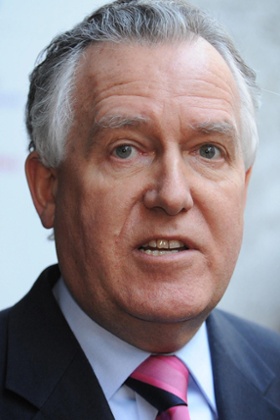
That special branch had a file on me dating back 40 years ago to Anti-Apartheid Movement and Anti-Nazi League activist days is hardly revelatory. That these files were still active for at least 10 years while I was an MP certainly is and raises fundamental questions about parliamentary sovereignty. The same is true of my Labour MP colleagues Jack Straw, Harriet Harman, Jeremy Corbyn, Diane Abbott, Ken Livingstone, Dennis Skinner and Joan Ruddock, as well as former colleagues Tony Benn and Bernie Grant – all of us named by Peter Francis, a former Special Demonstration Squad undercover police spy turned whistleblower.
Although activists like me vigorously opposed Stalinism, that didn’t stop us being lumped together with Moscow sympathisers, providing a spurious pretext to be targeted.
Read his article in full here.
Updated
Argentina has branded Britain’s plans to beef up defences in the Falklands a provocation and a pre-election stunt. According to Agence France-Presse, Argentina’s foreign minister, Hector Timerman, said:
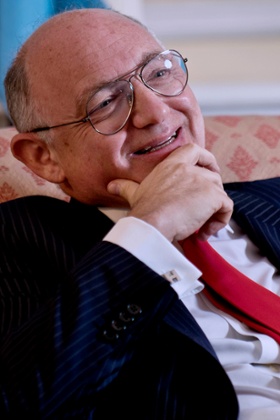
This business from Great Britain is a provocation, not just to Argentina but also to the United Nations.
We are committed to dialogue and international law.
They’re facing elections, so they resort to cheap nationalism to put all of British society on tenterhooks over a military matter.
Amid reports that Argentina is planning to lease 12 long-range bombers from Russia, David Cameron gave an assurance yesterday that Britain will always defend the Falklands. Michael Fallon, the defence secretary, also announced that two Chinook helicopters are to be deployed in the middle of next year, which would mount a “swift and decisive response” to any “emerging incidents”.
Philip Hammond is due to
make a speech in London at the Lord Mayor’s Easter Banquet at 6.45pm this evening. Will he respond to Timerman?
Updated
Hi all, Nadia here. Stay with us for the rest of the evening, as I’ll be running you through all the latest developments in the world of UK politics.
But first, a light note. With news coming in that Zayn Malik has left the pop group One Direction, let’s remind ourselves of the wonderful time this happened.
~ never forget ~ pic.twitter.com/T6ixWConbA
— George Berridge (@George_Berridge) March 25, 2015
We might know of a position opening up around 2020, Zayn. And it looks like we’re not the only ones willing to help.
Hi @zaynmalik, heard your news. Around 735,000 vacancies available at any time. Get job seeking tips here: http://t.co/7MxPeMGLrA #ZaynMalik
— DWP Press Office (@dwppressoffice) March 25, 2015
Good one guys.
Afternoon summary
- Labour has ruled out increasing national insurance, as well as the basic and higher rates of income tax, if it wins the election. (See 3.01bm.)
-
Labour has renewed its attack on Grant Shapps, the Conservative party chairman, following new revelations about his past business activities. Jon Ashworth, the shadow Cabinet Office minister, said:
New revelations seem to emerge every day and these are allegations Grant Shapps cannot escape. If he is to stay in post, Grant Shapps must now tell us why he threatened a constituent with legal action based on a falsehood, why he covered up his second job for so long and whether he or the Conservative party paid for his constituent to be bullied.
That’s all from me for today.
My colleague Nadia Khomami is taking over now.
Most commentators thought PMQs was a bit of a disaster for Ed Miliband, but Damian McBride, the former Gordon Brown spindoctor (who has been critical of Miliband recently) has an alternative take.
It's the NHS, stupid. And Cameron's inevitable, forced answer on VAT just makes it even easier to take the debate to NHS charges and cuts.
— Damian McBride (@DPMcBride) March 25, 2015
Mind you, I would have let the media force the answer out of Cameron over the course of the next week; I wouldn't have done it at PMQs.
— Damian McBride (@DPMcBride) March 25, 2015
This is what Downing Street said about why two of the prime minister’s children were allowed to miss school to watch PMQs. (See 11.55am.) It is what the prime minister’s spokesman told the afternoon lobby briefing.
It was the opportunity for them to see their one PMQs over a five-year period, the last one of this parliament. I think many mums and dads will understand why ... I’m sure all the necessary checks will have been made.
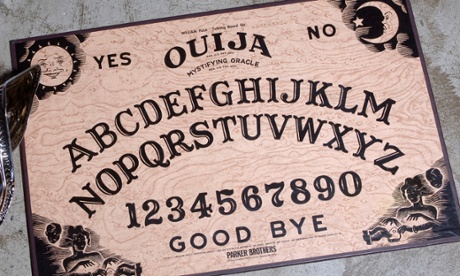
Forget VAT. In Northern Ireland Ouija boards are also an election issue. My colleague Henry McDonald has sent me this.
Democratic Unionist Gregory Campbell is clearly making an early appeal to the Evangelical Christian section of the electorate as he seeks to be returned as MP for East Londonderry.
Campbell tabled a parliamentary question today in the Commons for the business secretary to regulate the sale of Ouija boards.
A DUP spokesman said the MP raised the issue of the ‘spirit boards’ by a constituent back in Northern Ireland. Evangelical Christians including Campbell himself believe Ouija boards are the work of the devil and have been used to conjure up evil spirits. The Lib Dem business minister Jo Swinson told the MP said the government department had no such plans to regulate their sale.
Updated
Ruling out tax increases - 6 alternative taxes that could go up
Both Labour and the Conservatives have made announcements today ruling out certain tax increases. But the next government will still be faced with a massive deficit, and most commentators expect some taxes will go up.
So where could the chancellor find the money? The best starting point is chapter 10 of the IFS’s green budget, Options for increasing tax (pdf). It sets out a wide range of options. Here are five of them, chosen more or less at random.
1. Freezing all income tax and national insurance thresholds for two years.
Would raise: £3.7bn in 2015-16
This would effectively amount to a tax rise, but, because it would not involve an increase in tax rates, Labour could arguably say it was keeping its promise not to put tax up.
2. Raising corporation tax by 1 percentage point
Would raise: £1.5bn
This would be tricky, though, because the trend in recent years has been to cut corporation tax, not raise it.
3. Increasing council tax rates by 10%
Would raise: £2.3bn
Again, this would be tricky, because governments have been trying to freeze council tax in recent years, although you could argue that that would make an increase easier to justify.
4. Increasing fuel duty by 10%
Would raise: £2.6bn
This is another tax where increases have been deemed politically unacceptable, although, again, previous freezes could make future increases more defensible.
5. Imposing VAT on financial services
Would raise: £4.7bn
Labour has promised not to put up VAT or extend it to “food, children’s clothes, books, newspapers and public transport fares”. But there are many other goods and services that are not covered by full VAT, and extending the VAT base could raise vast sums (£67bn if absolutely everything went up to 20%). This would be one of the easier extensions to justify.
6. Reducing tax relief on pension contributions to the basic rate
Would raise: £10bn
The budget included plans to cut tax relief on pension contributions, and Labour has further plans in this area, but, as this figure shows, the potential savings in this area go well beyond what the main parties have proposed.
Updated
According to James Forsyth in this week’s Spectator, David Cameron is actively preparing for a second coalition with the Lib Dems. Here’s an extract.
The Spectator knows of at least two detailed discussions that Cameron has had on the topic in recent weeks. He said the same in both: no matter what they might hear to the contrary, he does not want to run a minority government. In the likely event of another hung parliament, he would prefer coalition. So the outcome of the general election will be decided by two battles: one at the ballot box, and the other behind closed doors — away from (and, in some cases, running contrary to) what was said on the campaign trail.
Ruling out tax increases - Potential costs to the Exchequer
With both main parties making important announcements about their tax plans for the next parliament, as Newsnight’s Laura Kuenssberg says, this could turn out to be a very significant day for the Exchequer
Every percentage point in VAT rise gets Treasury 5bn, every employee NI rise 3.7bn, employer 4.7bn - this has been a very expensive day
— Laura Kuenssberg (@bbclaurak) March 25, 2015
Here are the potential costs in more detail. I’ve taken the figures from the IFS’s green budget.
Not raising VAT (a Labour and Conservative commitment)
Raising the main rate of VAT by 1 percentage point would raise £5.2bn in 2015-16.
Raising the reduced rate by 1pp would raise £310m.
Raising the zero rate by 1pp would raise £1.7bn.
Not raising basic or higher rate of income tax (a Labour commitment)
Raising the basic rate by 1pp would raise £4.2bn.
Raising the higher rate by 1pp would raise £1.2bn.
Not raising national insurance (a Labour commitment)
Raising the main employee and self-employed NICs rate by 1pp would raise £3.9bn
Raising the upper employee and self-employed NICs rate by 1pp would raise £1bn
Raising employer NICs by 1ppc would raise £2.5bn
Kuenssberg thinks these commitments could turn the election campaign into “total fairlyland”.
With both big parties now ruling put raising almost every tax, does the elex campaign turn into total fairyland?
— Laura Kuenssberg (@bbclaurak) March 25, 2015
They both want to sort out books, at different speeds -cash comes from taxes or cuts, you can't keep ruling out tax rises without impact
— Laura Kuenssberg (@bbclaurak) March 25, 2015
Updated
This is good on ruling out tax increases.
hierarchy of pre election tax promises: "No plans to" < "rule it out" < "read my lips" < "cast iron guarantee" < "will resign if it happens"
— Faisal Islam (@faisalislam) March 25, 2015
Alistair Darling on ruling out a VAT increase
We haven’t heard yet from Alistair Darling, the former Labour chancellor, about David Cameron and Ed Miliband both ruling out an increase in VAT in the next parliament. But we probably know what he thinks, because he addressed this subject in his memoirs.

This is what he wrote.
There was one final spat [before the 2010 election campaign got fully underway]. Ed Balls and Gordon [Brown] wanted to make a virtue of us not increasing VAT by ruling it out for the whole of the next parliament. They then wanted to challenge the Tories to do the same. Nice electoral politics, but economic madness, was my view. No chancellor can tie his hands on tax.
Updated
And it is worth pointing out that, although Labour has ruled out increasing income tax (apart from the top rate), national insurance and VAT, the Tories have only ruled out increasing VAT.
On the other taxes, their argument can be paraphrased as: We don’t need to rule out increases, because we’re not planning them.
One party source told me: “[Tax rises] do not feature in the agenda of what we are going to do. As the prime minister said, they are not part of the plan.” Another source said: “You can see what our plans are; our plans are for cuts.”
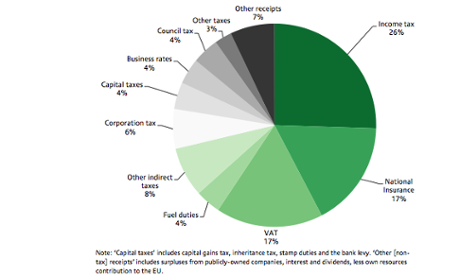
Labour has now ruled out increasing the three main taxes that produce revenue for the Treasury: income tax (apart from the highest rate, which it will raise), national insurance and VAT.
This chart, from the Institute for Fiscal Studies green budget, shows how these three taxes, will account for 60% of government revenue in 2015-16.
Balls says Labour won't raise basic or higher tax rates, or national insurance
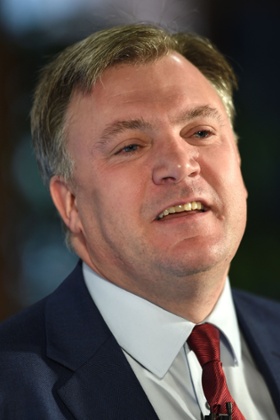
Ed Balls, the shadow chancellor, has been giving interviews following his announcement that Labour is ruling out an increase in national insurance. (See 2.06pm.) Here are the key points.
-
Balls said Labour was ruling out any increase to the basic and higher rate of income tax, and national insurance. Yesterday he strongly hinted that Labour would go into the election ruling out basic and higher rate tax increases, but the national insurance move is new. He also confirmed Labour would not increase VAT.
I said yesterday we will make our tax pledges in our manifesto, but I said yesterday the next Labour government will not raise the main rate of VAT, I said we will not increase the basic and higher rates of income tax, and I said yesterday and I’ll say it again to you today: the next Labour government will not raise National Insurance. That will be in our manifesto.
-
He said voters would not believe Cameron’s promise not to raise VAT.
I don’t think anybody’s going to believe a word David Cameron said. This was the prime minister who in 2010 said he would not raise VAT and straight after the election he raised it from 17.5% to 20%. Every Tory prime minister has raised VAT and the Tories will do so again. And the reason is very clear: they’ve got £10bn of tax cut promises – they can’t say where they’re going to pay for it – and the budget confirmed spending cuts deeper in the next three years than in the last five. These would be so decimating to our police, to our national defence, to social care that the only way the Tories will make their sums add up is cutting the NHS and raising VAT.
-
He said today’s announcement from Cameron was made in panic.
I think this is a huge problem for David Cameron and George Osborne. The reason why George Osborne has resisted this for weeks is because he knows it’s the wrong thing for the Tories to do because nobody can believe them; it’s why it wasn’t in the Budget last week. David Cameron, though, is in a panic – that’s what we’ve seen. But I remember John Major and Norman Lamont being in a panic in 1992, 93, 94 – they broke their promises and David Cameron will do the same thing again.
Updated
Lunchtime summary
- David Cameron has ruled out raising VAT in the next parliament as he moves to close off one of the main lines of attack from Labour, which had warned that the Tories would increase “the tax that hits everyone”. As Nicholas Watt and Rowena Mason report, in the last session of prime minister’s questions before the election, Cameron scored a clear victory over Ed Miliband, who was unable to say in turn whether a Labour government would raise national insurance contributions. Cameron said that Miliband’s failure to rule out an increase in national insurance showed that Labour was planning to introduce a “bombshell” tax on jobs. But within the last few minutes Labour announced that it was ruling out a rise in national insurance. (See 2.06am.)
-
Cameron has described Ed Miliband as “Alex Salmond’s poodle”. Speaking at PMQs, he also said the Labour party had been been taken hostage by the SNP.

As far as I can see, Alex Salmond has taken the entire Labour Party hostage and today we have got the ransom note.
And the ransom note is very clear. It says higher borrowing, uncontrolled immigration, unfettered welfare, higher taxes and weaker defence.
That’s what is being demanded and the British people have only one way of saying no to this appalling hostage situation - and that is to vote Conservative on May 7.
Later, when Labour’s Stephen Pound suggested that Cameron was a “lame duck” following his announcement that he would not serve a third term, Cameron replied:
Never mind talk of ducks, I’m looking at Alex Salmond’s poodle.
-
Cameron has been urged to publish a list of the republicans and Sinn Fein members who “begged, asked or received” royal pardons. As the Press Association reports, Democratic Unionist deputy leader Nigel Dodds told MPs that information would show Northern Ireland’s republicans who of their “great stalwart leaders” had received them.
Following the publication of the Northern Ireland select committee’s report into the disgraceful on-the-runs debacle yesterday, it’s now been revealed that the man who went about distributing these letters to IRA fugitives, Gerry Kelly of Sinn Fein, has actually the Royal Prerogative of Mercy for certain crimes.
Would you now list in the library of the House all those other Sinn Fein members and leading republicans who have likewise received a royal pardon so that republicans in Northern Ireland can know which of their great stalwart leaders have either begged, asked or received - probably on bended knee - such a royal pardon.
And secondly, so that everybody can know in the country which governments have been involved in such nefarious activities.
Cameron said that he would consider this idea, but that the peace process involved some “difficult compromises”.
-
Cameron has accused Labour MPs of attempting of a “disgraceful cover-up” over the NHS. He was responding to a question from the Conservative MP Charlotte Leslie, a member of the health committee, who said that Labour MPs were blocking publication of a report about the Health Act. She asked Cameron:
Do you share my concern that the objective scrutiny role of the select committee system has been fundamentally undermined by Labour’s refusal even to discuss a draft report, having heard evidence of decreased admin costs since the health reforms, privatisation slowing since 2005, TTIP not posing a threat to the NHS, no charges or top-ups introduced and no plans to? And do you agree that refusing even to discuss this flew in the face of our public scrutiny?
Cameron replied:
You make a very important point, which is this select committee report has been held back because Labour MPs don’t want to tell the truth about our National Health Service. They are only interested in trying to weaponise the NHS.
- Jim Murphy, the Scottish Labour leader, has said up to 40,000 apprentices in Scotland would be offered free bus travel to get to work under a Labour government.
- A minority Labour government propped up by the SNP would be the worst possible outcome of the general election for most UK voters, a poll has suggested. As the Press Association reports, nearly three-fifths (59%) of UK voters said they would be “dismayed” by a Labour-SNP alliance, a YouGov poll for The Times found. This compares with 54% who said they would be dismayed by a Labour-Liberal Democrat coalition, 52% dreading another Conservative-Lib Dem coalition, 49% a Labour majority and 45% a Tory majority. A quarter said they would be “delighted” or would not mind a Labour-SNP alliance, compared with a third broadly positive about Lab-Lib coalition, 37% positive about another Tory-Lib pact, 41% backing a Labour majority and 46% a Tory majority.
Updated
Labour rules out increasing national insurance
Ed Balls, the shadow chancellor, has just announced that Labour will not raise national insurance. This is what he told a briefing with journalists.
We will make it clear in the manifesto Labour will not be raising NI. That will be a clear pledge from us.
The Lib Dems have put out a statement following Ed Miliband’s performance at PMQs. It’s from Lord Scriven, a campaign spokesperson. (And, no, I had never heard of him either.)
The Liberal Democrats’ fair and sensible economic approach means we will cut £50bn less than the Tories and borrow £70bn less than Labour.
Under our plan to finish the job of balancing the books there is no need to increase income tax, VAT, national insurance or corporation tax.
Ed Miliband had one final chance today to prove his economic credentials and he fluffed it.
He can’t rule out a rise in National Insurance because Labour’s only financial strategy is to pile yet more money onto the nation’s credit card.
Meanwhile, David Cameron and the Tories can’t explain why they want to slash public spending more than necessary and fix the deficit on the backs of the working poor.
PMQs - Verdict from the Twitter commentariat
This is what political journalists and commentators are saying about PMQs on Twitter.
Every tweet I’ve seen from my commentariat feed says David Cameron won. Here are some of them.
Awful #PMQs for Miliband. In their last head-to-head a big win for Cameron. Miliband didn't expect VAT answer; then dodged on his NI plans.
— Tim Montgomerie ن (@montie) March 25, 2015
PM came out well in that. Lesson to Miliband is that unless you can rule out tax rises, don't ask PM about them! #PMQs
— Paul Brand (@PaulBrandITV) March 25, 2015
COMMENT Oh dear, total car crash for EM. labour should have prepared better for this PMQs. Why not go on this govt's broken promises ?
— Adam Boulton (@adamboultonSKY) March 25, 2015
Well that wasn’t Ed’s best #PMQs. Cameron answered the first question and Miliband never really got back on the front foot
— Mark Ferguson (@Markfergusonuk) March 25, 2015
Tory benches much the louder at last PMQs before election. Their man got the better of it.
— Carl Dinnen (@carldinnen) March 25, 2015
Importance of this PMQs to send MPs off in good heart. In that respect, a better day for the Tories.
— Joey Jones (@joeyjonessky) March 25, 2015
Cameron may wish he hadn't chickened out of a Miliband TV head-to-head. The wounded Tory came out fighting at final #PMQs
— Kevin Maguire (@Kevin_Maguire) March 25, 2015
Rarely seen the Labour benches looking more glum - not the send off they wd hv hoped for from the final #PMQs
— Jason Groves (@JasonGroves1) March 25, 2015
Cameron 6 - Miliband 0. #PMQs
— Iain Martin (@iainmartin1) March 25, 2015
2 instant verdicts from #PMQs (1) win for cameron (2) public will be further turned off by the yaboo-ery
— Nigel Morris (@NigelpMorris) March 25, 2015
This is a bravura performance from Cameron :-( #PMQs
— Political Scrapbook (@PSbook) March 25, 2015
If I was Cameron, I'd change my mind about head-to-head.
— India Knight (@indiaknight) March 25, 2015
Oh dear. Disaster for Ed Miliband in #pmqs. Cameron saw that VAT question coming a mile off.
— Owen Bennett (@owenjbennett) March 25, 2015
Samantha Cameron beaming at Cameron's answers. She's not alone. Tory benches happier than I've seen them in a while, buoyed by the tax trap
— James Forsyth (@JGForsyth) March 25, 2015
Clear win for Cameron today. But will it be his last?
— Tim Shipman (@ShippersUnbound) March 25, 2015
Oh dear, that "give me a straight answer on VAT" strategy for today's #PMQs didn't go so well for Miliband
— Ian Katz (@iankatz1000) March 25, 2015
Just written a piece about how no one notices PMQs. Which from Ed Miliband's perspective is just as well...
— Dan Hodges (@DPJHodges) March 25, 2015
And here are some other interesting tweets about the exchanges.
And yet again, we see the essay crisis prime minister. Backed into a corner, he performs at his best. What a time to do it. #PMQs
— Michael Savage (@michaelsavage) March 25, 2015
Nancy Cameron just shouted: "Yeah!" at the end of that Cameron/Miliband exchange #pmqs #getnancyonthetvdebates
— Jane Merrick (@janemerrick23) March 25, 2015
Cameron porkie there. He's Dave 4 Kitchens, not 1: 2 Downing St(rented, tenancy up for discussion), 1 Notting Hell, 1 Witney #PMQs
— Kevin Maguire (@Kevin_Maguire) March 25, 2015
Well, this lasted long... pic.twitter.com/ueReNAr9hh #pmqs
— Asa Bennett (@asabenn) March 25, 2015
We are seeing 'good dave' at pmqs today - funny, compassionate, lots of grace. Must be sam cam watching!
— ann treneman (@anntreneman) March 25, 2015
Packed Lords gallery for #PMQs Warsi, Feldman, McAvoy, Bew, Dubs, Empey, Rennard, Bates, Ian Lang, Stewart Wood. Interesting mix
— Tony Grew (@ayestotheright) March 25, 2015
Presumably Cam's promise never to raise VAT only applies if Tories win absolute majority. Which won't happen. #PMQs
— Iain Macwhirter (@iainmacwhirter) March 25, 2015
As I predicted yesterday, Cameron rules out VAT increase. Tory strategy all about keeping focus on big picture by killing distractions.
— Jeremy Cliffe (@JeremyCliffe) March 25, 2015
Miliband got set up. Osborne stalled on Vat at Treasury Select in the hope that would make Miliband go on it and Cameron could rule it out
— James Forsyth (@JGForsyth) March 25, 2015
Labour says it will continue with Tory VAT bombshell posters even though Cameron has just categorically ruled out a rise #pmqs
— James Chapman (Mail) (@jameschappers) March 25, 2015
My PMQs Verdict
My PMQs Verdict: Well, that was worth the hype. Normally exchanges at PMQs are heated, but relatively inconsequential. But today we got a proper announcement - a surprise fiscal statement, with a significant implications for a potential Conservative government - and David Cameron deployed it with perfect timing. It is rare to see a PMQs ambush executed with more aplomb.
Here is the key exchange.
Miliband: On Monday, the PM announced his retirement plans and he said it was because he believed in giving straight answers to straight questions. After 5 years of PMQs, that was music to my ears ... Will he now rule out a rise in VAT?
Cameron: In 43 days time I plan to arrange his retirement, but he’s right, straight answers deserve straight questions and the answer is Yes.
That said, although Ed Miliband saw his attack strategy collapse like a pack of card, he held his own well. (Or, at least, I think he did. I listen to PMQs, but I don’t watch it, because I’m typing, so I could not see what his face looked like when Cameron said Yes.) Miliband had back-up plan, and he asked a series of other question illustrating how Cameron has broken promises. Cameron did not answer these particularly effectively, but instead kept challenging Miliband to rule out an increase in national insurance, which of course he refused to do. Purists might argue that it is not the prime minister’s job to ask questions at PMQs, but that is rather missing the point. If the leader of the opposition’s refusal to answer a question looks evasive, and relevant to the topic in hand, viewers aren’t going to be impressed, regardless of who’s supposed to be answering the questions.
It would be nice to know when Cameron planned this move. It does look as though George Osborne may have been setting Miliband up, when he pointedly refused to rule out a VAT increase at the Commons Treasury committee yesterday.
But the more interesting question is whether the Tories ever planned to rule out a VAT increase during the election campaign. Almost certainly not is probably the answer, because in previous elections they have been careful not to rule out a VAT increase. Labour did not rule one out before the 2010 election either (although Ed Balls wanted to).
And that takes us to a point I made earlier (see 12.13pm); political parties don’t generally rule out a VAT increase if they expect to win.
So Cameron scored a striking tactical win this afternoon. But the manner of his victory illustrated an underlying weakness.
Updated
On the Daily Politics Priti Patel, the Conservative Treasury minister, has just said she did not know about David Cameron’s announcement before it was made.
Cameron says we need better transit schemes in Bristol. Replying to Chris Skidmore, the Conservative MP and historian, who has written a book about Richard III, he says Richard III will be buried tomorrow. That was the last time someone did in their relative to get a top job. The country ended in chaos, he says.
And that’s it.
Stephen Pound, the Labour MP, says some people called Cameron “chicken” last week. He hopes we’ve moved on. But is it fair to call him a lame duck?
Cameron says he knows what a lame duck involves; trying to get into Downing Street on the back of Alex Salmond. Never mind ducks; he is looking at Salmond’s poddle.
In his last PMQs, David Cameron says Miliband is Alex Salmond's poodle as Tory MPs chant "woof, woof" from the backbenches
— Rowena Mason (@rowenamason) March 25, 2015
Updated
Hugh Bailey, the Labour MP, reads from a cutting before the 2010 election quoting Cameron ruling out an increase in VAT. Why should people believe Cameron now?
Cameron says he has given a straight answer. In government, he knows what needs to be done. Both main parties have set out plans for a £30bn adjustment (ie, cuts). The Tories have said how they would fund this, he says. But Labour says it would find half the money from tax increase. Today we learnt it would come from a jobs tax, he says.
Elfyn Llwyd, the Plaid Cymru MP, says he is stepping down. But he hopes Alex Salmond will return. Which causes him more dread?
Cameron says he was hoping he would miss both of them. But he pays tribute to Llwyd, saying he has made some very passionate speeches in the Commons, on subjects like the Iraq war.
Charlotte Leslie, a Conservative, says Labour MPs on the health select committee have blocked a report since it heard evidence that administration costs have declined in the NHS since the Health Act was past, that privatisation has slowed down, and that TTIP does not pose a threat.
Cameron says the fact that this report has been held up is disgraceful.
#PMQs Feisty Tory Charlotte Leslie raises health select cttee row over "good NHS NEWS" report and alleged Labour sabotage
— MichaelWhite (@MichaelWhite) March 25, 2015
Updated
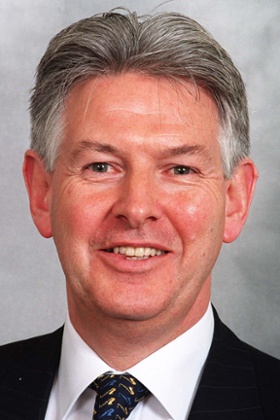
Labour’s Michael Connarty stands up. Somone shouts “SNP gain”. Connarty asked about a couple in his constituency who lost £47,000 after taking advice from a dodgy adviser. Should people like this be regulated?
Cameron pays tribute to Connarty, saying he is standing down. Someone corrects him. “He’s not.” He says this is his 146th appearance at PMQs, and his team normally get this right. He says he will pay tribute to Connarty anyway, and wish him luck. All MPs have heard similar stories. He will look into this and write to Connarty, either in his capacity as MP or whatever else he is doing after the election.
Updated
Cameron says broadband rollout has doubled under this government.

Caroline Lucas, the Green MP, says the sun shines bright green on her Brighton constituency. But trains are running late, and compensation rules are unfair. Will Cameron back the Brighton Argus campaign for fairer compensation?
Cameron says the Green council in Brighton does not empty people’s dustbins. But he will look at the Argus campaign.
Updated
Simon Kirby, a Conservative, says it is easy to say the words long-term economic plan. But in his Brighton constituency there has been massive investment. Will the sun continue to shine on Brighton?
Cameron says Kirby has been a strong champion for Brighton. And the claimant count in his constituency has gone done 52% since the election.
Cameron says the pressures on the station at London Bridge are immense. But the government is investing in Britain’s infrastructure.
#PMQs Gosh he's claiming credit for Crossrail, a cross party project, as I recall
— MichaelWhite (@MichaelWhite) March 25, 2015
Updated
Cameron says Alex Salmond has taken the Labour party hostage. And he has sent the ransom note, including higher taxes. Voters can only deal with this by voting Conservative.
Yvonne Fovargue, the Labour MP, says Cameron has put himself on a fixed-term contract. And, from 7 May, it will be a zero hours one.
Cameron says his contract is clear: 10 years, two terms, one kitchen.
Updated
Richard Drax, a Conservative, says rail links in south Dorset need to be improved.
Cameron says the government has announced extra seats on South West Trains. We can only have this investment because we have a long-term economic plan.
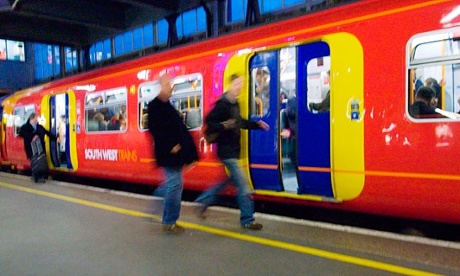
Updated
Nigel Dodds, the DUP MP, asks about the “disgraceful on-the-run debacle”. Sinn Fein’s Gerry Kelly has had a royal pardon, he says. Will Cameron name the other Sinn Fein politicians who have had a royal pardon? People should know which governments were involved in such “nefarious activiities”.
Cameron says he will look at this. But in the past governments have had to make distasteful compromises in the cause of peace.

Simon Danczuk asks about immigration. Cameron says he has been following Danczuk’s despatches from the front, and he quotes from Danczuk’s New Statesman interview. He says he would encourage Danczuk to do more interviews.
Simon Danzcuk cheered by Tory MPs. Raised asylum seeker numbers. Both Eds deep in conversation..
— Paul Waugh (@paulwaugh) March 25, 2015
Updated
My snap PMQs verdict
Snap PMQs verdict: It is rare for the PM to use PMQs to spring a policy surprise, and Cameron decision to rule out a VAT increase gave him the platform for an easy win. There is one point worth remembering, though; as a colleague pointed out when Ed Balls ruled out a VAT increase yesterday, it’s not what you normally do when you expect to win.
Updated
Miliband asks Cameron to rule out cutting the top rate of income tax.
Cameron says the rich are paying more under this government. He wants to keep midde-earning families out of the top rate of tax. Will he promise not to raise NI?
Miliband says this has been a government of the few for the few. It is time for a Labour government.
Cameron says the deficit is going down, operations in the NHS is going up, inflation is at zero and employment is up. The government offers competence. Labour offers chaos.

Miliband says Cameron will have plenty of time to ask questions after 7 May. The OBR says cuts will be deeper. Did he break his promise on cutting immigration?
Cameron again asks Miliband to rule out an increase in NI. This is Labour’s jobs tax. They clobber firms with it. Will he rule it out.
Miliband says there is only one person who will raise taxes on ordinary families. Cameron promised no top-down NHS reorganisation. Did he break that promise?
Cameron says he has put more staff into the NHS. Miliband cannot give a clear answer on NI. Miliband has had five years to get a policy. He has failed.
Updated
Cameron rules out VAT increase in next parliament
Ed Miliband says Cameron announced his retirement plans on Monday. It was because he believed in giving straight answers to straight questions. That was music to my ears, he says. Will he rule out a rise in VAT?
Cameron says he plans to arrange Miliband’s retirement. His answer is yes.
-
Cameron rules out an increase in VAT.
Miliband says no one will believe it because of his spending plans. Can Cameron confirm that his spending cuts will be greater than anything seen in the last five.
Cameron challenges Miliband to rule out a national insurance increase.
Updated
Cameron says sorry to victims of infected blood
Rory Stewart, the Conservative MP, asks about the Penrose report into those given HIV from infected blood.
Cameron says it will be for the next government to take account of these findings. But he must recognise what happened. To those patients given infected blood, he would like to say sorry on behalf of the government. Some £25m will be given in 2015-16, as a transitional step towards full compensation. Lord Penrose is ill. MPs will want to offer him their best wishes, he says.
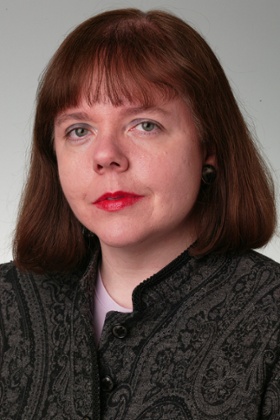
Labour’s Ann McKechin says the number of people on zero hours contracts has increased, and the percentage of people in relative poverty has increased.
Cameron says there are 174,000 more people in Scotland in work. And only one worker in 50 is on a zero hours contract.
Updated
David Cameron starts by offering his condolences to those who died in the French air crash. At this stage three Britons are known to have been on the flight. The Foreign Office is trying to find out if more were on it.
Good to see that Nick Robinson feels well enough to tweet.
Not sure it'll aid my recovery but I'm tuned in to last #PMQs before election.Time for new show -James's Kitchen Nightmare? @daily_politics
— Nick Robinson (@bbcnickrobinson) March 25, 2015
Clegg update: he is here for #pmqs
— Tony Grew (@ayestotheright) March 25, 2015
Cameron's wife and two of his children in gallery to watch PMQs
Lovely to see Sam Cam in the gallery with Nancy and Arthur for the last PMQs of this Parliament along with @rupertdoggett
— margot james (@margotjames2015) March 25, 2015
Samantha Cameron is sitting three metres from me in the Gallery with two of her children to watch what could be her husband's last #PMQs
— Christopher Hope (@christopherhope) March 25, 2015
(Shouldn’t they be in school?)
Updated
On the Today this morning Deborah Mattinson, the pollster, said PMQs matters for politicians - but only because of its impact on party morale. It did not register with the general public, she said.
[PMQs is] about the parties, that’s about teeing up your troops. It’s not about the voters at all. It matters. But it’s not about the voters.
According to PoliticsHome’s Paul Waugh, Labour tried a chicken stunt at Number 10 today, but got the timing wrong.
Labour sent three chickens to Downing Street to get a pic with PM's car as he left for PMQs Only trouble was they turned up 20 mins too late
— Paul Waugh (@paulwaugh) March 25, 2015
Some PMQs trivia.
A few statistics ahead of the last #pmqs before the election. There have been a total of 157 #pmqs in this parliament.
— Ian Jones (@ian_a_jones) March 25, 2015
David Cameron has been present for 146 of the 157 #pmqs in this parliament; Nick Clegg has stood in for nine and William Hague two.
— Ian Jones (@ian_a_jones) March 25, 2015
An average of 32 questions are asked at each #pmqs, meaning roughly 5,000 questions have been asked at #pmqs since the 2010 election.
— Ian Jones (@ian_a_jones) March 25, 2015
You can decide for yourself how many of those 5,000 questions have actually been answered. #pmqs
— Ian Jones (@ian_a_jones) March 25, 2015
The Today programme had a nice item this morning with highlights from the PMQs exchanges between David Cameron and Ed Miliband this parliament.
You can hear it here. It starts 1hr 46m into the broadcast.
PMQs
PMQs starts in just under 20 minutes. It’s the last before the election, of course.
That has prompted some rather odd tweets from broadcasters.
Daily Politics and FINAL PMQs of this Parliament!!!! Coming now on BBC2!!!!!!!!!!!!!!!!!!!! #bbcdp
— Andrew Neil (@afneil) March 25, 2015
To misrepresent Henry James horribly: Here it is that remarkable thing - the last #PMQs of the 2010-2015 parliament. Live at noon.
— Adam Boulton (@adamboultonSKY) March 25, 2015
Owen Paterson says being in EU undermines UK defence
Owen Paterson, the Conservative former environment secretary, is giving a speech to the Heritage Foundation in America later today. In it, he will argue that being a member of the EU makes it harder for Britain to defend itself.
Here’s an extract from the speech that his office has released.
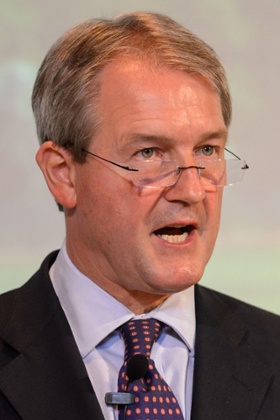
The UK, leaving the EU, would regain our independence to devise our own foreign policy. Working with like-minded allies, we would forge our own defence policy and the practical requirements that should follow on from that.
It is the first duty of a government to defend its citizens. I believe we should provide the necessary funds required by an appropriate foreign policy. Nor am I fussed about committing to particular projects whether it is aircraft carriers or improved cyber defence. I don’t wish to be bound by a particular percentage, it is the required defence outcome that should be decisive. If foreign and defence requirements change, we should not be afraid to override established percentages.
Updated
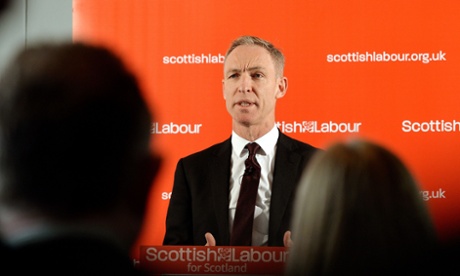
Murphy says Labour will use City money to help young people in Scotland
Jim Murphy, the Scottish Labour leader, has been giving a speech in the City of London this morning. He said that Labour would spend £1bn on measures for Scotland’s young people, including a Scottish jobs guarantee and a £1,000 increase in bursaries for Scottish students, and he made a point of stressing how this involved a redistribution of funds from the City. That was something the SNP could not match, he said.
This is an unprecedented investment in our young people, only made possible by harnessing the wealth of the whole of the UK, including the wealthiest in the City of London.
It is a guarantee of opportunity that the SNP can’t deliver because they don’t believe in redistributing from South to North.
And it is a guarantee that the Tories won’t deliver because they do not believe in redistributing from rich to poor.
He said bankers owed society a period of “penance”.
Jim Murphy in the City of London says that after the financial crisis bankers owe "not just a debt but a period of penance"
— Kate Devlin (@_katedevlin) March 25, 2015
He propose free bus travel for apprentices.
Jim Murphy says he will offer apprentices in Scotland free bus travel to get to work
— Kate Devlin (@_katedevlin) March 25, 2015
And he took a swipe at his enemies - the SNP.
Murphy on Salmond threat to vote down Tory budget:"The SNP are David Cameron's little helpersThe more SNP MPs the more chance DC clings on"
— Tim Reid (@TimReidBBC) March 25, 2015
And Diane Abbott, the Labour MP.
Jim Murphy on mansion tax: "To be attacked from the right by Boris Johnson isn't unusual; to be attacked from the right by Diane Abbott is."
— Conor Pope (@Conorpope) March 25, 2015
Murphy refers to Diane Abbott as "that wannabe mayor".
— Jamie Ross (@JamieRoss7) March 25, 2015
The Murphy/Abbott feud was generated by Abbott’s reaction to a policy announcement from Murphy at the start of the year.
Updated
Frank Field, the Labour former welfare minister, has welcomed his party’s plan to cut the use of food banks. (See 10.32am.) Field co-chaired a parliamentary inquiry into food poverty which produced the Feeding Britain report and he says Labour’s proposals will implement its recommendations.

Labour deserves real credit for being the first party to lay down a clear set of markers by which the success of its welfare reforms can be measured. While one third of the proposals we set out in Feeding Britain have already been put into action, we have today been given the first indication that the remaining two thirds of our recommendations could form the basis of a strategy to combat hunger and prevent the need for so many people to rely on food banks during the next parliament. Feeding Britain’s aim is now to gain a similar undertaking from the other parties.
Updated
Labour's five-point plan to cut the use of food banks

Labour has announced a five-point plan to reduce the number of people using food banks. According to the party, here are the proposals.
1. Tackle low pay, by raising the minimum wage to at least £8 an hour before 2020, promoting a living wage, and ending exploitative zero-hours contracts so that working people can bring home enough to feed their families.
2. Ensure a co-ordinated government approach to food policy, ending the chaos in food policy under the Tories where no minister has taken responsibility for tackling food bank dependency.
3. Get a grip on delayed benefit payments, including jobseekers allowance, and personal independence payments for disabled people, which are pushing more people to food banks. Labour will set a target to bring down the number of people who cite delays or mistakes with their benefit payments as their reason for using food banks by the end of the party’s first year in office.
4. Abolish targets for benefit sanctions, by ensuring the system is implemented fairly by raising awareness of hardship payments, reducing waiting times for hardship payments, and making sure protections are in place for the most vulnerable including those with mental health issues, carers, pregnant women and people at risk of domestic violence.
5. Abolish the bedroom tax, which has hit over half a million people, two thirds of them disabled, pushing many into debt and through the doors of food banks.
Rachel Reeves, the shadow work and pensions secretary, has expanded on this in an interview in the Daily Mirror.
Updated
The ComRes poll about attitudes to David Cameron’s decision to announce that he would not seek a third term (see 9.35am) also contains some findings about potential Labour leaders.
Respondents were asked who would make the best Labour leader. Ed Miliband was not included as an option, but his brother David easily outperformed three of the figures who are tipped as possible successors.
David Miliband: 29%
Andy Burnham: 9%
Yvette Cooper: 8%
Chuka Umunna: 6%
PMQs will be fun. The Commons order paper (which lists which MPs are down to ask a question) could have been written by Lynton Crosby.
By a wonderful coincidence, Labour's Simon Danczuk has Q4 at #PMQs today. He called EdM a "fu**ing knob" last week. http://t.co/X99GaXLjHT
— Michael Fabricant (@Mike_Fabricant) March 25, 2015
Michael Fabricant is wrong, though, about Simon Danczuk calling Miliband a “fucking knob” in a New Statesman interview. That is what he implicitly called Harriet Harman. Danczuk’s complaint about Miliband was that he was a vote-loser who was seen as even more of a toff then David Cameron.
Here is the key quote.
Any Labour politician that says to you they knock on a door and Ed Miliband is popular are telling lies. They’re just telling lies. It’s just not true. I spend four hours knocking on doors on a Sunday – they [constituents] say things like ‘you’re doing an alright job as MP but I don’t want Ed Miliband as prime minister, so I won’t vote for you.’ So it’ll cost me votes ...
If we’re having a straight conversation about this, he [Miliband] has an image of being more of a toff than David Cameron. That’s how the public see it. And what they mean by that is that he’s seen as more aloof. They’d prefer to go for a pint with David Cameron than they would with Ed Miliband, that’s the reality of it.
When were political leaders first mentioned in the Guardian?
While you’re waiting for the final PMQs of the parliament, why not reminisce with us of the year 1992, when an incumbent Conservative government was failing to push ahead in the polls, and its leader had scuppered plans for TV debates. Sound familiar? It was also the year that a 25-year-old David Cameron made his debut in the pages of the Guardian – described as John Major’s “suave Old Etonian” personal advisor.
Our data team has delved through the Guardian archive to discover when today’s party leaders were first mentioned in our hallowed pages. In 1994 Ed Miliband was perhaps inevitably referred to as “his younger brother, Ed” in relation to David’s elevation to head Tony Blair’s policy team, while Nick Clegg actually shared writing duties on a 1992 news article on student protests in Hungary.

Updated
Nearly eight in ten voters say that David Cameron’s announcement to stand down as prime minister after two terms will have no impact on their likelihood to vote Conservative on 7 May, according to a ComRes poll.
More people (45%) see Cameron’s announcement as honest than those that see it as arrogant (28%).
Opinion is more divided when it comes to those that believe Cameron was right to rule out a third term (38%) and those who say he was wrong (32%).
In terms of who the British public would prefer as Cameron’s successor as Tory party leader: 31% said Boris Johnson, 17% Theresa May and 12% George Osborne.
However, the challenge for the prime minister is that although the announcement may not make a dent on public opinion, it could cause unease within his own party especially within the context of a fragile government forced to seek parliamentary support on a case-by-case basis.
Today's Guardian seat projection - Tories 274, Labour 271
The four most recent polls all show Labour and the Conservatives tied. However, behind the two main parties we are seeing some movement: support for both Ukip and the Greens appears to be dropping as election day nears.
Last night’s ComRes poll has Farage’s party on 10%, a two year low.
In terms of the Guardian’s seat projection there is no fundamental change from yesterday: the Conservatives are on 274 seats (up one), Labour 271, SNP 53 and the LibDems are down one and are projected to win 26 seats.
As things stand, the combined Labour-SNP tally (324 seats) means that when it comes to forming a stable government any option that excludes Sturgeon’s party would struggle to find the required support needed to win a confidence vote - which makes Alex Salmond’s comment from yesterday - “the SNP would vote down a Tory government” - significant.
Updated
ComRes poll - Tories and Labour tied on 35%, but Tories ahead on the economy
There is also a ComRes poll out this morning. Like the YouGov poll (see 8.39am), it also shows the Conservatives and Labour tied.
The Daily Mail commissioned the poll and here are the key figures.
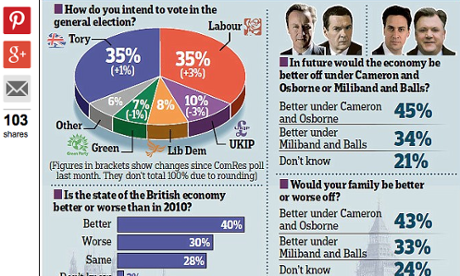
Here is the Mail’s version of the story. And here is the news release from ComRes.
Although the Conservatives and Labour are both on 35%, some of the other findings are very encouraging for the Conseratives. They have an 11-point lead over Labour on whether the economy would be better off under David Cameron and George Obsorne than under Ed Miliband and Ed Balls, an 11-point lead on whether people think their family would be better off under the Tories than under Labour, and seven-point lead on whether the country would be better off..
Cameron has a 16-point lead over Miliband on best prime minister. And Osborne has a 10-point lead over Balls on best chancellor.
People are more likely to say that the economy is in a better state than it was in 2010, by 40% against 30%. (Not that this proves much; on all almost objective measures except debt, the economy is better off.)
But there is something for Labour in the findings too. By 33% against 24%, people are more likely to say that their family’s financial situation is worse now than it was in 2010.
There are 43 days to go until the election. Here is today’s “election fact” from the Press Association.
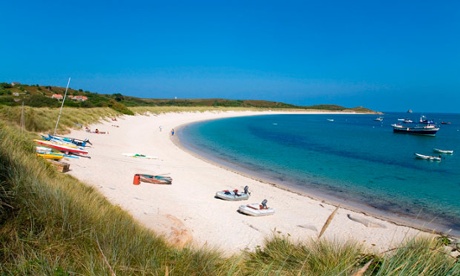
The referendum in May 2011 on whether to bring in the alternative vote system for parliamentary elections put the spotlight on two small local authority areas. The far flung Isles of Scilly had an electorate of just 1,774 and the City of London of 6,537, which enabled their counts to be completed quickly, making them the first and second authorities to declare. Both voted “No” as did most of the UK. The City can trace the origins of its government back to the Middle Ages while, more recently, the Isles of Scilly were granted their own local government board in 1890. Both are Britain’s only two “sui generis” unitary authorities allowing them a wider remit beyond that of other councils.
Updated
Ed Miliband was on ITV’s Good Morning Britain today. He said that his brother David, who is now living in New York running the International Rescue Committee aid agency, would not be campaigning for Labour in the election. He said:
We had a bruising leadership contest four-and-a-bit years ago, he’s moved on from that, I’ve moved on from that. He’s got his own thing that he’s doing and I think he wants to carry on focusing on that. One of the reasons he left after the leadership contest was because he didn’t want the soap opera.
He also dismissed the controversy about his two kitchens.
This election isn’t going to be decided by my kitchen or kitchens, it’s going to be decided by what’s happening to people in their lives.
And he said he was not complacent about winning.
I think that we are going to win the election but I’m not measuring the curtains and I think it’s really important we don’t do that.
Lynton Crosby cancels speaking engagement
Lynton Crosby, the Conservative election strategist, was supposed to be speaking at an advertising industry breakfast this morning. But he cancelled.
Looks like Lynton Crosby won't be making a rare appearance in public after all. Plug pulled at the eleventh hour... pic.twitter.com/p8WN9t1UuJ
— David Singleton (@singersz) March 24, 2015
This is not gone down well with some of those who turned up, it seems.
Arrived at #AWEurope breakfast event with Lynton Crosby to find that it has been cancelled! Very Poor form guys.
— Danny Rogers (@dannyrogers2001) March 25, 2015
Some very pissed off people in Frith Street this morning #AWEurope !
— Danny Rogers (@dannyrogers2001) March 25, 2015
I'm in Frith Street waiting for Lynton Crosby. Wish someone has told me. #AWEurope
— Alistair MacCallum (@alimaccallum) March 25, 2015
YouGov poll - Tories and Labour tied on 35%
Here are today’s YouGov GB polling figures.
Update: Cons & Lab tied - Latest YouGov/The Sun results 24th Mar - Con 35%, Lab 35%, LD 8%, UKIP 12%, GRN 6%; APP -14 http://t.co/G8NBsJEgDG
— YouGov (@YouGov) March 25, 2015
Updated
Good Morning.
Grant Shapps, the Conservative chairman, has been speaking about Alex Salmond’s New Statesman interview, and his threat to vote down a minority Conservative government’s Queen’s Speech.
Alex Salmond is threatening to undermine a government chosen by the British people. This is a man who lost his battle in Scotland but is now determined to bring chaos and insecurity to the rest of the country.
It’s a very peculiar line, echoing the statement the Conservative party issued last night saying that Salmond was threatening to “sabotage the democratic will of the British people”. It does suggest that the Conservatives have a poor understanding of how democracy is supposed to work. If elected MPs choose to vote against something, that’s not undermining democracy; that is practising it. Even Shapps ought to be able to see this.

Updated
Commenters below the line point out, rightly, that the season of TV debates has already begun, with BBC3’s Free Speech series.

I would consider the BBC3 'free speech' debates to be the first of the debates and they are excellent.
Sadly the Tories are notable by the absence of David Cameron (again) and the no-show of even Mr Shapps. I wonder why the senior Tories are so frightened of facing the electorate, unlike every other leader of political parties as the 'cast list' shows:
Labour - Ed Miliband (Leader)
SNP - Nicola Sturgeon (Leader)
Greens - Natalie Bennett (Leader)
Plaid Cymru - Leanne Wood (Leader)
Conservatives - a first term MP, a supporter from business and a couple of journos.
4 Conservatives appeared last night and they were hammered by an audience that was specifically chosen to reflect a range of political views and backgrounds. It was not an impressive performance and the lack of any senior Conservatives was a bit insulting to the audience in all honesty, especially given all the other parties have sent their leaders.
I also saw the one with Ed Miliband who faced the audience alone who threw some tough questions at him that he answered with impressive good humour.
Thanks to FTN for the list of those being interviewed.
Tory party chair Grant Shapps was due to appear on last night’s “I’m a Conservative, ask me anything” episode (that is how it was billed), but was replaced on Tuesday morning by junior education minister Sam Gyimah, who appeared alongside journalist Toby Young and Ian Birrell, and The Apprentice contestant Luisa Zissman.
@paulwaugh Funny how Grant's diary problems started the day after @guardian put the allegations in this story to him http://t.co/MLLOWa49lg
— Randeep Ramesh (@tianran) March 24, 2015
The other parties, as reader DJT1Million points out, all put forward their leaders.
Updated
Ahead of the final PMQs of this parliament – today, at noon; catch all the pre-scripted gags and backbench harrumphs on this live blog – the Guardian’s sketchwriter John Crace has been looking back at five years of blows traded by Cameron and Miliband across the dispatch box.
He writes:
It’s a half-hour of parliamentary time that few will miss, least of all the two main participants. While both men profess to dislike the charmless, public-schoolboy nature of their exchanges, they seldom now manage to rise above them. What began with some purpose when they first squared up to each other more than four and half years ago has long since descended into a punch-drunk pantomime stalemate.
And John’s verdict on the two stars of the show?
Not that it makes any difference [what questions are asked], because Cameron doesn’t answer them anyway. What he wants to answer is a question that invariably hasn’t been asked …
Miliband’s triumph has been to not be as useless as everyone expected.
But here’s a cheering reminder that behind all the bluster, the two leaders do know how to share the LOLs:
Updated
The TV debates start – I was going to type “in earnest”, but it’s actually been a rather wearisome journey to get here – tomorrow, with Cameron and Miliband grilled (separately) for Channel 4 and Sky News.
Below is a handy guide for those of you who want to ring the dates on your calendar. The Guardian election live blog will of course be following them in full:
Useful TV debates update from the Commons Library http://t.co/rPjWIABI3g pic.twitter.com/LWXL3nUxLY
— Michael Savage (@michaelsavage) March 24, 2015
Morning briefing
Good morning and welcome to day three of the Guardian’s live election campaign blogs.
Every day until the UK goes to the polls on 7 May, we will be live blogging from 7am to 10pm to bring you the latest updates on the campaign.
I’m Claire Phipps and I’ll be anchoring the blog for now, handing over to Andrew Sparrow later this morning. We are on Twitter @Claire_Phipps and @AndrewSparrow, or do please leave us a comment below the line.
The big picture
Today sees the final PMQs of this parliament, with MPs celebrating the end of term by bringing in board games and writing on each other’s shirts. Following David Cameron’s surprising slip/carefully planned announcement that he doesn’t intend to stick around for a third term as PM, Labour will no doubt be keen to give the wobbly Tories a little more of a shake.
As one Tory told my colleague Nicholas Watt:
This prime minister’s remarks will probably be forgotten in a week’s time, just as the budget is now largely forgotten. But they may not be forgotten in two months’ time.
If the prime minister is in a difficult position on 8 May after an uncertain result, then he has just ensured that his position will be that little bit less certain. It is like a small chink in the wall. You can just about spot the chink. It could eventually blow open.
You should also know:
- Labour has raised eyebrows by claiming that “savings” from scrapping the bedroom tax would pay for a £175m anti-poverty fund for Scotland. Scottish Labour leader Jim Murphy said money for the fund would come from the £35m-a-year saved for the Scottish government if Labour wins the election and scraps the bedroom tax. But a tweet by shadow work and pensions secretary Rachel Reeves prompted questions over the sums:
@RachelReevesMP @UKLabour @scottishlabour What savings? Won't you have to spend more?
— C4 News FactCheck (@FactCheck) March 24, 2015
(For those interested, Channel 4’s Fact Check later heard from Labour that it plans to scrap the bedroom tax, raise taxes to pay for it, thereby saving money because the Scottish government will no longer need to pay out to mitigate the bedroom tax.)
- This is all part of a Labour focus today on welfare and its plans to tackle food bank use, with a pledge that they “can never be allowed to become a permanent feature of British society”. Labour also says it will abolish jobcentre targets for increasing sanctions – have a read of these breaches – including missing appointments because of a brother’s unexpected death or the birth of a stillborn baby – that earned jobseekers sanctions in recent months.
- Conservatives were outraged after Alex Salmond told the New Statesman that the SNP would not assist a Tory minority government and would instead try to “lock out” Cameron by triggering a confidence vote that could see Labour installed instead.

-
Ukip has named Harriet Yeo, a former Labour councillor, to stand for the party in Folkestone and Hythe, following the expulsion of former candidate, and MEP, Janice Atkinson on Monday over an expenses scandal.
And check out our latest polling projections, based on the most up-to-date figures:
Diary
- At 8am Lynton Crosby, the Tory party’s chief election strategist, is giving a talk at ad week conference at Ronnie Scott’s jazz club, on “politics, power and the modern media”. Sadly, most of the modern media – bar the Telegraph, which is co-hosting the event – is barred, after news of the event was spotted, but I have a feeling a few whispers will find their way through.
Crosby goes public - here pic.twitter.com/mDEMw1kksp
— Sam Coates Times (@SamCoatesTimes) March 24, 2015
- At 9.30am, Scottish Labour leader Jim Murphy makes a speech in the city of London, with more on that £175m anti-poverty fund (see above).
- Noon sees the final PMQs of this parliament, with minute-by-minute coverage on this liveblog.
- Straight after that, from 12.45-2pm, Nick Clegg submits to a Q&A with Mumsnet.
- Neatly, Miriam González Durántez, lawyer and Clegg’s wife, is interviewed by Shelagh Fogarty on LBC radio at 2.30pm.
- At 6.45pm foreign secretary Philip Hammond makes a speech in London at the Lord Mayor’s Easter Banquet (who knew?).
- And the Guardian launches the latest in its Battleground Britain series, today focusing on Taunton and the threats of a Lib Dem wipeout. If you missed the first two in the series, you can find them here: Glasgow East and South Thanet.
The big issue
The last PMQs of the parliament and – potentially – the last in which Nick Clegg will be sitting next to David Cameron. Sometimes it’s been chummy:
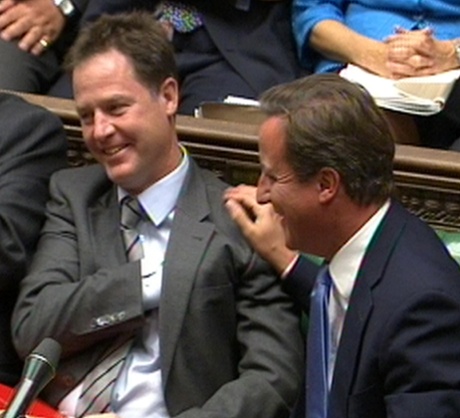
Sometimes … not so much:
Nick Clegg has turned up to PMQs, but he doesn't look like he's enjoying it much. pic.twitter.com/L0u3ruVKfP
— Frances Perraudin (@fperraudin) March 4, 2015
In terms of winning over voters’ hearts and minds, PMQs is virtually irrelevant compared with the media appearances and Mumsnet chats of the campaign. But Cameron and Miliband will be keen to trade some hefty blows today. Expect mentions of leadership challengers (on all sides), Shredded Wheat and Alex Salmond.
Read these
-
Andrew Pierce in the Daily Mail has an idea why Cameron’s cosy kitchen chat with the BBC’s James Landale went – if you’re in the what-an-error camp – so wrong:
So confident was Downing Street that the interview would go off without a hitch that Craig Oliver, the No 10 communications secretary – himself an ex-BBC man – didn’t even bother to make the trip to Oxfordshire. Cameron was accompanied instead by Michael Salter, the Downing Street broadcasting officer, who is a relatively junior adviser in his team …
Crucially Landale, who has been with the BBC for 12 years after a decade at The Times, was not asked for a list of questions he might ask, or even subject areas in advance of the interview.
- But Daniel Finkelstein in the Times (paywall) has a solution to avoid such a fuss in the future:
We should have a term limit for prime ministers. Two terms and that’s your lot. And if you quit half way through your term, your successor should require an election within months. David Cameron’s answer should be compulsory.
-
The Telegraph reports that Theresa May intends to put “rocket boosters” under current rules that restrict jobseekers’ benefits to migrants who can’t speak English. The harsher plans would extend the sanctions to housing and incapacity benefits, the report says.
- Also in the Telegraph, Mary Riddell says it’s Miliband who should be preparing to head a minority government:
Of the two prime ministerial contenders, Mr Miliband looks hungrier for change. Mr Cameron’s decision to consign himself to lame duck limbo can only help a Labour leader said by some activists to be attracting less hostility on the doorstep. As one senior party figure says: ‘His resilience under fire has earned him some respect.’
The day in a tweet
Me voy a encontrar con Miriam Gonzáles mañana @LBC - discutimos feminismo, trabajo, confianza y un tipo que se llama Nick.Nos vemos allí 🇪🇸
— Shelagh Fogarty (@ShelaghFogarty) March 23, 2015
If today were a novel, it would be …
The End of the Affair, by Graham Greene. If you swap the bomb blast for the crushing realisation that your party is on the brink of electoral wipeout.
The key story you’re missing when you’re election-obsessed
Jeremy Clarkson could be sacked by the BBC today, despite the intervention of Nancy Cameron (aged 11) on behalf of the family friend and Chipping Norton neighbour.










Is this Labour's new manifesto approach? 101 things we are not going to do. We are not going to make cats wear jumpers or raise the age of voting to 101 years old or introduce parking charges for pushchairs. I bet some pr bloke has told Ed that as Labour have no policies that are workable, they will have to make a case for what they are not going to do. They can make not doing something a pledge which is then always achievable. We will definitely not change vat or ni- so basically we are following current Tory policies, but it sounds like we are doing something different.