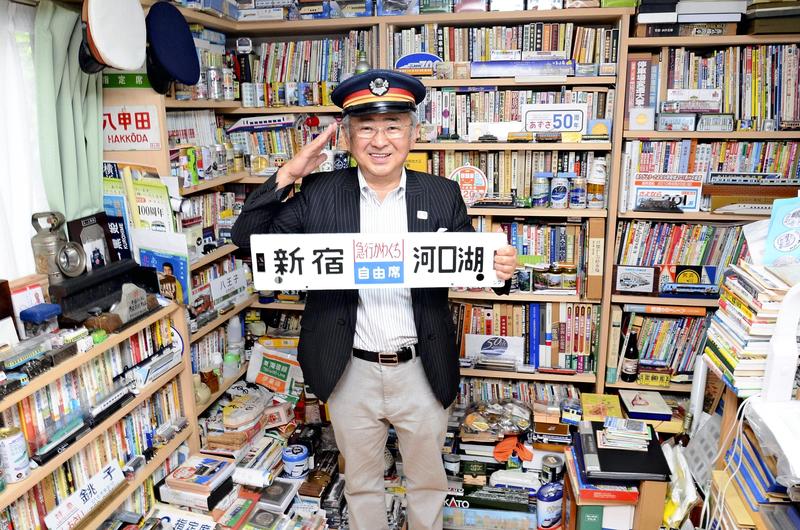
HACHIOJI, Tokyo -- Tadatsugu Numamoto is known as "Mr. Ekiben" for his vast knowledge of these boxed meals for train travelers, savvy that he has used to contribute stories to magazines and create miniature figures.
Numamoto, 72, is a former employee of the Japanese National Railways. He is currently employed by a general incorporated association, Nippon Tetsudo Konai Eigyo Chuo-kai, which handles public relations for ekiben.
In spring, Numamoto invited foreign tourists and others to his office in Taito Ward, Tokyo, where he emphasized the appeal of ekiben with empty boxes shaped like a Shinkansen bullet train and an octopus pot.
"Ekiben in Japan not only taste good, but the shape of the containers is also interesting," he said. "They can be reused as a bento box and enjoyed two or three times."
"There's a lot of Japanese technology contained in these boxes," he added.
The empty boxes he showed his visitors were items that Numamoto has collected over the years. The participants were impressed, saying they were different from ordinary bento boxes.
Nearly 30,000 items
Numamoto was born and raised in Oyama, Shizuoka Prefecture, where the JR Gotemba Line runs. He grew up thinking that becoming a railroad worker meant being a full-fledged adult, because there were many railroad workers among his relatives and neighbors. He joined JNR in April 1966 after graduating from high school.
At the time, technological progress was bringing the use of steam locomotives to an end. Numamoto traveled across the country on holidays to take pictures of locomotives, and each time he bought a box lunch. He was never happier than when he took the containers and wrapping paper to his dormitory for single employees and organized them on his days off.
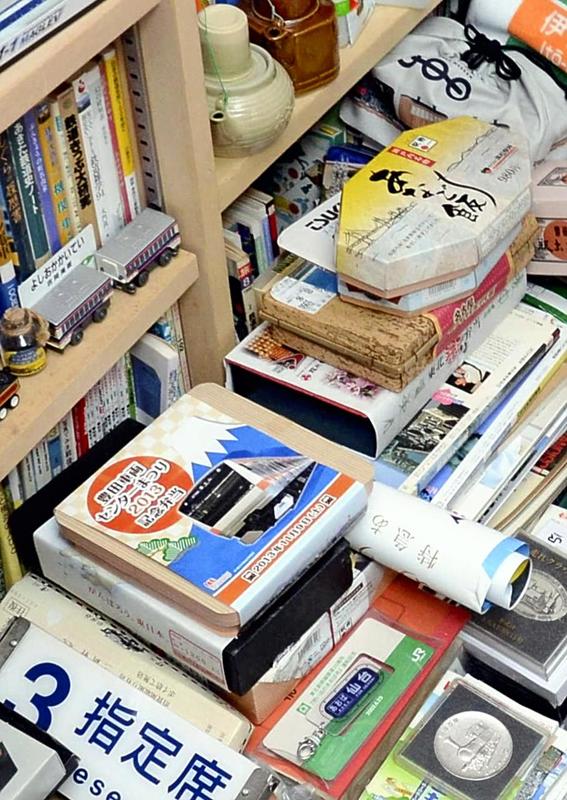
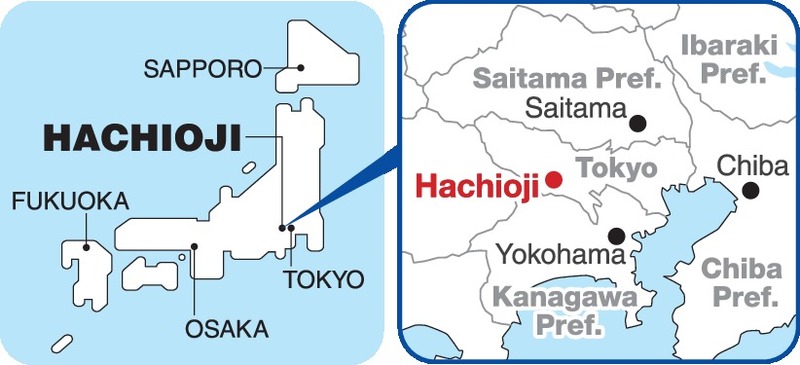
Even after he got married and bought a house in Hachioji, west Tokyo, Numamoto continued to keep ekiben items in storage and in a shed in his garden. He collected nearly 30,000 items, including station stamps and admission tickets.
Numamoto's collection became known within the national railway entities, and in 2009, at the age of 62, he was hired by the association. He has worked as a PR person for ekiben since then.
500 yen miniatures
The ekiben industry has been in difficult straits recently, and the number of ekiben shops nationwide has decreased from about 430 in the mid-1960s to about 90 today. The main reason is that the number of limited express trains with short stops has increased, and tachi-uri ekiben vendors on the platform have almost disappeared.
Nevertheless, "the appeal of ekiben is eternal," said Numamoto.
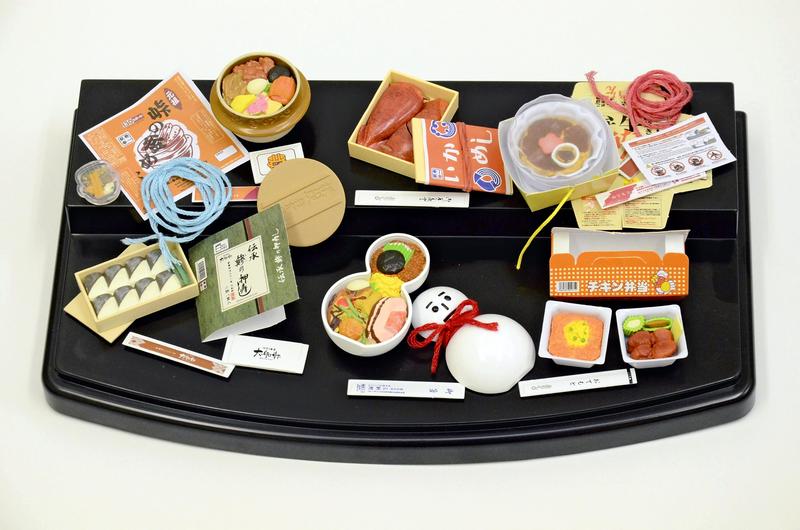
This year, Numamoto worked with figurine makers to create miniatures that minutely reproduced famous ekiben from Tokyo and the prefectures of Gunma and Miyagi. Since the end of July, the figures have been available in capsule vending machines for 500 yen each at major JR stations, including Tokyo and Shinjuku. They are selling well, and the production of a second series is being considered.
Numamoto has eaten nearly 2,000 ekiben nationwide. Even now, when he travels, he eats ekiben at various places and takes them home as his treasures, and writes about his impressions in travel magazines.
"Many ekiben have enriched my life. I want to continue eating ekiben until I die," he said.
Read more from The Japan News at https://japannews.yomiuri.co.jp/