Einstein at the space station, a sleeping black hole and sledging on Mars – in pictures
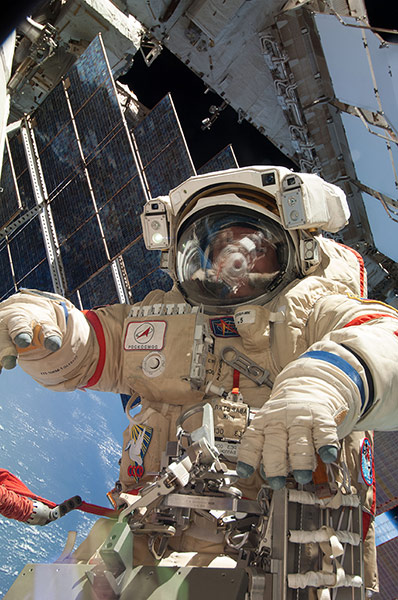
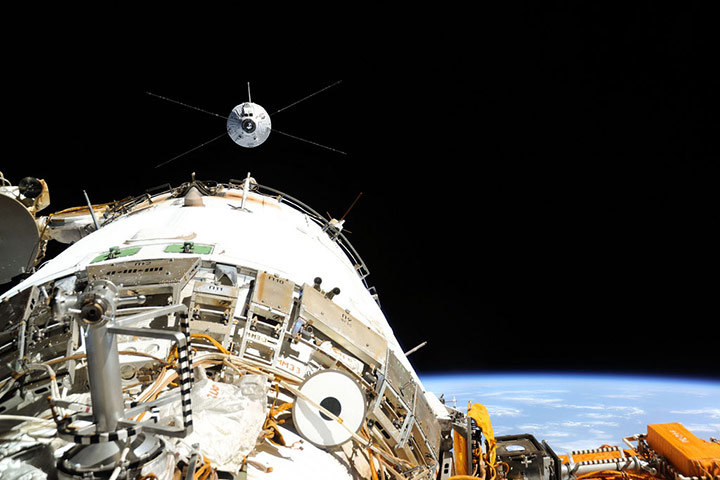
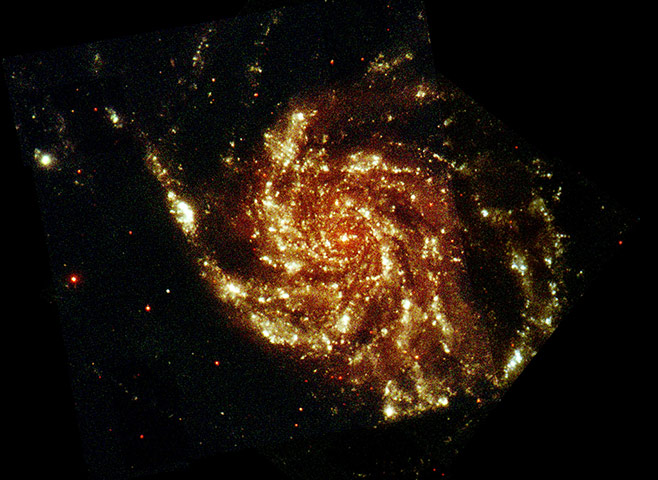
Russian cosmonaut Fyodor Yurchikhin took part in 'extravehicular activity' at the International Space Station on 24 June. During the spacewalk, which lasted six hours and 34 minutes, Yurchikhin and cosmonaut Alexander Misurkin replaced an ageing control panel for the cooling system of the Russian Zarya module. They also installed clamps for power cables in preparations for a new laboratory module. The Russian Federal Space Agency plans to launch a combination research facility, airlock and docking port for the station late this yearPhotograph: ISS/NASAAlbert Einstein – Europe's supply and support ferry – docked with the International Space Station on 15 June 2013. In this image you can see the automated transfer vehicle's four solar panel arrays and antenna. ATV Albert Einstein delivered 7 tonnes of supplies, propellants and experiments – more than 1,400 individual itemsPhotograph: ISS/ESA/NASAThe Pinwheel Galaxy looks particularly fiery in this image taken at ultraviolet and optical wavelengths by the European Space Agency's XMM-Newton space telescopePhotograph: XMM/ESA
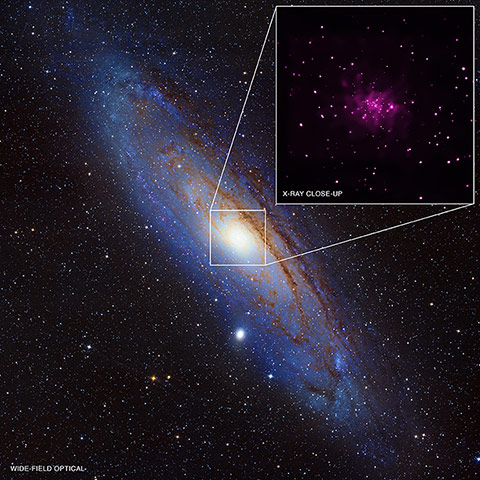
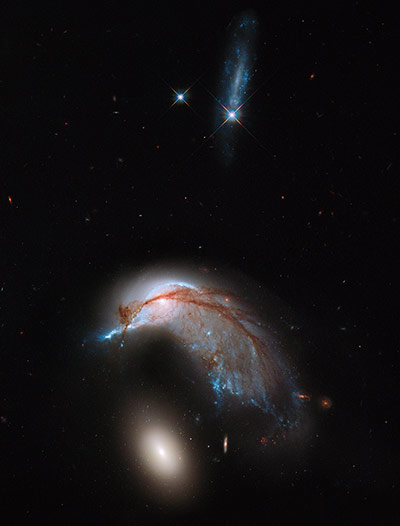
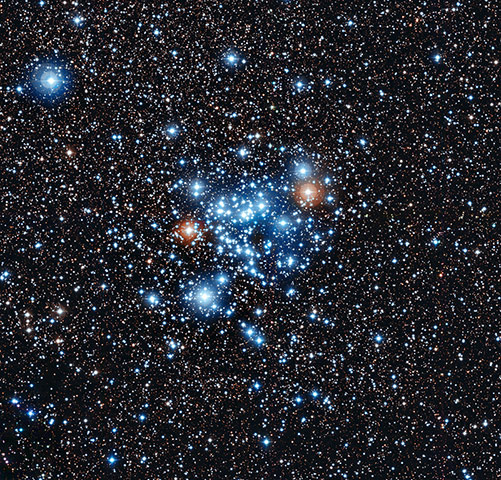
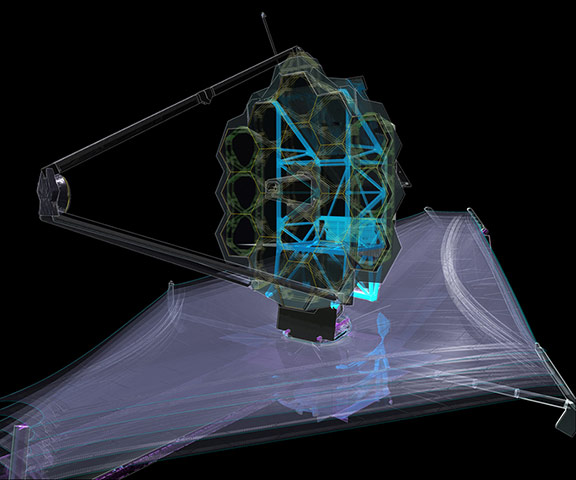
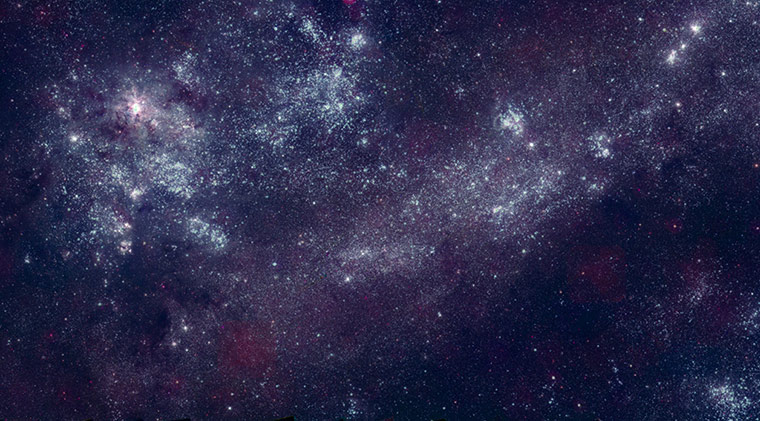
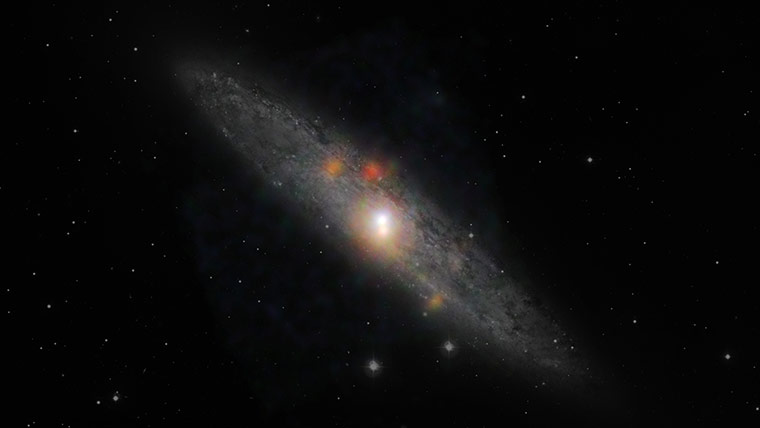
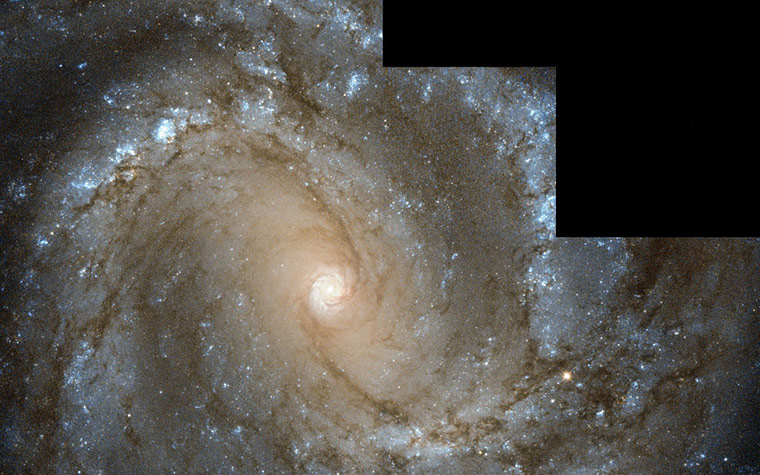
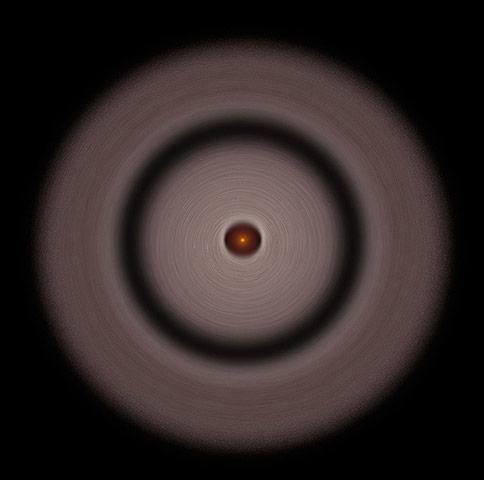
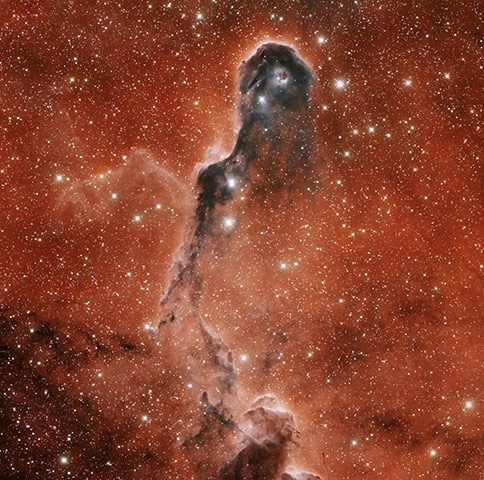
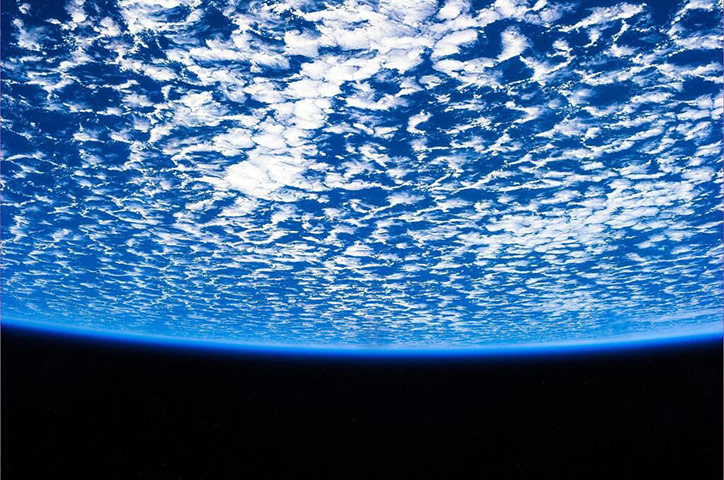
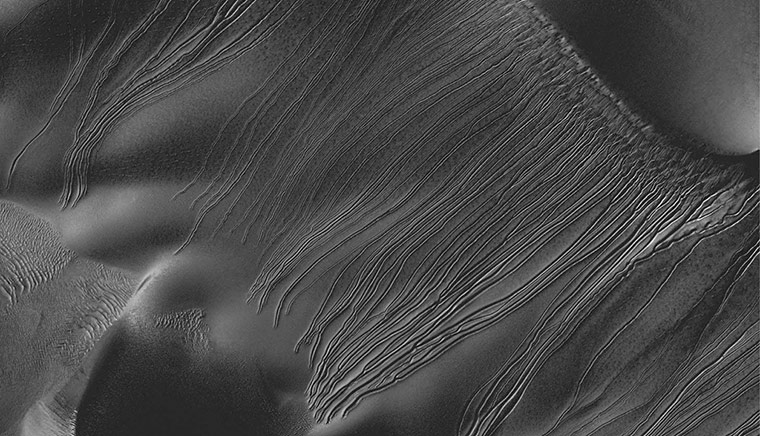
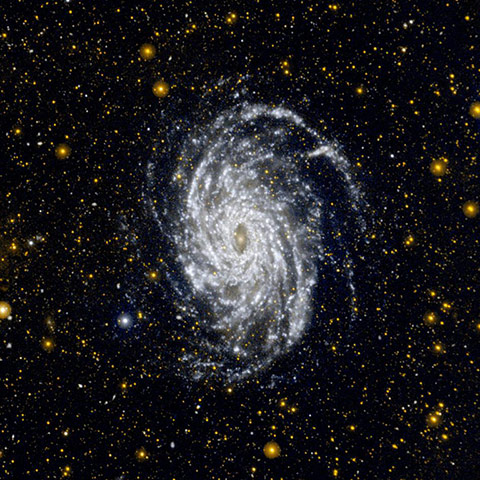
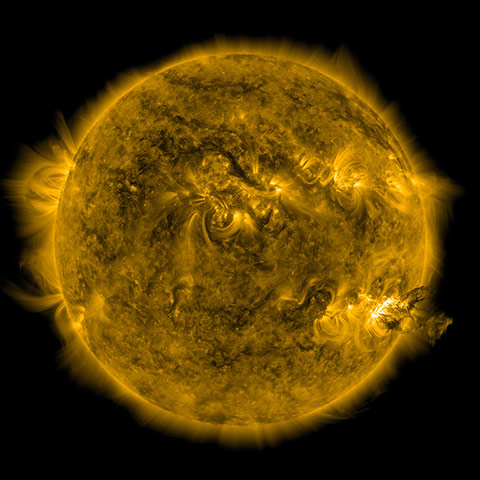
Twenty-six black hole candidates were discovered in the Milky Way's galactic neighbor, Andromeda. Researchers identified the 'stellar-mass black holes' – which form from the collapse of a giant star and typically have masses between five and 10 times that of the sun – using over 150 pictures taken by the Chandra x-ray observatory over 13 years. This composite graphic shows the central region of Andromeda as an inset (purple) in context with an optical image (red, green, and blue) of the galaxy. Billions of years in the future, the Milky Way and Andromeda will collide and many more black holes will be createdPhotograph: Chandra X-ray ObservatoryTwo galaxies interacting bear a striking resemblance to a penguin guarding its egg. NGC 2936 (the penguin), once a standard spiral galaxy, and NGC 2937 (the egg), a smaller elliptical, are tearing each other apart. The image is a combination of visible and infrared light, created from data gathered by the Nasa/Esa Hubble Space TelescopePhotograph: Hubble Space Telescope /ESA/HubbleThis cluster of stars in the constellation of Centaurus contains 36 that are a new class of 'variable star' – whose brightness fluctuates. The observations were made by a group from the Geneva Observatory using the Swiss 1.2-metre Leonhard Euler Telescope at ESO's La Silla Observatory in Chile. This spectacular group of young stars is the open star cluster NGC 3766 in the constellation of Centaurus (The Centaur)Photograph: ESOThis is an x-ray diagram of Nasa's next-generation James Webb Space Telescope. In blue is the recently fitted 'backplane support frame', which supports the observatory's array of hexagonal primary mirrors and holds the science instruments.Photograph: Northrop Grumman/NASAThere are nearly a million ultraviolet sources in this 'mosaic' of the Large Magellanic Cloud, which is about 14,000 light-years across. The picture was assembled from 2,200 images taken by the ultraviolet/optical telescope on Nasa's Swift satellite. The cloud . Click here to compare the galaxy's appearance in optical and ultraviolet lightPhotograph: S. Immler (Goddard) and M. Siegel (Penn State)/Swift/NASAThe black hole at the centre of the Sculptor galaxy has been caught napping. Like the black hole at the heart of our own galaxy, it has run out of material to eat – at least for now. It is thought that the hole, which is about five million times the mass of our sun, became dormant within the past 10 years. This is a composite image from Nasa's Nuclear Spectroscopic Telescope Array (NuSTAR) and the European Southern Observatory in ChilePhotograph: JHU/JPL-Caltech/NASAThe Hubble Space Telescope captured this image of the spiral galaxy Messier 61, which is only 55 million light-years away from Earth – a mere stone's throw in cosmological terms. It is roughly the size of the Milky Way, with a diameter of around 100,000 light-yearsPhotograph: Hubble Space Telescope/NASA/ESAHubble uncovered evidence that a planet is forming 7.5bn miles away from its star, challenging current theories about planet formation. Of the almost 900 planets outside our solar system that have been confirmed to date, this is the first to be found at such a great distance from its star. The suspected planet is orbiting the diminutive red dwarf TW Hydrae. The illustration shows how the unseen planet is sweeping up material in the star's disk, carving out a lane like a snow plow Illustration: Hubble Space Telescope/NASA/ESAThis is the Elephant Trunk Nebula (aka IC 1396): a giant emission nebula illuminated by a hot, massive star (off the top edge of this picture). At the centre of the picture is the dark, dense cloud of gas that gives the nebula its name. This image was captured by the Mosaic camera on the Mayall 4-metre telescope at Kitt Peak National Observatory Photograph: T.A. Rector (University of Alaska Anchorage) and H. Schweiker (WIYN and AURA/NSF)/NOAOLuca Parmitano spends his spare time photographing our world from a height of 400 kilometres. The Esa astronaut is spending six months on the International Space Station and views the Earth through the station’s panoramic Cupola window. All Luca's pictures are available herePhotograph: Luca Parmitano/ISS/ESAThese 'linear gullies' on Martian dunes may be the tracks of blocks of dry ice sledging down the slopes. This image came from the High Resolution Imaging Science Experiment (HiRISE) camera on Nasa's Mars Reconnaissance OrbiterPhotograph: Univ. of Arizona/JPL-Caltech/NASAA space telescope retired. Operators of the Galex galaxy-hunting satellite sent the decommission signal on 28 June after a decade of operations. This image from the ultraviolet telescope shows NGC 6744, one of the galaxies most similar to our Milky Way in the local universe. Galex will remain in orbit for at least 65 years, then burn up as it re-enters the atmospherePhotograph: JPL-Caltech/NASAA highly distorted fish-eye view of the inside of the dome of the 1.2-metre Leonhard Euler telescope at the La Silla Observatory in Chile. The telescope itself is the red structure at the centre of the picture Photograph: M.Tewes/ESOA solar eruption blasts tonnes of hot plasma into space (bottom right). Nasa's Solar Dynamics Observatory is trained on the sun 24 hours a day capturing images with a resolution greater than HD. Its data open a window on what must be happening on more distant starsPhotograph: Cfa/SDO/NASA
Sign up to read this article
Read news from 100’s of titles, curated specifically for you.