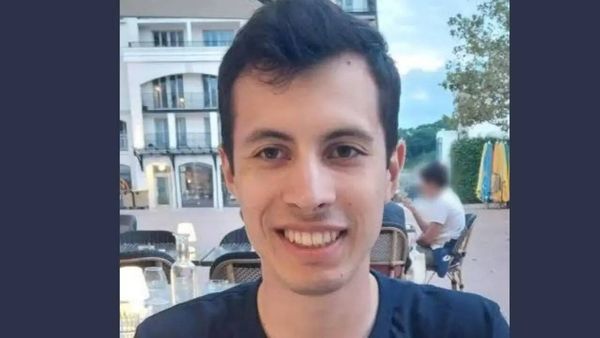
It seemed as if Bryce Gowdy had the world on string. What few people realized, however, is that his life was hanging by a thread. Last week, the thread snapped.
The awesome wide receiver from Deerfield Beach High was to head to Georgia Tech this week with a full ride on a football scholarship. But somewhere in between the hoopla of early signing day and his departure, Gowdy, 17, stepped in front of a speeding train and was killed.
Gowdy's death is a singular tragedy for his family, for his schoolmates and coaches, for everyone who rooted for him, on the field and as he embarked on new adventures. However, his choice to take his life is an increasingly common and tragic one for Floridians between the ages of 10 and 24.
And we must pay attention, not only when more-well known teens commit suicide, but also before children, teens and young adults who are suffering in anonymity do the same thing. Suicide, after all, is preventable.
But the state of Florida, where teen suicide has doubled in the past decade, is, in some ways, is not taking it seriously especially when such young people have easy access to guns.
According to a recent series in the Sun-Sentinel, young suicides in the state have increased 50% during the past 10 years. Twice a week, a child or a teen in Florida commits suicide. About half of them use a gun, mostly weapons that belong to a relative.
But firearms are virtually ignored in state-created material on youth suicides. That's an irresponsible and dangerous omission that state lawmakers _ especially Republicans who are always reluctant to blame guns for bloodshed _ should not allow to stand.
In Miami-Dade County, the public school district has for years _ pre-Parkland _ worked to pull students back from the brink from this fatal "solution," Superintendent Alberto Carvalho told the Editorial Board. "We were concerned with unrecognized and under-recognized signs," he said.
"We learned that the silent killer of young people was associated with stigma. Feelings of inadequacy, depression, ideation _ thoughts of suicide."
Three years ago, district went right to the source, and went deep: "We put kids in private booths _ alone _ just to speak. The kids knew they were being taped. They felt more comfortable speaking in a booth to a camera," Carvalho said.
"We learned, particularly with teenagers, of their sense of isolation, of disconnect from each other and also adults," Carvalho said. "They revealed the one friend they had was sometime a counselor or a security guard."
The district put programs in place. It was the first in the state to implement Kognito, a computer-based simulation that puts teachers, administrators and other employees, including school bus drivers, face to face with concerning behaviors. "We focused on athletic directors and coaches." Carvalho told the Board.
"A lot of those stresses happen on the field, on the court, and student athlete would not reveal their own fears." Gowdy is a prime example.
Students, too, receive training for peer-to-peer help.
The district also was the first in Florida to create its own its own mental-health department. And this is where the state Legislature should make a huge difference when its session starts this month.
Senate Bill 7030 would allocate about $8.2 million to expand and enhance mental health services throughout the district. M-DCPS would receive about $6.6 million of the funds, with charter schools getting $1.6 million.
Already the district already has hired 65 mental health coordinators; ensured that students who are referred for mental-health care are following through; coordinated school and community-based services for students and their families; let all schools continue to involve their Threat Assessment and Mental Health Teams and discuss students who need mental-health services and direct these students to school and community resources.
Again, teen suicide is preventable. Let's help end this heartbreak, Florida.
If you or someone you know is contemplating suicide, call the Suicide Prevention Lifeline at (800) 273-8255 or (800) SUICIDE or Switchboard Miami at 211. For more information call the National Alliance on Mental Illness, Miami-Dade County, at (800) 950-NAMI (6264). For additional resources, go to namimiami.org/crisis-info. If facing imminent danger, call 911.