On Saturday night, New York City Mayor Bill de Blasio hosted a star-studded concert in Central Park designed to proudly declare that a battered Big Apple was recovered and officially back in business. People showed up en masse for a bill that included Bruce Springsteen, Jennifer Hudson and LL Cool J.
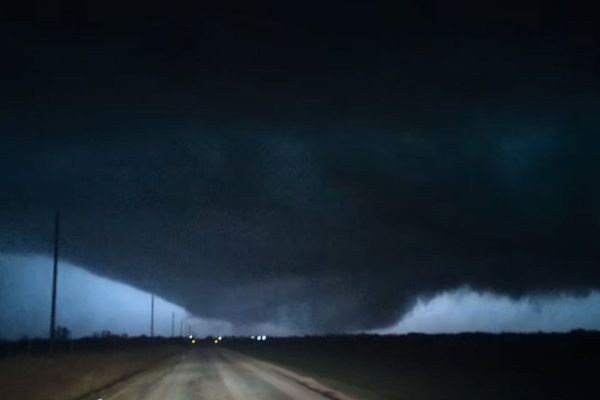
Alas, Hurricane Henri had other plans for the night. And just as Barry Manilow was leading the crowd in his anthemic “Can’t Smile Without You,” a voice from the heavens, or at least the city of New York, abruptly silenced Manilow, canceled the concert and sent everyone home, even though the likes of Paul Simon and Elvis Costello still were cooling their heels in the wings.
One of Manilow’s biggest hits was “I Made It Through the Rain.” Not this time, he didn’t. Who cannot relate?
Neither hurricane nor lightning is causally related to the COVID-19 crisis, of course, but, as the storm turned New York’s storied avenues into fast-flowing rivers Saturday night, the metaphoric implications were too rich to miss.
No, New York City is not yet back in business. Neither is Chicago. There is to be no great back-to-work-and-normalcy celebration right after Labor Day in America’s great cities. Offices and subway trains are not going to suddenly fill with people. Fall tourists are not going to reappear like magic. Kids are not going to have a normal year at school.
The delta variant has put paid to all of that.
Right now, the mutations of the virus clearly are outpacing our attempts to vanquish its ravages.
There is growing evidence that the vaccines will need the help of a booster shot, or shots.
Take the worrying case of the Rev. Jesse Jackson, one of Chicago’s best-known political figures and a 79-year-old man who suffers from Parkinson’s disease. As you’d expect, Jackson was in front of the cameras in January, getting the vaccine. In recent days, he was admitted into Northwestern Memorial Hospital alongside his 77-year-old wife, Jacqueline. Both were being treated for COVID-19.
For any Chicagoan who did not previously know any breakthrough cases, they now know at least two. Both Jacksons are reportedly responding well to treatment. We wish them a rapid recovery.
And while it is easy for northerners to point fingers at profligate behaviors in the south that appear to have increased the COVID-19 infection rate, history teaches us that southerners tend to head inside during the summer. In Chicago, that danger comes later in the year.
We are, in short, headed for an anxious and ambiguous fall, long on worry and short on conclusive data.
You can sense that mood in and around Chicago. Social gatherings are taking place, but they’re often accompanied by nervousness, even if everyone is vaccinated. Hosts fear the kind of criticism that came to the Obamas, following their ill-conceived bash on Martha’s Vineyard, with its ever-shifting guest list. Perky welcome-back videos from churches and synagogues, likely planned in June, now can feel like they are striking the wrong tone. Children going back to school in coming days will be well aware that not all the adults in their lives think the same about how they should be getting their education.
Arts performances have returned, albeit in far smaller numbers than is typical in a Chicago fall. But audiences will need to be vaccinated and masked. Many Chicagoans are willing to comply for everyone’s safety, but there is no question that the mood in the seats and on the lawns has been chilled. The kinds of escapist entertainment that we were assuming everyone would want now feels not just premature but maybe even tone-deaf. And audiences so far have tended to be small.
No, we’re not back. So what to do?
Much is unknown. There is no authoritative, data-driven guidance yet on how likely it is for vaccinated people to catch and/or transmit the virus (although there is persuasive evidence that the vaccine offers crucial protection against illness and death). As a result, opinions vary on the wisdom of returning to the office and, indeed, to school. That will continue as days grow shorter. Surety is for suckers.
Similarly, no one really knows how long the protection from the vaccines can be expected to last, and whether any diminishment moves slowly or quickly. Add in the ethical dilemma of getting a booster shot when most of the world remains unvaccinated and it’s enough to send you permanently into the basement.
That’s no good. But as Labor Day approaches and kids go back to school and students to college, the fall of 2021 is looking like a season of limbo. Best to face up to that.
The situation with HIV is perhaps instructive. The scourge of AIDS was eventually halted, but there was no moment for a declaration of victory. Just slow scientific advances and improvements. More and more, that’s seeming to be the long-haul case with COVID-19. It’s politically inconvenient for our leaders but the virus doesn’t care.
What can we do as citizens, beyond getting vaccinated? We have to learn how to better assess personal risks and benefits (there are more percentages than absolutes) and we have to be tolerant of fellow citizens who, for one reason or another, make different choices for themselves. Moderation and small groups look like smarter choices than concerts in Central Park. Experiments will fail but will still be necessary. Both kids and their education will have to be protected. So will the medically vulnerable.
And we have to have faith that one day, especially if we pull together, the rain really will stop.