THE Edinburgh TV Festival moving to Greater Manchester will be a blow to Scotland’s creative industry, but it “was never really a Scottish festival,” a top film expert has claimed.
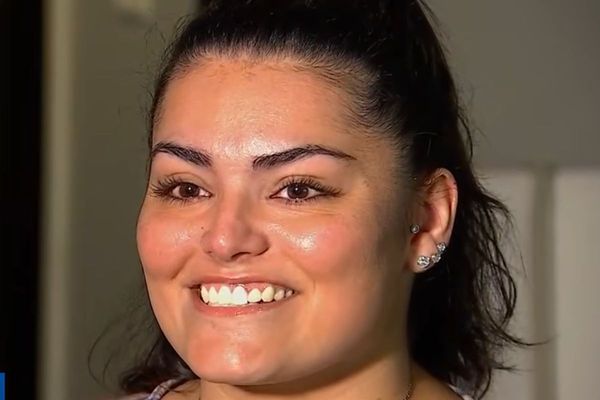
Glasgow Tellyfest CEO and filmmaker Claire Duffy said the decision to move the festival from Edinburgh after more than 50 years “might not make that much of a difference in the end” as it had been dominated by international creatives instead of homegrown talent for several years.
The Edinburgh TV Festival made the shock announcement last week that it will relocate to Greater Manchester in a bid to “radically reduce the costs” and make it easier for people to attend.
However, Duffy has argued that the decision to uproot the festival, which has been based in the Scottish capital since 1976, could present an opportunity to replace it with a new festival that serves Scottish creatives better.
She told The National podcast: “It's definitely a real blow to the Scottish industry to have such an impactful and important festival being held in one of our cities and having the entire UK, in fact international industry coming up in visiting us, as it were; there was definitely a real positive there.”
“On the other hand, when I look back at the key creatives, sort of the main names, as it were, that featured over the last three, four, five years, I struggle to see a single Scottish name.
“And where there was, there's maybe one or two here and there, and it just, it's clear to me that it was very much an international festival that happened to take place in Edinburgh.
“Now, again, that's not to knock it completely, but I think for the grassroots Scottish community, filmmaking community, it might not make that much of a difference in the end.”
Around 2000 delegates normally attend the event, the biggest screen industry gathering in the UK, which is organised by The TV Foundation charity.
The festival notably features the MacTaggart lecture, which has given a platform to figures such as Emily Maitlis, Louis Theroux and David Olusoga in recent years.
It has also brought the likes of David Attenborough, Michael Sheen, Graham Norton, Jeremy Paxman, Jerry Springer, Armando Iannucci, Louis Theroux, Michaela Coel, Emily Maitlis and Charlie Brooker to the city.
With the likes of Edinburgh International Film Festival running at the same time as the festival in August, top comics have said the likes of Fleabag, Baby Reindeer, Saturday Night Live UK and Taskmaster were all picked up by TV executives due to the annual event.
Duffy argues that with the Edinburgh TV Festival moving to England, there can be an opportunity for Scotland to create a new festival which can focus more on its own homegrown talent.
She said: “There's absolutely a loss to the Scottish community, that we don't just get to go through to Edinburgh anymore, that it's down to Manchester.
“Given that, I think it was quite clear it was never really a Scottish festival. I think what we truly need is a festival that's actually inherently Scottish, whether that is Glasgow-based or Edinburgh-based.
“I don't know that it necessarily has to be only TV.
“I think it's a little bit old-fashioned at this point that we have a film festival and a TV festival and then we have games festivals and theatre.
“In these days of integrated media, they're all one in the same, most TV series have podcasts, and so on, and I think that's really exciting.
“I think what Scotland really needs is a media festival that deals with all the different mediums where we can get stories out to audiences, and I think it needs to be truly inherently based in Scotland and prioritising and centring Scottish talent.”

The head of Screen Scotland further said that the festival’s relocation to Greater Manchester was no “surprise” and that “significant funding” in place for the event will now go towards creating new opportunities in Scotland.
David Smith, director of Screen Scotland, the Scottish Government’s national public agency that aims to develop all aspects of the nation's film and TV industry, said: “Looking forward the resources that would have supported the TV Festival had it stayed in Edinburgh are now available to support other new things. That is the opportunity.”
Duffy said funding a new festival could help to support Scotland’s screen industry, which has faced difficulties over the last few years, with jobs being prioritised for London-based firms.
She said: “I'm a natural optimist and so I'm always careful as I don't want to diminish or dismiss that it's really, really difficult in all of the creative industries, particularly the screen industry at the moment people are losing their jobs.
“They're not getting enough work. They're having to leave the industry because they're just not making enough money to survive.
“So I don't want to say that that's fine and good because it's absolutely not.
“But on the other hand, there is a perspective that I think is becoming louder and louder. me. I was sort of starting to see it a couple of years ago and I think that this movement is starting where there's a little bit of an element of scorched earth.
“A lot of the old, and it's not just the festivals, it's the old broadcasters. It's the way that we have we've made film and TV for decades and decades and decades, telly's been around for the best part of a century now, and it's completely different to how it was just 10 or 15 years ago.”
She added: “I think there's huge shifts and fluxes happening in the global industry, not unique to Scotland whatsoever.
“But I think that it's time to start seeing that as a huge opportunity to build something that not only gives more opportunities to creatives, which is hugely important and creates more employment and opportunities up here, but actually serves audiences better.”
You can listen to The National’s podcast anywhere you get your podcasts including Spotify and Apple, and watch the full thing on YouTube.