If only the Rugby Football Union had as much wisdom as it has money. This week was an inauspicious one even before the share-tipping activities of England’s kitman earned him the sack and Eddie Jones’s visa problem briefly enlivened the news agenda. It may even be that the RFU, hurtling towards the point where greed outpaces good judgment, has just made one of the costliest mistakes in its modern history.
The press release, at first glance, did not look too controversial. England are to play Wales, rather than the Barbarians, in the customary end-of-May fixture at Twickenham, with the aim of raising a few extra quid to help compensate the clubs for this season’s World Cup disruption. The problem lay in the use of the word “capped”; no longer is it a springtime frolic for hopeful youngsters.
Between last August and next June, England’s top players will now face playing 16 full Tests. The additional date is on the same weekend as the Premiership final, after which Jones’s team will immediately embark on a full three-Test tour of Australia. Utter madness would be a generous summary.
It could also prove the small step too far that badly damages Jones’s chances of reforming the English landscape. The Australian may have some promising raw material but what if it stumbles into Brisbane totally exhausted? On the phone from distant Dubai you can already hear the exasperation in the voice of Damian Hopley, chief executive of the Rugby Players’ Association, as he reflects on his members’ wellbeing.
By the end of the 2017 British & Irish Lions tour to New Zealand, the top players will have had barely any meaningful rest for two years. “There is a sense of bewilderment among players about the scheduling,” says Hopley. “It’s not right. You can’t expect them to keep bouncing back. It’s just impossible. In many ways the game is in rude health, but you do wonder who’s actually going to be playing in that Test against Wales or the subsequent Test series in Australia? Could the last man standing please represent the Lions … ”
These, remember, are the same players upon whose backs the RFU racked up record revenues of £207.9m in the year ending June 2015, with substantially greater profits to come once the final World Cup sums are done. A potential England forward such as Joe Launchbury, already nursing a sore lower back and hamstring, faces 18 Test matches in the next 15 months before – if selected – setting out to play the rugby of his life for the Lions on their 10-game trek around a wintry New Zealand.
Yes, modern players are well remunerated but not if they are forced to retire in their mid-20s. “In terms of the players’ long-term welfare, the tail keeps wagging the dog,” says Hopley, frustrated at the “inertia” of the game’s custodians in terms of looking after their biggest assets. He concedes the latest RFU financial numbers are “staggering” but has been warning of the lurking cost of burnout ever since the association was founded 18 seasons ago. “Players need to be protected from themselves. We are in danger of killing the goose.” A knackered goose, even if it did once lay golden eggs, is not much use either.
This, of course, is a global problem extending far beyond Twickenham, where the RFU this week unveiled another lucrative commercial deal with the City-based financial company Old Mutual Wealth (according to the blurb it manages £319.4bn of client assets). The ink is also barely dry on a new funding deal for the RPA to assist former players whose bodies have given up the unequal struggle.
What Hopley still seeks, however, is more recognition of the strain being placed on today’s names. World Rugby’s current global tour schedule expires in 2019 but any meaningful dialogue with the players about a new, improved structure has yet to happen. “I’ve always decried rugby’s inefficiency in terms of getting people around the table,” says Hopley. “At some point we’ve got to be in those conversations. To be precluded from being in the room in the 21st century is just archaic. Our absence from those discussions just prolongs finding a solution.”
There is the odd glimmer of light. The raising of the Premiership salary cap means clubs such as Wasps can theoretically increase the size of their squads and give Launchbury and his ilk more rest. Individually calibrated workloads and improved rehab have reduced the training ground attrition rate.
Hopley, though, is calling for the whole rugby world to get real. As a starting point he would propose commencing the European season a month later, playing into June and scrapping routine summer tours. “I think you have to question the summer tours and their worth. But then you’re back to revenue-sharing models that have most northern hemisphere people spraying their gin and tonics across the room.” Better a reduction in Tests, though, if it preserves their rarity value, produces fresher players and creates space, say, for a showdown between Europe’s club champions and their Super Rugby counterparts.
Instead the annual quest to squeeze a quart into a pint pot continues. Australia and Argentina will both play 15 Tests in 2016. Super Rugby is about to expand to 18 teams. Hopley is among those who fear the physical toll will be unsustainable. “There are big questions we need to address, particularly the structure of the season. The interested parties need to take a step back and say: “Right guys, this is what we’ve got to do.’ We want to be part of that. If we get the playing structure right then the commercial side will follow.”
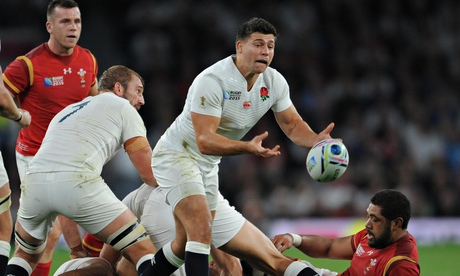
It may be too late for some. England’s scrum-half Ben Youngs has already warned of trouble ahead – “There is no doubt that in the next couple of years you will see some players suffer from burnout” – in the wake of this year’s intense World Cup buildup. Hopley lacks recent data – he says his members have “survey fatigue” – but insists something has to give.
“With our season structure it is impossible for our top players to peak for 28 or 30 games a season. So how do we make it better within the confines of what we can control?” As Jones is about to discover, it is a recurring question with no easy answer.