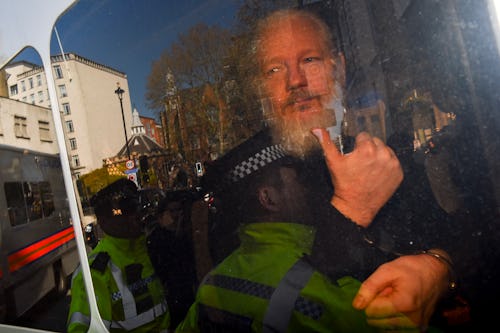
Citing a naturalization letter containing “inconsistencies, different signatures, the possible alteration of documents, unpaid fees and other issues,” Vice and multiple outlets report that Ecuador has officially revoked Julian Assange’s citizenship, the latest and arguably most severe disavowal from the country that essentially renders the Wikileaks founder stateless.
Currently incarcerated in Britain’s Belmarsh high-security prison, Assange is still battling American attempts to extradite him to face computer hacking and espionage charges that could result in up to a 175-year jail sentence. Assange’s lawyer, Carlos Poveda, informed The Associated Press that they intend to appeal the Ecuadorean ruling, arguing the decision was made without due process.
End of a long road —
Assange spent seven years inside the South American country’s London embassy after seeking asylum from the nation. Ecuador’s then-President Lenín Moreno and his government attempted to secure citizenship for the native-born Australian as a means to classify him as a diplomat for the country, thus allowing him to leave the London embassy.
Most recently, U.K. courts denied U.S. requests for Assange’s extradition, citing his mental health conditions and his alleged high risk of suicide or self-harm. Earlier this month, however, the U.K.’s High Court left a door open for the possibility of an American arrest by allowing the U.S. to appeal the initial decision.
Potentially huge implications —
Ecuador’s dramatic and sudden decision, while potentially foreseen by experts, could have huge ramifications stateside. Were Assange to be extradited to America, it would begin an entirely new (and potentially final) chapter in a decades’ long saga of the U.S. intelligence community’s war against groups like Wikileaks.
Regardless of one’s opinions on the Wikileaks founder, his ultimate fate within the American judicial system will undoubtedly influence the next generation of leakers and hackers, as well as how they approach disseminating potentially confidential information to the wider public.
What’s happening with the other guy —
Meanwhile, the other infamous U.S. intelligence leaker, Edward Snowden, is sounding the alarm on governments’ ability to install and access spyware that can collect vast amounts of users’ private data.
“If you don’t do anything to stop the sale of this technology, it’s not just going to be 50,000 targets. It’s going to be 50 million targets, and it’s going to happen much more quickly than any of us expect,” Snowden explained during an interview with The Guardian. Snowden was himself granted asylum by Russia back in 2020, which is how he’s avoided his own extradition to and trial in the U.S.’
No one said whistleblowing was going to be easy. But how this plays out could make it even more difficult.