Concerns continue to mount over the possibility that the spread of pneumonia caused by a new strain of coronavirus first confirmed in China will put downward pressure on the world economy.
The stature of the Chinese economy has considerably increased since 2003, when China was hit by an outbreak of severe acute respiratory syndrome (SARS).
Vigilance among Japanese companies is increasing.
Piolax Inc., a Yokohama-based company which operates a plant in Wuhan, China, the epicenter of the outbreak and the center of the Chinese auto industry, is now busy contacting about 200 plant workers to find out if they are able to work from Feb. 4, after the Lunar New Year holiday ends. The company hopes to resume operations then, but it is not confident it will be able to do so. "We can't see any signs of the situation settling down. It will be difficult to avoid postponing the resumption of plant operations," an official of the company said.
Dongfeng Motor Co., a company jointly established by Nissan Motor Co. and a Chinese firm, is headquartered in Wuhan, while Honda Motor Co. has three plants in the city. Many Japanese parts makers also operate there. About 5.1 million passenger cars produced by Japanese automakers are sold annually in China, exceeding the roughly 4.3 million units sold in Japan. Sales levels in China determine the performance of each company.
If the Chinese economy plunges due to the outbreak of the virus, it will affect not only Japanese automakers but also the whole Japanese economy, which is buttressed by the auto industry.
Fears of SARS-like scenario
What concerns Japanese companies and the financial market is the recurrence of a situation similar to that which occurred during the 2003 SARS outbreak, which impacted the world economy.
The Chinese economy has grown so much that it is almost impossible to compare it with that of 2003. China's gross domestic product grew from about 215 trillion yen in 2003 to about 1,600 trillion yen in 2019. The purchasing power of Chinese people has expanded at a furious speed. Retail sales in China increased during the same period from about 82 trillion yen to about 645 trillion yen.
If Chinese consumers hold off spending as they did in 2003, it could deal a blow to Japanese companies operating in the country.
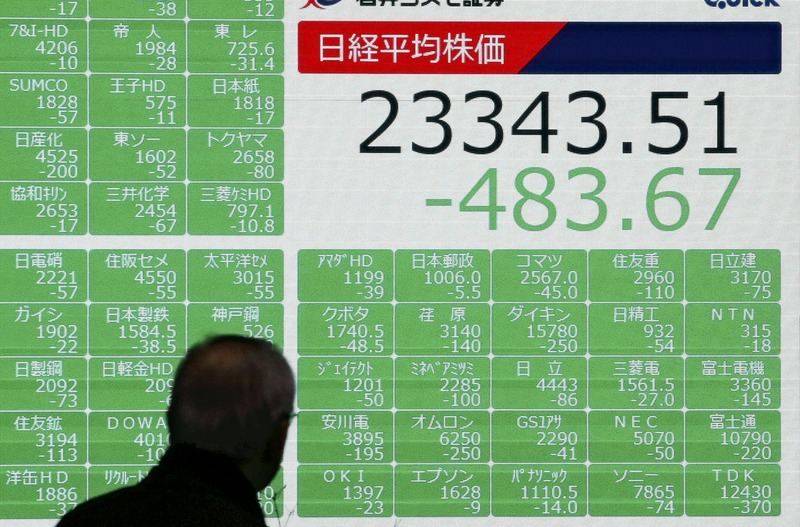
The Nikkei average of 225 selected issues on the First Section of the Tokyo Stock Exchange temporarily dropped 500 points on Monday, due to the selling of stocks of not only Honda and Nissan, but also companies that have expanded their businesses in China such as Shiseido Co. and Fast Retailing Co., operator of the Uniqlo clothing chain.
Threat to world GDP
The impact of the coronavirus outbreak on the aviation industry also continues to increase. According to the Land, Infrastructure, Transport and Tourism Ministry, more than 2,000 flights with about 400,000 passengers in total were scheduled from China to Japan during the Lunar New Year holiday period.
The holiday period is a time when the number of group tours increases, "so flight booking have declined by several percentage points compared to before the spread of the virus," an airline official said. And it is not just airlines and hotels that have taken a hit.
At Sanrio Puroland in Tama, western Tokyo, about 500 tickets for tourists in Chinese tour groups had been canceled by Monday. During the Lunar New Year holiday period in 2019, about 70 groups from China had booked tickets, but this year, the number of such groups has declined to about 30 after a series of cancellations. "The impact has been bigger than anticipated," a Puroland official said.
To contain the spread of the virus, the Chinese government has banned all outbound group travel, a move that is being felt around the world. With income levels increasing in China, overseas travel is booming. Chinese tourists accounted for 10.5% of the total number of international tourists in the world in 2018, up from 2.9% in 2003.
An estimate by SMBC Nikko Securities Inc. shows that if the Chinese government's outbound travel ban is in place for six months, the total amount of money spent by Chinese people while traveling abroad will fall by about 83.1 billion dollar (about 9 trillion yen), pushing down the world GDP by about 0.1%.
Read more from The Japan News at https://japannews.yomiuri.co.jp/