Just days after becoming the longest-serving prime minister, Shinzo Abe announced he would resign, making way for a new national leader for the first time in nearly eight years.
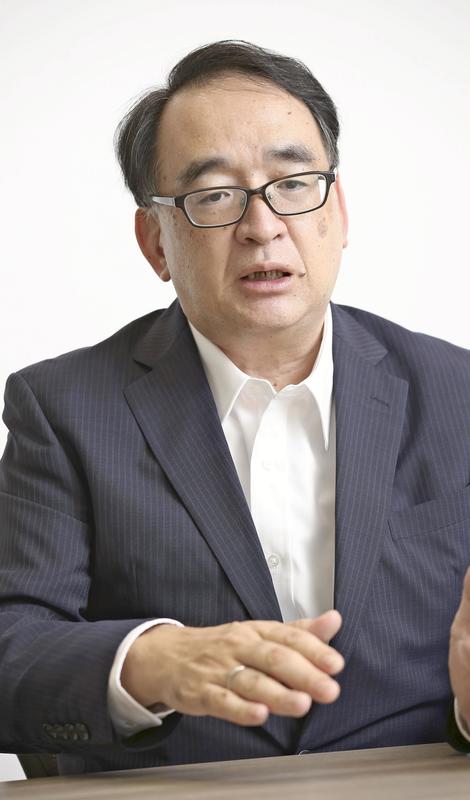
The Yomiuri Shimbun recently interviewed Takahide Kiuchi, executive economist at Nomura Research Institute Ltd., about Abe's tenure and what the next administration could have in store.
The Abe administration's economic policy deserves praise for promoting free trade around the world.
The Trans-Pacific Partnership involving 11 countries without the United States went into effect in 2018, followed the next year by an economic partnership agreement between Japan and the European Union.
In addition to eliminating tariffs, these deals are incredibly significant for setting rules on areas such as trade, investment and intellectual property rights.
Although inbound travel to Japan has ground to a halt due to the new coronavirus pandemic, the growth in foreign tourism has had a major economic impact.
Expectations of further growth in foreign tourism spurred the creation of environments to welcome them. Travel spending in 2019 was 4.8 trillion yen, which is up about three-fold from 2013. This can be said to have raised the potential of the Japanese economy.
During this time, there have certainly been improvements in the economy and employment. Yet instead of being due to the effects of Abenomics, in large part this can be chalked up to tailwinds created by the global economy.
The third arrow of Abenomics -- the growth strategy -- has been under-powered, with the potential growth rate, which represents the strength of the Japanese economy, hovering around only 1%.
A number of policies have been rolled out in the name of structural reform, such as "regional revitalization" and "workstyle reforms." These gave a feeling of political accomplishment, but had little economic effect. I want the new prime minister to gird himself to take on structural reforms.
The Abe administration has tried to generate demand to overcome deflation as one of its pillar policies. The focus on monetary easing and fiscal stimulus has relaxed fiscal discipline, which is a major negative legacy of the administration.
The next prime minister should consider shifting focus from demand-creation to supply-side policies that increase economic efficiency and productivity.
The key to improving productivity is promoting digitization in the public and private sectors. If this increased efficiency and productivity in various industries, real wages would rise and consumption would increase.
This could also help correct the problem of over-concentration in Tokyo. Four of the government's plans, including this year's "Basic Policy on Economic and Financial Management and Reform" include digitization and regional diversification. I hope these areas will be pushed as part of structural reforms for addressing the pandemic.
Putting the nation's finances on a sound footing is an urgent issue and is actually a growth strategy in and of itself.
A total of 90.2 trillion yen in new government bonds have been issued in fiscal 2020, with dependence on debt growing to its worst-ever level of 56.3%.
Passing on government debt to future generations will lower economic expectations and suppress hiring and investment by businesses.
If the government can come up with ways to secure financial resources that will quickly eliminate debt, such as tax hikes that mostly affect the wealthy, corporate growth expectations would also rise.
Kiuchi, 56, joined Nomura Research Institute in 1987. After serving in positions including director of economic research at Nomura Securities Co., he was appointed to the Policy Board of the Bank of Japan in 2012 for a five-year term.
--This interview was conducted by Yomiuri Shimbun Staff Writer Koichiro Shigematsu.
Read more from The Japan News at https://japannews.yomiuri.co.jp/