With no end in sight for the novel coronavirus pandemic, the situation surrounding the apparel industry has become ever more adverse. Is there any hope? The following is the second installment of a series looking at the tactics apparel firms are using to survive.
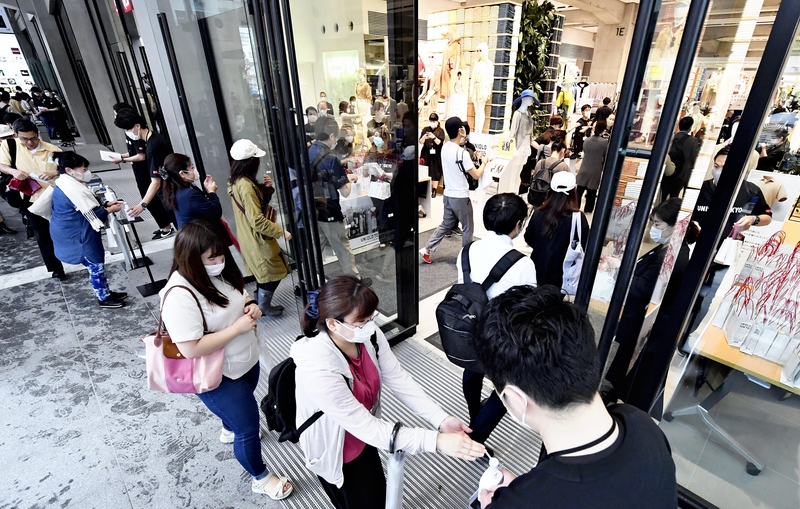
When Fast Retailing Co. opened its Uniqlo Tokyo flagship apparel store in Ginza, Chuo Ward, Tokyo, in mid-June, one of the hottest-selling items that day was not an article of clothing. Uniqlo's debut release of face masks -- a three-pack priced at 990, yen before tax -- made with its quick-drying Airism garments sold out in minutes.
Fast Retailing Chairman and President Tadashi Yanai was in fact reluctant to enter the mask business, saying, "We are a clothing store, so we don't make masks."
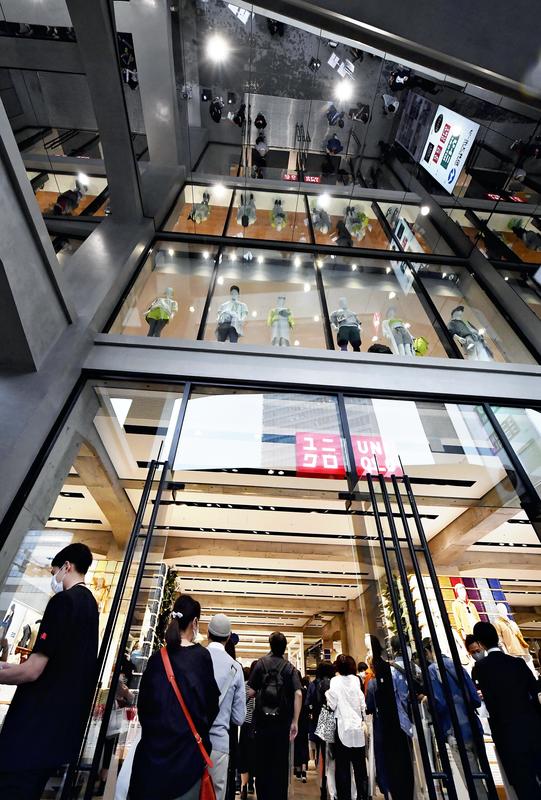
However, face masks turned out to be an exceptional hit. Ahead of the summer heat, the masks won the hearts of consumers by emphasizing coolness and softness to the touch.
Uniqlo is well ahead of its competitors in the percentage of products sold at full prices. Taku Kawai, a business consultant and author of books on apparel makers, estimates that Uniqlo sells more than 70% of its products at full prices, while major apparel makers only manage about 40%.
The secret behind Uniqlo's high turnover is that many of its products are priced low and it has low risks of holding unnecessary inventory. Uniqlo mainly produces basic items such as undergarments that emphasize functionality, and as such are less susceptible to changes in fashion. If the masks don't sell, they can be carried over to the next season.
"The stay-home trend means consumers are spending more time at home and in their neighborhoods. Fancy clothes do not sell," Yanai said, showing his confidence in Uniqlo's lineup of casual clothes.
Uniqlo's sales in June rose 26.2% from a year earlier, even as other apparel makers struggled. July sales were unchanged from a year earlier, when long rains hit the country, but rose 29.8% in August.
Fast Retailing currently has a market capitalization of about 7 trillion yen. Meanwhile, Inditex (Spain), the world's largest apparel company that operates Zara, has a market capitalization of about 9 trillion yen. Five years ago, the market capitalizations of the two companies differed by nearly 8 trillion yen. The business slowdown seen since the start of the coronavirus pandemic has forced Zara to reconsider its operations, closing 1,000 stores worldwide. Uniqlo, meanwhile, is creeping up on Inditex.
--There is no standard.
On the other hand, long-established apparel makers, in contrast to Uniqlo, have long been competing with each other by making rather expensive clothing with elaborate designs. And partly because department stores are averse to shortages, the apparel makers often make more units than necessary.
Focusing primarily on product planning tends to lead to outsourced production and sales. As a result, sewing companies, wholesalers and other businesses are involved in supply chain from manufacturing to sales, complicating the distribution channel and pushing up costs that get added to product prices. But in an era of growing penny-pinching, consumers find the high prices hard to accept.
Shinji Oe, president of Sanyo Shokai Ltd., a leading, long-established apparel company, said: "Every season, we have planned new products from scratch, and those were all over [at the end of every season]. That's why our standard product labeled 'This is for this brand' was not born."
Will apparel makers be able to embark on structural reforms that will bring about new hits?
--Achievement in customer service
The domestic apparel market was 15 trillion yen at its peak during the bubble economy period, but has since shrank to 9 trillion yen. Instead of competing for a limited pie, moves are accelerating to find new businesses in other industries.
Aoki Holdings Inc. aims to break away from its dependence on men's clothing. In 1998, when sales of suits started to peak out, the company got into the wedding hall operation business under the name of Anniversaire. It was a time when the society was filled with goods and consumers began to focus more on experience.
It now has 22 years of operations under its belt. In February, a staff member from the company's wedding hall in Yokohama won the top prize in a national competition in which young workers at wedding halls and restaurants compete in hospitality. It was the first time the company won a gold medal in the competition, which was the 14th this February. The Aoki's staff was able to win the gold medal beating first-class participants such as the Imperial Hotel and Tokyo Kaikan because of the company's efforts to invite professional instructors to learn world-class customer service.
Anniversaire has expanded to 13 venues nationwide, including Tokyo, Osaka and Nagoya. In the future, the company aims to widen its profits in wedding halls and karaoke club operator Cote d'Azur and other businesses that excel in those areas, even though such businesses are currently facing stiff headwind.
"The diversification of management is steadily bearing fruits," Aoki Holdings Chairman Hironori Aoki said.
World Co., which sells products under the brand name Untitled, is strengthening its business support services for other industries, such as retail sales and hotels. The company makes use of its experience in store design and analysis of best-selling products that it has developed in the apparel business.
-- Production of inferior products
Yanai inherited his father's men's clothing store and opened the first Uniqlo store in Hiroshima in 1984. His aim was to create a store where consumers could buy everyday clothes at low prices.
As the number of Uniqlo stores increased, inferior products began to be mixed in with products purchased from established manufacturers. So, Yanai steered the enterprise toward making its own clothing to ensure high quality.
Zara founder Amancio Ortega, on the other hand, was a clothing artisan. After receiving large cancellations from retailers to whom he delivered products in the 1970s, it is said that he shifted his focus toward always selling out each item.
Retailer vs artisan. The difference in their roots is reflected in how they sell their clothes.
Uniqlo will stock many items in its stores to prevent customers from feeling uncomfortable from seeing empty shelves. Its designs are basic, and based on the premise that they will be worn with other companies' clothing.
Zara, on the other hand, sells a lot of fashion-conscious products for working women. The founder's sense of craftsmanship remains at the forefront, starting with small-volume production. When the items sell out, they order additional production, but the focus is on clearing out their inventory.
Read more from The Japan News at https://japannews.yomiuri.co.jp/