WASHINGTON _ The U.S. economy stumbled in the fourth quarter, expanding at a disappointing 1.9 percent annual pace and making last year the weakest for growth since 2011, the Commerce Department reported Friday.
The figure for the October-through-December period was below analyst expectations and well off the 3.5 percent annual growth rate for the third quarter. That was the strongest pace in two years.
But a sharp reversal in exports _ down 4.3 percent after a 10 percent increase in the previous quarter _ and slower pace of consumer spending growth in the fourth quarter offset an improvement in business investment.
Economists expected growth to decline after a jump in the third quarter that was fueled by consumers and businesses making up for a dismal first half of the year. The economy expanded at just a 0.8 percent rate in the first quarter of 2016 and 1.4 percent in the second quarter.
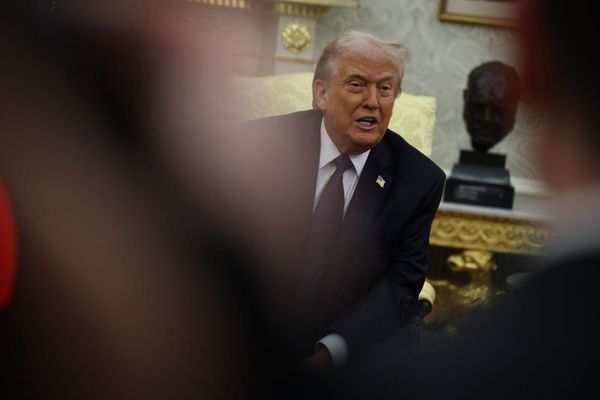
The report showed how difficult President Trump's vow of 4 percent annual growth will be to achieve.
"I almost want to say 4 percent is out of reach. It's a huge stretch," said Scott Anderson, chief economist at Bank of the West.
He noted the economy is close to full employment and global growth is weak, reducing demand for U.S. exports.
He's forecasting 2.2 percent annual growth this year and 2.8 percent next year, anticipating that tax cuts being pushed by Trump and congressional Republicans won't happen until at least the fall.
Although the fourth-quarter figure was below expectations, the 1.9 percent annual growth rate was decent compared to earlier in 2016, economists said.
"Even though overall growth slowed, the underlying economic strength was solid during the final quarter of 2016," said Sung Won Sohn, an economist at Cal State Channel Islands.
Anderson noted that economic growth averaged a 2.7 percent annual rate in the second half of the year, a marked improvement from the first half's 1.1 percent growth pace.
"It shows the U.S. economy expansion has some momentum going into the first quarter of this year," said Anderson.
Companies continued to expand their inventories in the fourth quarter as consumer and business confidence picked up.
Inventory growth added 1 percentage point to overall economic output, the second-straight quarter of a positive contribution after five quarters in which inventory declines subtracted from growth.
More broadly, private investment increased 10.7 percent in the fourth quarter after a 3 percent increase the previous quarter.
The growth in consumer spending slowed to 2.5 percent in the fourth quarter from 3 percent the previous quarter. Still, economists said that was a solid pace.
But exports were a major drag as the strong dollar and economic troubles abroad reduced demand for U.S. products. The pace of export growth declined for the fourth time in the past six quarters.
The overall fourth-quarter data, the first of three official estimates, mean that the U.S. economy expanded just 1.6 percent for all of 2016. That was down from 2.6 percent the previous year and the worst performance since 2011.
The figures also cement Obama's status as the first president since Herbert Hoover to not have at least one year of economic growth at 3 percent or higher.
The best year under Obama was 2015, when the economy expanded 2.6 percent.
But economists note that Obama started his term in the depths of the Great Recession, which began in late 2007. The economy contracted 2.8 percent in his first year in office. Growth returned in 2010 but has been around 2 percent since then.
Trump has promised that his policies will boost growth.
"To get the economy back on track, President Trump has outlined a bold plan to create 25 million new American jobs in the next decade and return to 4 percent annual economic growth," according to the "Bringing Back Jobs and Growth" page on the White House website.
That would be accomplished by lower taxes, including cutting the corporate rate, eliminating "job-killing regulations" and striking new trade deals that lead to more manufacturing jobs in the U.S., the White House said.
But Steven Mnuchin, Trump's nominee for Treasury secretary, appeared to scale down expectations during his confirmation hearing last week, saying his main objective was annual growth of 3 percent to 4 percent.