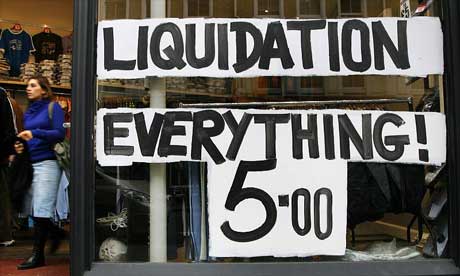
My grandmother used to say: 'When poverty walks in the door, love flies out the window'. As fears about the economy have increased, polls show that public concern about climate change has fallen.
Psychology has plenty of explanations: from the idea that people have a finite pool of worry to the observation that perceptions of risk are closely tied to personal experience. It's hard to worry about more than one thing at a time and hard to appreciate risks you can't feel or observe for yourself.
In 2011 British people's feelings are likely to be focused close to home – my job, my home, my family. Concern for others, for the rest of nature or for the future may indeed 'fly out of the window'.
This doesn't mean that concern has ceased to exist however. Fears that have been put to the back of the mind have a habit of grumbling away. "I know I ought to be worried," said a friend. "But it's too difficult – could we talk about something nicer?"
The desire to 'talk about something nicer' leads people to embrace the hope that scientists have got their facts wrong, that it's all the fault of the Chinese, that there's nothing that 'little me' can do.
In the face of economic pressures, news of climate change and our unsustainable lives becomes harder to bear. And when people don't want to talk about something, the temptation is to collude, manipulate or to get angry.
So the challenge for 2011 is to keep sustainability at the front of people's minds. This has to be done honestly. It's no good pretending that all is well or that a nudge in the right direction will do the trick. The need is to normalise concern and to speak the truth without terrifying people. This requires leadership that shows realism, hope, warmth, strength and tolerance. We need to create safe spaces where citizens can share their concerns and act. We need to assert those values – justice, equality, responsibility and the love of nature – that will provide long-term environmental security.
Leadership can be shown by all kinds of people, setting an example, acting as role models, speaking the language of the people they know best. That's what I hope for in 2011, from business, from government and from activists working in their local communities everywhere.
• Rosemary Randall is a psychotherapist and founder of the charity Cambridge Carbon Footprint
This content is brought to you by Guardian Professional. Become a GSB member to get more stories like this direct to your inbox