Ecology in action photo competition winners – in pictures
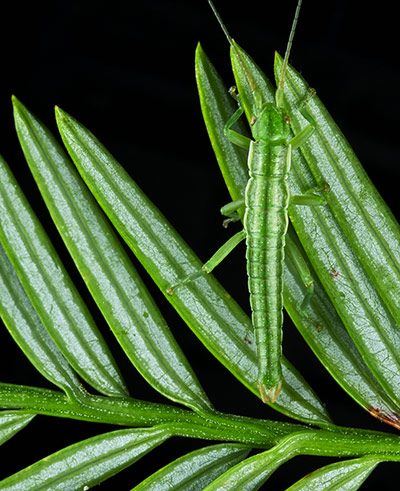
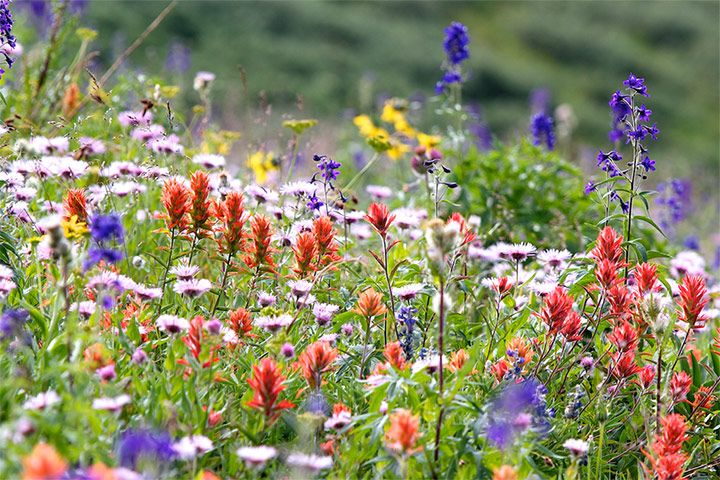
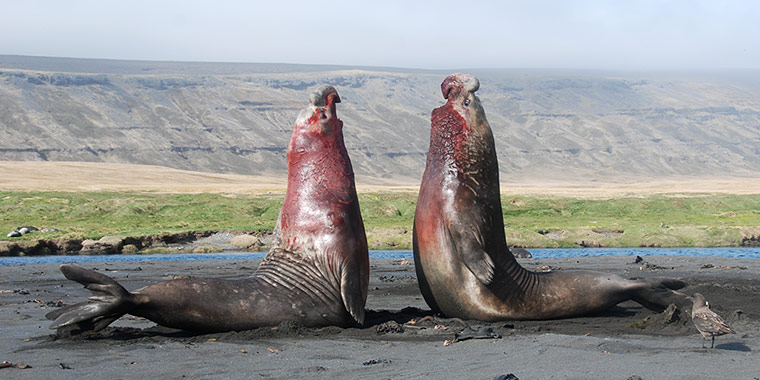
Overall winner: Moritz Muschick from the University of Sheffield. The overall winning image depicts a stick insect (Timema poppensis), almost but not quite, camouflaged against its host, the redwood tree (Sequoia sempervirens). The contrast of stunning green stripes and a pitch black background highlights the coevolution of the two species – though the insect benefits through its camouflage while the plant suffers from being eaten Photograph: Moritz Muschnik/BMC Ecology Image CompetitionRunner-up – Benjamin Blonder from the University of Arizona. The runner-up depicts a subalpine flower meadow in Colorado. The judges say: ‘The emphasis here is not on survival, but on reproduction: the dull but functional photosynthetic green seems an almost insignificant background compared to the waving of riotously coloured floral genitalia’ Photograph: Benjamin Blonder /BMC Ecology Image CompetitionIn addition to the winner and runner up, the judges, who include Bang Goes the Theory’s Dr Yan Wong, chose five section winners, and an editor’s pick. Laetitia Kernaleguen's image of two male southern elephant seals (Mirounga leonina) fighting over a harem of females won the behavioural and physiological ecology category. 'When a male challenges the head of a harem he needs to prove his strength at a great cost, resulting in a fascinating and captivating fight between the two giants'Photograph: Laëtitia Kernaléguen/BMC Ecology Image Competition
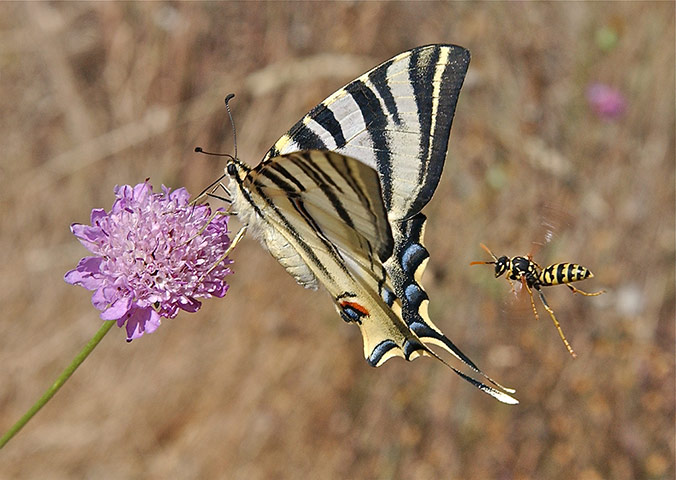
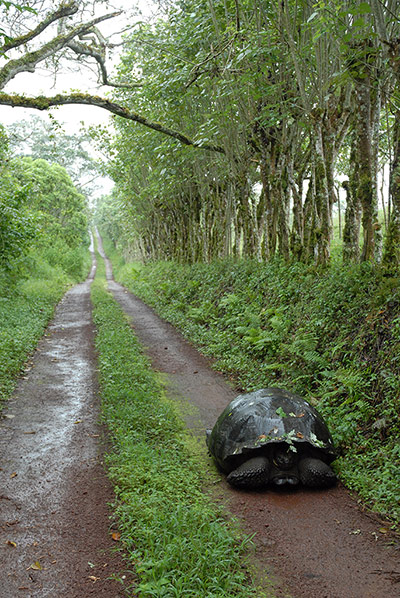
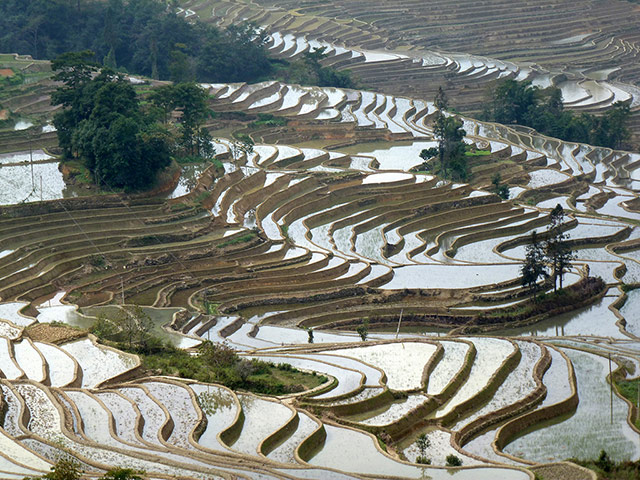
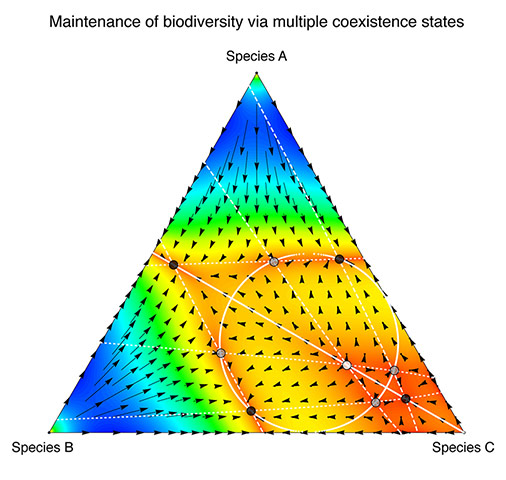
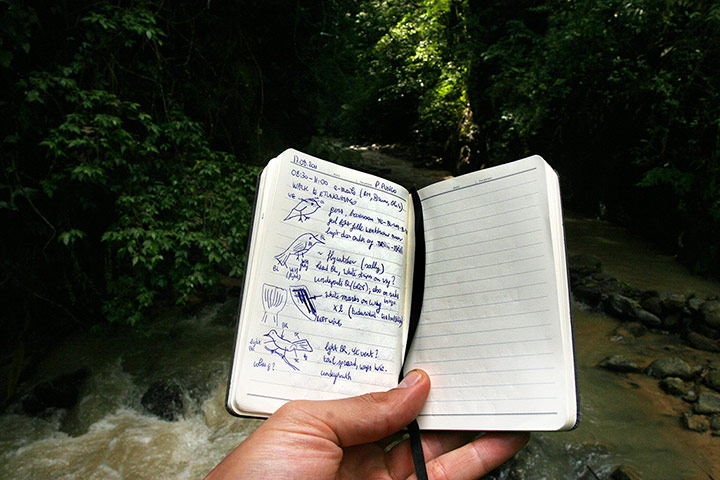
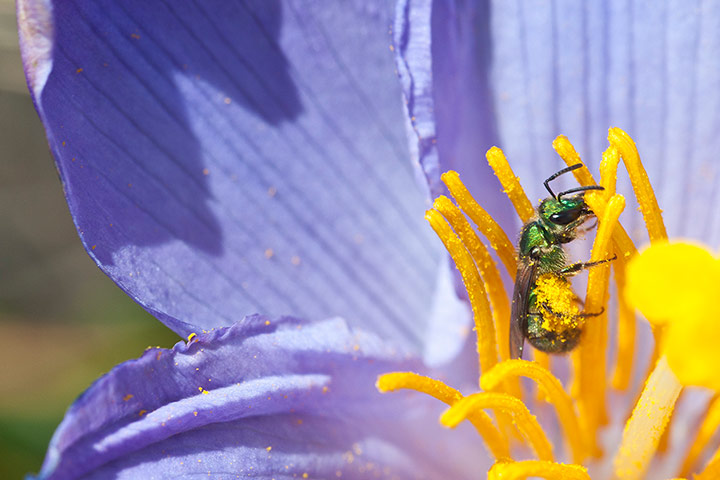
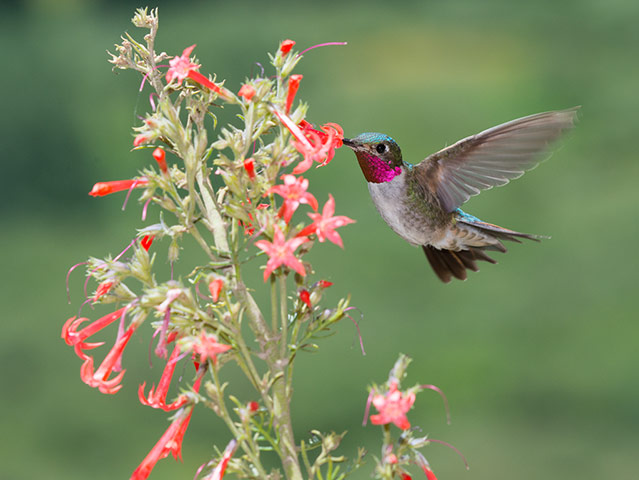
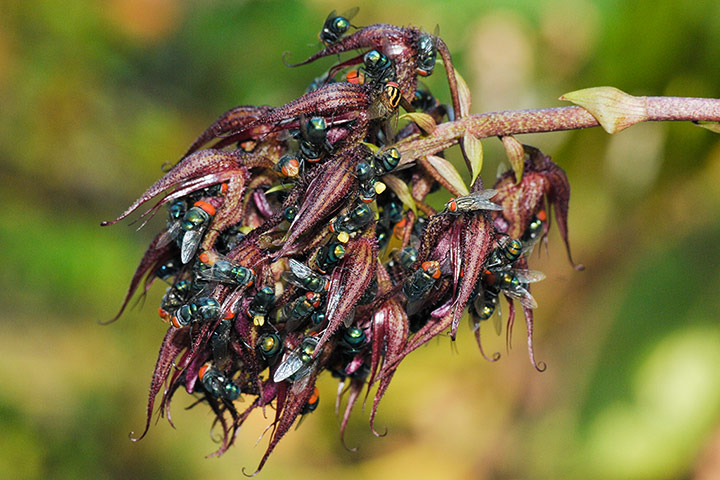
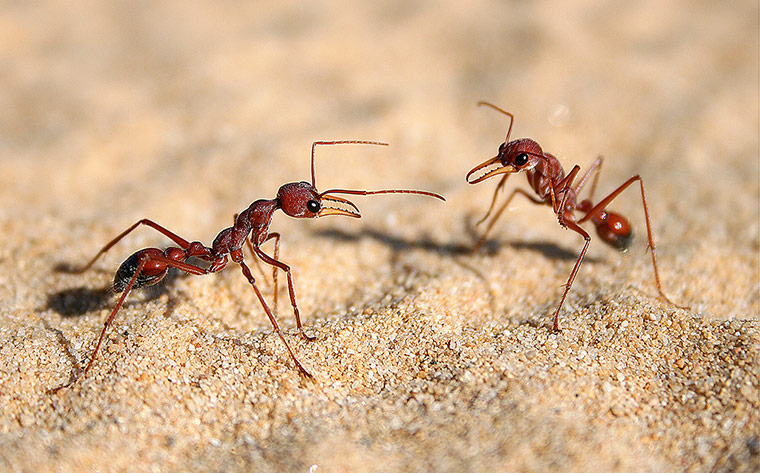
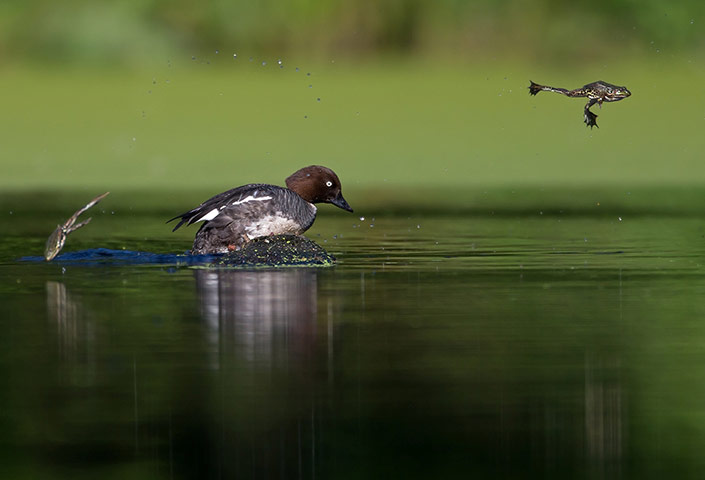
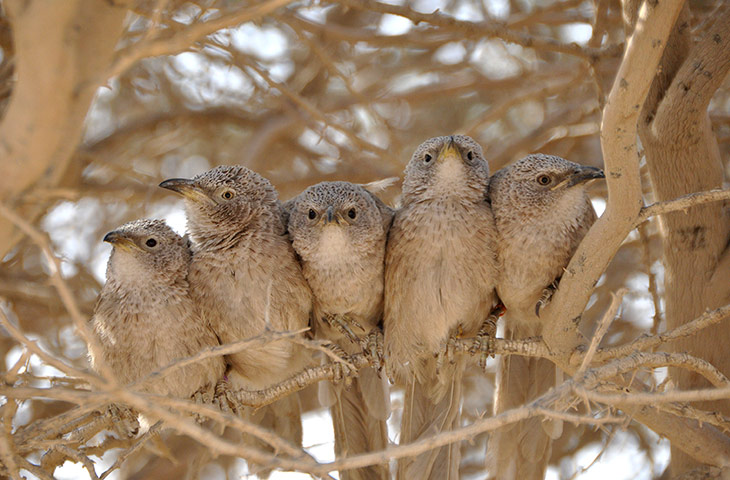
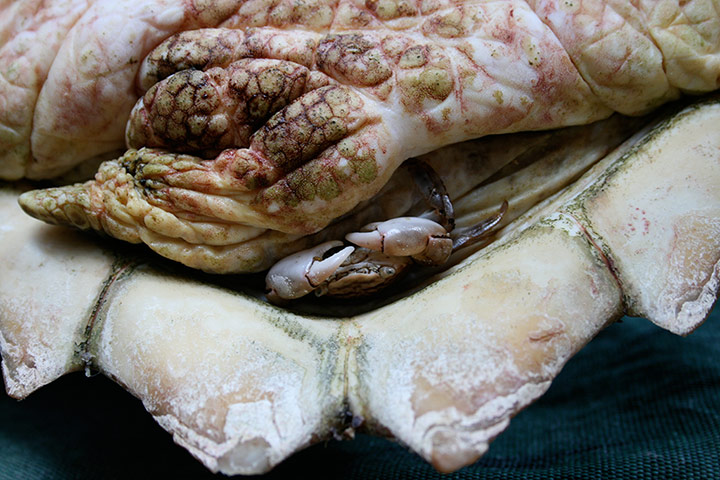
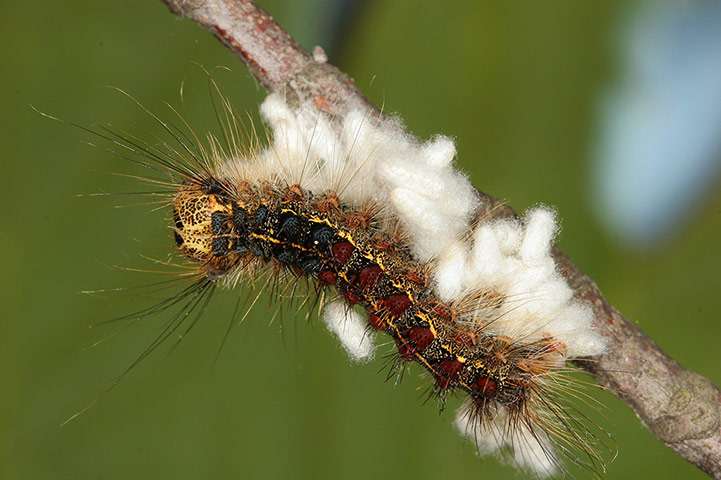
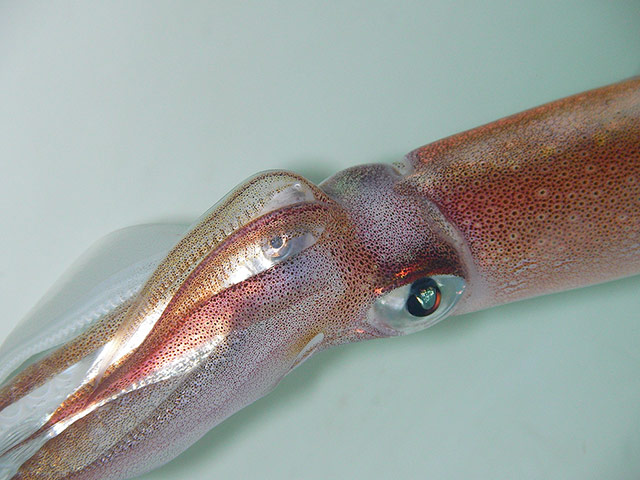
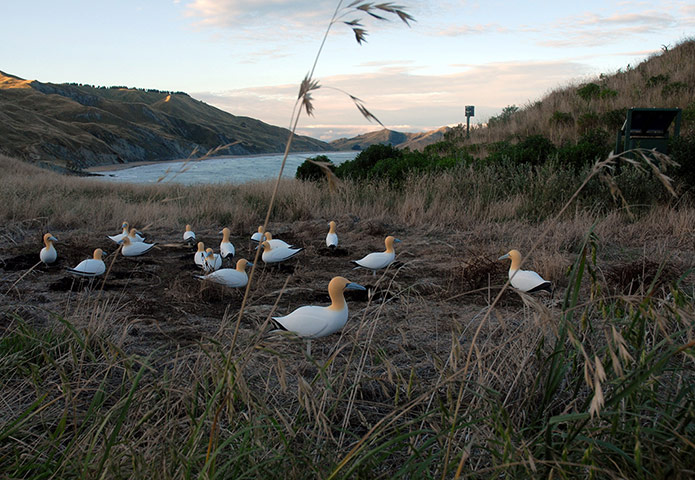
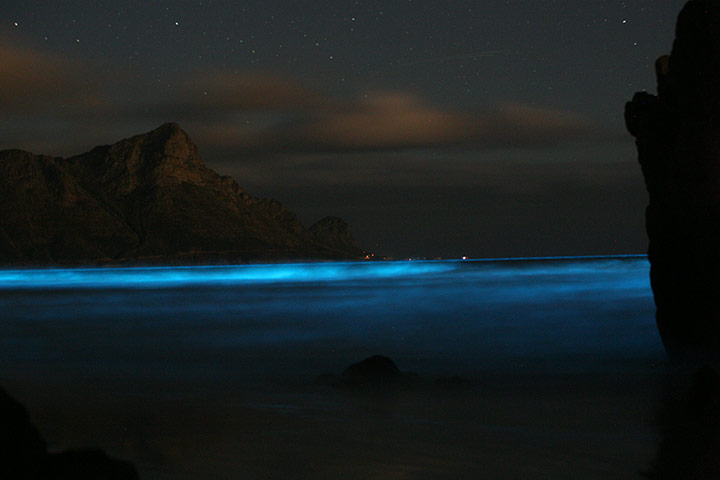
The winner of the community, population and macroecology category was Michael Siva-Jothy with this image of a polistine wasp attacking a swallowtail butterflyPhotograph: Michael Siva-Jothy/BMC Ecology Image CompetitionThe winner of the conservation ecology and biodiversity category was Hara Woltz. 'A Galápagos tortoise (Chelonoidis nigra) utilising a human road on Santa Cruz Island. I took this photograph while researching ecological interactions between species and landscapes in the Galápagos'Photograph: Hara Woltz/BMC Ecology Image CompetitionThe winner of the landscape ecology and ecosystems category is Yulin Jia's image of a rice paddy in Yuanyang, China Photograph: Yulin Jia/BMC Ecology Image CompetitionThe winner of the theoretical ecology and models category is this model of evolutionary game theory on the maintenance of biodiversity with multiple playersPhotograph: CS Gokhale and A Traulsen/BMC Ecology Image CompetitionThe editor's pick was Raf Aerts' notebook depicting work on the impact of coffee cultivation on bird conservation in south-east PeruPhotograph: Raf Aerts/BMC Ecology Image CompetitionThere were also 19 highly commended images that the judges said 'excel in either sheer visual beauty, technical skill, or storytelling'. Among them was this image by Daniel Wisbech Carstensen of an insect collecting pollen in Vellozia, Serra do Cipo, BrazilPhotograph: Daniel Wisbech Carstensen (Instituto de Biociencias, Brazil)/BMC Ecology Image CompetitionBy David W Inouye. A male broad-tailed hummingbird (Selasphorus platycercus), visits a scarlet gilia (Ipomopsis aggregata) flower at the Rocky Mountain biological laboratory (RMBL), in Colorado. These migratory hummingbirds fly from Mexico to Colorado each summer to reproduce, and are the primary pollinators of scarlet gilia flowers. Long-term studies of the phenology of the hummingbirds and the flowers they visit have been conducted since 1973 at RMBL, and show that the timing of both of these partners in the ecosystem service of pollination are changing, but not at the same ratesPhotograph: David W. Inouye/BMC Ecology Image CompetitionBy Ong Poh Teck of the Forest Research Institute Malaysia. 'It’s a stinky feast! Blowflies just can’t resist the attraction of the orchid Bulbophyllum lasianthum. During anthesis, these attractive purplish-red flowers emit a strong foul odour similar to that of carrion. Both male and female blowflies are capable of pollinating the flowers' Photograph: Ong Poh Teck (Forest Research Institute Malaysia)/BMC Ecology Image CompetitionBy Sylvain Dubey, University of Lausanne). Communication in bulldog ants (Myrmecia nigriscapa), Sydney, AustraliaPhotograph: Sylvain Dubey (University of Lausanne)/BMC Ecology Image CompetitionBy Thomas Jensen, Medical Prognosis Institute, Denmark. 'The two frogs way enjoying the sun on the branch when the duck jumped up on the branch. The frogs jumped for their lives!'Photograph: Thomas Jensen (Medical Prognosis Institute, Denmark)/BMC Ecology Image CompetitionBy Yitzchak Ben Mocha, Tel Aviv University. Arabian babbler (Turdoides squamiceps) group allopreening in front of a neighbouring group during a border confrontation. The grooming of another individual, called allopreening or allogrooming, has hygienic and signal functions in many birds and mammalsPhotograph: Yitzchak Ben Mocha (Tel Aviv University)/BMC Ecology Image CompetitionBy Maristella D'Addario, University of Rome. A small Columbus crab, (Planes minutus), living on a loggerhead sea turtle (Caretta caretta)Photograph: Maristella D'Addario (University of Rome)/BMC Ecology Image CompetitionBy Gyorgy Csoka, Forest Research Institute Hungary. A caterpillar of the gypsy moth (Lymantria dispar) killed by the gregarious braconid wasp (Glyptapantheles liparidis). 'This parasitoid is a major natural enemy of the worldwide known forest pest. 48 larvae developed in a single host and pupated under it after leaving the agonising caterpillar’s body'Photograph: Gyorgy Csoka (Forest Research Institute Hungary) /BMC Ecology Image CompetitionBy Miguel Cabanellas, Mediterranean Institute for Advanced Studies. 'With a refined and tenacious tactic of predation, the European squid (Loligo vulgaris) has captured a bream (Sparus aurata), launching its tentacles and applying a lethal bite in the prey column. The image captures the moment when the squid seizes the prey with his arms'Photograph: Miguel Cabanellas (Mediterranean Institute for Advanced Studies)/BMC Ecology Image CompetitionBy Matteo Lattuada, University of Antwerp. 'I think that this photo shows one of the most important issue in nature conservation nowadays. Because of habitat loss a lot of species are facing big troubles to survive. So, people are trying to create reserves and refugees for animals. But the encroachment due to sprawling of cities highlights the problem of save either one or another species, because in a restricted area often it is not possible to conserve all the species occurring inside. My photo is a way to underline this compromise'Photograph: Matteo Lattuada (University of Antwerp) /BMC Ecology Image CompetitionBy Hara Woltz, Columbia University. 'This image is of a constructed colony of decoy northern gannets on the North Island of New Zealand. Calls are broadcast through solar-powered speakers, and the decoys were set up to try to re-establish gannets on a preserved piece of land where northern gannets historically were found'Photograph: Hara Woltz (Columbia University)/BMC Ecology Image CompetitionBy Bruce Anderson, University of Stellenbosch. 'A blue tide – a dinoflagellate population (Noctiluca sp.) turns the ocean a luminous blue colour as the disturbance by the wind triggers a light-generating chemical reaction. The production of light is thought to attract fish predators that prey on potential predators of the dinoflagellates'Photograph: Bruce Anderson (University of Stellenbosch)/BMC Ecology Image Competition
Sign up to read this article
Read news from 100’s of titles, curated specifically for you.