It produces the second highest number of players in the NFL. With California and New York, it is among the handful of states with a trio of NFL teams. It also boasts a high school that has paved the way for as many current pro players (10) as Nevada and Idaho combined.
And yet, for a sixth successive year, Florida’s NFL fans do not have a single team to cheer for in the postseason. It has become a wasteland for playoff expectations, the total eclipse of the Sunshine State in footballing terms.
If it were not for the Florida State Seminoles, the state’s current sporting status would be emptier than the storage space in Old Mother Hubbard’s. University of Florida, University of Miami, the Miami Marlins, Tampa Bay Rays, Miami Heat, Orlando Magic and Florida Panthers have endured miserable recent runs, while David Beckham can’t even get his Miami MLS franchise off the ground. The Tampa Bay Lightning offer hope but it is still 10 years since they last made any significant NHL noise.
However, it is the NFL trio that bears most of the burden of disappointment in Florida terms, with a truly epic eschewing of success that is hard to believe in these days of salary cap parity.
In the past six seasons, Miami, Tampa Bay and Jacksonville have gone a combined 102 and 186 in the win-loss column for a woeful 0.35 winning percentage. They haven’t made the playoffs since 2008, with Miami the last of the trio to reach the postseason, and the Jaguars the only one to actually win a play-off game in 12 years (a wildcard victory over Pittsburgh in the 2007 season).
The Buccaneers did win the Super Bowl to crown a triumphant 2002 campaign, but they have managed just two fleeting wildcard appearances since then, both losses (in 2005 and 2007), and have just completed their worst season since their last 2-14 stinker in 1986.
It is an astonishing litany of failure, with the three teams combining for a 1-17 record in terms of winning seasons over the past six seasons (Tampa Bay the lone success, in 2010) and the Buccaneers and Jaguars failing to exceed four wins on no fewer than seven occasions.
The Dolphins have, at least, reached .500 in each of the last two years but that is offset by the fact their last playoff win was 14 seasons ago, and only five teams have gone longer without postseason success, including historically woeful Cleveland and Detroit.
Jacksonville’s less than stalwart past three seasons include 27 losses by double digits – the second-worst run of the NFL’s modern era – while this year’s combined Team Florida NFL record of 13-35 is comfortably the worst since the state became a three-franchise proposition in 1995.
Yet go back but 15 years and this was a hotbed of playoff potential, with Jacksonville and Tampa coming within a game of meeting in the Super Bowl itself in the 1999 season. All three reached the postseason in 1997 and 1999, while at least one got there every year from 1995 to 2002. As recently as 2007, both the Jaguars and Buccaneers were in the frame, while the previous longest spell without any of them making the playoffs prior to 2008 was just two years, in 2003 and 2004. Even with just two teams, from 1976, the longest drought was only four years.
So how does a collective swoon hit three teams in one state for such a protracted period? Clearly, they aren’t drafting much of the undeniable talent that comes out of the Sunshine State, and that is Clue No1. There is also a notable inability to stick with a general manager/head coach/quarterback for any length of time, while Clue No3 centres on the recent injury record of the trio, which also relates back to No1.
The Miami Herald’s Adam Beasley has had a ringside seat for the Dolphins’ last six seasons of futility while sports columnist Gene Frenette has done the same in Jacksonville for the Florida Times-Union, and they are of a similar mind when it comes to analysing Team Florida’s failings.
Beasley says: “It is a rough time to be a Florida football fan for sure. It is a combination of three teams that have been seriously mismanaged for the best part of a decade. Florida is a state that loves football. From the time they can walk, kids have a football in their hands. It is absolutely a culture in Miami. Some of the best talent in the nation comes out of high schools here, and it is a huge disconnect at NFL level.”
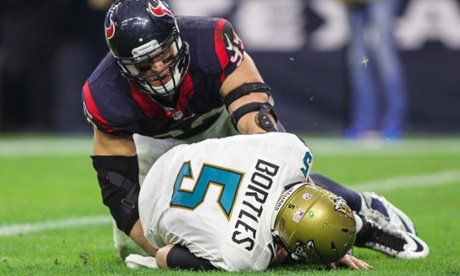
Frenette observes: “There is no question Jacksonville has missed on way too many high draft picks in recent years. When you miss on a top 10 pick at quarterback, that sets you back three or four years. In 2011, they picked Blaine Gabbert, and here we are three years later, still hoping the next guy, Blake Bortles, will be the answer.
“I would say with Tampa and Jacksonville, you have a similar story of mismanagement. I think Miami are a little bit ahead of the curve mainly because they seem to have a quarterback who is more advanced, but all three have done nothing to really keep the fans engaged.”
Poor drafting is most certainly a key issue. The Jaguars have had seven successive top 10 picks and have little to show for them.
Defensive linemen Derrick Harvey (2008), Eugene Monroe (2009) and Tyson Alualu (2010) are respectively out of the league, a bit-part player at Baltimore and a second-string choice at EverBank Field; 2011 was the year they reached for Gabbert (when they could have had JJ Watt, Andy Dalton or Colin Kaepernick); currently suspended wide receiver Justin Blackmon was the fifth choice in 2012; inconsistent offensive lineman Luke Joeckel (2013) anchors a fairly woeful unit that has given up a league-leading 66 sacks this season; and this year’s choice Bortles has shown flashes of hope without ever really not looking like a rookie.
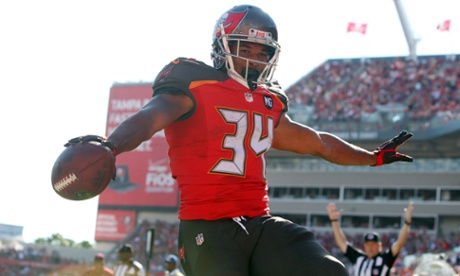
Equally, Tampa Bay completely whiffed on first-rounders Josh Freeman (2009), defensive lineman Adrian Clayborn (2011; just 20 injury-hit games and 5.5 sacks in the past three seasons) and safety Mark Barron (2012; only three interceptions in 37 starts before being shipped to St Louis in October). This year they used all six selections on offensive players, only to see the defence perform at historically bad levels.
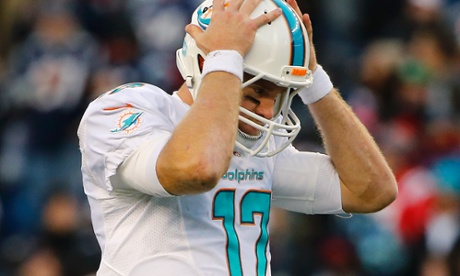
Miami seem to have bucked the trend of quarterback calamities with Ryan Tannehill, who now seems firmly entrenched as their starter, but even they have had some wretched choices, including much of last year’s class, like first-rounder Dion Jordan (a defensive end who the team traded up to grab at No3), who has yet to prove he can stay on the field after two drug-related suspensions.
If the trio have been guilty of major draft failures, their management track record has not been much better. Jacksonville are on their third head coach, second general manager and seventh starting quarterback of the six-year Barren Era, while Tampa Bay are 3-2-5 in the same period and Miami 2-2-5. Only the Dolphins have had the same quarterback for three years in a row while the lack of front office continuity is equally startling.
“I don’t know how to explain it other than mismanagement,” says Beasley. “It doesn’t matter how the kids perform, if you don’t draft well, you won’t be successful. Ryan Tannehill is the best quarterback the Dolphins have had since Dan Marino but it is a two-way game and, when the defense fails their part the way it has this year, it doesn’t matter who the quarterback is. It is definitely still a problem.”
“I do think the honeymoon period is clearly over for Gus Bradley and Dave Caldwell,” says Frenette. “Next year, their feet will be held to the fire a lot more. Frustration among the fans is certainly setting in. The record is not better, even if the promise is.
“Owner Shahid Khan is probably also right there with the fan base – he has to be frustrated by the lack of improvement in the win total. I think he has a pretty implicit understanding of what he bought into and he sees it more clearly now. Next year will be huge because the fans are going to want to see progress in the win column. I don’t think anyone will expect the playoffs but there will be expectations of being at .500.”
Both observers can see hope for the Dolphins and Jaguars, but not for the Buccaneers. “It would be hard right now to pick Tampa to do anything because their quarterback situation is so unsettled,” says Frenette. “I don’t know if Marcus Mariota or Jameis Winston in the next draft will fix that immediately, either. There are just too many issues to deal with.”
Tampa Bay were arguably the biggest let-down of 2014 after bringing in new head coach Lovie Smith, expensive free agent quarterback Josh McCown and cornerback Alterraun Verner, and having distinct playoff ambitions before becoming the NFC’s lowest scorers and giving up 410 points. Almost the ultimate mark of condemnation was their 0-6 record in the feeble NFC South, where the division winner went 7-8-1. As fast as Smith plugged one hole, another two seemed to appear, and the head coach clearly has his work cut out if he is not to join the league’s Black Monday exodus this time next year.
Jacksonville and Miami have absolutely no room for complacency, though. Gus Bradley and Joe Philbin will surely add to the head-coaching cull if there is no real improvement in 2015 and, while for the Jags that could be as little as an 8-8 season, the Dolphins are likely to need a postseason finish to ensure Philbin’s continued tenure.
“At 10-6, they would throw a party down here,” says Beasley. “Miami do have hope because they have a quarterback. Tannehill is certainly a top 15 guy and, while he may not be Peyton Manning, Tom Brady or Aaron Rodgers, if you get the right pieces around him, you can compete for the playoffs. But the playoffs must be in the team’s very near future.”
Frenette remains cautiously optimistic Bradley and general manager Dave Caldwell are still moving in the right direction, with almost all of the 2014 draft showing signs of promise. “Early indications are that it might be a pretty good class,” he says. “But the biggest question is still to be determined – is Bortles the guy? There are always going to be growing pains with a rookie quarterback but the team can’t afford another three of four-year period of having drafted the wrong quarterback.”
It’s almost unthinkable that such a sizeable chunk of the NFL could be frozen out of the playoffs for a seventh year in succession but, after a 13-35 campaign in 2014, it requires an improvement of Oscar-winning proportions. In reality, Florida’s hopes of ending the drought rest on the shoulders of Miami and Tannehill.
Among starting quarterbacks this season, Tannehill finished 14th in terms of QB rating. Fully eight of those above him are all on playoff teams this postseason and the other five were all contenders, so the inference is clear – improve that rating and Miami can think seriously about throwing a party in 12 months’ time. And the Sunshine State will be back in playoff brightness once again.