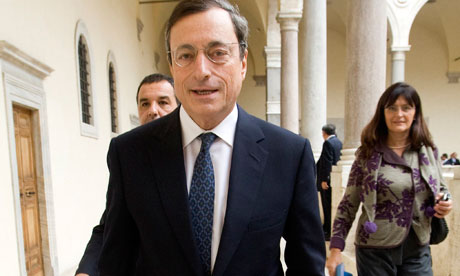
Mario Draghi could hardly have had a more difficult baptism as the president of the European Central Bank. He arrived with the sovereign debt crisis in the eurozone intensifying, the economy heading towards recession and the commercial banking system teetering on the brink of a Lehmans-style collapse.
The Italian central banker is taking things step by step. Firstly, he has reversed the misjudged interest rate increases announced by his predecessor Jean-Claude Trichet. After cutting rates at his first two meetings, Draghi has returned the ECB's policy rate to 1%, even though there were some dissenting voices. Further cuts are likely next year.
Secondly, he has taken action to shore up the banking system. The meat of Wednesday's press conference was the announcement that the ECB would make it much easier for banks to get their hands on ready cash to see them through what is fast becoming a serious credit crunch.
As a result, banks will be able to borrow from the ECB for three years rather than just 12 months, and will be able to offer the ECB collateral of a less highly quality nature when they seek assistance.
This is a traditional central bank response and a sensible one. When a financial crisis is brewing, it is the job of a central bank to make credit freely available.
Europe's crisis is not just about liquidity, it is also about solvency – of both financial institutions and governments. Here, Draghi played it long, stressing that the ECB did not have a plan to go on a bond-buying spree as soon as the Brussels summit delivered a workable fiscal compact.
This might merely be a tactical manoeuvre, designed to keep the pressure on heads of government in their two days of talks and ensure there is no backsliding. On the other hand, it could suggest that Germany's reluctance to sanction full-scale quantitative easing by the ECB is shared by Draghi and his colleagues. If so, the markets could be in for a rude awakening.